
Delhi's monsoon does not arrive politely. It comes on a hot afternoon when the light turns brass-coloured, the crows go quiet, and then the sky lets go hard enough to strand the traffic on the roundabouts for an hour. What confuses most first-time visitors is that locals plan around this season rather than endure it. The gardens hit their peak, one sweet appears in the shops that exists at no other point in the year, and a good half of the city's best hours happen under a roof with a glass of chai going cold in your hand.
Forty-eight hours is enough, if you accept that the rain sets the running order and not you. What follows is grouped the way you will actually use it: what to do when it is falling, what to do when it stops, and what to book before you get on the plane.
The gardens are at their best in the rain
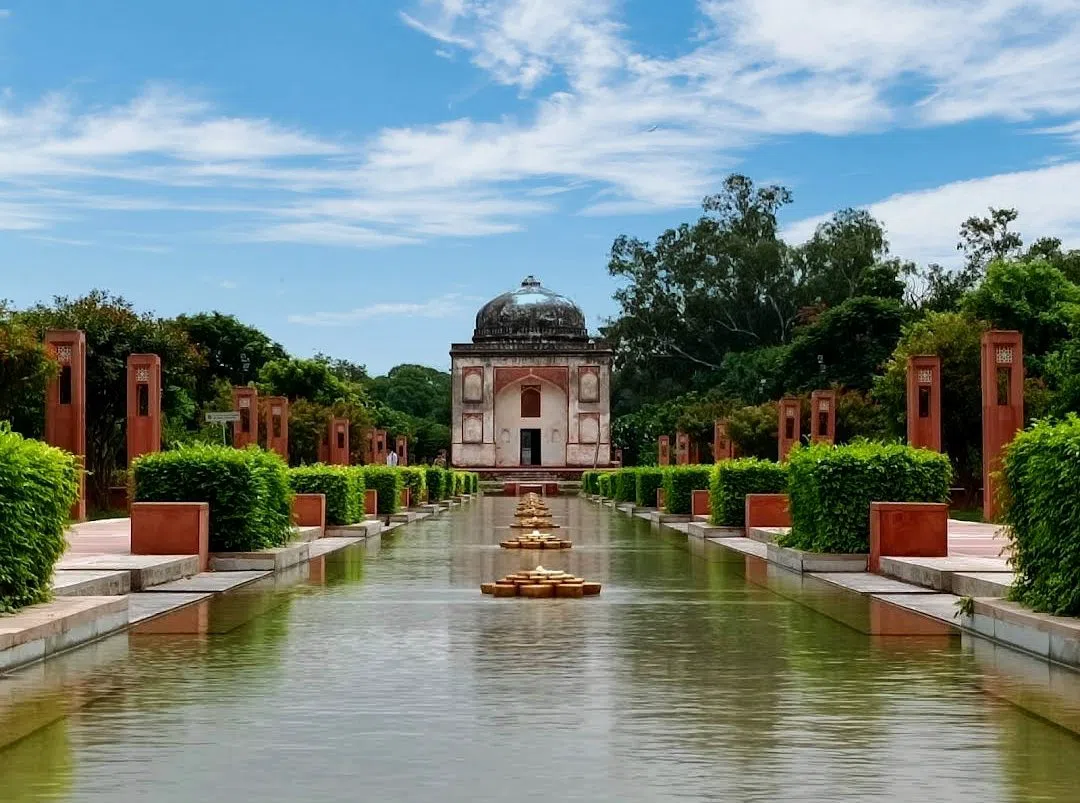
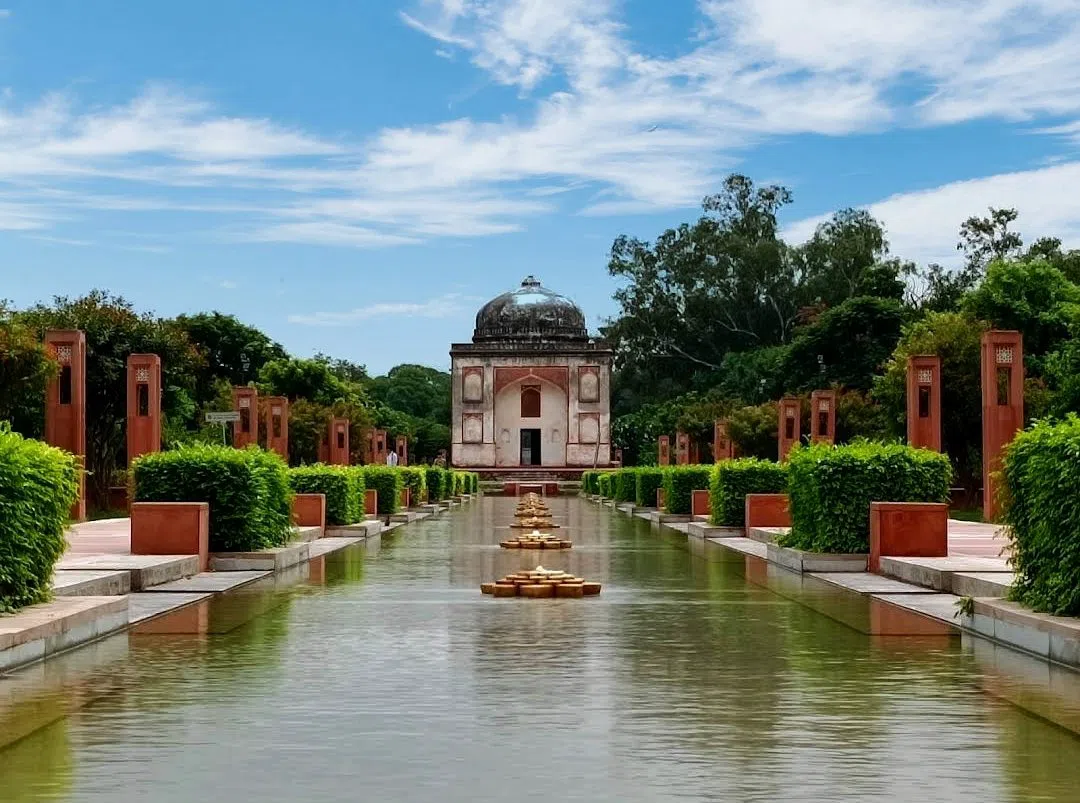
Sunder Nursery (Nizamuddin East) is the best place in Delhi to watch the monsoon do its work. The heritage park's water channels, dry and ornamental for most of the year, actually fill; the tomb sandstone darkens to a deep rust; and the rose garden and lotus ponds are at their annual peak in exactly these weeks. It opens at 6am and stays open to 10pm daily, which makes an early rain walk easy and, more to the point, gets you there before the school parties and tour coaches. Tickets are ₹50-100 per adult at the gate, and there is a combo with the Humayun's Tomb complex and its museum that is worth taking if you plan to do all three. There is no door policy of any kind here; families, large groups and photography parties are all routine. No metro station sits at the gate, so plan on an auto or a cab for the last stretch, and give yourself two hours minimum.
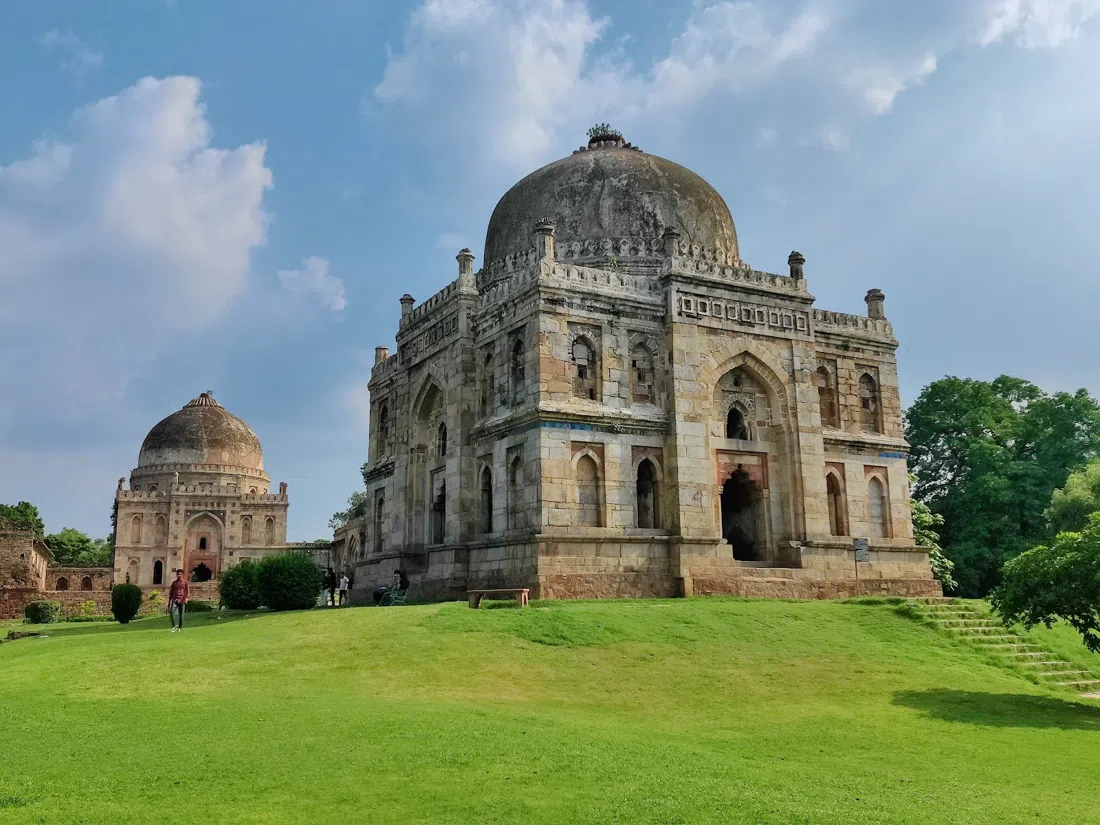
Lodhi Garden (Lodhi Estate) is the city's default monsoon walk and the one Delhi habit worth copying. It is free, unfenced and open to everyone, 5am to 8pm through the April to September season, and the tomb domes look better under a grey sky than they do in the white glare of May. Jor Bagh is the closest metro. One honest warning that no postcard mentions: mosquitoes are the real monsoon hazard here, far more than the rain. Bring repellent and use it before you go in, not after the first bite.
The one thing to book before you land
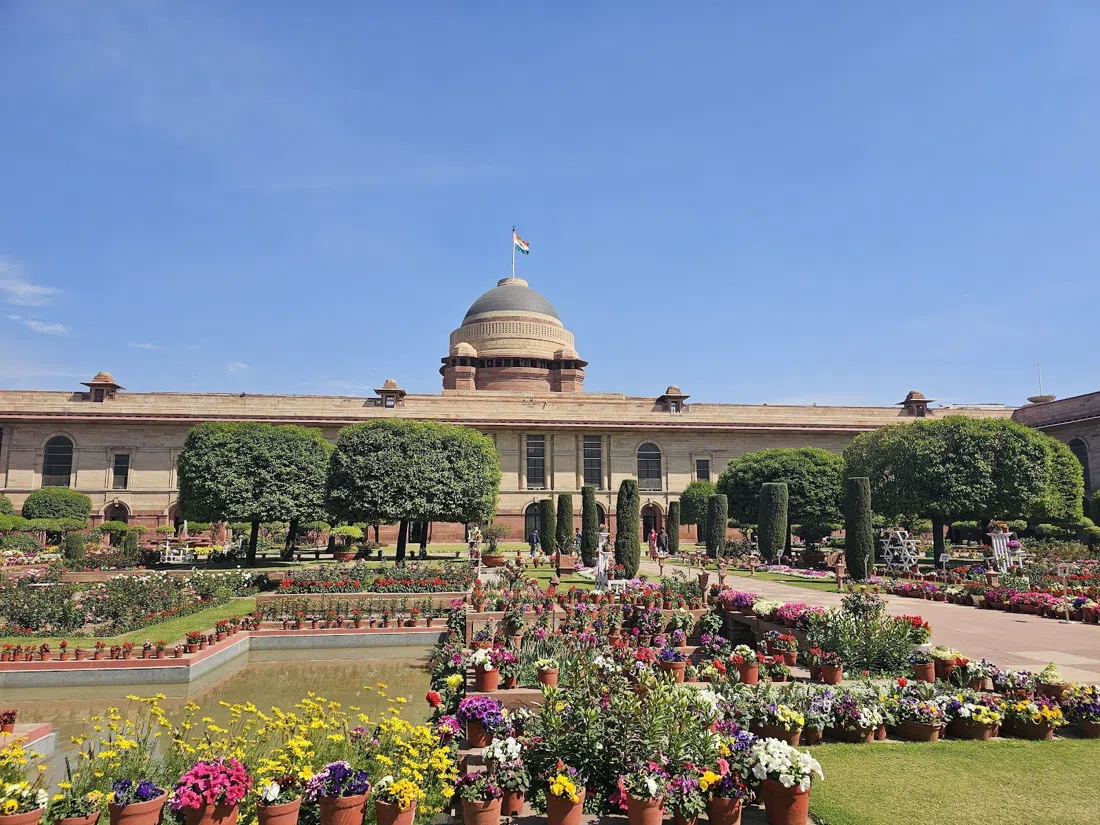
Amrit Udyan, Rashtrapati Bhavan (Raisina Hill) opens its Summer Annuals window from 16 August to 15 September 2026, 10am to 6pm, closed Mondays. It is a rare, time-limited chance to walk the presidential gardens. Entry is free, but slots are booked online only and walk-ups are turned away at the gate, no exceptions. Bookings for a given day close at 10am the previous day, and every member of a group needs their own booking in their own name, so this is not something one person can arrange for six people on arrival. Photography and bag rules are strict; travel light and expect to be checked. A shuttle runs from Central Secretariat metro, and there are rain shelters inside, which is more than most Delhi gardens can say. If you only pre-book one thing for these two days, make it this.
Buildings that were made for water
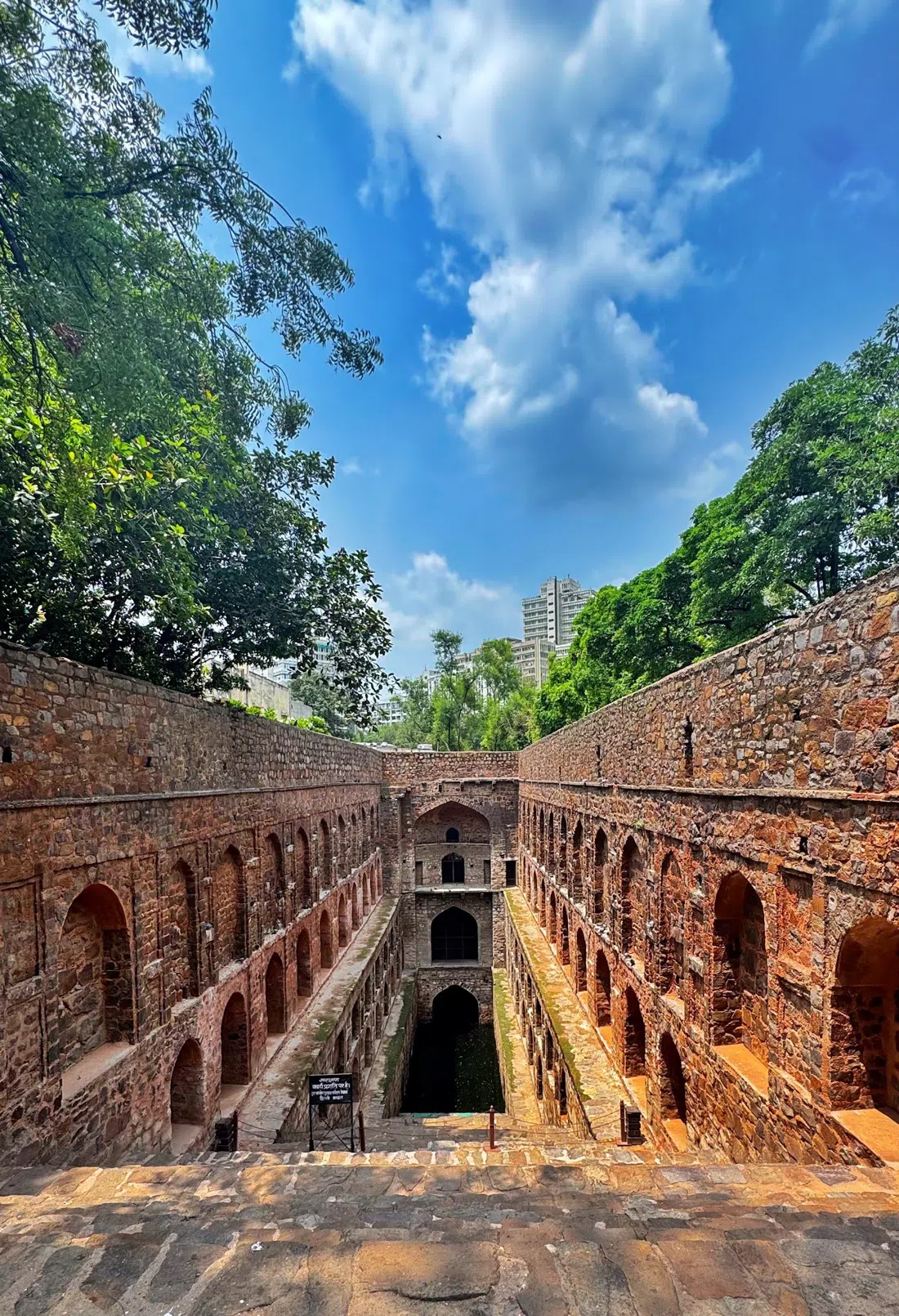
Agrasen ki Baoli (Hailey Road, just off Connaught Place) is a monsoon-water building marooned in the middle of the business district: a stepwell dropping into the ground between office blocks, free to enter, open 7am to 6pm daily. It is one of the very few sights in the city where a downpour improves the experience rather than ruining it. The noise changes, the light drops, and the whole structure starts doing the job it was built for. It is also one of the few where rain makes it dangerous. The lower steps are narrow and get genuinely treacherous when wet, and there is no railing to save you. Small groups and walking tours pass through constantly, which is fine, but do not descend past the point where the stone is dark and shining.
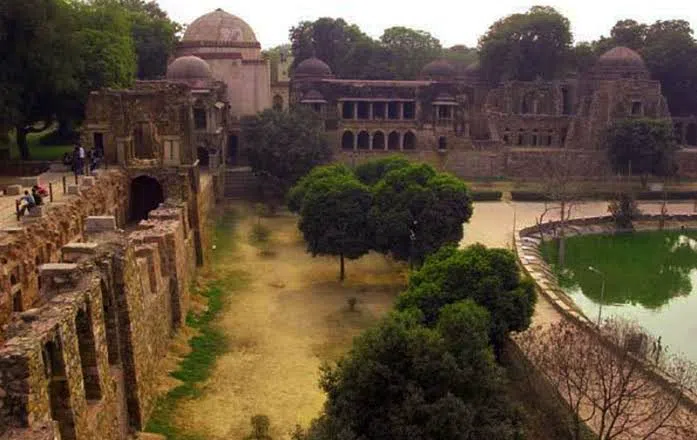
Hauz Khas Complex (Hauz Khas, south Delhi) is the one Delhi monument that was designed for this season. The medieval tank was built to catch the monsoon, and only in these few weeks does it hold real water; the rest of the year you are looking at a depression with a story attached. It is ASI-ticketed at ₹20 for Indians and ₹250 for foreign nationals, open 10.30am to 7pm and closed Mondays; Green Park is the usual metro walk in. Groups are fine inside the complex. Outside it, Hauz Khas Village is a different proposition: the bars and rooftop cafés will take a large party, but wet weekends jam the lanes, and those lanes flood. Proper shoes, not sandals, and do not count on getting a cab to the door.
Roofs worth having
When the rain settles in for three hours, and at some point in a monsoon 48 it will, you want somewhere with a ceiling that is worth the time regardless.
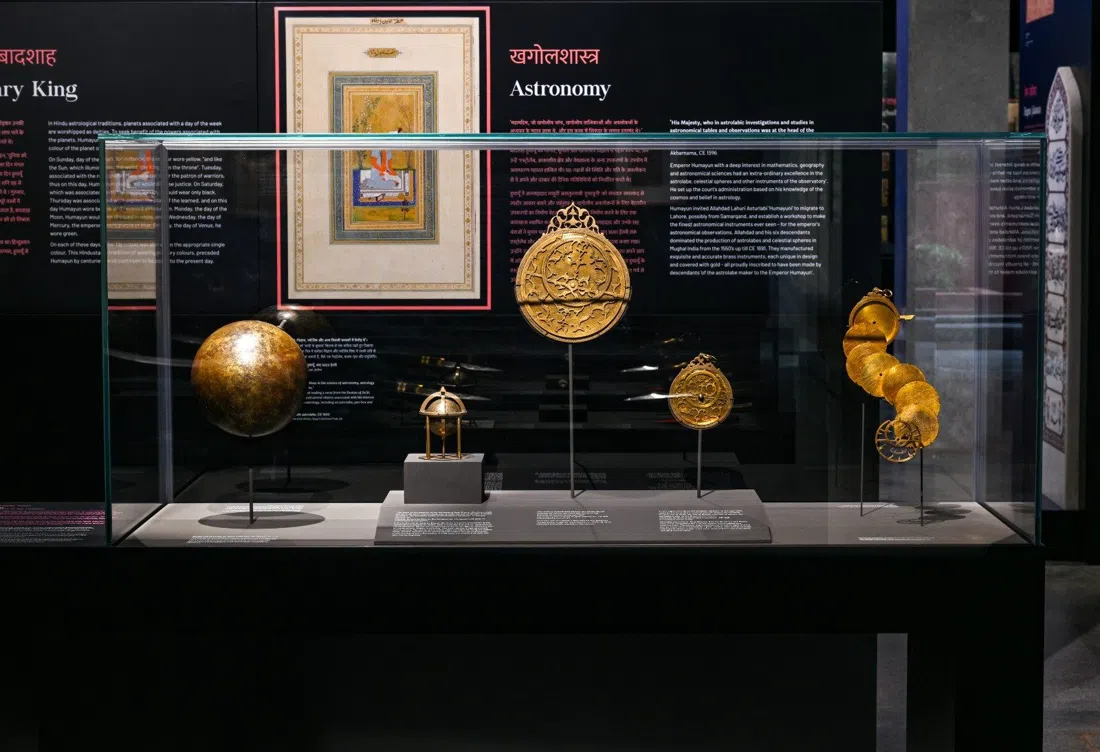
The Humayun's Tomb Site Museum (Nizamuddin) is the obvious wet-afternoon anchor, and it is a short walk from Sunder Nursery. It is entirely underground, air-conditioned, and only opened in 2024, so it is still noticeably uncrowded compared with everything else in this part of the city. Tickets are ₹50 per adult and ₹25 per child for Indians, with combos available at the shared counter alongside the tomb and nursery. There is lift and ramp access throughout and it is properly wheelchair-friendly. Open Tuesday to Sunday, closed Mondays.
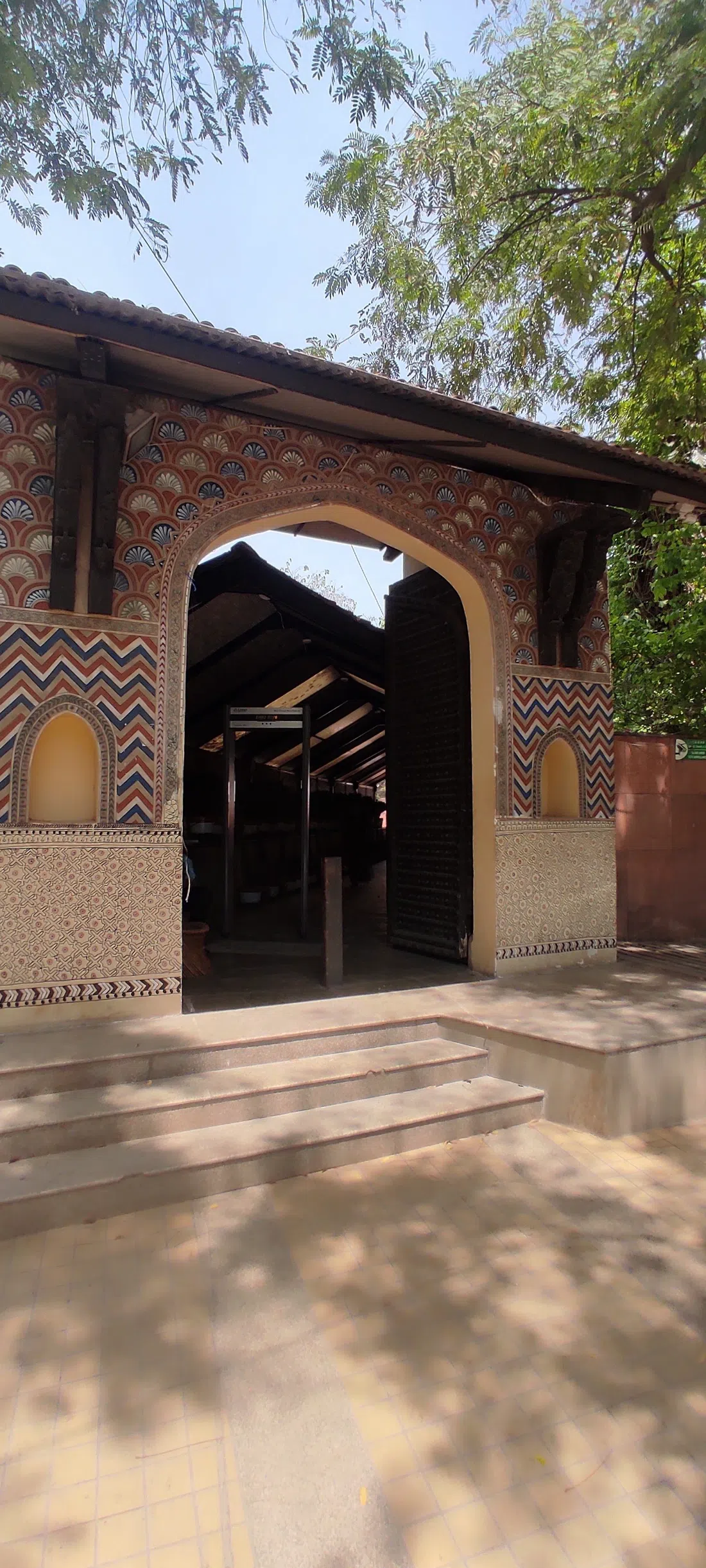
The National Crafts Museum & Hastkala Academy (Bhairon Marg, by Pragati Maidan) is the smartest hedge on this list, because it is half covered galleries and half open courtyard and works whether the rain holds or not. Entry is free for Indians and ₹300 for foreign nationals, artisans work on site rather than being wheeled out for photographs, and school parties and craft tours are the norm rather than an intrusion. It is closed on Mondays. Café Lota at Gate 2 (8am-9.30pm, around ₹1,200-1,800 for two) serves the best regional Indian monsoon food in the city, palak patta chaat and Kumaoni bhatt ki churkani among it, and is worth planning a meal around rather than falling into.
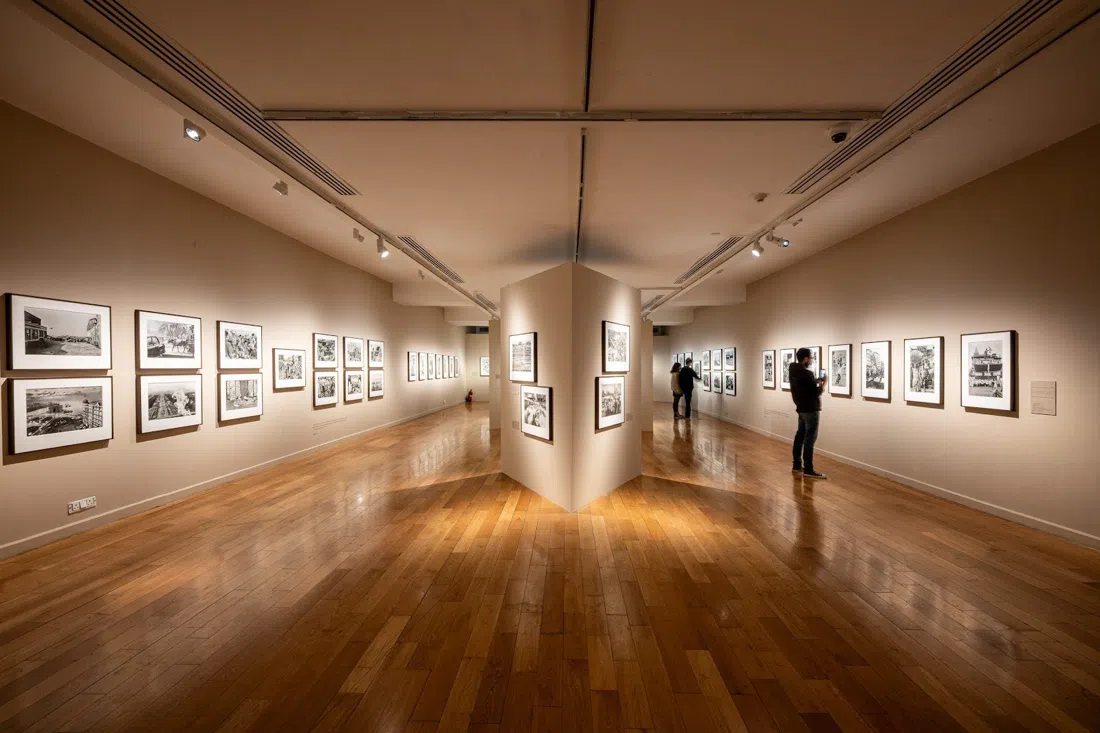
In south Delhi, the Kiran Nadar Museum of Art (KNMA, Saket) is the natural cloudburst fallback: India's leading private modern-art collection, free to enter, entirely indoors, and a five-minute covered walk from a metro-served mall, which matters enormously when the road outside is ankle-deep. Register at reception on arrival. There are ramps, carpeted floors and wheelchair access; groups should email [email protected] ahead rather than turning up en masse. Open Tuesday to Friday 10.30am-7pm, weekends to 9pm, closed Mondays. One caution: a larger standalone KNMA building is under construction in Aerocity, so check which site an exhibition is actually at before you travel across the city for it.
Chai, pakora and the sweet that only exists now
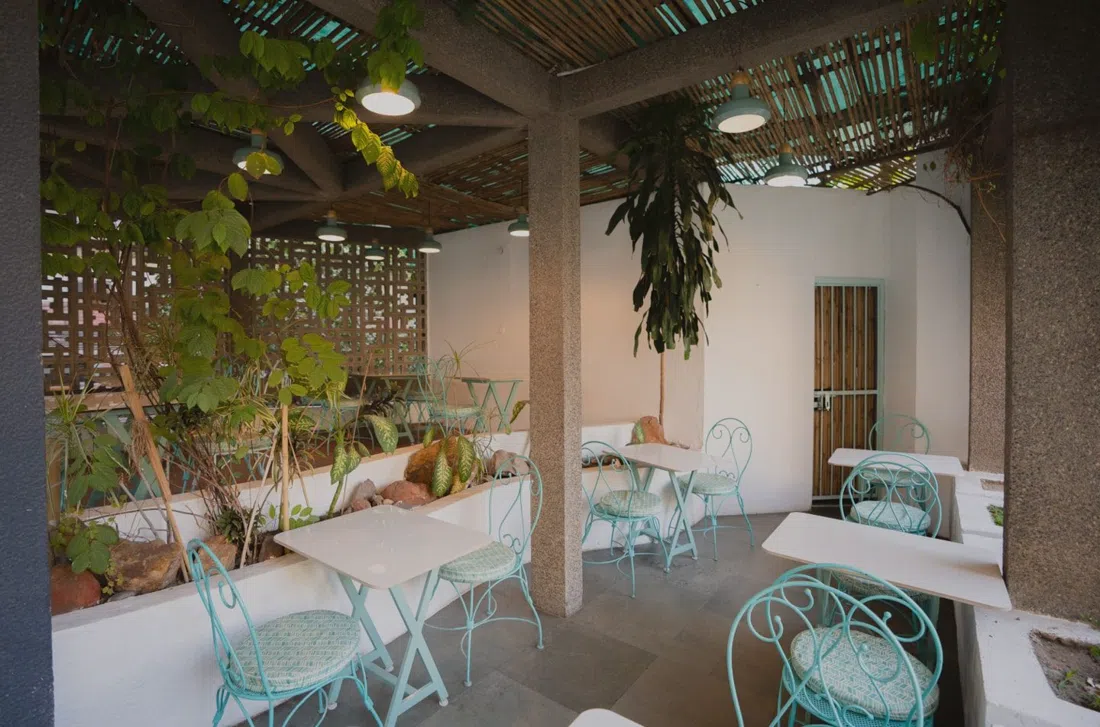
Triveni Terrace Café (Mandi House) is the definitive Delhi chai-and-pakora ritual and costs almost nothing to perform: ₹300-600 for two, cash-cheap, open 10am to 8pm daily. It is a modernist arts-centre terrace where the rain comes straight off the trees and onto the parapet in front of you. There are no reservations and no door policy; casual groups are the house style. The catch is size. The terrace is small and fills within minutes of a shower starting, so arrive before the sky does. Pair it with whatever is on in the Triveni galleries or the amphitheatre downstairs and it becomes an afternoon rather than a stop.
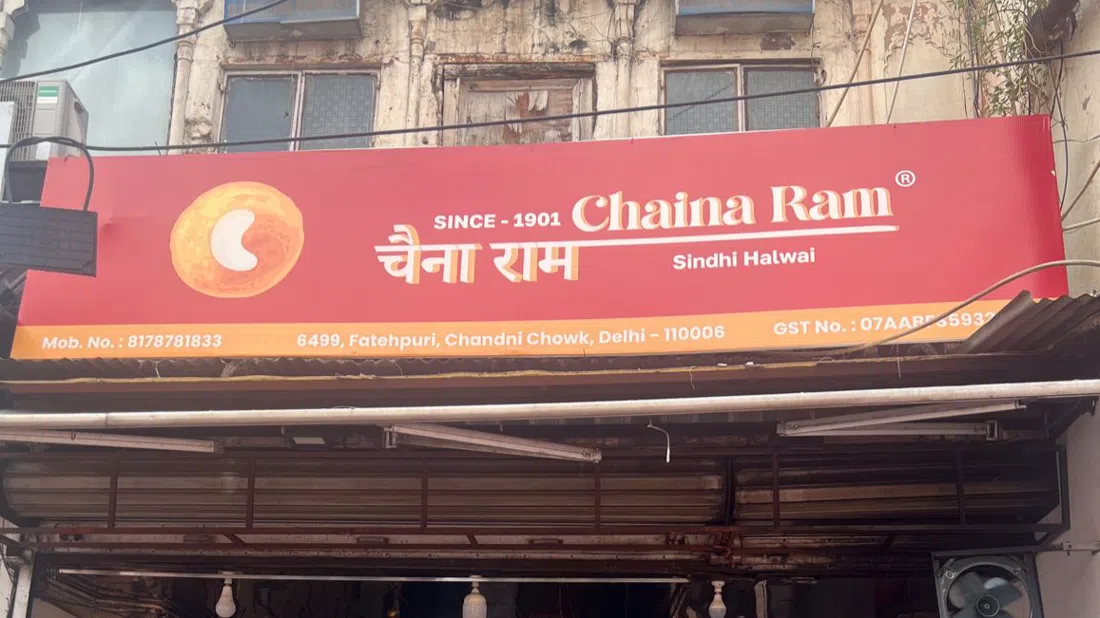
Chaina Ram Sindhi Confectioners (Fatehpuri, at the far end of Chandni Chowk) is the most literally seasonal entry here. Ghewar, the disc-shaped, honeycombed, syrup-soaked sweet, is made only during the rains, and this counter is where Delhi goes for it. Reckon on ₹800-950 a kilo, or a few hundred rupees for a single piece, which is the sensible amount unless you are feeding a family. It opens from 8am, takes cash happily, and has no seating at all: you queue on the street, which in a downpour is exactly as chaotic as it sounds. Time it to the Teej festival window if you can, when the whole ritual is at full volume.
Eating heavy in Old Delhi
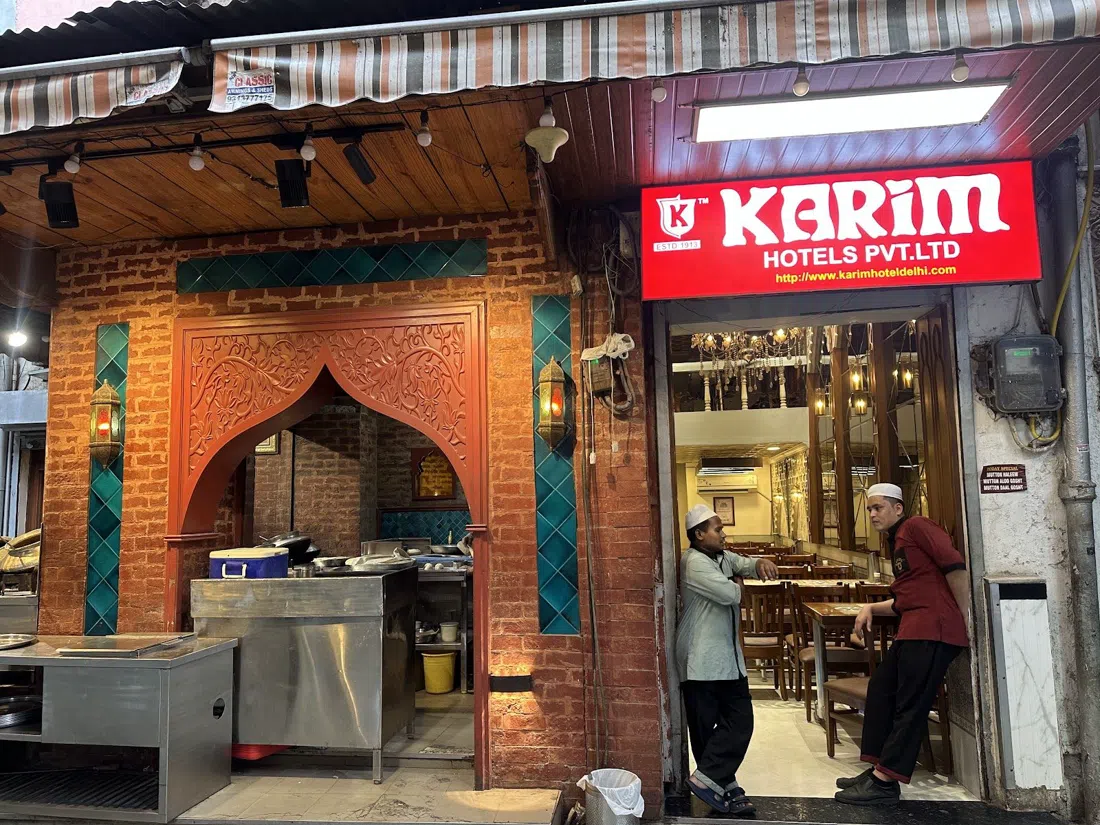
Karim's (Jama Masjid) is the right register for a wet night: slow-cooked nihari and mutton burra, heavy and warming, from a kitchen founded in 1913 by a cook descended from the Mughal court kitchens. There are no reservations, tables are communal and shared, and groups get seated as space frees up, so expect a wait on rainy evenings and do not arrive at 9pm with eight people and a plan. It is a no-alcohol, cash-friendly place. The Old Delhi lanes around it flood properly, so take the metro to Jama Masjid and walk the last stretch rather than trying to hold a cab through it.
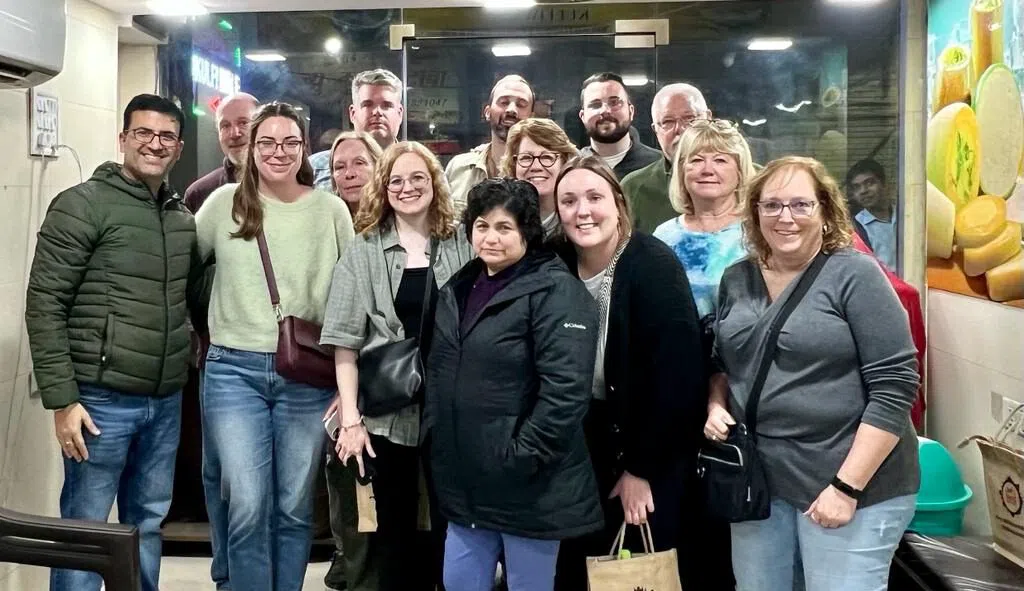
If you have never eaten street food in India, the wet season is the wrong moment to freelance it. Delhi Food Walks has been running since 2011 and is the most credible operator for a first-timer here; a guide who knows which stalls are safe in the rain earns the fee. They run breakfast, lunch, tea and a five-hour, ten-stop dinner walk, plus home-cooking classes, and the format is built for groups; private bookings go through +91 989 112 1333 or [email protected]. Reckon on roughly ₹3,000-6,000 per person depending on length. What I like is that their routes cross Sikh, Muslim and Hindu areas rather than reducing the city to one 'best-of' loop, which is a lazy habit in Delhi food tourism and a misleading one.
Two nights, two registers
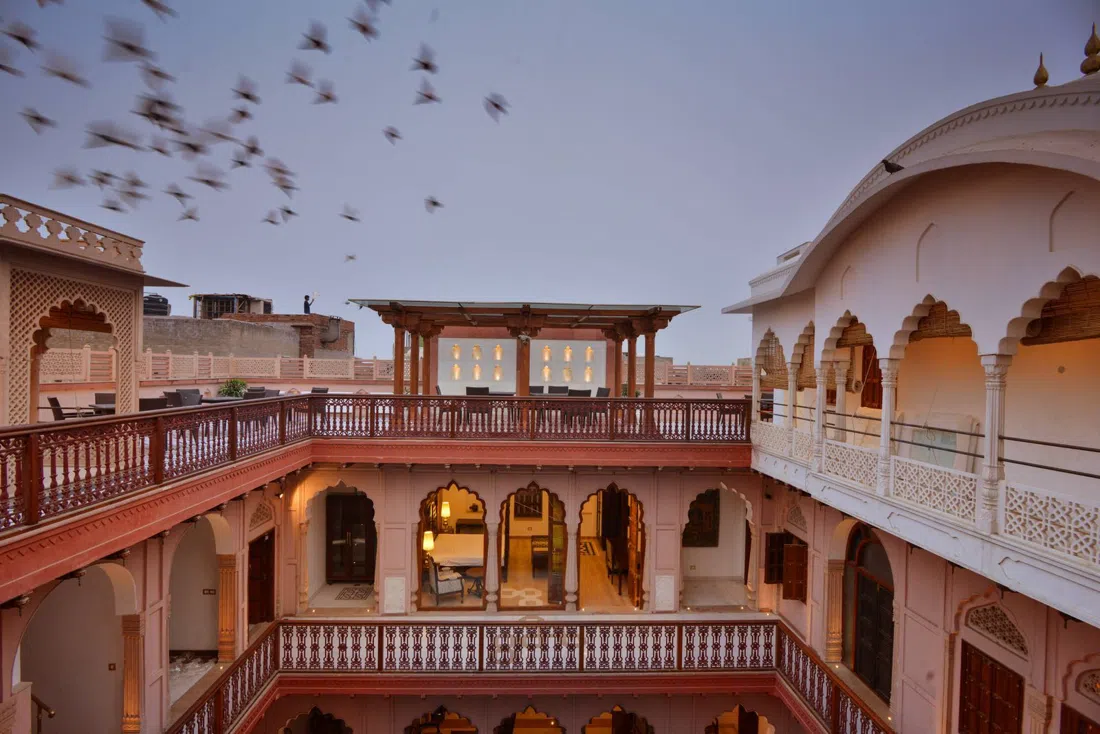
Haveli Dharampura (Gali Guliyan, Chandni Chowk) is the most cinematic monsoon night in the city: a UNESCO-award-winning restoration where the rain falls into the open central courtyard while kathak is performed in it. The Kathak-e-Khas dinner runs from 7.30pm, weekends, and it is reservation-only, a three-hour dinner-plus-performance format at roughly ₹3,000-5,000+ per head, with no walk-up option whatsoever. Book on [email protected] or +91 11 4909 1777. They take private groups and events. If that is beyond the budget, the Lakhori à la carte menu is considerably cheaper and you still get the building.
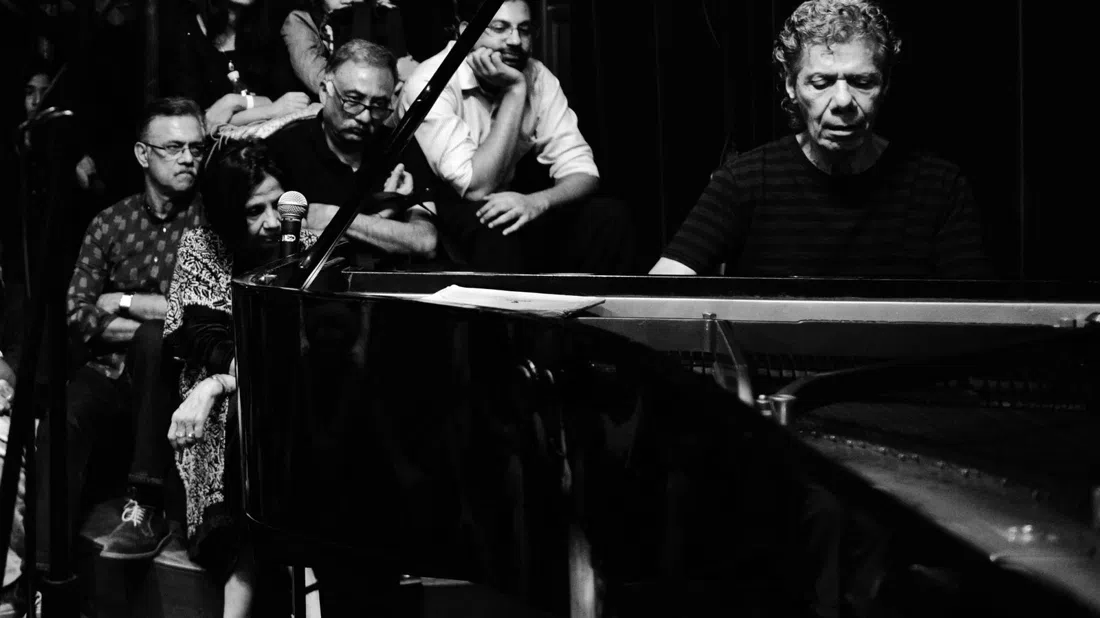
For a night the weather has ruined, The Piano Man Jazz Club (Safdarjung Enclave) is Delhi's serious live-jazz room, open 1pm to 1am daily with show slots at 1.30pm and 9pm. Reckon on ₹1,500-2,500 for two plus a cover charge on ticketed nights. The original room is small, so book ahead, and if you are more than four people, ask for the larger Eldeco Centre sibling in Saket instead of squeezing into Safdarjung. Check the listings before you commit; the programming varies more than the reputation suggests.
Oil, heat and the Ayurvedic case for the season
Monsoon is the traditional Ayurvedic season for oil therapies, which makes Amatrra Wellness (now at Le Méridien, central Delhi) more than the usual hotel-spa cliché. It is appointment-only through online booking, +91 11 2375 3048 or [email protected], with treatments from ₹4,000 up past ₹10,000. There are couple suites, and they run group wellness events if you ask for a custom package. One practical point that trips people up constantly: it has moved from its long-time home at The Ashok, so ignore older listings, older directions and any driver who insists he knows where it is.

A shape that actually works
Day one, central and old: Sunder Nursery at opening, the Site Museum next door when the first shower lands, then Triveni Terrace for chai in the afternoon and Old Delhi in the evening, with Chaina Ram for ghewar on the way to Karim's, or Haveli Dharampura if you booked. Day two, gardens and south: Amrit Udyan on your pre-booked slot (or Lodhi Garden at 6am if you did not get one), Agrasen ki Baoli mid-morning, the Crafts Museum and Café Lota for a long lunch, then Hauz Khas when the tank is full, with KNMA and The Piano Man as the wet-weather substitutes. Do not schedule the two outdoor blocks back to back. The rain will make that decision for you anyway.
Practicalities
The metro is the only reliable way to move in a Delhi monsoon; roads flood fast and cabs stop appearing exactly when you need one. Buy a smart card on arrival. For the last kilometre to places like Sunder Nursery, take an auto and accept you will get wet.
Cards work in the museums, restaurants and the club. They do not work at Chaina Ram, on the street, or with most auto drivers. Carry ₹2,000-3,000 in small notes.
Mondays close the Hauz Khas Complex, the Site Museum, the Crafts Museum, KNMA and Amrit Udyan, near enough half this list. If one of your 48 hours falls on a Monday, front-load it with Sunder Nursery, Lodhi Garden, Agrasen ki Baoli and food. Mornings are drier than afternoons more often than not; treat 6am to 10am as your outdoor window.
Monuments and gardens run ₹0-250 a head. A serious meal at Karim's or Café Lota is ₹600-1,800 for two. The two splurges are the haveli dinner and the spa. Two full days, mid-range, comes in around ₹4,000-6,000 per person before a hotel. For rooms, start with the Delhi hotel search, and for everything outside this season read the wider Delhi guide.
Bring repellent, a light waterproof rather than an umbrella, and shoes with grip that you do not mind writing off. Nobody in Delhi is impressed by dry shoes in August.