The boulevards of New Delhi were drawn for a procession that happened properly only once. Between 1912 and 1931 the British laid out a capital of sandstone, sightlines and hexagons at exactly the moment their hold on India was coming loose, and sixteen years after the last stone went down the Viceroy's household packed and left. What is left is a city centre built at imperial scale and used now for ordinary government work: wide, green, oddly quiet at midday, and far more open to visitors than it looks through a taxi window.
Reading the plan before you walk into it
First-time visitors get this part of Delhi wrong in two opposite directions. Some arrive expecting an abandoned quarter and find traffic police, school buses, gardeners and ministerial convoys. Others assume the whole thing is a sealed VIP zone and never try a door that is open six days a week for ₹50. Neither reading survives a morning on foot.
The logic is simple once you see it. When the British moved their capital out of Bengal in 1911, Edwin Lutyens and Herbert Baker set the Viceroy's house on the high ground of Raisina Hill and ran a ceremonial axis east from it to a war memorial arch. Around that arch, the princely states were required to build town palaces on hexagonal plots, a ring of loyalty rendered in stone at a polite distance below the Viceroy. Behind and south of all this came the bungalow zone: low white houses on plots large enough to swallow a European village, laid out so that nothing would ever crowd the sightlines.
That is also the honest limit of the visit. The bungalows are residences, allotted to ministers, judges, senior officials and MPs. You cannot go in. Looking over hedges at them is a thin experience and the security staff will, reasonably, get bored of you. The imperial city you can genuinely enter is about six buildings, four of which want a ticket booked in advance, and the day works best if you treat them as one connected argument rather than six separate stops.
The emptiness people photograph is partly design and partly season. Setbacks, roundabouts and hundred-metre frontages were drawn for cars and cavalry, not pavement life, and from May to early July the heat empties the pavements of anyone who has a choice. Come between October and March and the same streets have joggers, picnic families, peanut sellers and the smell of cut grass. Plan for roughly 25°C and strong sun even in December mornings that start at 8°C.
The house the empire vacated
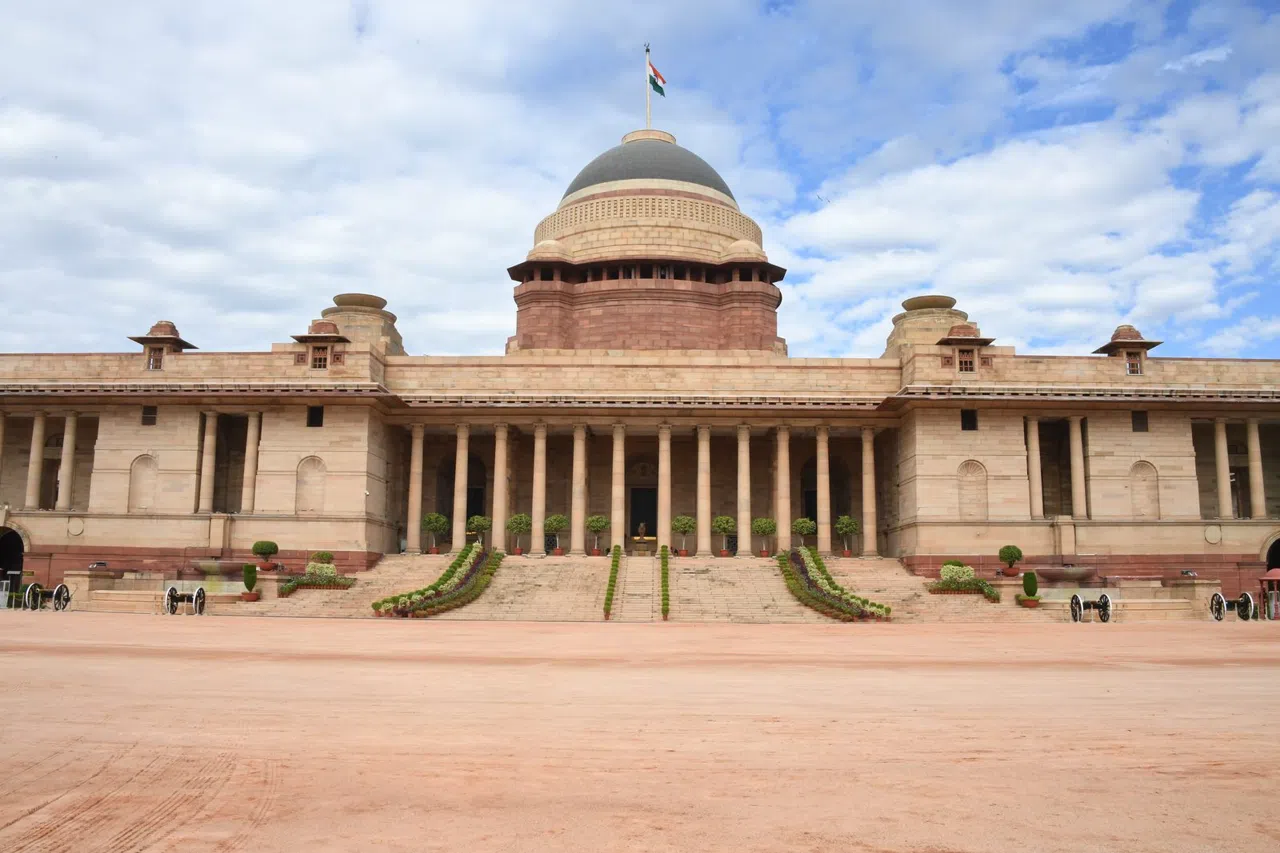
Rashtrapati Bhavan (Raisina Hill) is the single unmissable entry, and not only for its size. An empire commissioned this house for a Viceroy and handed it over sixteen years after completion: the most expensive statement of permanence anyone made in twentieth-century India, occupied by its intended tenant for less than a generation. It is now the President's residence, and the parts opened to the public are the museum complex beneath and beside it.
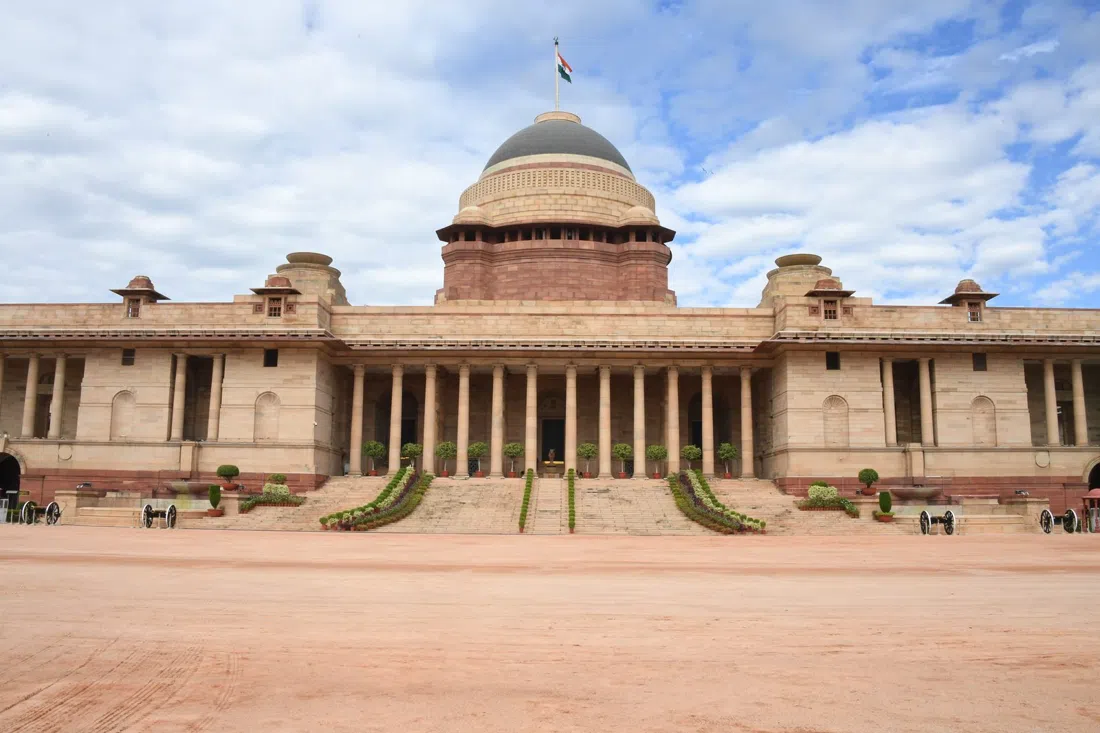
Book at visit.rashtrapatibhavan.gov.in. There are five slots a day, Tuesday to Sunday, running 09:30 to 16:00 with last entry at 16:00, and the price is ₹50 per visitor. Children under eight go free. Photo ID is mandatory for every single member of the booking and must match what you entered. This is the one rule that spoils people's mornings, usually because one person in a family brought a photocopy. Carry the original.
The Change of Guard is a separate thing worth building a Saturday around: 07:30 to 08:30 on the forecourt, same ₹50 registration, and in winter the light at that hour on the red and cream sandstone is the best you will get. The Amrit Udyan gardens, the formal planting behind the house, open only in the February and March window. If your trip falls then, take it. If not, do not spend the day hunting for a back-gate workaround that does not exist.
Groups are explicitly priced rather than merely tolerated. A party of 30 pays ₹1,200 in total, a 20% discount on individual tickets; above 30 it is ₹1,200 plus ₹50 for each extra head. School, college and tour groups register through the same visitor portal as everyone else, so there is no special channel to chase and no agent you need to pay to find one.
Two palaces the princely states were made to build
The National Gallery of Modern Art (Jaipur House, on the India Gate hexagon) occupies one of those compulsory palaces, and the reversal is hard to ignore: a building raised to display a ruler's deference to the empire now holds India's national collection of modern art, hung by Indian curators for Indian audiences. The butterfly plan means you walk curved galleries rather than a corridor, which rewards a slow second lap.

Entry is ₹20 for Indian nationals and ₹500 for foreign nationals. Opening hours are 11:00 to 18:30 Tuesday to Friday and 11:00 to 20:00 on Saturdays and Sundays, closed Mondays and national holidays, with a live exhibition programme through 2026 alongside the permanent hang. There is no door policy and no dress code; school and college groups come through constantly on weekday mornings. For couples, the weekend evening hours to 20:00 are the quietest, most atmospheric slot in this entire guide.
A short walk off the same hexagon, Bikaner House (Pandara Road) is the sharpest counter-example to the empty-bungalow cliché and the stop that most changes how people talk about this district afterwards. Another princely state's imperial-era town palace, it now runs a near-continuous programme of exhibitions, launches and receptions. Delhi Contemporary Art Week took the building over from 31 August to 5 September 2026, free to walk into, and the gaps between shows are measured in days. Exhibitions are usually free; the culture spaces generally run 10:00 to 18:00 Monday to Saturday, and the venue rooms are bookable if you are organising something.
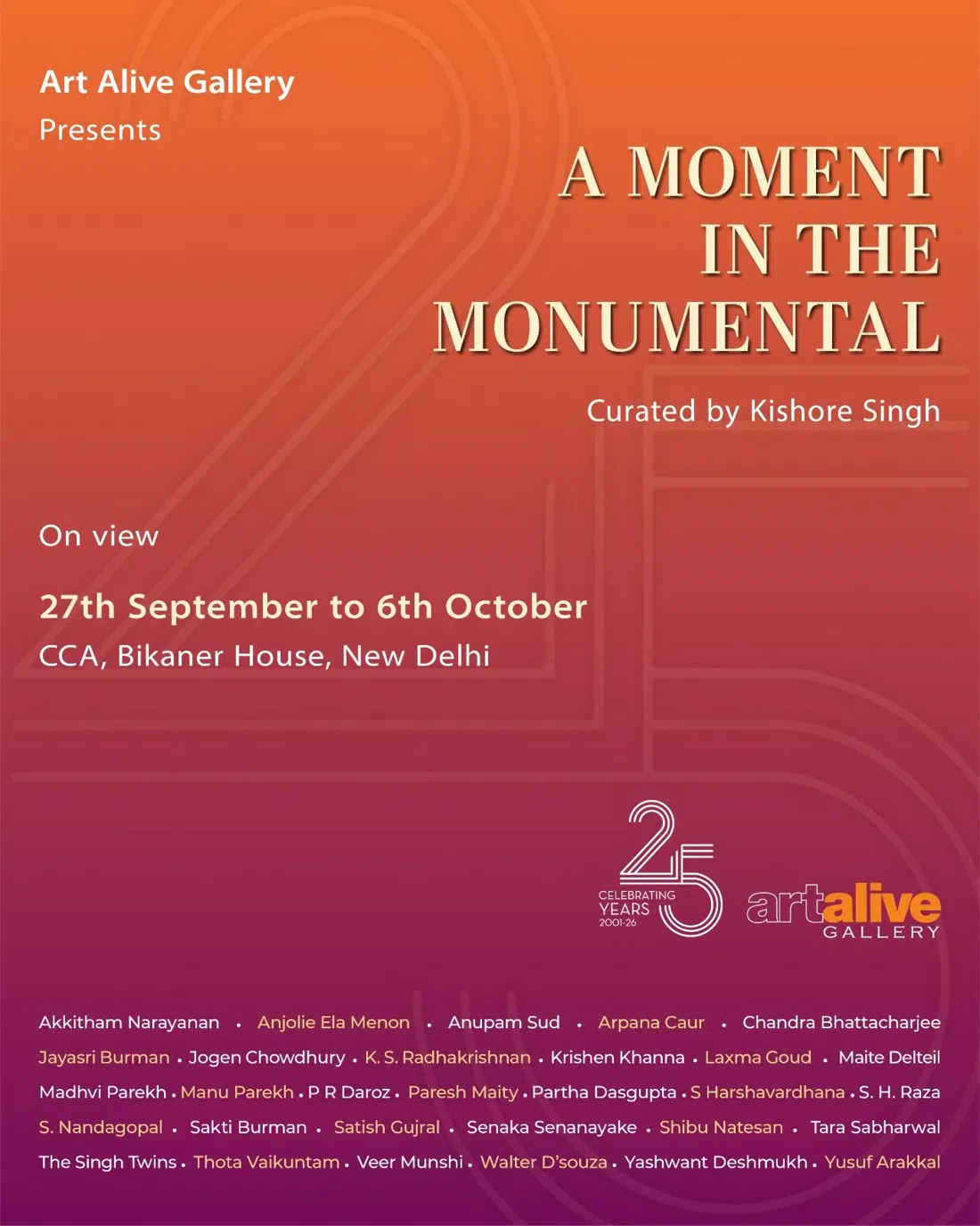
It also solves lunch, which matters because this part of Delhi is short of casual food. Three restaurants (L'Opéra, Diggin and Haldiram's) sit in the compound, take walk-in groups and stay open to somewhere between 22:00 and 23:30, well after the galleries shut. Budget ₹500 to ₹1,500 a head. A courtyard table here at dusk, with an opening going on behind you, is the clearest sign that Lutyens' Delhi was never left behind; it was repurposed by people who had other plans for it.
The residence that changed tenants twice
Pradhan Mantri Sangrahalaya at Teen Murti Bhavan (Teen Murti Marg, west of Raisina Hill) carries the whole handover in its address book. It was built as Flagstaff House, the residence of the British Commander-in-Chief; after independence it became Jawaharlal Nehru's home; since 2022 it has been the museum of India's prime ministers. Three regimes, one roof, no demolition.
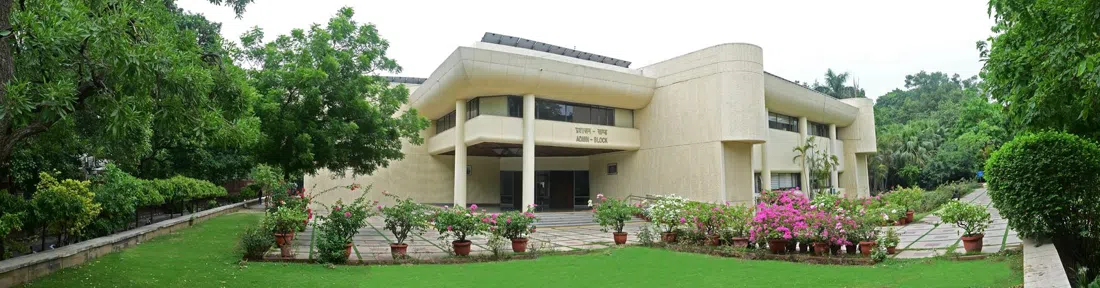
Adult entry is ₹50, with optional add-on experiences at ₹50 each, and slots are booked online at pmsangrahalaya.gov.in. It opens 10:00 to 18:00, pulling back to 17:00 from November to February, and closes Mondays and public holidays. Light-and-sound shows run at 19:30 and 20:15 in Hindi and English. Confirm which language sits at which time when you book, because people regularly turn up for the wrong one.
Be realistic about the crowd. This building takes the heaviest school and tour-group traffic of anything here; a weekday mid-morning can be a wall of noise and queued headsets. Late afternoon is calmer, and the grounds reward twenty minutes of walking before you go in: old trees, long lawns, and the Commander-in-Chief's sense of his own importance still legible in the driveway.
The capital before the capital
Most visitors never learn that the Viceroy governed India from a different building entirely while Raisina Hill was a building site. The Old Viceregal Lodge (University of Delhi North Campus, Civil Lines) was that building, and it is free, unpoliced at the perimeter, and almost entirely unvisited by tourists.
Set expectations carefully. The grounds and lawns are publicly accessible around the clock; the interior is now the Vice-Chancellor's office and needs permission, so most people see the exterior and the gardens only. Guided group visits are available on request, which means writing ahead, weeks ahead, politely, with your dates and numbers, rather than turning up hopeful. The reward if you get in is a detail no plaque on Raisina Hill will give you: the old Legislative Assembly chamber, where laws for a subcontinent were passed, is now the University's Academic Council room, where the agenda is examination regulations.
Go in term time and take the campus with it. The surrounding streets are bookstalls, photocopy shops, student canteens and cheap chai, a useful corrective after a day of ceremonial axes. Nearest metro is Vishwavidyalaya on the Yellow line, then a short walk or rickshaw.
A drink and a night inside the period
The Imperial New Delhi (Janpath, at the southern edge of Connaught Place) is the only place on this list where you can sleep inside the era rather than tour it. Built in 1931 and opened in 1936 to a Blomfield design from Lutyens' circle, it holds the largest collection of colonial and post-colonial art in Delhi, enough that walking the corridors for the pictures is a legitimate reason to come without booking a room.
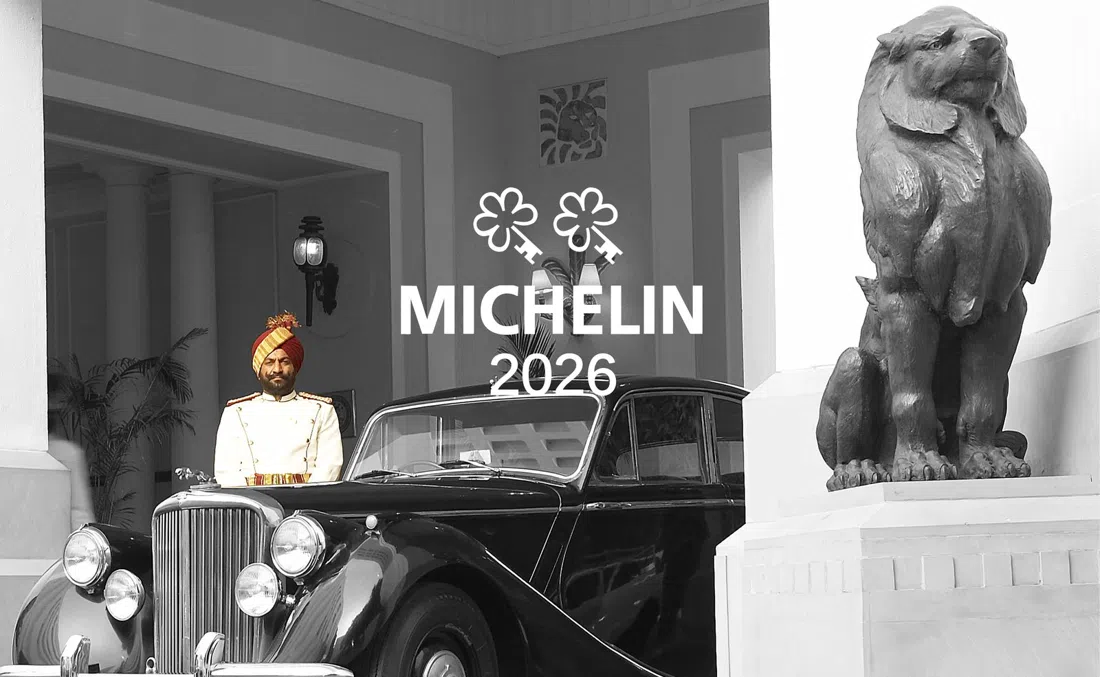
Rooms run from roughly ₹18,000 to ₹30,000 and up per night, which puts it in the splurge bracket. If that is not your budget for a week, a Delhi hotel search will put you in Connaught Place or around Khan Market within walking or one-stop distance of everything above, and you can still come here for an hour. A drink in 1911 Bar or The Hardinge Bar costs around ₹1,200 to ₹2,000. Lunch at The Spice Route is ₹3,000-plus a head. The Atrium is the easiest entry point for tea.
Non-residents are genuinely welcome, which is not true of every hotel bar in this city, but smart-casual is expected in the evening: collared shirt or equivalent, closed shoes, no beachwear. The bars, The Atrium and the restaurants all take groups, and private dining is arranged by the hotel rather than negotiated at the door.
Who each of these actually suits
Couples get the most out of the National Gallery of Modern Art on a weekend evening, a Bikaner House opening, and a late drink at The Imperial. Groups are properly served at Rashtrapati Bhavan, where the pricing is published rather than improvised, at the prime ministers' museum, which was built for coach parties, and at the Bikaner House restaurants. Solo travellers should take the Viceregal Lodge and the North Campus streets around it; nobody will look at you twice, and it is the one stop with no booking friction.
Families: under-eights are free at Rashtrapati Bhavan, the light-and-sound shows at 19:30 and 20:15 are late for small children, and the galleries expect indoor-quiet. On mobility, distances between these buildings are long and shade is intermittent, so if steps or ramps are a concern, ask the specific building when you book rather than trusting a general promise. Expect bag screening at every government site, and carry the ID you booked with.
Practical notes for the walk
Metro is the right spine. Central Secretariat (Yellow and Violet lines) and Udyog Bhawan (Yellow) put you closest to Raisina Hill; Khan Market (Violet) is the practical station for the India Gate hexagon, about a 15-minute walk; Janpath (Violet) is a few minutes from The Imperial; Vishwavidyalaya (Yellow) serves North Campus. Trains run from around 06:00 to 23:00, tickets are QR or card, and the airport express is a separate line. For gaps between stops, use a ride-hailing app rather than negotiating with autorickshaws, since metered fares are theoretical here.
Cash: UPI is accepted almost everywhere, cards work at the hotel and restaurants, and museum tickets are bought online by card. Still carry ₹500 to ₹1,000 in small notes for autos, water, and campus canteens.
Timing: October to March, without argument. February and March are the only months for the Amrit Udyan gardens. Avoid Mondays, when the gallery, the prime ministers' museum and Rashtrapati Bhavan all close. Keep a Saturday free if you want the 07:30 Change of Guard, which pairs neatly with the gallery's 11:00 opening.
Budget, per person, excluding your hotel: tickets ₹50 to ₹600 depending on nationality, metro ₹60 to ₹120, lunch ₹500 to ₹1,500. A sensible full day lands around ₹1,200 to ₹2,000; add a Spice Route lunch and two drinks at The Imperial and you are past ₹6,000. For where this district sits in the rest of the city, and what to do with the evenings, the wider Delhi guide covers the ground this piece deliberately does not.