Nothing about the approach prepares you for it. You push up a flight of worn red sandstone steps through a crush of cap-sellers and shoe-minders, hand over your footwear at the top, and then the archway lets go of you and you are standing on an open floor the size of a parade ground, sandstone and marble, quiet in a way that nothing else in Old Delhi is quiet. Jama Masjid (Masjid-i Jahan Numa), the great Mughal congregational mosque at the top of Old Delhi, gives away almost nothing from the street. The experience is the moment of walking in, and then the hour you spend not quite wanting to leave.
What you see once you are inside
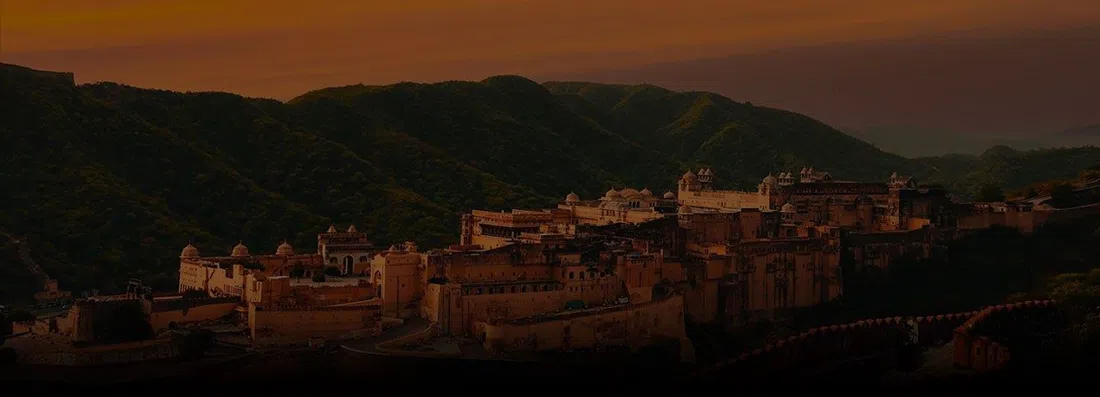
This was Shah Jahan's last large commission in the city, finished in the 1650s and deliberately raised on a rock outcrop so it would sit above the rooftops around it. The elevation is still the point. The courtyard is a plain open rectangle with marble walkways crossing it to a central ablution tank, and on the western side the prayer hall stands behind a deep arched recess, three bulbous domes in striped white and black marble above it, a minaret at each shoulder. Arcades run round the other three sides with the gates cut into them, each one reached by its own broad flight of steps, each flight still a marketplace.
What you actually do here is walk and look. There is no route, no audio guide, no numbered circuit and no museum. You stay on the marble in bare feet or socks, you keep out of the prayer hall during namaz, and you spend most of your time either watching the courtyard fill and empty or leaning on a parapet looking out over the tin roofs and water tanks of the old city. Pigeons go up in sheets when a child runs. By late afternoon families are sitting in the shade of the arcades with their shoes beside them. It is a working mosque with a visitor overlay rather than a monument that happens to contain a mosque, and the difference becomes obvious at prayer time, when the courtyard is cleared of visitors for roughly twenty to thirty minutes and everyone who is not praying waits outside on the steps.
Entry to the mosque itself is free. There is no ticket, no timed slot and nothing to reserve, and a group of any size walks straight in.
The 130 steps up the south minaret
The minaret climb is the part worth building your morning around. A hundred and thirty steps spiral up the southern tower in a shaft barely wide enough for one person, which means nobody can pass you and you cannot pass anyone, so the queue on the stairs moves at the speed of its slowest member. At the top you get the panorama that every photograph of Old Delhi is taken from: the courtyard below, the lanes crawling off towards Chandni Chowk, and the long red wall of the fort across the main road. It costs about 100 rupees at the official rate, although some gates will quote 500 rupees to foreign visitors and simply wait to see whether you pay it.
It is not a climb for everyone. The stair is dark, uneven and close, with no handrail worth the name, and anyone with bad knees, vertigo or any dislike of enclosed spaces should skip it without guilt and spend the time in the courtyard instead. Access for women travelling without a male companion has been restricted at the minaret at various times, so ask at the gate before you pay rather than discovering it halfway up.
What it costs at the gate and what you will be told it costs
The mosque is free, but your camera is not. Expect a charge of around 300 rupees per phone or camera at the gate, with reports ranging between 200 and 300 depending on who is collecting. Shoe-minders at the top of the steps and the men lending robes to visitors in shorts or sleeveless tops expect somewhere between 10 and 50 rupees. None of that is a scandal; all of it needs small notes, and arriving with a 2,000-rupee note and nothing else is how people end up overpaying.
The persistent irritation is the layer of self-appointed guides working the steps, who will quote inflated minaret fees, invented camera fees and occasionally an entry fee that does not exist. The defence is boring and effective. Pay at the gate itself, not to a man who intercepts you on the stairs, ask what the posted rate is, and keep walking while you decline. If you would rather not carry your shoes, hand them over and pay the small fee; if you would rather keep them, put them in a bag and carry them, which plenty of visitors do.
Turning up versus walking in with a guide
Because there is nothing to pre-book, the only real decision is whether you want someone to interpret the place for you. Doing it alone costs you nothing but the camera charge and leaves you to work out the prayer timings, the gate fees and the lanes yourself. A guided half-day through Old Delhi is the alternative, and it exists in volume: the guided tours covering this mosque carry about 13,500 traveller reviews between them, the top-rated one holds 4.9 out of 5 from 5,417 reviews, and they run seven days a week. One caveat catches guided groups out as readily as independent visitors. Guides are not permitted to lecture during the five prayer times, and the courtyard empties of visitors anyway, so a tour that arrives at the wrong half-hour stands on the steps like everybody else.
What to wear and the rules that actually get enforced
Shoulders and knees covered, for men and women both. Women should cover their heads; scarves and robes are available at the gate for the small fee above. Shoes come off at the top of the entrance steps, socks are fine and in May and June socks are close to essential, because the sandstone in the open courtyard gets hot enough to make people hop between the marble strips. Photograph the architecture freely and ask before photographing anyone at prayer. Friday around midday is the congregational prayer and the single worst slot of the week for a casual visit; during Ramadan the evenings around the mosque are extraordinary and completely unsuited to anyone who wants space.
The bazaar that starts at the bottom of the steps
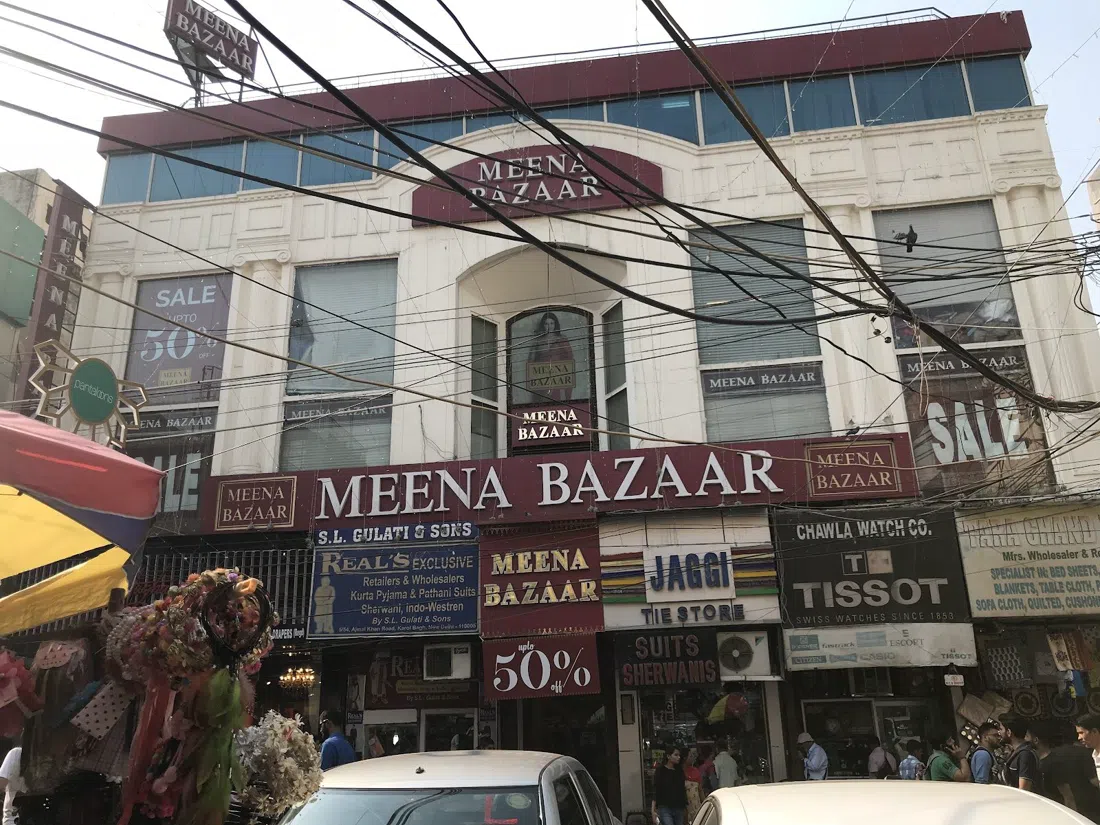
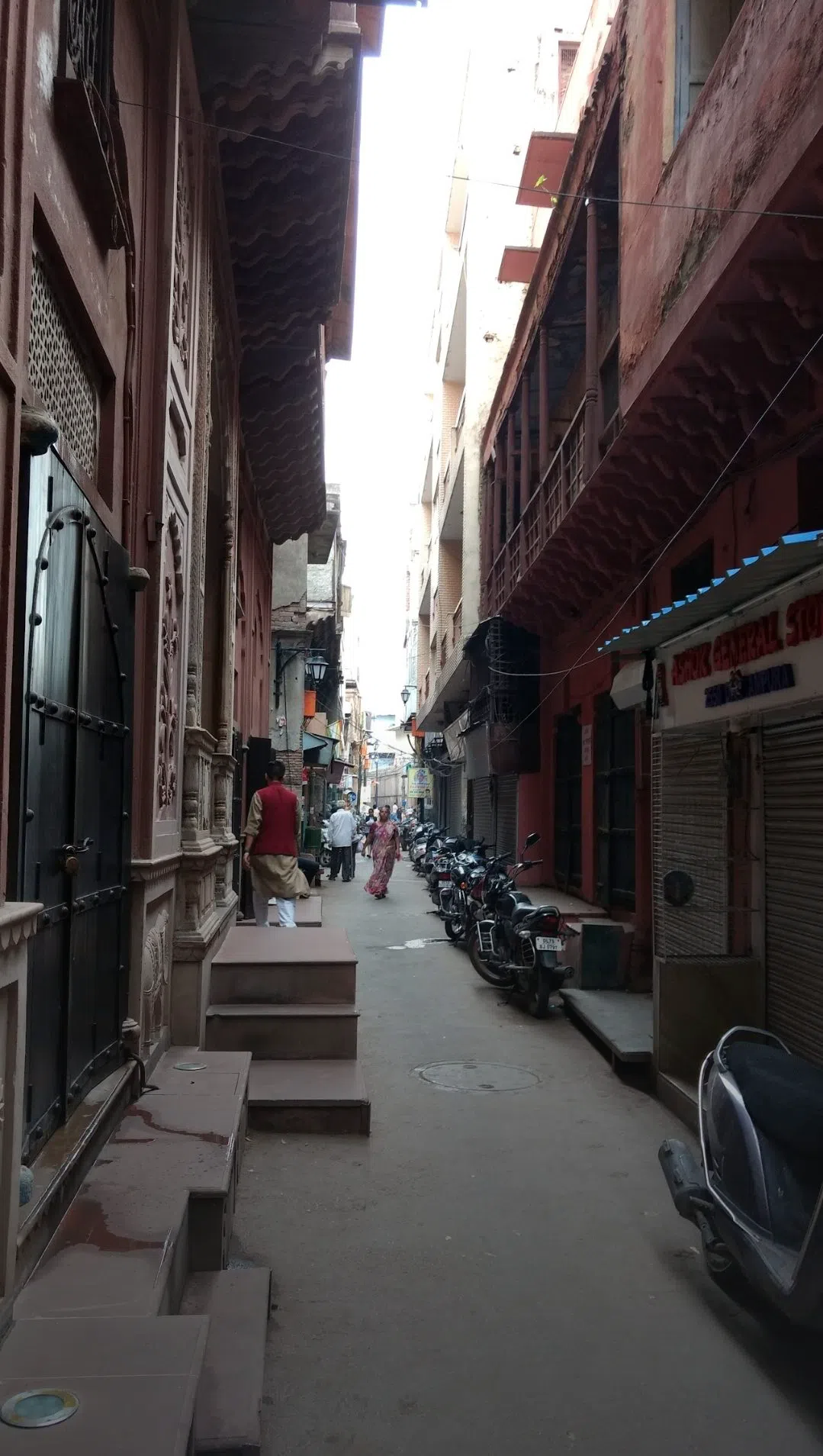
Meena Bazaar (the mosque forecourt, Old Delhi) is the mosque's actual front doorstep and the cheapest shopping near it: prayer caps, attar, scarves and trinkets between 50 and 500 rupees, free to walk and perfectly navigable for a group of six to ten as long as you accept single file in the narrow lanes. It is also pickpocket country on Fridays and at Eid, so carry nothing in a back pocket. The municipal authority ran a court-ordered encroachment and demolition drive through the lanes around the mosque in 2026, so individual stalls here appear and vanish and no stall-by-stall recommendation survives contact with reality.
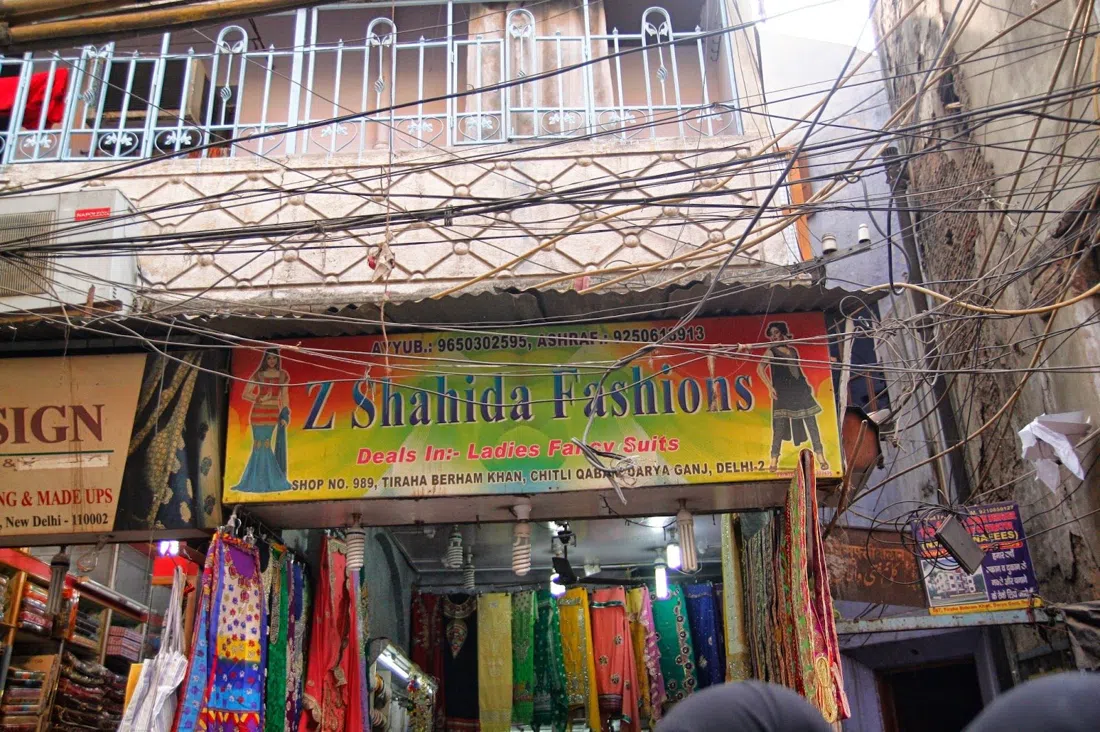
Dariba Kalan (running off Chandni Chowk towards the mosque) is the one shopping street in the area still selling something made locally: silver sold by weight, jhumkas from 300 to 3,000 rupees, attar from 200. It links the two ends of the walk naturally. The shops hold two or three people at a time, so a group should browse in pairs; most open 11am to 7pm and close on Sundays. At the mouth of the lane, Old Famous Jalebi Wala (Dariba Kalan corner) has been frying since 1884 and is a pure takeaway counter with no seating, which makes it the ideal two-minute full stop on a mosque-and-bazaar walk: one person orders by weight, 60 to 120 rupees for a 100g portion. These are the thick ghee-fried jalebis, far heavier than the thin ones sold elsewhere.
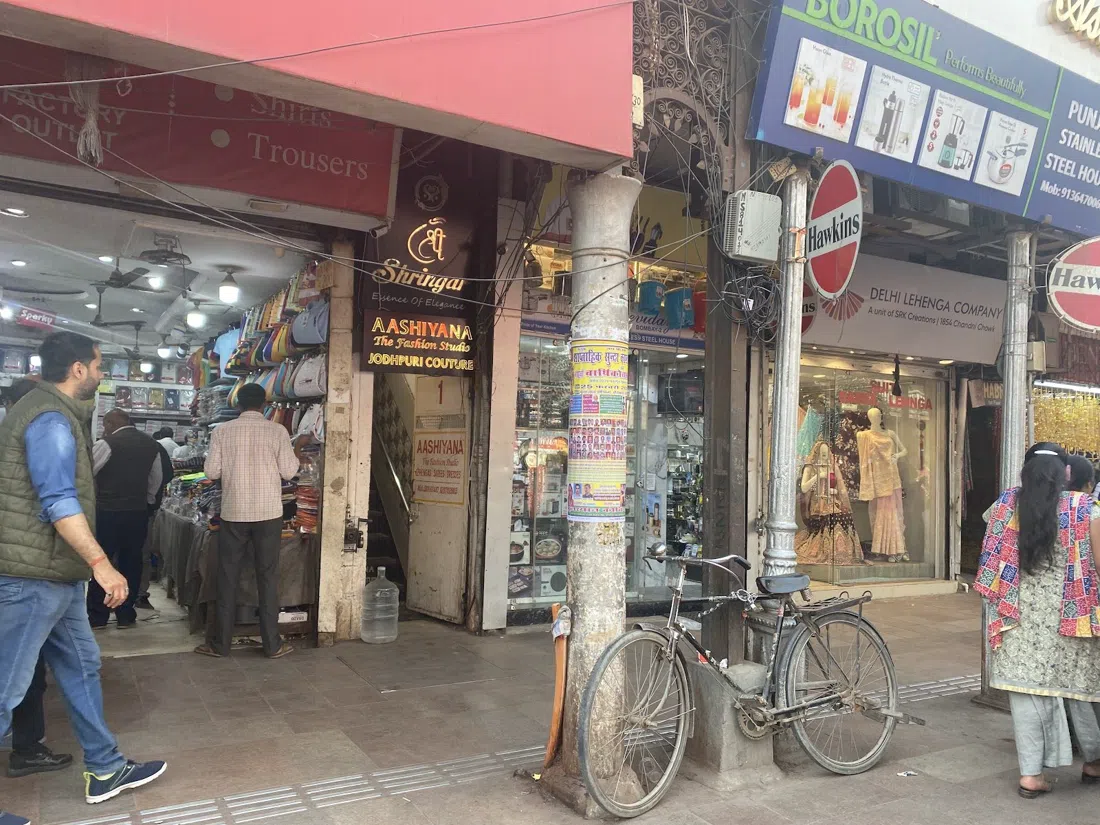
Khari Baoli Spice Market (the western end of Chandni Chowk) is Asia's largest wholesale spice market and a working trade floor rather than an attraction. Small groups of four to eight only, best between 10am and 1pm, closed on Sundays, and the chilli dust will make you cough and your eyes stream. The Gadodia Market rooftop above it is the best free viewpoint in the old city and also the most honestly risky thing in this article: the stairs are unlit, uneven and unofficial, and you go up at your own risk or not at all.
Eating within five minutes of the gate
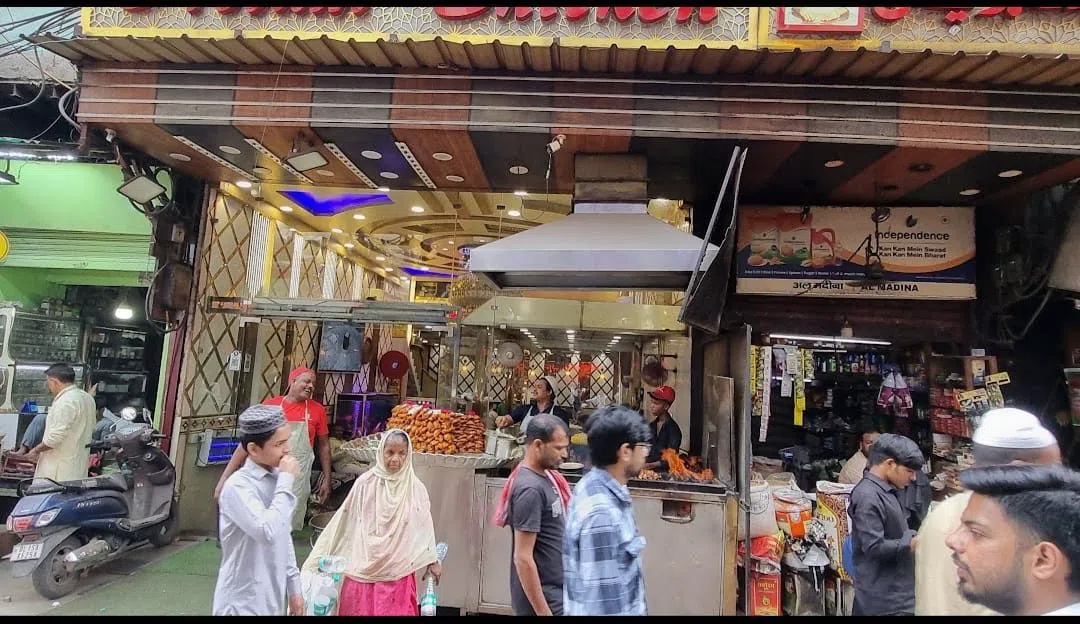
Karim's (Gali Kababian, off Matia Mahal) is the obvious pairing with the mosque, founded in 1913 and two minutes from Gate 1, open from around 9am to past midnight. It takes no reservations and spreads several small dining rooms across an alley, so a party of eight or more gets split across tables unless you go off-peak between 3pm and 6pm. It is a canteen with famous kebabs and korma, 400 to 700 rupees a head with mains from 250 to 600, no view of anything, and vegetarians will find almost nothing on the menu.

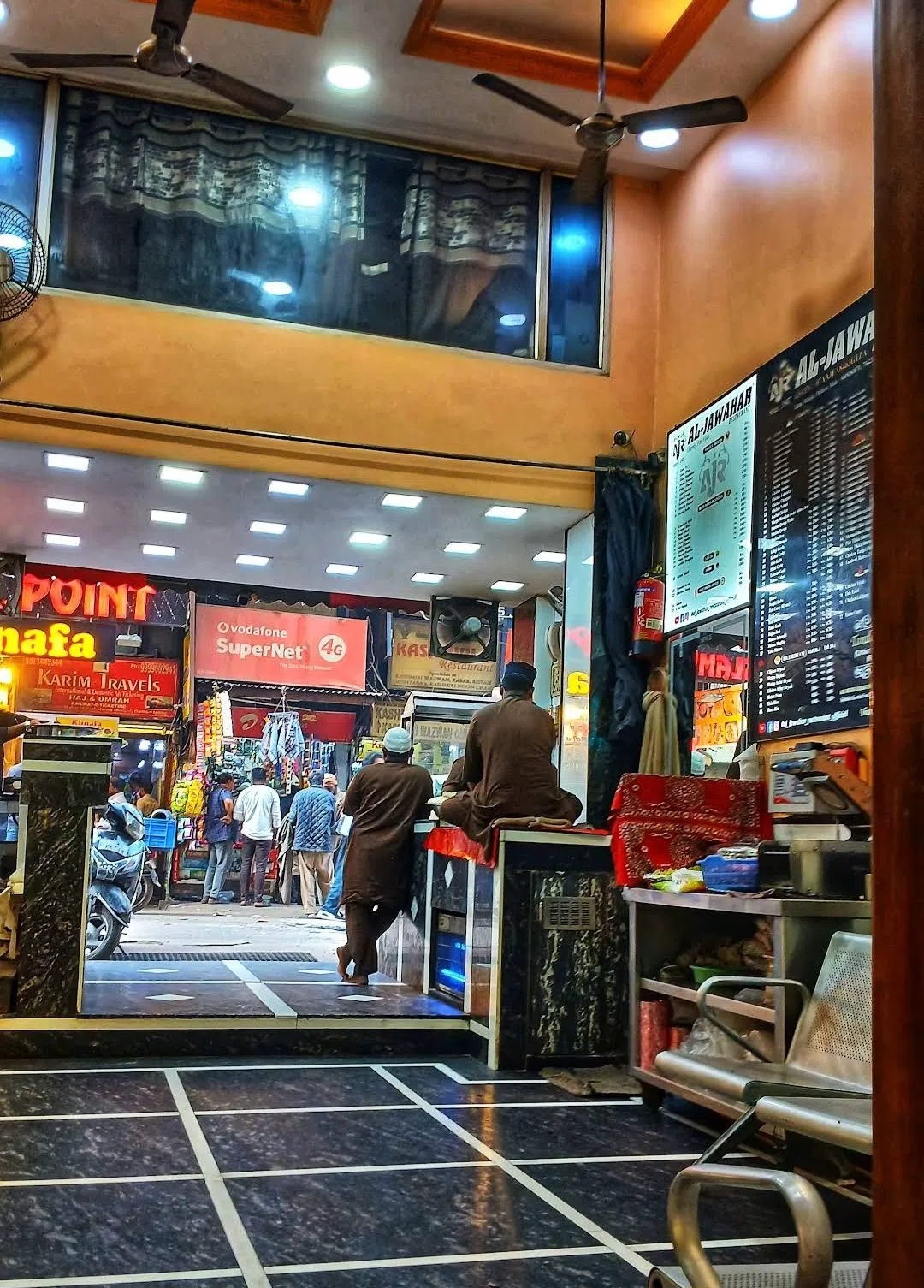
Al Jawahar (Matia Mahal, twenty metres away) is the calmer, cleaner alternative and the most group-friendly of the old guard: two air-conditioned floors, proper table service, staff used to seating parties of ten to twelve, 350 to 600 rupees a head. Phone ahead for anything large. It opens 10am to 11pm, which makes it the obvious lunch straight after the minaret climb.
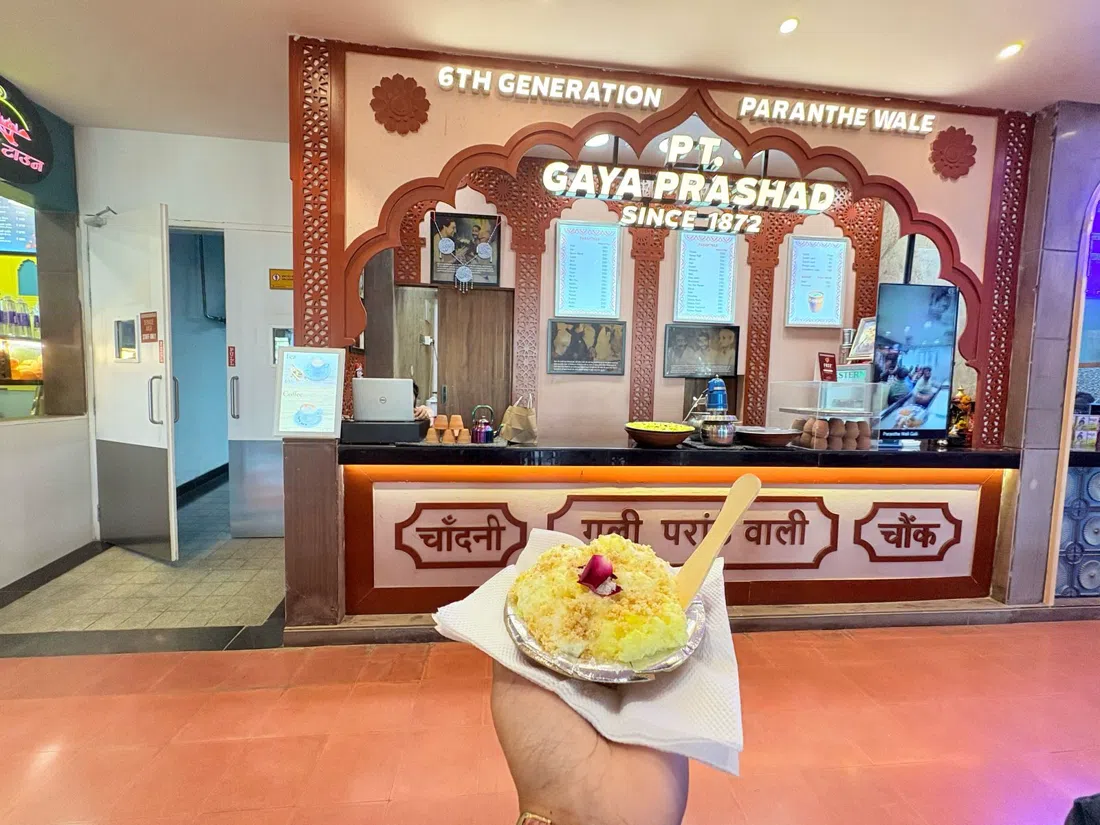
Aslam Chicken (Matia Mahal) is the dish Old Delhi is famous for after dark: half a butter chicken for around 300 rupees, 250 to 450 a head. It only opens at about 4pm and runs to 12:30am, so it is useless for a daytime mosque visit. The upstairs rooms are cramped, it works for four to six people and gets awkward above that, and it is messy, buttery stand-and-eat food rather than a meal. For the vegetarian counterweight, Pt. Gaya Prasad Shiv Charan Paranthe Wale (Paranthe Wali Gali, Chandni Chowk) has been frying since 1872: parathas at 60 to 120 rupees including sabzi and five pickles, 100 to 250 a head, open 9am to 11pm. There are perhaps thirty seats across two rooms, so a group of eight will be split or will queue. Go before 12.30pm. The appeal is the ritual rather than refined cooking.
Where to look at the mosque from
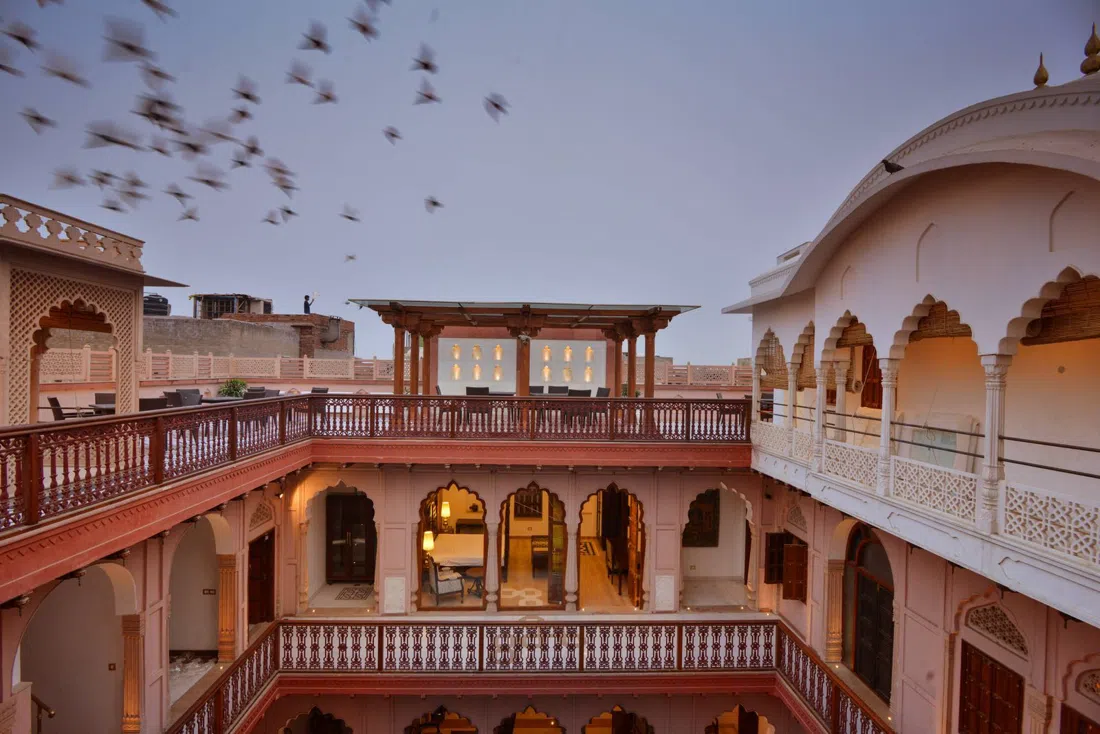
If you want the photograph of the mosque rather than the photograph from it, Haveli Dharampura (Gali Guliyan, Old Delhi) is the only legitimate option at sunset, a restored heritage haveli whose rooftop restaurant looks straight at the domes. Book the rooftop specifically, not the courtyard, or you get beautiful architecture and none of the view. Dinner runs 2,500 to 4,000 rupees a head, high tea from about 1,200, rooms from 15,000. Always reserve: walk-ins are regularly turned away when a wedding or a Kathak evening has taken the place over, and groups can book the courtyard or the roof outright.
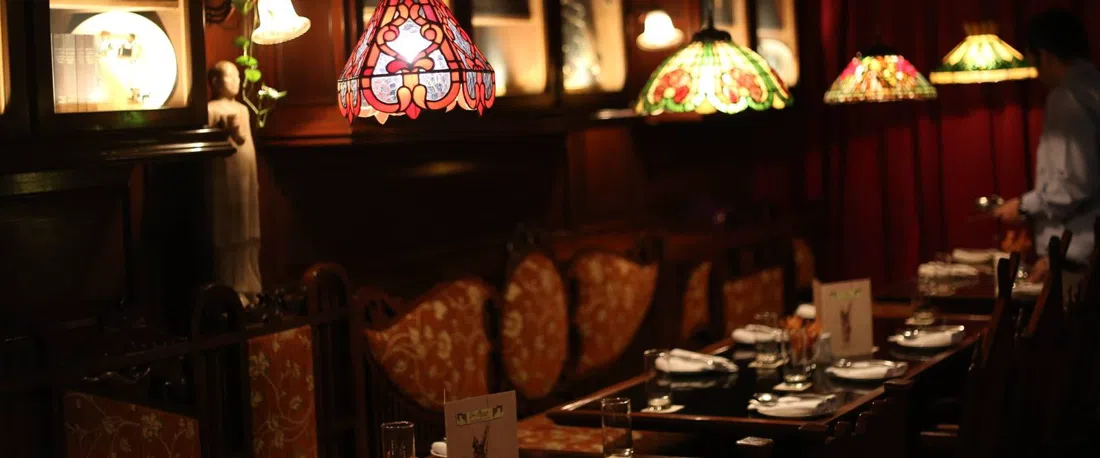
For anyone who finds Matia Mahal too intense, Chor Bizarre (Hotel Broadway, Asaf Ali Road) is the sensible fallback: air-conditioned, takes reservations, handles tour parties well, and its Kashmiri Wazwan tasting menu is built for a table of six to twelve. Reckon on 1,200 to 2,000 rupees a head, ten minutes by rickshaw from the mosque. It is back at its original address after a hiatus; the hotel rooms above are still being refurbished, the restaurant is not.
Three faiths in a ten-minute walk
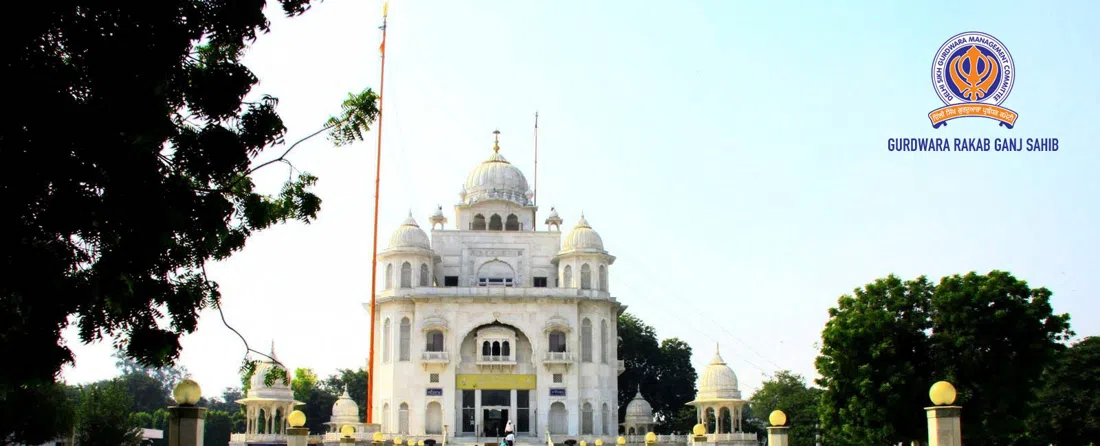
The mosque makes far more sense as one stop in a row of them. Gurudwara Sis Ganj Sahib (Chandni Chowk) actively welcomes groups of any size, stands on the site where Guru Tegh Bahadur was executed in 1675, and runs a free community kitchen around the clock where volunteers will seat a tour party without being asked twice. Heads must be covered (scarves are lent free), shoes and socks come off, and no tobacco goes through the door. It is the easiest place in India to eat alongside local people for nothing, and it is where you explain Old Delhi rather than photograph it.
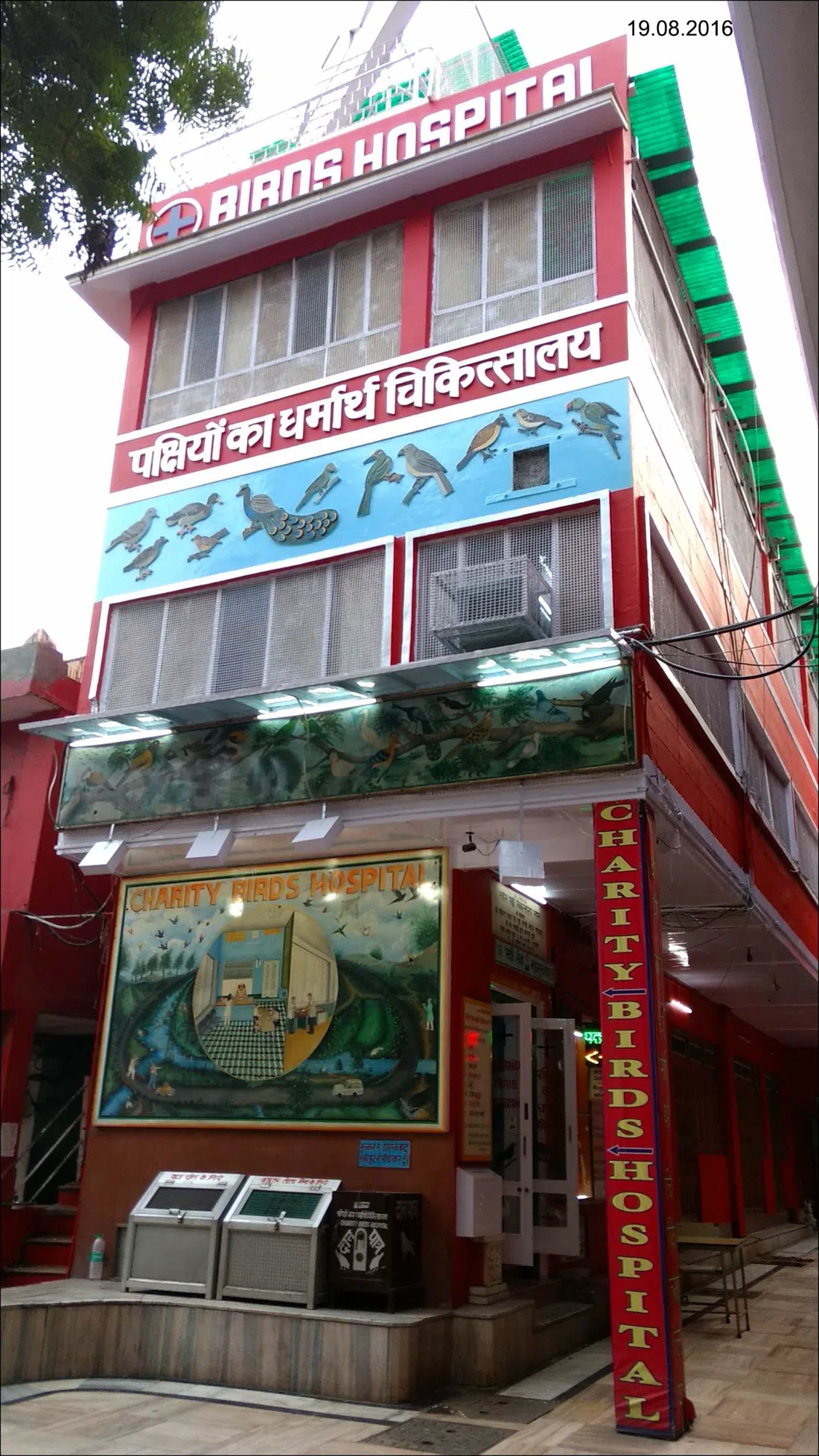
Shri Digambar Jain Lal Mandir & Jain Birds Hospital (facing the fort, Chandni Chowk) is Delhi's oldest Jain temple, from 1656, and a genuine oddity: a free charitable bird hospital treating around sixty birds a day, open 8am to 8pm, with recovered birds released on Saturdays. Entry is free, but leather belts, wallets and bags must be left outside, which is the usual stumbling block for groups. The temple shuts in the middle of the day while the hospital stays open.
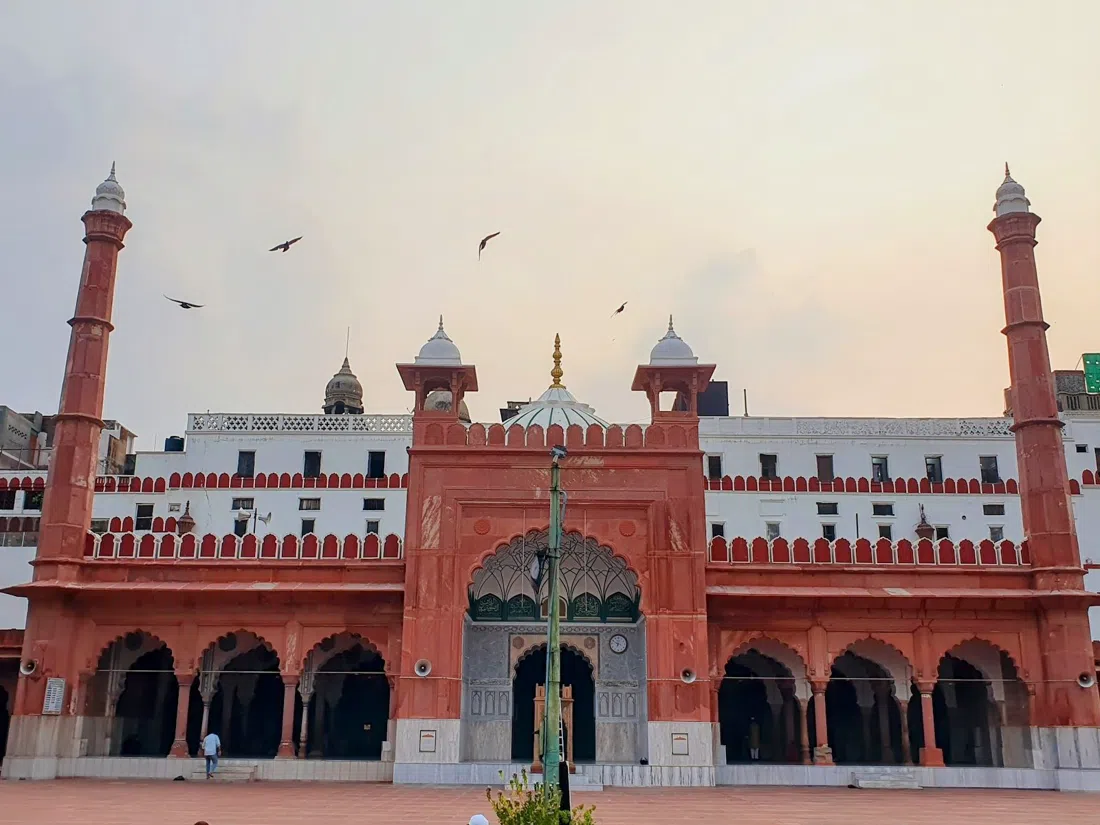
Fatehpuri Masjid (western end of Chandni Chowk) is the useful contrast to the main event: built in 1650 by one of Shah Jahan's wives, barely visited, no touts, no ticket and no camera charge, open roughly 5am to 9.30pm. It absorbs a group easily, women should cover their heads, and visitors should stay out of the prayer hall during namaz. It sits exactly where the spice market begins, so it costs nothing to add. A little west, Ghalib ki Haveli (Ballimaran) is the only calm air in the lanes: the last home of Urdu's most quoted poet, free and unticketed, 11am to 6pm, closed Mondays and gazetted holidays. The rooms are small, so parties of more than about ten should go in waves. It is modest and almost always empty, so set expectations rather than skipping it.
Pairing it with the fort
Red Fort (Netaji Subhash Marg) and the mosque were one piece of city planning, built by the same emperor and facing each other across the road, which makes them the obvious half-day. Two things catch people out. The fort is closed on Mondays, which is the most commonly wasted morning in Old Delhi, and the ticket counter queue at Lahori Gate is routinely the longest part of the visit, so buy online in advance. Entry is 35 rupees for Indian visitors and 600 for foreign visitors, 40 and 650 for the composite ticket including the Archaeological Museum, and the evening sound-and-light show is 80 or around 250.

Is it worth it
Yes, with one condition: get the timing right and the mosque is among the few sights in the country that still feels like a place rather than a queue. It suits anyone who likes architecture at human scale, anyone who wants a free sight in a city of expensive ones, and photographers, who get both the minaret panorama and the rooftop angle. It suits couples and small groups best; large parties function fine in the courtyard and badly in the eating lanes. It does not suit anyone who needs an interpreted, air-conditioned, step-free experience, anyone who finds confident touts genuinely distressing, or anyone unwilling to take their shoes off and cover up. For the rest of the old city around it, our Delhi guide has the wider picture.
Best time to go
Mornings win. Arrive between 7am and midday, or after 1.30pm, and you miss the prayer-time clearances; aim for the first hour after 7am and you get soft light, a near-empty courtyard and a minaret stair without a queue. Late afternoon is the second-best slot for atmosphere, when local families settle in the arcades, and sunset belongs on a rooftop looking at the mosque rather than in it. Avoid Friday around midday entirely, and treat Eid as an event rather than a visit. By season, October to March is the comfortable window; May and June make the open sandstone punishing by 10am, which is another argument for the early start; the monsoon months of July to September are hot and wet but leave the courtyard blessedly empty between showers. If you only have one Monday in the city, spend it here: the mosque is open and the fort and the poet's house are not.
Practical notes
The nearest station is Jama Masjid on the Violet Line, five to ten minutes on foot through the lanes; Chandni Chowk on the Yellow Line is the better arrival for the spice market, jewellery lane and paratha gali end; Lal Qila on the Violet Line puts you at the fort. Cycle rickshaws cover the last stretch for 50 to 100 rupees and are faster than a car in those lanes, which a car cannot usefully enter at all.
Carry cash in small notes. The camera charge, the shoe-minder, the robe, the bazaar and every eating house in Matia Mahal are cash transactions; cards are reliable only at the heritage haveli, the Kashmiri restaurant and the fort's online ticket. A realistic solo budget for the half-day is around 300 rupees for the camera, 100 for the minaret, 50 for shoes and a robe, 400 to 700 for lunch and 100 for jalebis, which comes to 1,000 to 1,300 rupees plus the fort ticket. Allow 60 to 90 minutes for the mosque and the climb, and four to five hours for the full loop with the fort, the gurdwara and lunch. If you want to be at the gate at 7am without a cross-city commute, the old city and the stations around it are the obvious base, and a Delhi hotel search will show what is within rickshaw distance. Two closed-day rules to hang on to: Monday takes out the fort and the poet's house, Sunday takes out the spice market and the jewellery lane.