Het Delhi-nummer
Walking Kashmere Gate, Delhi's 1857 quarter
The scarred gate, two old burial grounds, Skinner's church and the Partition Museum, plus where to eat, drink and sleep around them.
Door Bram VerhoevenA Dutchman reading Delhi one neighbourhood at a time

The north side of Kashmiri Gate (Lothian Road) carries the pockmarks of cannon fire from the assault of 14 September 1857. It is the only gate of Shahjahanabad that still shows that damage, and it sits on a railed traffic island, a lawn beside it and traffic running past on both sides. The monument is open and free. There is no gate across it and no ticket desk.

Reading 1857 on Lothian Road
Stand on the north side to read the blast scars. You are looking at Robert Smith's 1835 remodel of Shah Jahan's north gate, a twin-arched double gateway in grey Delhi quartzite and brick, the masonry pitted where the shot landed. Walking groups stop here as they please, and nobody asks you for anything at the kerb. The island gave the neighbourhood its name, and it is the best reason to come.
A little further along the same road stand the Magazine Gateways and Telegraph Memorial (Lothian Road). Two arched gateways are all that is left of the arsenal the British garrison detonated in May 1857 instead of surrendering it, and beside them sits a small stone plinth and plaque of 1901 to 1902. That memorial is to the telegraph operators whose message out of Delhi is credited with saving the Punjab for the Raj. Neither monument is enclosed, so you read them from a narrow island with buses and auto-rickshaws passing on both sides. The traffic does not let up.
Plan je reis naar Delhi
Actuele prijzen van onze boekingspartners.
Gratis annuleren bij veel kamers. We kunnen een commissie ontvangen als je boekt.
Nicholson Cemetery off Club Road
Nicholson Cemetery (Club Road) is two minutes from metro Gate 4 and free to enter in daylight. Brigadier General John Nicholson, who died of wounds from the Kashmiri Gate assault, lies under a railed grave slab inside a walled green burial ground, among leaning sandstone crosses and tapering obelisks under big old trees, with a red-brick boundary wall around the lot. This is the most legible 1857 site in Delhi and the standard meeting point for walking groups working the uprising trail. It remains an active cemetery, so keep voices down.
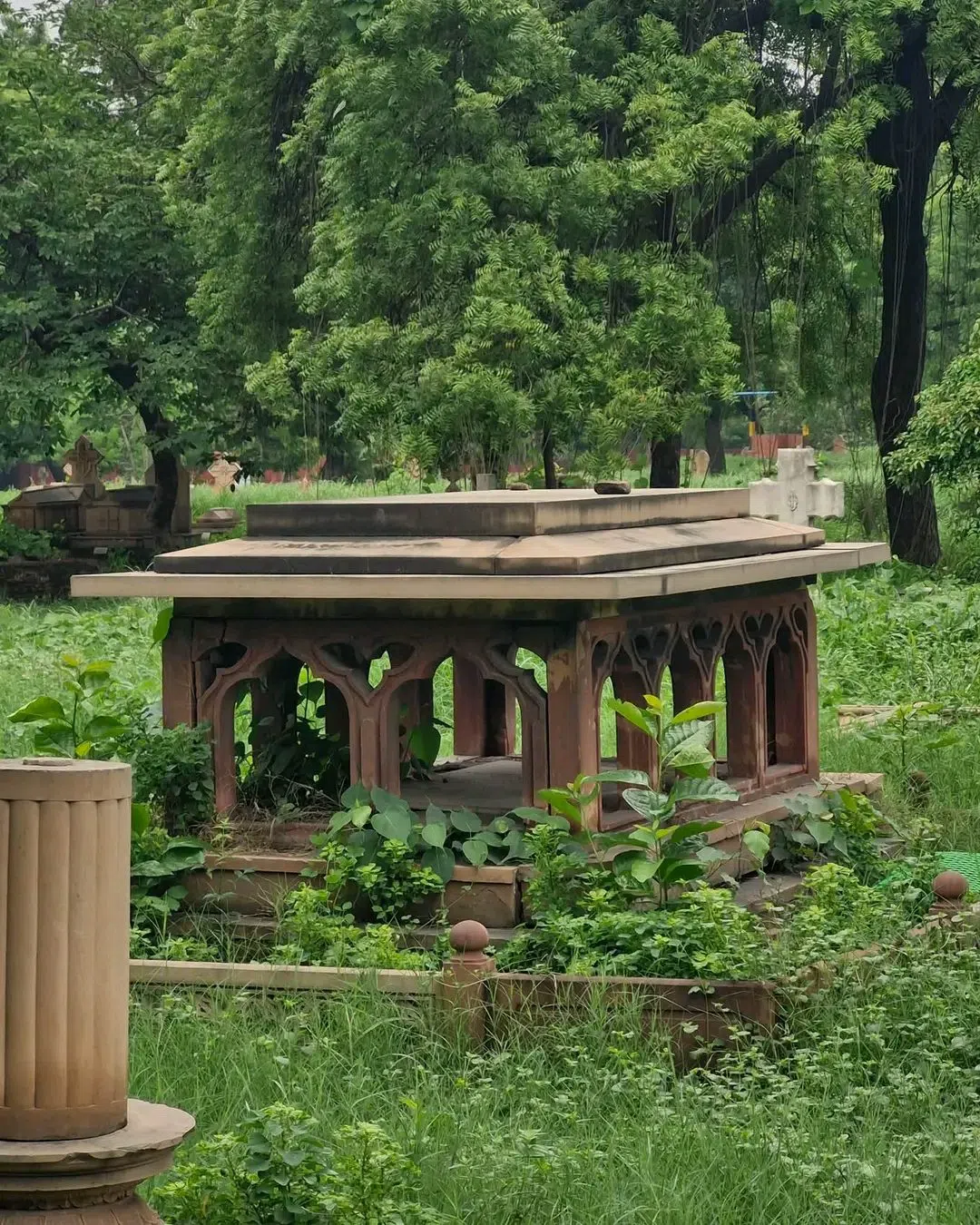
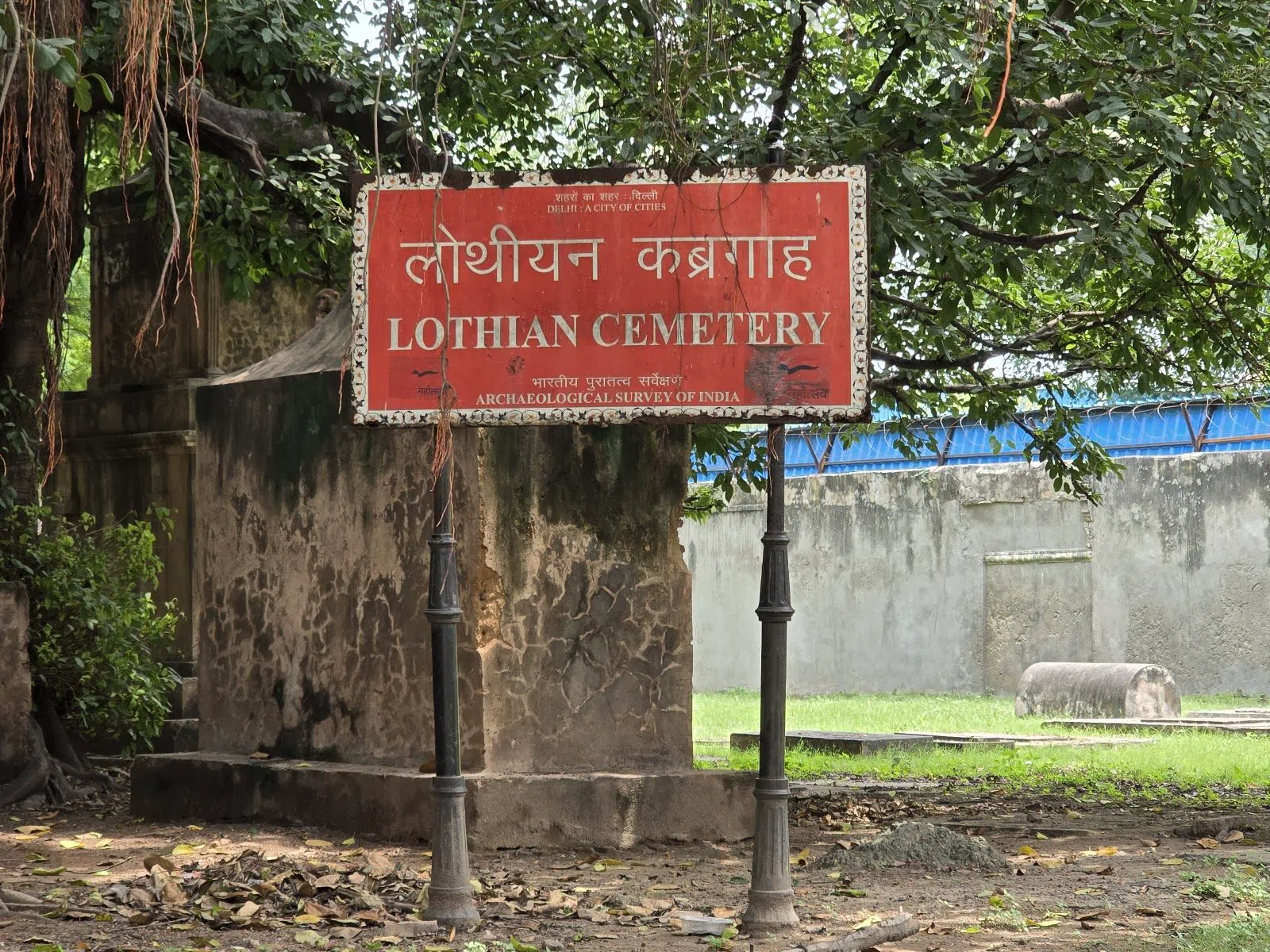
Lothian Cemetery behind the GPO
Lothian Cemetery sits behind the Kashmere Gate GPO and opens 10 a.m. to 6 p.m., with no fee. Delhi's oldest Christian burial ground, in use from 1808 to 1867, it was restored from dereliction in 2017, and what the restoration uncovered is a field of squat brick tombs capped with domes and pyramids, plaster headstones with their lettering effaced, and dry scrub between the graves. Locally it is known for the headless sentinel grave legend, which is why guides save it for last. Ghost-walk operators bring people in after dark.
St James' Church and the Skinner memorials
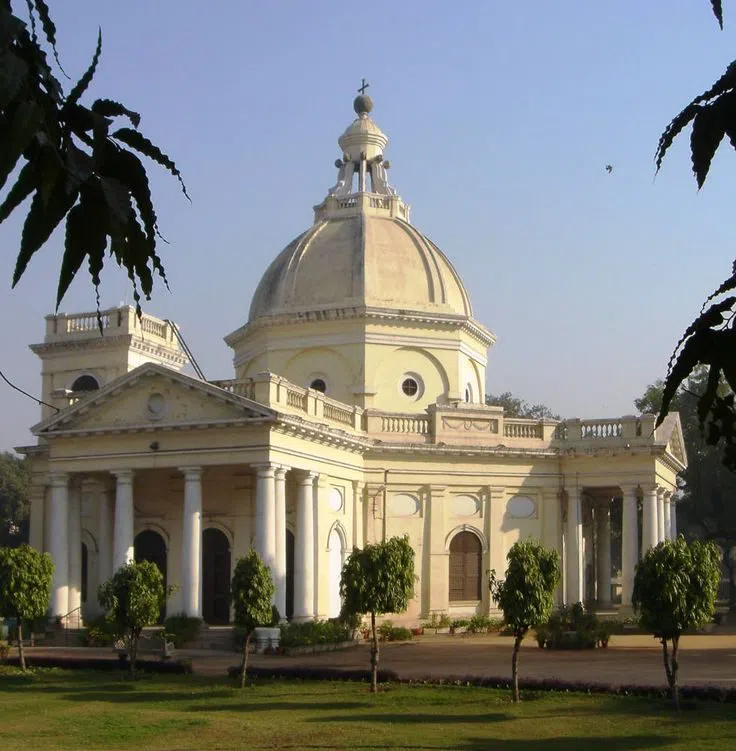
St James' Church (Skinner's Church) is Delhi's oldest church, built in 1836 by James Skinner, an Anglo-Indian cavalryman, on a vow he made on a battlefield. The cream stuccoed building takes a Greek-cross plan under a shallow Florentine dome topped with a copper ball and cross. Crucifixion stained glass fills the arched windows, and Skinner family marble memorials line the walls inside. A wide lawn and old trees surround it, and entry is free.
It is a working parish church, and visitors are welcome outside services. Sunday service is at 8.30 a.m. from Easter to September and 9 a.m. from October to Easter. The church closes 1 p.m. to 2.30 p.m. for lunch, which is the hour most first-time visitors wander up. If you find the doors shut, ask the caretaker.
Dara Shikoh's library, now the Partition Museum
The Dara Shikoh Library and Partition Museum (Ambedkar University Delhi) is the one indoor, properly curated stop in the area, and the only landmark here with air conditioning. The 1637 Mughal pavilion built for Shah Jahan's scholar son later served as the British Residency and then as Delhi College, and a white colonnaded colonial verandah now wraps it in deep arcaded shade. Inside are migrants' suitcases and trunks, handwritten testimony panels, and a hung tree of hope made from visitors' notes.
It opens 10 a.m. to 5 p.m. Tuesday to Sunday and closes on Monday. Slots are pre-booked online, so sort yours out before you walk over. Entry is ₹20 for Indian visitors and ₹200 for foreign visitors, and free-entry pre-booked slots have also run.
Qudsia Bagh behind the bus terminal
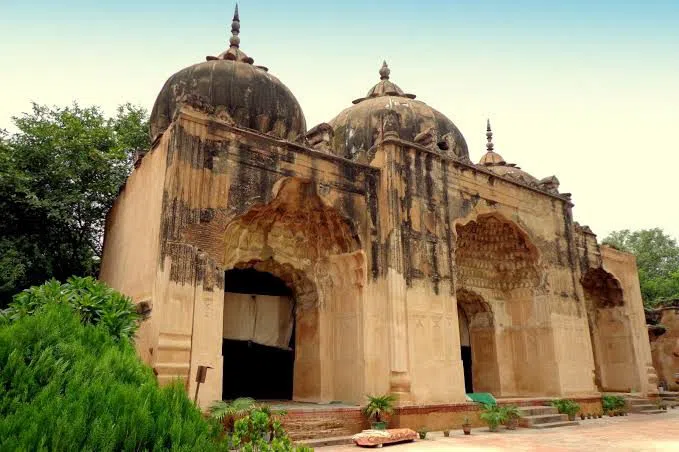
Qudsia Bagh (Sham Nath Marg) was laid out in 1748 as a pleasure garden for Qudsia Begum, a dancer who became queen. Most of it was destroyed in 1857. What survives, ASI-restored, is a towering red and grey stone western gateway standing alone on the road, with the small onion-domed Qudsia mosque beside it and carved sandstone pavilion fragments scattered around; lawns and sports pitches run behind the ISBT. The park is free and open in daylight hours, and it is an odd, quiet thing to find marooned behind a bus terminal. The city has made periodic attempts to rename it, so you may see another name on a sign.
Vasudev Ghat and the Yamuna aarti
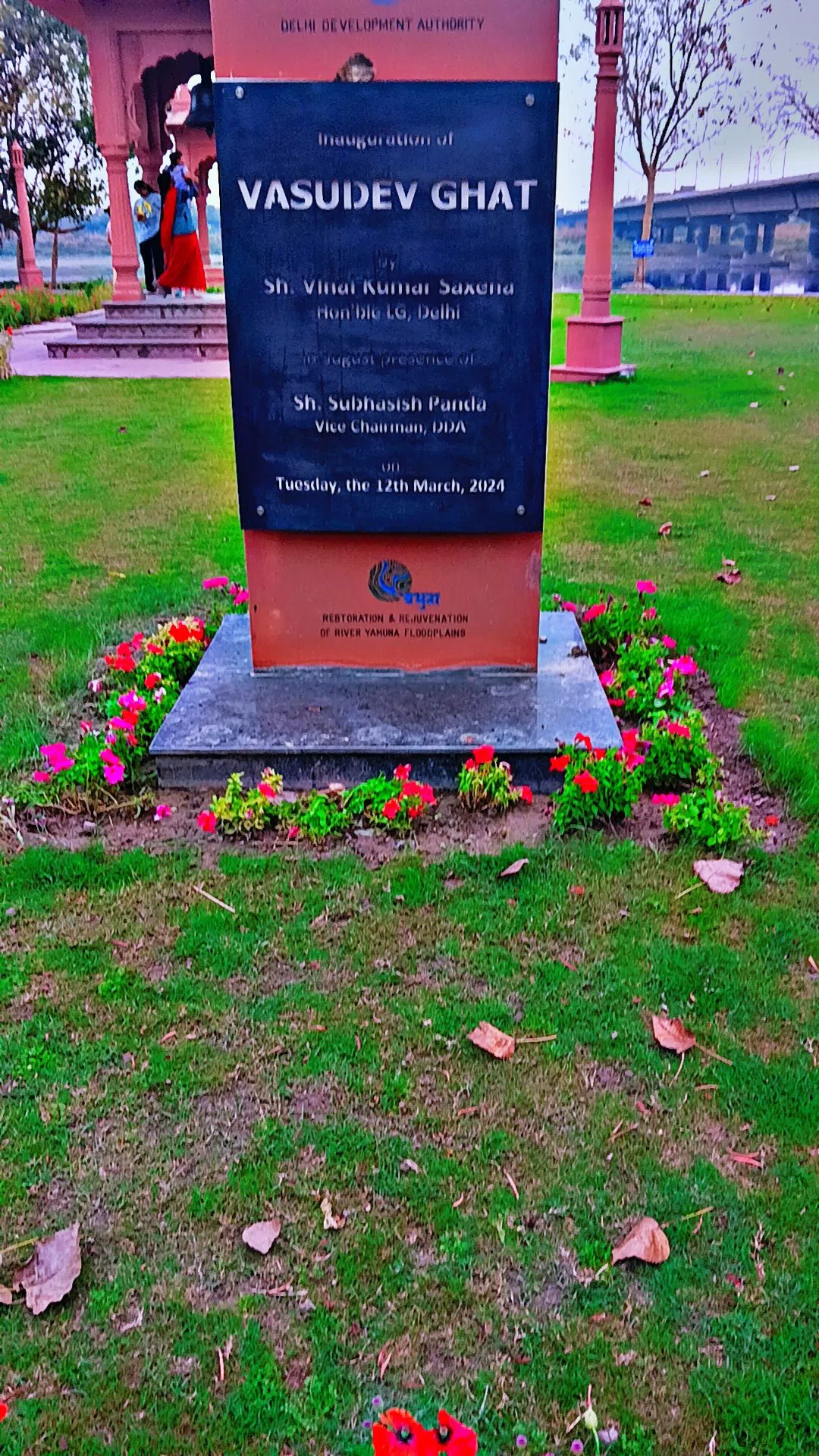
Vasudev Ghat is the redeveloped riverfront directly in front of the Kashmiri Gate bus stand, reached from metro exits 5 or 6. Newly built tiered stone steps drop to the Yamuna between planted terraces, fountains and lamp standards, with the river wide and brown below. Rows of brass lamps are lit at dusk, and the aarti runs at 6 p.m. on Tuesday and Sunday, when the steps fill. Come in winter for the migratory birds that mass on this stretch. The riverfront is free and open.
Nili Chhatri Mandir above the river
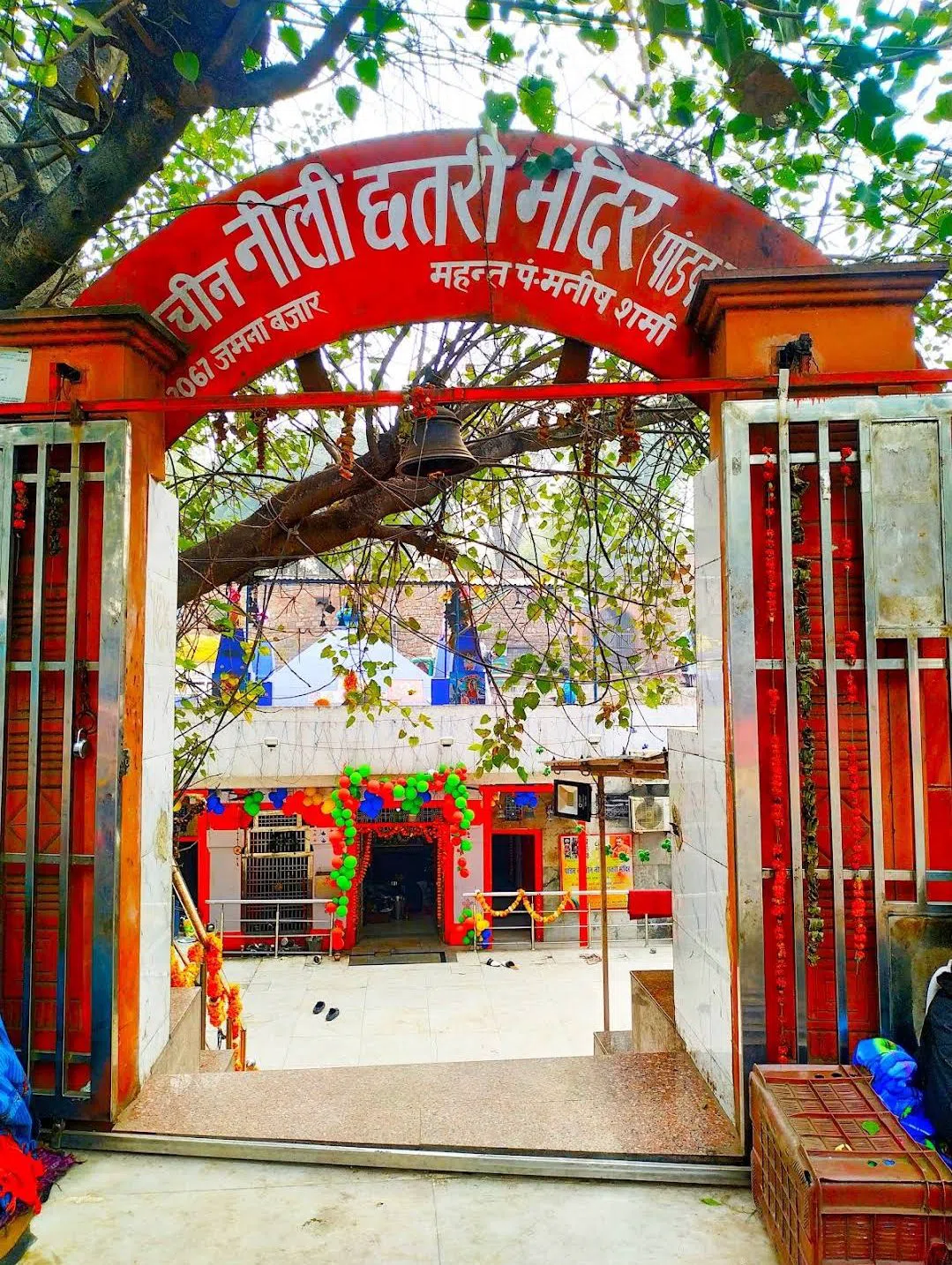
Nili Chhatri Mandir is a Shiva shrine named for the blue-tiled canopy over it, standing above the Yamuna bazaar riverbank near Salimgarh's Bahadur Shahi gate. Bells and marigold garlands hang at the shrine, and stepped access runs down to the water. Legend ties the site to Yudhishthira's sacrifice and to Humayun's lost pavilion. The temple is active and free; go in daylight and remove your shoes at the entrance. The adjoining Nigambodh Ghat is a working cremation ground. Do not photograph it.
Walking the area with a guide
Delhi Heritage Walks runs a 1.5km, two-hour 1857 trail through Kashmiri Gate and the streets around it, taking in the two cemeteries, the gate, St James', Dara Shikoh's library and the magazine ruins. This ground is scattered and unsignposted, and a guide earns far more here than in Chandni Chowk. Guides hold 1857 photographs up against the scarred walls, which is the clearest way anyone has found to make the morning make sense. Public walks run to a schedule, with exclusive private departures on request, and you book the date online. The fee is ₹₹ per person, with private group rates on request.
Eating between the gate and Chandni Chowk
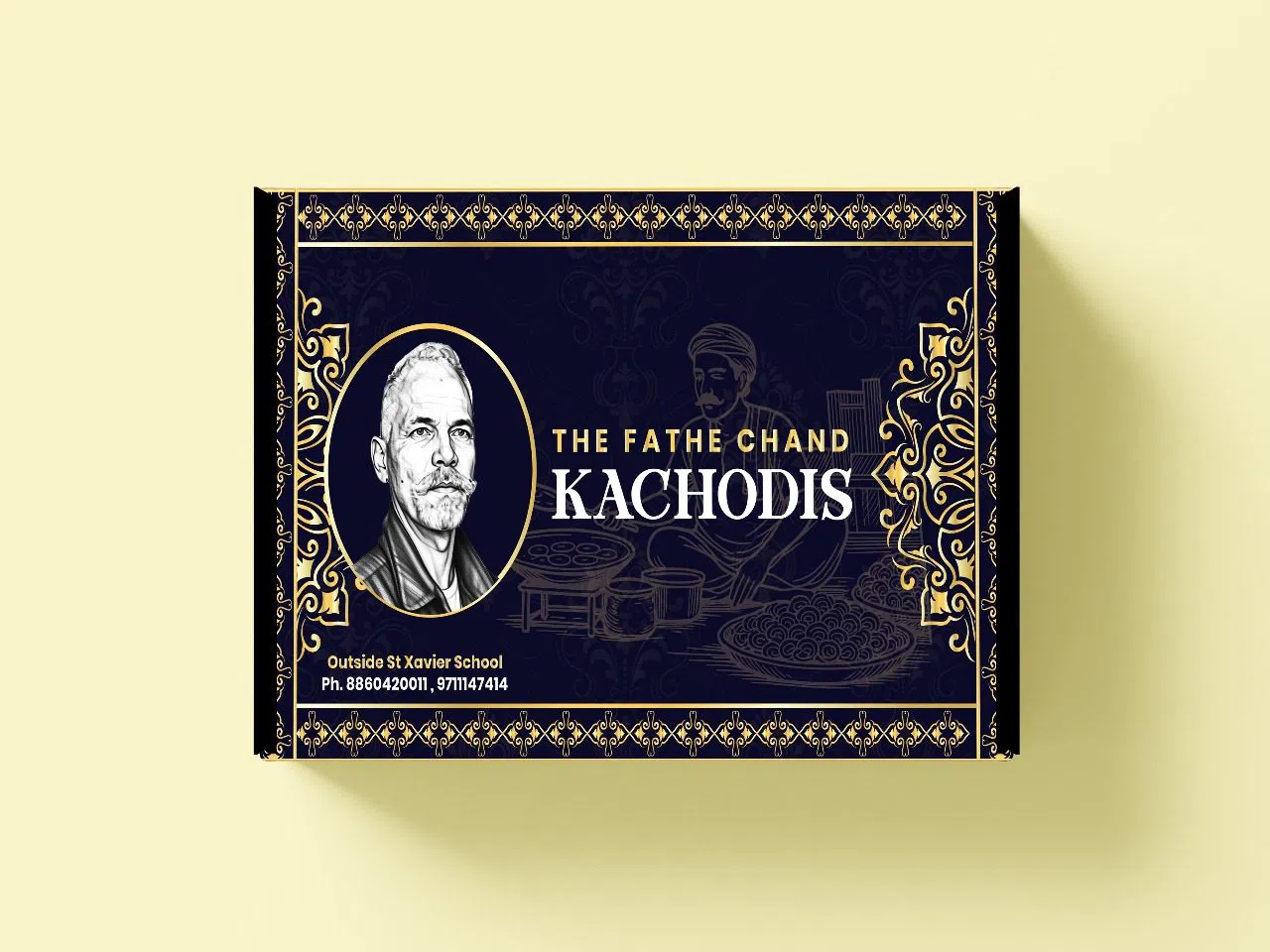
Fateh Ki Kachori (Raj Niwas Marg) has held the same tiny pavement shopfront for five decades, opposite the school gate. Flat khasta kachoris are stacked beside a black karahi and ladled over with chana, tamarind chutney and masala into a bowl. It opens 10.30 a.m. to 4.30 p.m. Treat it as a mid-morning stop and expect a queue. The counter is standing room, with space for a few people at a time and none for a coachload. Under ₹100 for two.
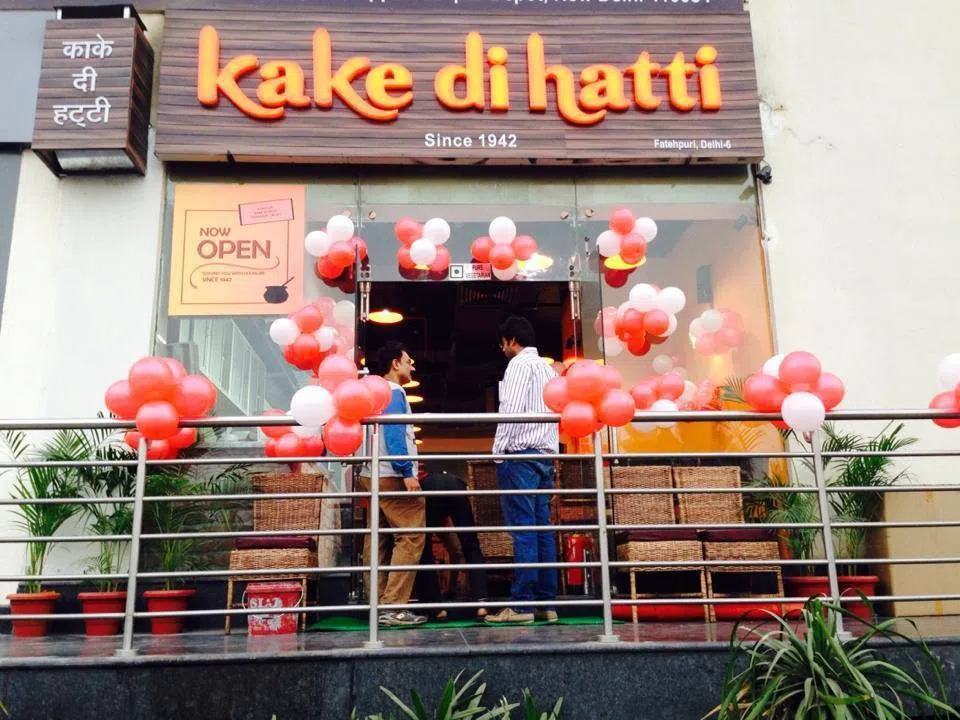
Kake Di Hatti (Church Mission Road) has been running since 1942 and is known for the biggest naan in Delhi, a tandoori naan the size of a bicycle wheel overhanging the plate, with steel bowls of dal and paneer alongside. The shopfront is cramped and stacked over several floors, by Fatehpuri Masjid, 1.5km south down Church Mission Road from the gate. Hours are noon to midnight. No reservations are taken and family groups pack it out. Go off-peak if there are more than six of you. ₹500 for two.
Daryaganj (Sham Nath Marg, Civil Lines) takes the ground floor of the colonial Exchange Building, 1.5km north of the gate, done out in 1940s Delhi styling with monochrome archive prints on the walls. The kitchen runs on a claim of descent from the one that invented butter chicken and dal makhani, and the cooking holds up; the butter chicken comes out in a copper handi. It serves noon to midnight, takes bookings and seats larger tables. ₹1,600 for two.
An evening drink in Civil Lines
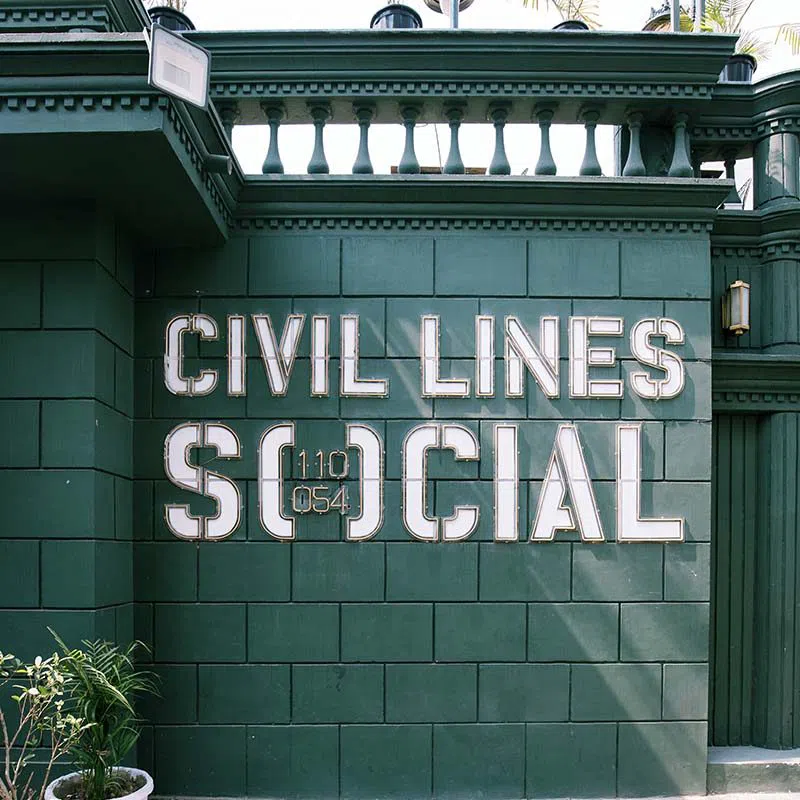
Kashmere Gate itself is close to dry after dark. Civil Lines Social occupies the ground and first floors of the same Exchange Building, and it is where the area drinks: long communal tables and industrial-salvage interiors inside, cast-iron Victorian garden furniture out on the terrace. Big tables, loud music and cocktail pitchers, bookings taken, no real door policy. Ask for the terrace when you book. ₹1,200 for two with drinks.
Where to stay
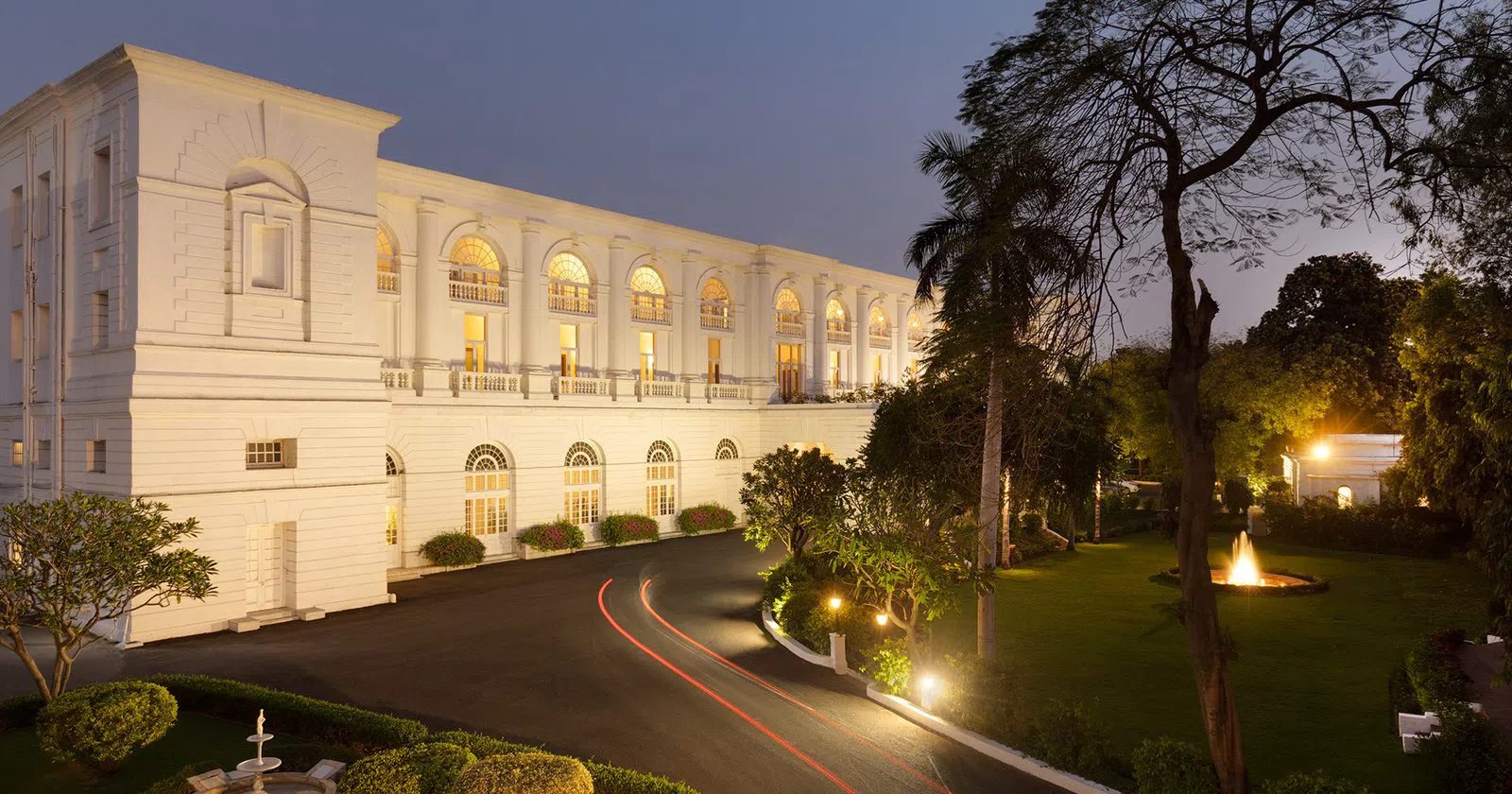
Maidens Hotel (Sham Nath Marg) was built for the 1903 Durbar and sits a 10-minute walk up Sham Nath Marg from the gate, which makes it the obvious base for this neighbourhood. The long white colonnaded block, tall shuttered windows and deep verandahs stand in eight acres of tropical garden, and the corridors inside are cavernous and high-ceilinged. The Oberoi-run property has garden lawns, two restaurants and the Cavalry Bar. Raj-era photographs line the Curzon Room, which is worth a dinner on its own. ₹₹₹₹.
Haveli Dharampura and Golden Haveli stand 2km south in the Chandni Chowk lanes, close to Jama Masjid. The 200-year-old Mughal haveli was rebuilt in lakhori brick around a central courtyard, with carved jharokha balconies stacked on three sides and scalloped arches below, and the restoration won a UNESCO Asia-Pacific award. The rooftop terrace looks onto Jama Masjid's domes. The house has 13 rooms, runs its own heritage walks, food tours and kite-flying, and keeps the Lakhori restaurant on site. ₹₹₹₹.
What to book and when things close
The Partition Museum is shut on Monday and its slots are pre-booked online; the guided walk needs a date booked ahead, and a table at Daryaganj or Civil Lines Social is worth reserving. St James' Church closes for lunch in the early afternoon, and the cemeteries, the gate, Qudsia Bagh and the ghat are free and need nothing arranged. See the Delhi guide and the Delhi hotel search.
Voor vertrek
Do you have to pay to see the 1857 sites at Kashmere Gate?
No. Kashmiri Gate sits on a road island and has no ticket desk, and the Magazine Gateways and Telegraph Memorial are open to the street. Nicholson Cemetery is free in daylight, Lothian Cemetery is free and opens 10 a.m. to 6 p.m., and St James' Church is free as well.
When is the Partition Museum at Dara Shikoh's library open, and what does it cost?
Open 10 a.m. to 5 p.m. Tuesday to Sunday, closed Monday. You book a slot online first. Entry is ₹20 for Indian visitors and ₹200 for foreign visitors, and some pre-booked slots have been free. It is also the only landmark in the area with air conditioning.
When is the Yamuna aarti at Vasudev Ghat?
At 6 p.m. on Tuesday and Sunday, when rows of brass lamps burn on the steps and the terraces fill. The ghat is free and is right in front of the Kashmiri Gate bus stand; come out of the metro at exit 5 or 6. In winter the same stretch draws migratory birds.
Is a guided walk worth it in Kashmere Gate?
Yes, because the sites are scattered and unsignposted. Delhi Heritage Walks runs a 1.5km, two-hour 1857 trail that takes in both cemeteries, the gate, St James', Dara Shikoh's library and the magazine ruins; the guides hold period photographs up against the scarred walls. You book a public walk or a private departure online by date.
Where can you get a drink near Kashmere Gate?
Kashmere Gate itself is close to dry after dark, so people drink at Civil Lines Social in the Exchange Building, on the ground and first floors. Ask for the terrace. It takes bookings and has no real door policy, and two with drinks comes to about ₹1,200.