The Delhi issue
The Language of Spice: How Delhi Speaks Through Its Markets
From the chilli haze of Asia's oldest spice bazaar to a century-old stall's stuffed-fruit kulfi, an honest, dish-by-dish route through the markets and kitchens where Delhi does its real talking.
By Nandita RaoFrom the Chandni Chowk galis to the new-Delhi tasting menus
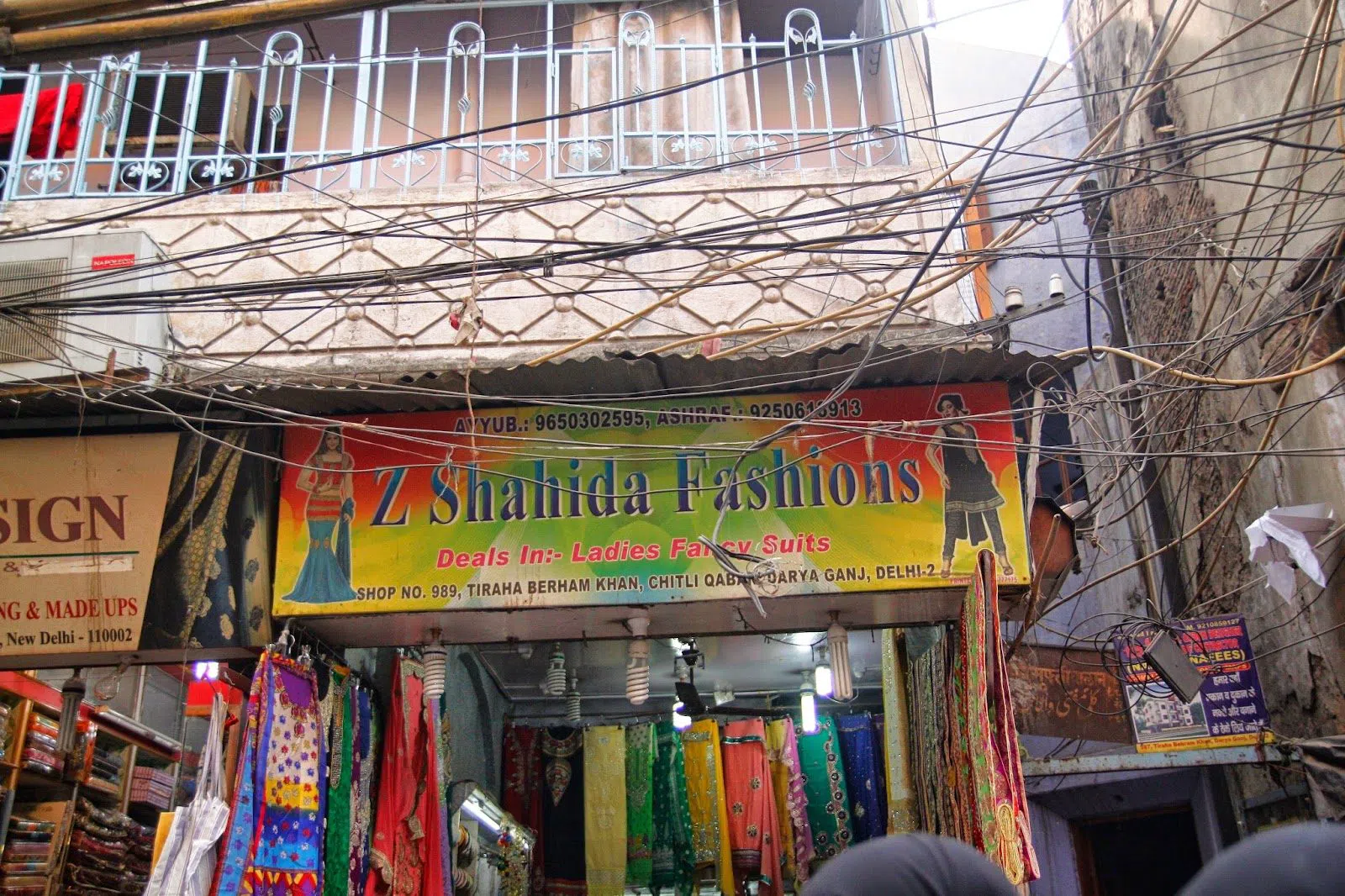
Stand at the mouth of Khari Baoli at nine in the morning and the air reaches you before the sight does: a red haze of ground chilli that catches the back of the throat, the resinous sweetness of green cardamom, the low mineral hum of asafoetida. Delhi does not describe its spices to you — it makes you sneeze, then cough, then finally understand. This is a city that thinks out loud in masala, and its markets are the grammar. What follows is a working route through them, honest about which places still cook the way their legend claims and which coast on it, and clear about where a crowd of six will thrive versus where two people should slip in quietly and eat standing up.
The wholesale cathedral: where the trade still runs by the sack
Start at the source. Khari Baoli (Old Delhi, at the western end of Chandni Chowk) has been Asia's largest and oldest wholesale spice bazaar since around 1650, and it remains exactly that — a trade, not a tourist attraction dressed up as one. It is free to wander and closed Sundays. The spices here move by the kilo, in jute sacks stacked to the rafters, and you are not really the customer: the customer is a buyer from Lucknow ordering forty kilos of Kashmiri chilli for the year. That is precisely why it is the sensory anchor of any spice trip to the city — you are watching the real thing, porters running hundred-kilo loads up worn stone staircases into 17th-century havelis packed with turmeric and dried Kashmiri mirch. Two pieces of practical honesty: bring a mask or at least a scarf, because the airborne chilli genuinely makes you sneeze until your eyes stream, and do not attempt this with a group unless you have a guide. The lanes are single-file and loud, it is cash-heavy, and a party of six will simply lose each other. Come around 10am, after the first loading crush and before the midday heat turns the alleys into an oven.
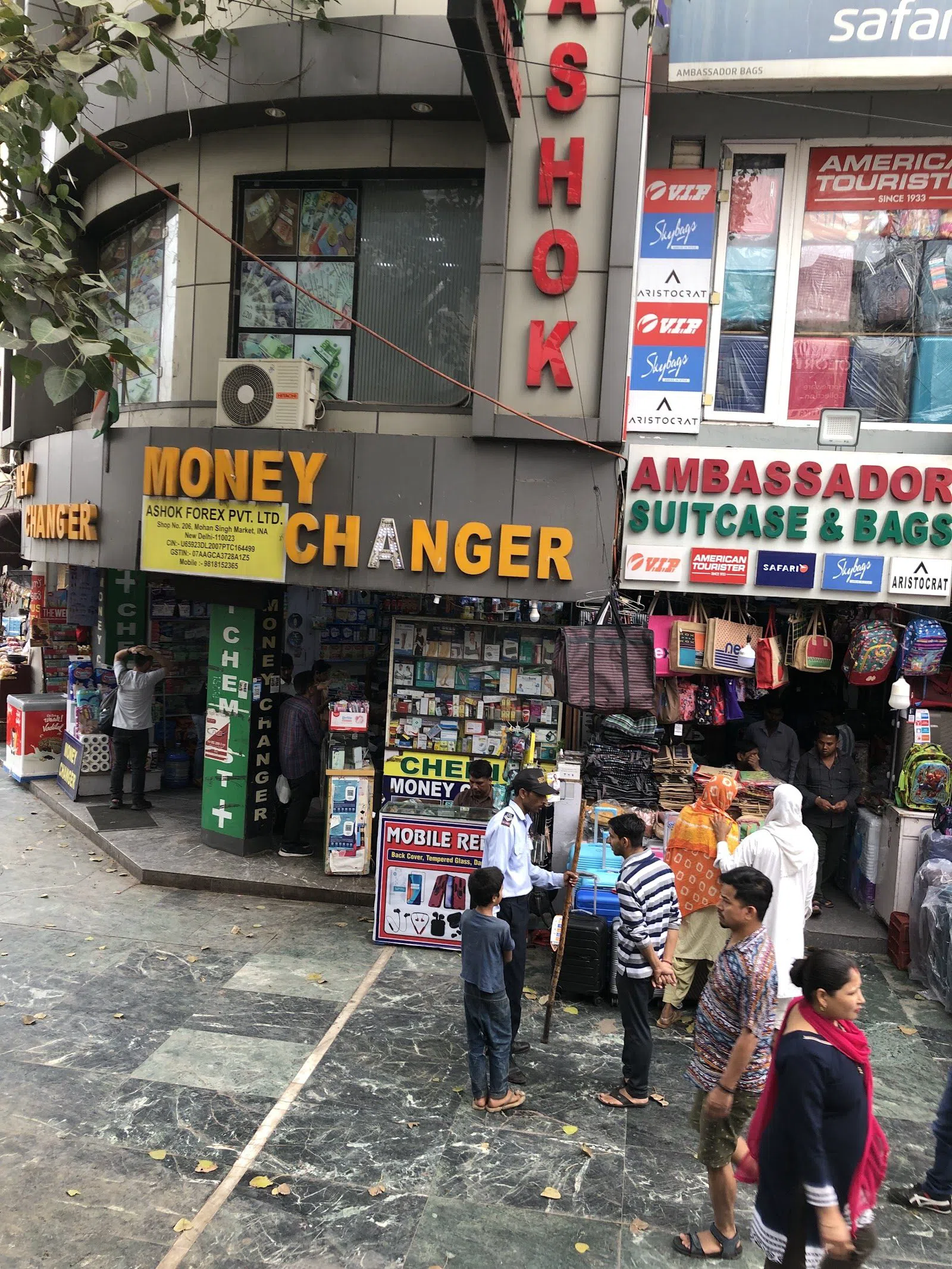
If Khari Baoli is Delhi shouting, INA Market (INA, South Delhi) is Delhi talking normally. This is the counterpoint the wholesale bazaar needs — cleaner, calmer, genuinely browsable, and where the city's chefs and serious home cooks actually shop. Entry is free, the spices are sold retail with packs from around ₹50, and the vendors are happy to let you crush a cardamom pod under your thumb or taste a pinch of a blend before you commit. For a small group this is the easy, low-stress place to buy: no one is going to run you down with a handcart. Come here to understand what you smelled in the old city, at a pace where you can actually ask questions.
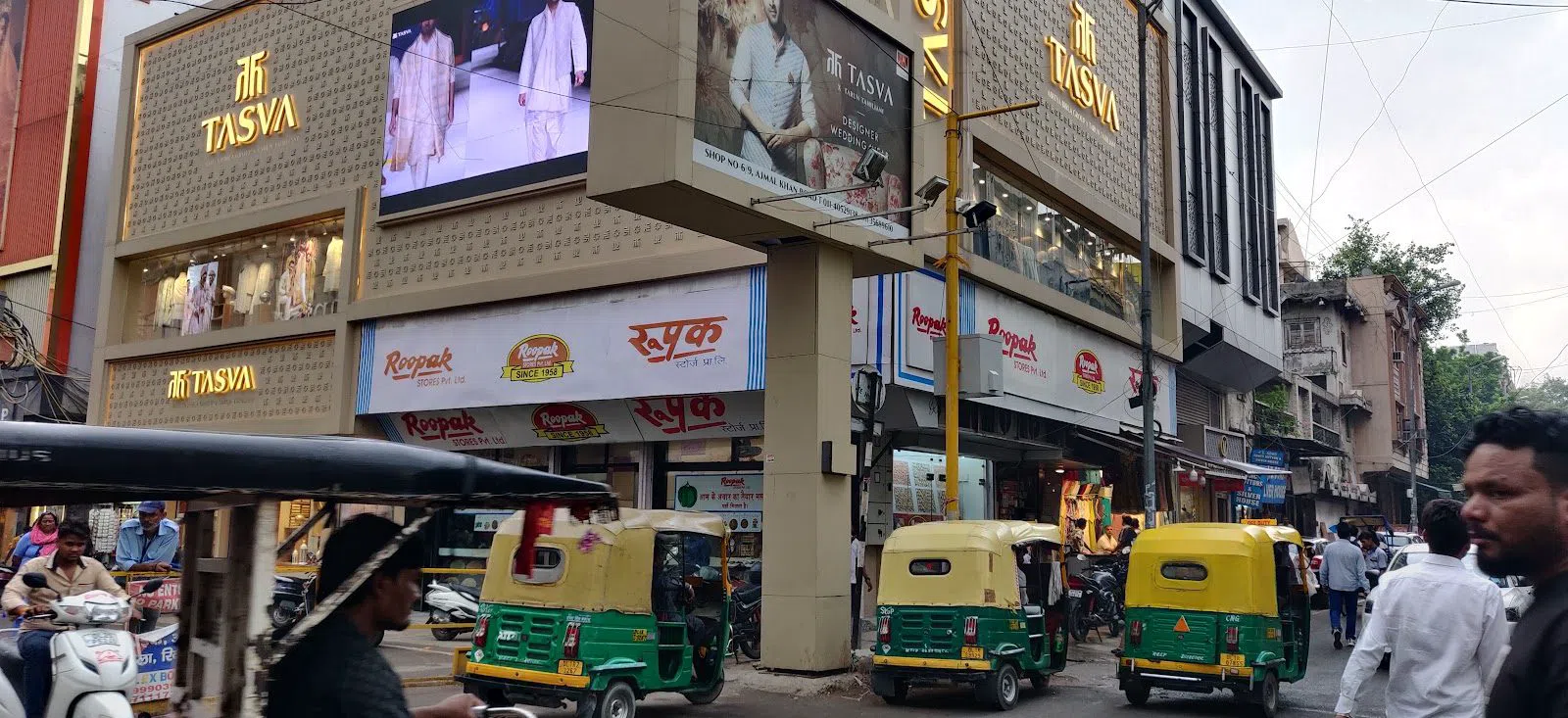
And for the thing everyone actually wants — to carry the smell home — go to Roopak Stores (Karol Bagh). Trading since 1958, it is the trusted spice-blend institution of west Delhi, with FSSAI-certified house masalas (their garam masala and chana masala blends are the ones locals gift to relatives abroad), packs from ₹50, and dry fruits sold by weight. It is a proper retail shop that welcomes browsers, which makes it the sensible group stop: everyone can pick up their own bag of blends without holding up a wholesale counter. Vacuum-sealed packs travel and clear customs far better than a loose scoop from a bazaar sack.
Plan your Delhi trip
Live prices from our booking partners.
Free cancellation on many rooms. We may earn a commission when you book.
Old Delhi's meat institutions: Karim's and its quieter rival
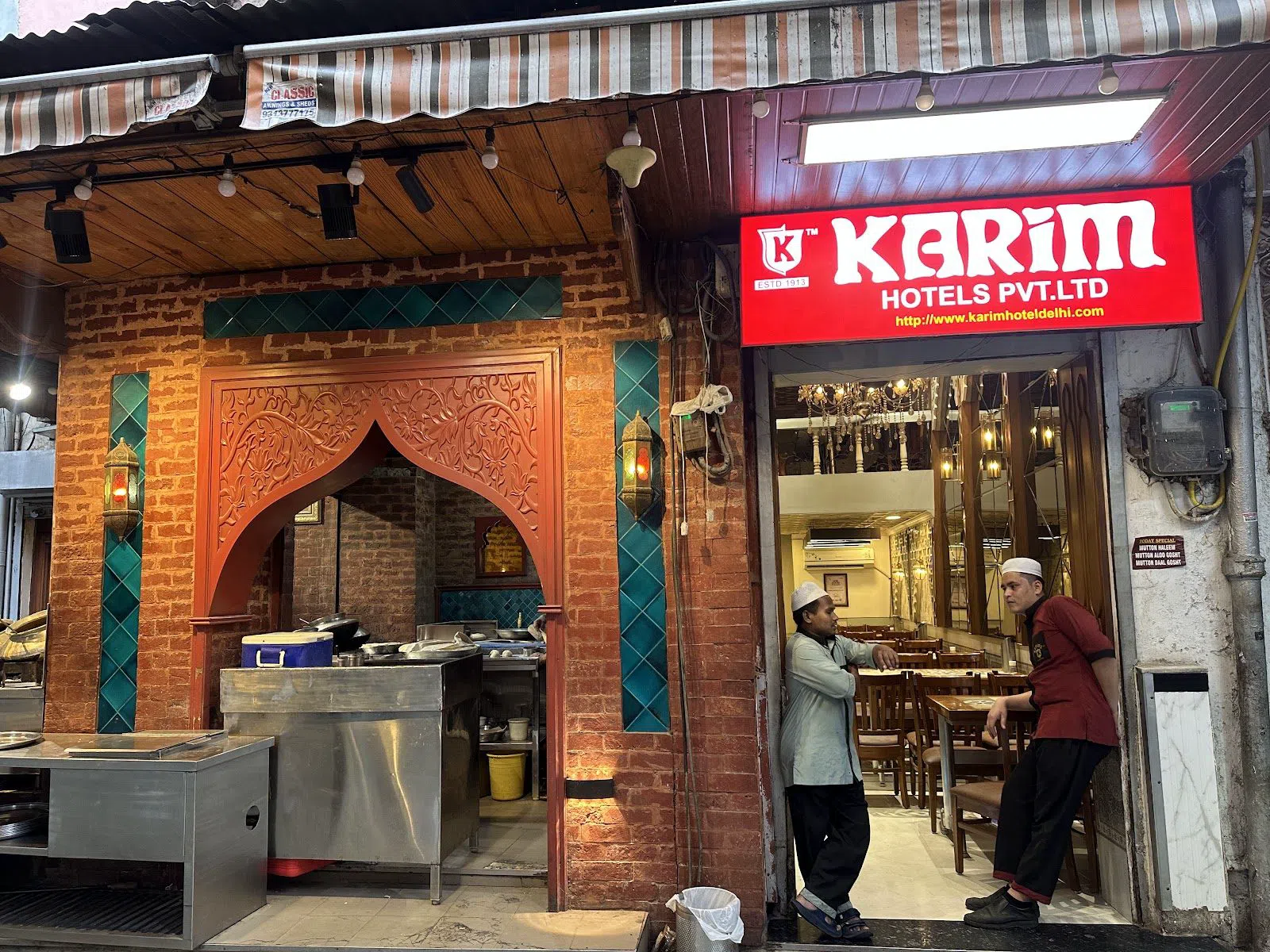
You cannot read Delhi's spice through markets alone; you have to eat where the masalas end up. Two doors down from each other near Jama Masjid sit the two names every food list repeats. Karim's (Gali Kababian, beside Jama Masjid) has served Mughlai food since 1913, founded by descendants of cooks from the Mughal royal kitchen, and it is the essential Old Delhi meat institution — casual, family-style seating spread across several rooms, mains ₹200–₹500 a head. It takes groups but no reservations, so at peak (weekend lunches, and Ramadan evenings, when the whole lane becomes a moving feast) expect a genuine wait. Order the mutton burra and the slow-cooked mutton korma; those are where the kitchen still earns its name. My one caution, and it matters: Karim's trades hard on a century of reputation, and on a busy night some plates — the chicken jahangiri, the odd dry seekh — can coast. Order the mutton, not the buffet-broad menu, and you'll eat what made it famous.
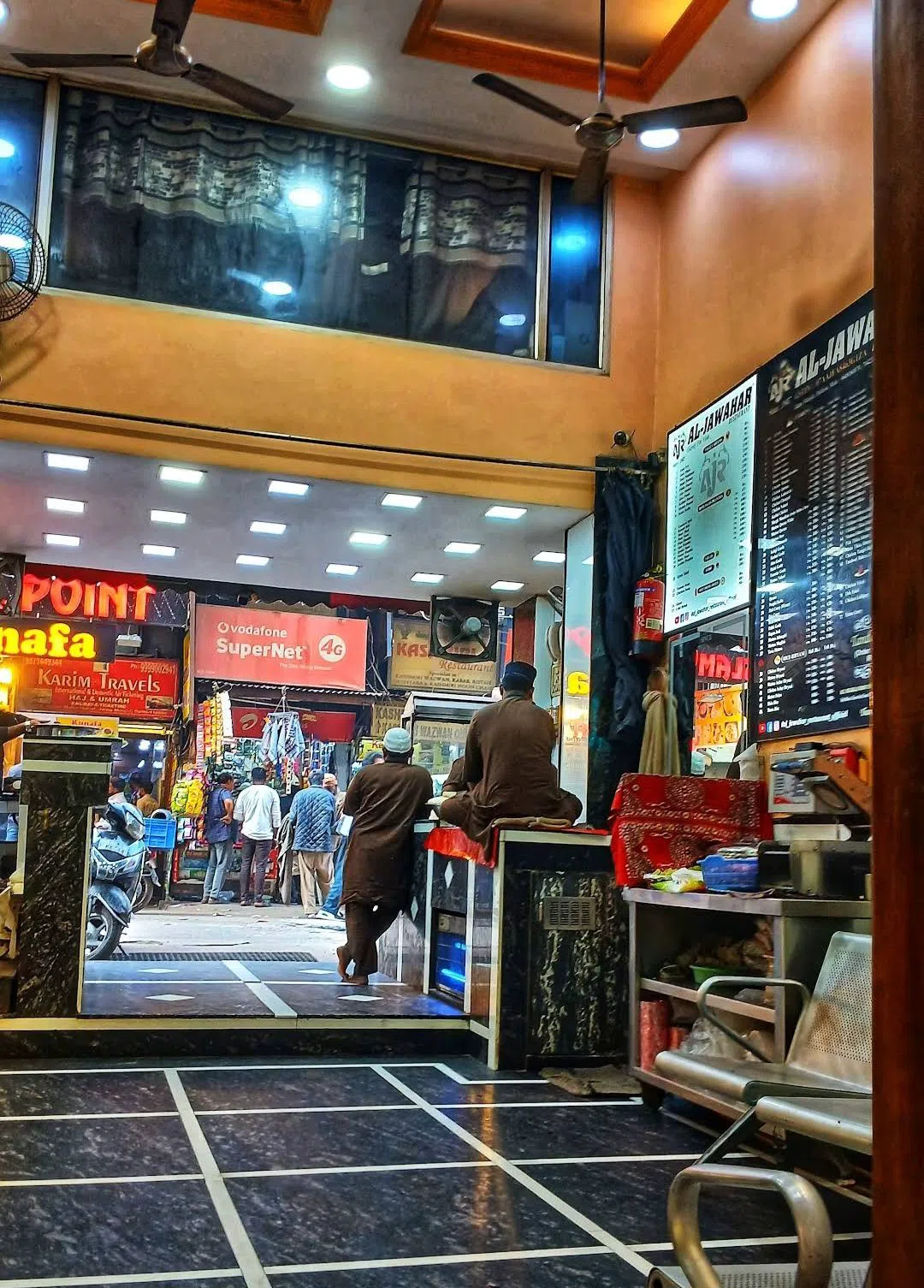
Then do the thing most first-timers don't: walk next door. Al Jawahar (immediately beside Karim's, near Jama Masjid) is the quieter, cleaner rival, with spacious upstairs seating that is genuinely more comfortable for a group, open till midnight daily, and cheaper — around ₹400 for two. A lot of locals will tell you flatly that its korma and mutton burra are the better plate, and on my visits the gravies were the more carefully spiced of the two. Eat a half-plate at each if your table is game; the comparison is half the pleasure, and it settles the argument better than any list can.
The sweet, the sour and the fried: Chandni Chowk on foot
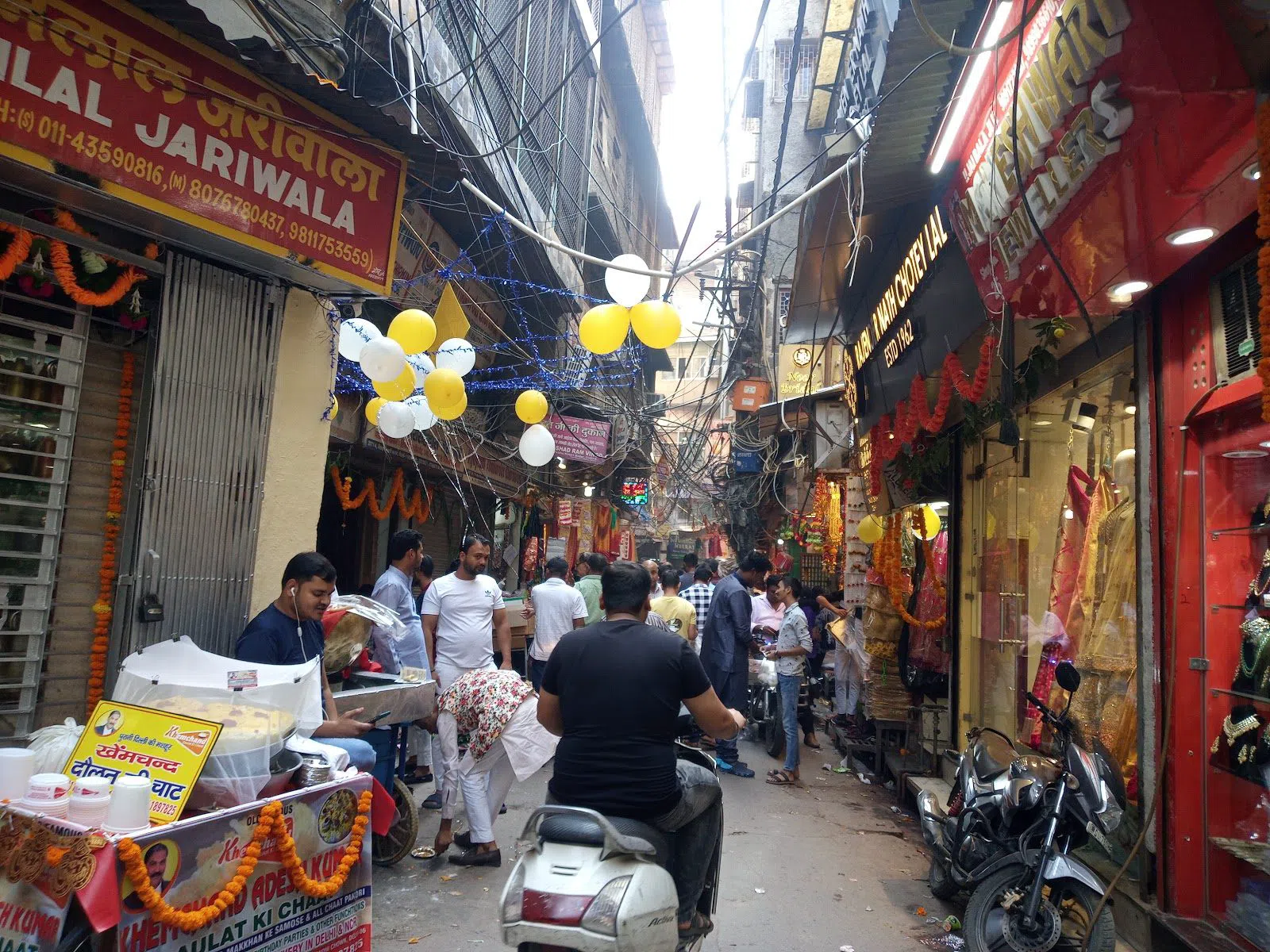
The old city's genius is that its street food clusters, so you can walk a single loop and taste four distinct grammars of spice and sugar. Begin at Paranthe Wali Gali (Chandni Chowk), a whole narrow lane given over to deep-fried stuffed flatbreads since the 1870s, worked by tiny sit-down shops like Kanhaiya Lal and Babu Ram. Parathas run ₹70–₹120 each and go far beyond potato — rabri-stuffed, papad-stuffed, even cashew- and mixed-nut versions, each fried in its own iron kadhai of ghee. It is pure sensory theatre. Go early: the shops are tiny, groups have to split across benches, and by mid-morning the seats are gone.
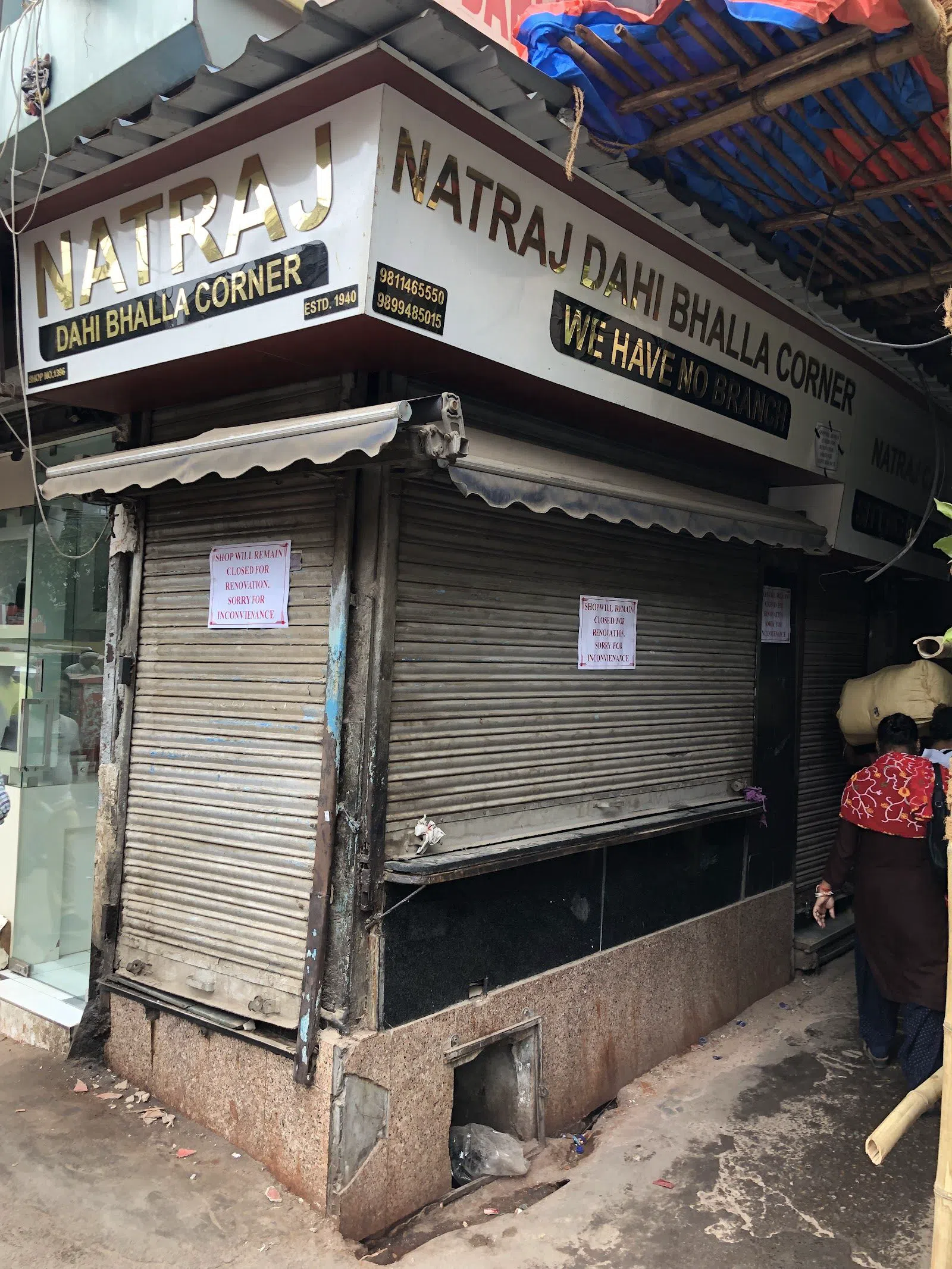
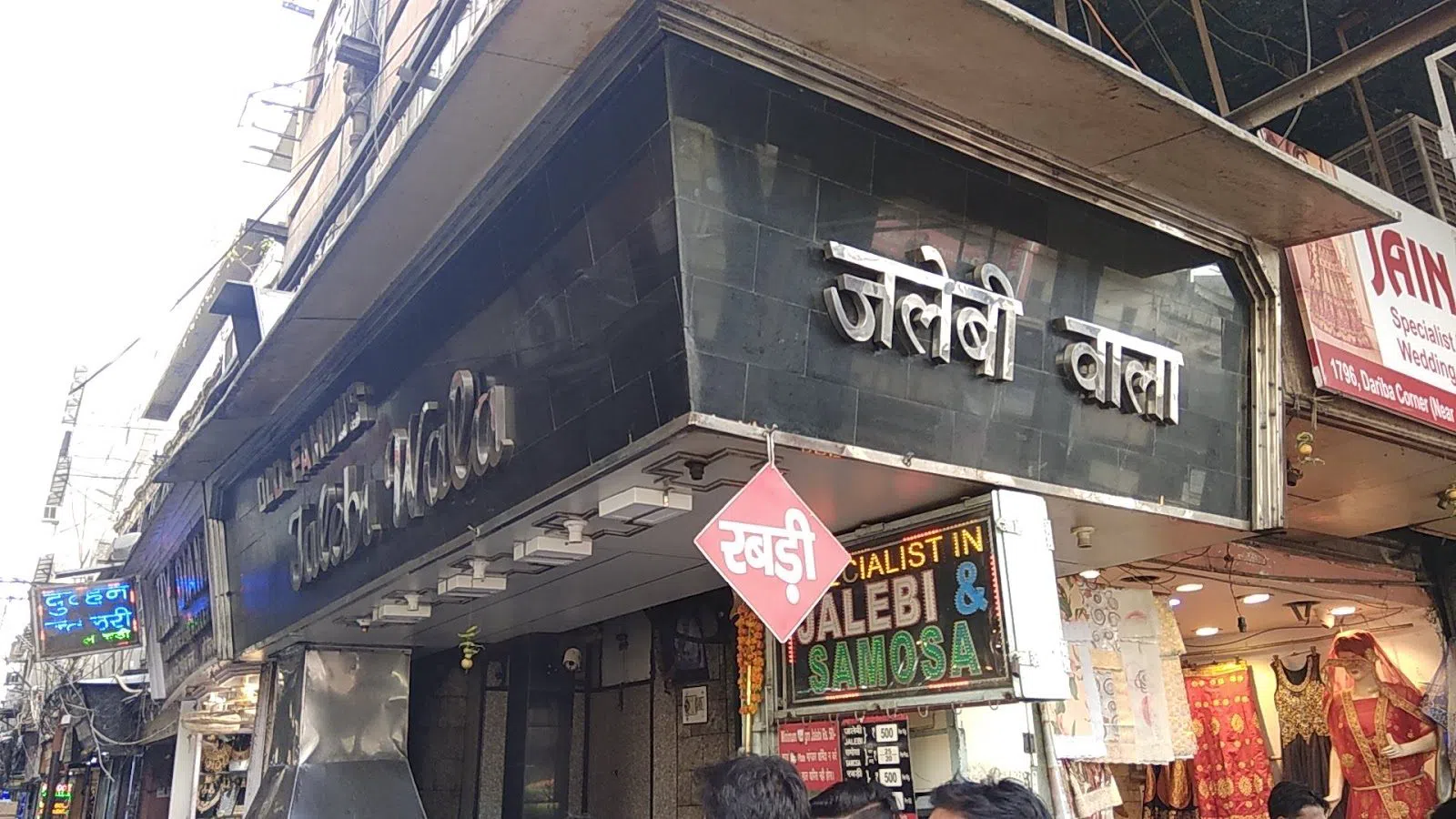
A few steps on, Old Famous Jalebi Wala (at the Dariba corner of Chandni Chowk) has been frying its thick, ghee-heavy jalebis since 1884 — mandatory, and unlike the thin crisp jalebi you'll meet elsewhere, these are fat, syrup-logged coils sold by weight at roughly ₹100 a portion. It is a takeaway counter with no seating, so this is a stand-and-eat stop, not a sit-down; perfect for a group to pause, share a warm paper bag, and move on. Nearby, Natraj Dahi Bhalle Wala (Chandni Chowk) has done exactly one thing since 1940 — dahi bhalla and aloo tikki — and done it perfectly, which is the whole lesson. A plate is around ₹80–₹100, it is standing-only on the pavement, and the archetypal Old Delhi chaat experience is precisely this: eating a single, flawless dish on your feet, tamarind and yoghurt running over your fingers.
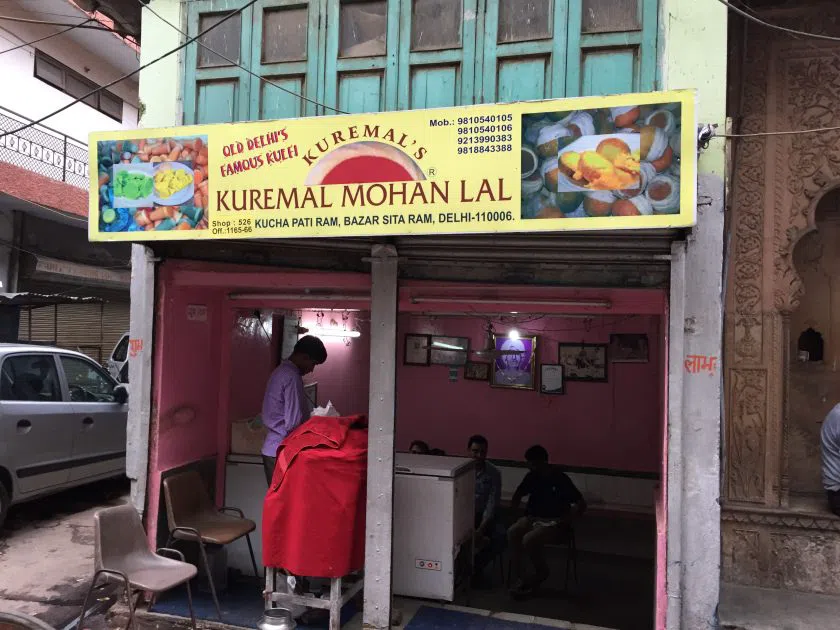
Close the sweet loop at Kuremal Mohan Lal Kulfi Wale (Kucha Pati Ram, near Chawri Bazaar). A century old and famous for a genuinely unusual dessert — stuffed whole-fruit kulfi, where an entire mango or guava is hollowed, filled with kulfi, frozen and sliced into pinwheels — it runs ₹80–₹150. It is a small stall with a little seating, which makes it a fine spot for a group to gather and order rounds, and it is the most photogenic thing you'll eat all day. Mango season (roughly April to July) is when the fruit kulfis are at their best; out of season, ask what's actually stuffed that day rather than ordering off memory.
Beyond the old city: one plate and one tasting map
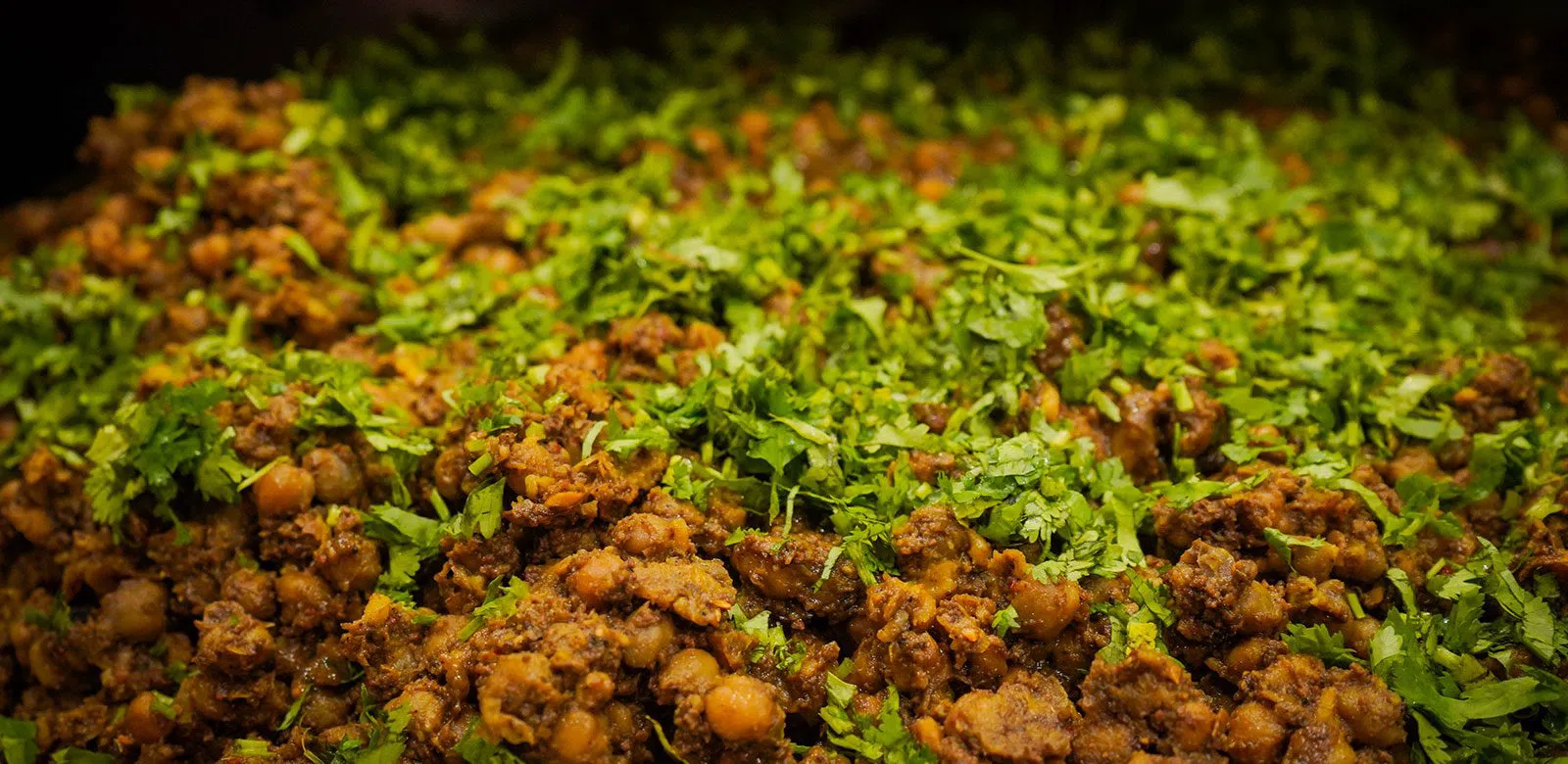
Two stops are worth crossing town for. Sita Ram Diwan Chand (Paharganj) serves what many in Delhi will defend as the city's best chole bhature — since the 1950s, a plate for about ₹120, the bhature huge and blistered, the chana dark and heavily spiced. It is small and always packed, an easy walk from the Paharganj backpacker belt; go early or resign yourself to a queue. This is a single-dish pilgrimage, not a leisurely lunch, and it suits couples and small groups better than a big table.
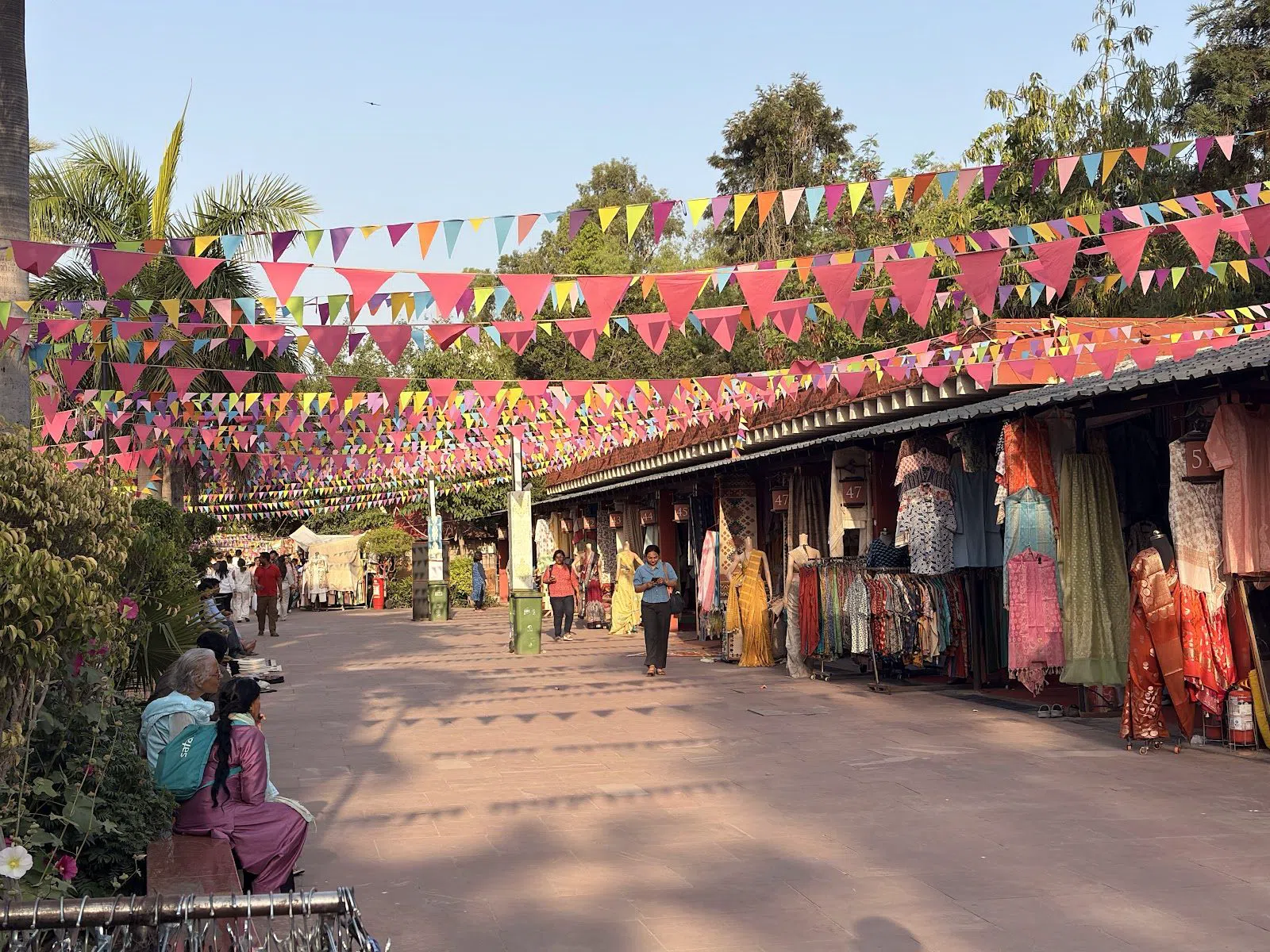
For the opposite — breadth without criss-crossing the city — Dilli Haat INA (INA, across the road from the spice market) is a ticketed craft-and-food bazaar (₹30 entry, dishes ₹80–₹300) that works as a one-stop tasting map of India: Ladakhi momos, Rajasthani gatte ki sabzi, Bengali fish curry, all in one open-air courtyard. It is the single best option for a group that wants to graze many regional cuisines in an afternoon, and pairing it with the INA spice lanes across the street makes an efficient, low-stress half-day.
Learning the grammar: guides and a home kitchen
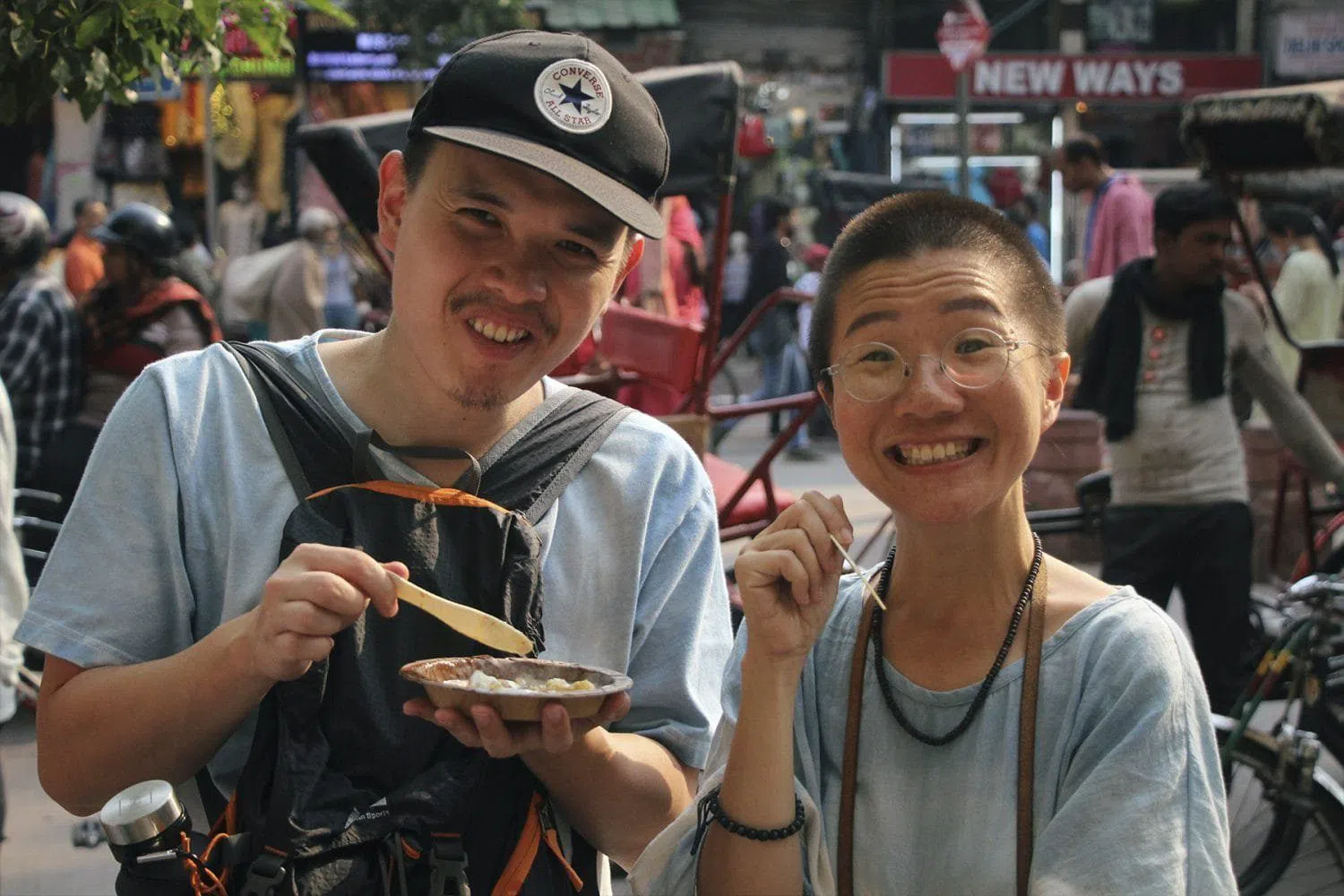
If the old city intimidates you — the crowds, the hygiene worries, the sheer navigation — do not skip it; go with someone. Reality Tours & Travel runs a purpose-built small-group Old Delhi Street Food Tour that meets at the metro, includes the tastings, and costs roughly ₹2,000–₹3,500 per person. It is a responsible-tourism operator that reinvests in local causes, and it is the sensible choice for anyone wary of eating the old city solo; the guide also handles the where-and-when so a group isn't stranded mid-lane.
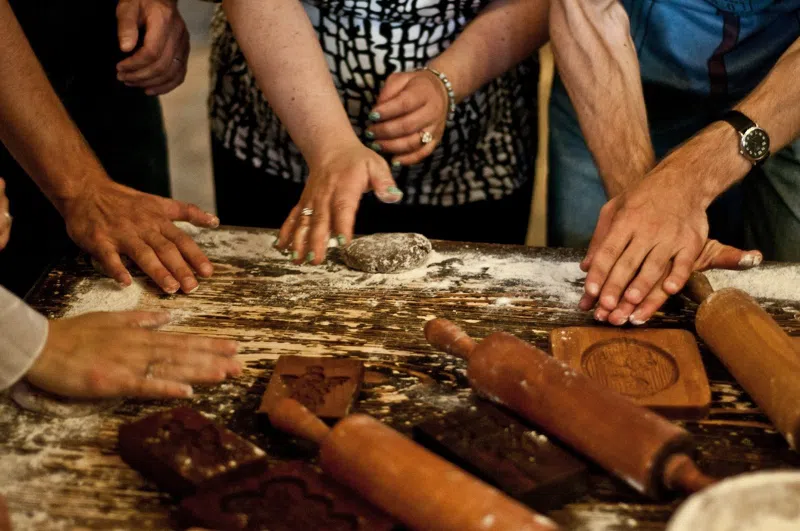
To go one step further and actually cook, book Delhi Cooking Class (Jyoti's home kitchen), which pairs a guided spice-market walk with hands-on cooking of three dishes in a real home. Classes run from about ₹3,000 per person, take 2–8 people, and offer the personal attention a restaurant meal never can — this is where the smells finally become a recipe you take home. Between the two, you have both the eat-and-watch and the make-it-yourself angles covered.
The upscale bookend
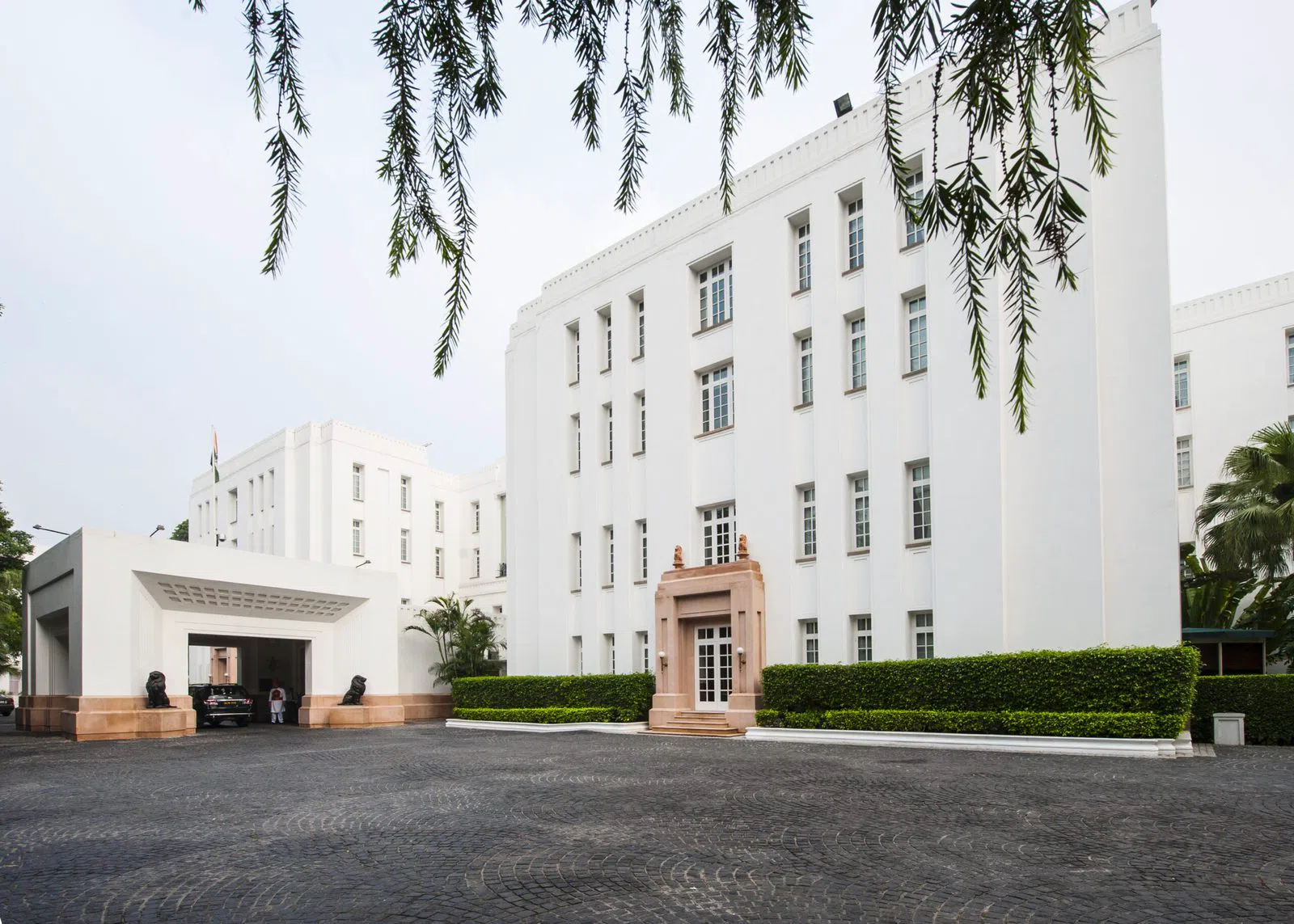
When you want the spice route told as fine dining rather than street theatre, The Spice Route at The Imperial (Janpath) is the bookend. It is one of the world's most beautifully designed dining rooms — a decade in the making, hand-painted, mapping the culinary spice route from Kerala across Southeast Asia — and it is priced to match at ₹5,000-plus for two. Reservations are recommended, and the refined setting suits couples and smaller groups on a special night far better than a boisterous party of eight. Treat it as the calm, considered coda to days spent sneezing through wholesale chilli — the same ingredients, a wholly different language.
For where else to eat, sleep and wander around these routes, the wider Delhi guide maps the neighbourhoods these markets sit in.
Practical notes: cash, transport, timing, budget
Cash is king. Nearly every stall and market vendor here — the jalebi counter, the chaat stall, the wholesale spice sacks — is cash-only. Carry small notes (₹10s, ₹20s, ₹100s); no one is breaking a ₹500 note for a ₹100 jalebi. UPI is creeping in at the bigger shops like Roopak, but never rely on it in the lanes.
Transport. The Metro is far and away the best way in. Chandni Chowk (Yellow Line) drops you a short walk from Khari Baoli, Paranthe Wali Gali and the Jama Masjid restaurants; INA station (Yellow/Pink Lines) serves both INA Market and Dilli Haat; New Delhi station reaches Paharganj. Cars cannot penetrate the old city's core anyway — walk it or take a cycle-rickshaw for the last stretch. The Imperial is nearest Janpath/Rajiv Chowk.
Timing. Old Delhi is a morning and evening city. Come to Khari Baoli by 10am; do the street-food loop from late morning; avoid 1–4pm in summer, when the heat and closures make it thankless. Khari Baoli is closed Sundays. For the least crush, a weekday beats a weekend everywhere in Chandni Chowk.
Budget. You can eat superbly here for very little. A full street-food morning — parathas, chaat, jalebi, kulfi — runs well under ₹600 a head. A sit-down Mughlai meal at Karim's or Al Jawahar is ₹200–₹500; a guided food tour ₹2,000–₹3,500; a cooking class from ₹3,000; and the one splurge, The Spice Route, ₹5,000-plus for two. Spice to take home starts at ₹50 a pack.
Where to stay. Base yourself for easy Metro access to both the old city and INA — start a Delhi hotel search and prioritise anything within a short walk of a Yellow Line station. A little planning here saves you an hour of traffic every single day.
Before you go
What is the best spice market in Delhi to visit?
Khari Baoli, at the western end of Chandni Chowk, is Asia's largest and oldest wholesale spice bazaar and the definitive sensory experience — but it's a working wholesale trade sold by the kilo, chaotic and cash-heavy, and closed Sundays. For a calmer, browsable retail experience where you can actually buy small packs and sample freely, head to the INA Market spice lanes in South Delhi instead.
Is Karim's or Al Jawahar better in Old Delhi?
Both sit beside Jama Masjid and both are excellent. Karim's (since 1913) is the famous name and its mutton burra and korma remain the plates to order, though a busy night can leave some other dishes coasting. Al Jawahar, right next door, is quieter, cleaner and cheaper, with upstairs seating better for groups — and many locals rate its korma and mutton burra the superior plate. If you can, order a half-plate at each and decide yourself.
Do I need cash for Delhi's markets and street food?
Yes — carry cash, in small notes. The jalebi counters, chaat stalls, kulfi stall and wholesale spice sacks are almost all cash-only, and no one will break a ₹500 note for a ₹100 snack. UPI is appearing at bigger retail shops like Roopak Stores, but never rely on card or app payment in the old city's lanes.
Is it safe to eat street food in Old Delhi, and should I go with a guide?
The busy, long-running institutions — Natraj (since 1940), Old Famous Jalebi Wala (1884), Paranthe Wali Gali — turn over so fast that food is fresh and cooked to order, which is your best safety signal. If you're nervous about hygiene or navigating the crowded lanes, book Reality Tours & Travel's small-group Old Delhi Street Food Tour (around ₹2,000–₹3,500 per person); it meets at the metro, includes vetted tastings and handles the where-and-when.
What spices should I buy in Delhi to take home?
Buy blended, sealed masalas rather than loose scoops — they travel and clear customs better. Roopak Stores in Karol Bagh (since 1958) makes FSSAI-certified house blends like garam masala and chana masala from about ₹50 a pack, and also sells dry fruits by weight. The INA Market lanes are the other good retail option, with packs from ₹50 and vendors happy to let you smell before you buy.