Delhi专刊
Delhi's Lotus Temple takes no ticket and asks for silence
Twenty-seven marble petals, nine pools, ₹0 at the gate and a prayer hall that stays silent, with the Kalkaji and Nehru Place stops on either side.
作者:Bram VerhoevenA Dutchman reading Delhi one neighbourhood at a time
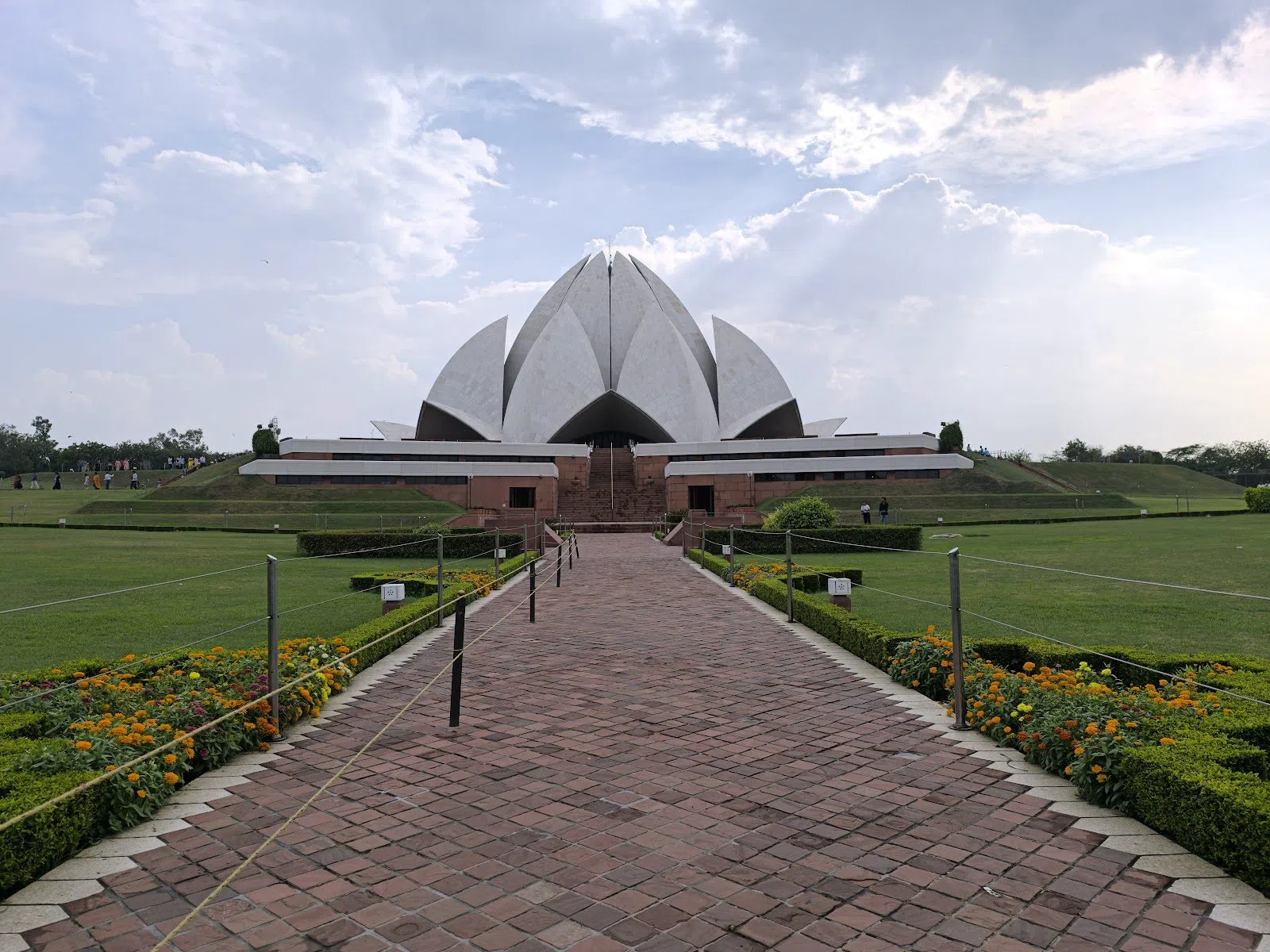
Shoes and bags go to the counters by the gate, and from there the walk to the prayer hall runs single file through the gardens. Nobody talks inside the hall and nobody takes photographs. Entry costs ₹0 and there is nothing to book.
What you see under the petals
Lotus Temple (Bahapur, Kalkaji) is a Bahá'í House of Worship built as 27 free-standing white marble petals in three tiers. The petals rise from nine blue pools, radial walkways run out across the lawns, and there are nine doors at the base. All visitors enter free, and no part of the site needs a ticket, a booking or a guide.
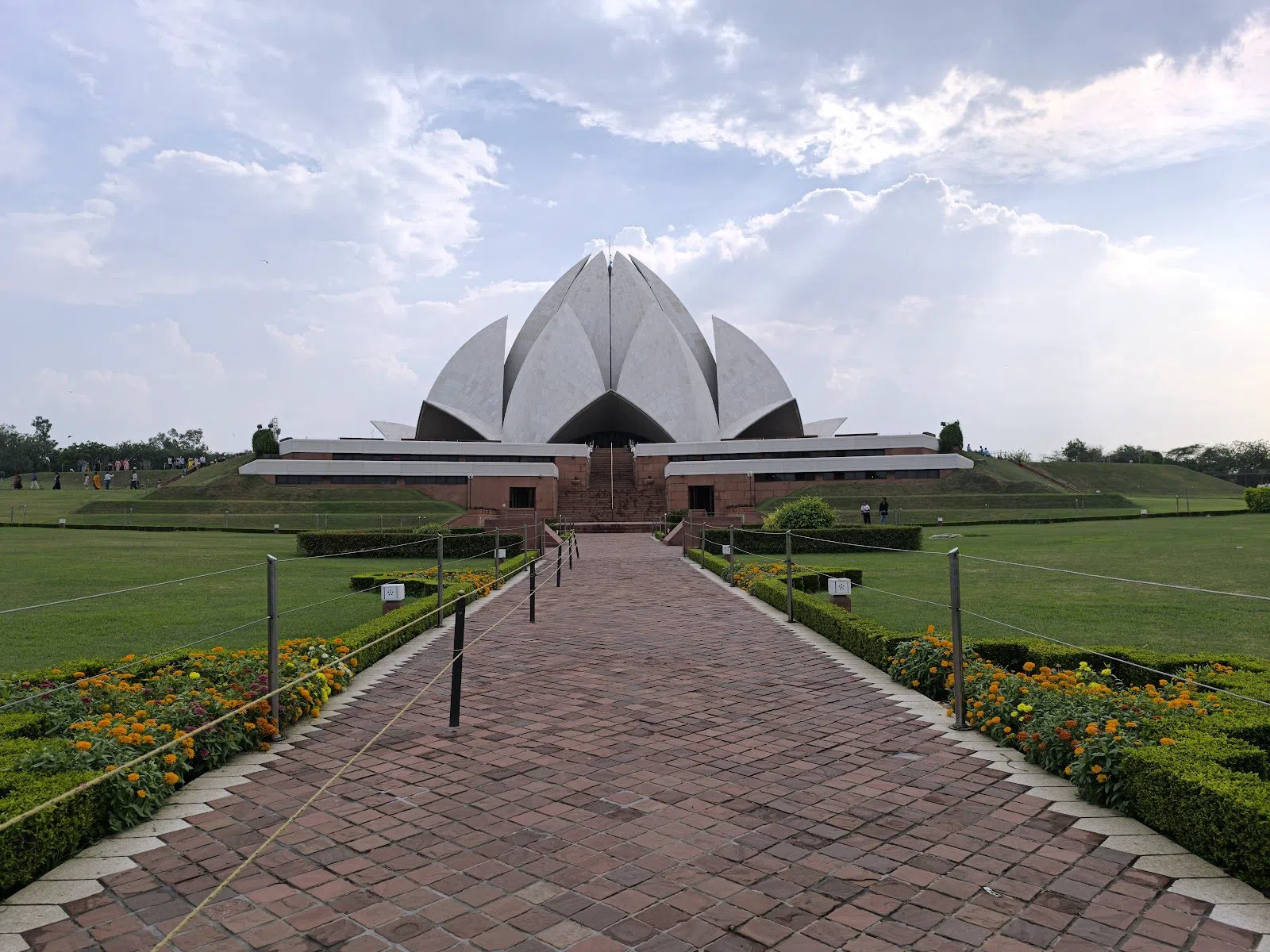
The hall under the petals has two rules: silence, and no photography. Shoes and bags stay at the counters outside, so you cross the last stretch of walkway barefoot.
Ushers move the large school and tour parties into the hall in batches. Coaches drop their passengers at the Kalkaji Mandir side of the complex, and the queue builds from there through the gardens.
规划您的Delhi之旅
实时价格,来自我们的预订合作伙伴。
许多客房可免费取消。您预订时,我们可能会获得佣金。
The information centre in the gardens
The Bahá'í House of Worship Information Centre (temple gardens, Kalkaji) is the half of the visit most people walk past. It is a low annexe of backlit photo panels, written text boards and a small film gallery, free and self-guided, and it covers the nine-sided plan and the Bahá'í teachings in 10 minutes. A second exhibition sits poolside in the basement arcade directly under the petals.

Send anyone who came for the architecture here first. It will also hold a coach party while the prayer-hall queue clears, which is why it pays to walk in this door before joining the line.
Queues, entry and guides
Nothing is sold at the gate because nothing is charged. The queue is the only thing between you and the hall. It forms single file along the garden walkways and moves in batches as the ushers fill the hall. School groups and tour parties are the variable, and a morning with several coaches parked at the Kalkaji Mandir side takes longer than one without.
A guided Old and New Delhi tour takes the temple in as one stop of several and runs seven days a week. It books up steadily, so reserve ahead if you want someone else doing the driving between sights. Entry stays ₹0 either way.
Best time to go
The temple closes on Mondays for maintenance. It opens Tuesday to Sunday, 9 a.m. to 7 p.m. from April to September and 9 a.m. to 5:30 p.m. from October to March. Short devotional readings run at set hours inside the hall.
Come at opening, before the school and tour coaches arrive. From October to March the 5:30 p.m. close ends the visit in daylight, which matters if you planned to walk into Kalkaji afterwards.
Kalkaji Mandir and the walk back
Kalkaji Mandir (Kalkaji) stands a 10 to 15 minute walk from the Lotus Temple gate, a dense cluster of red, saffron and silver shrine spires above a covered bazaar lane of flower, bangle and prasad stalls. Barefoot crowds funnel through it to a small marble sanctum. This is Shakti worship, loud and thick with incense, open from pre-dawn to late night with cleaning breaks at midday and mid-afternoon.
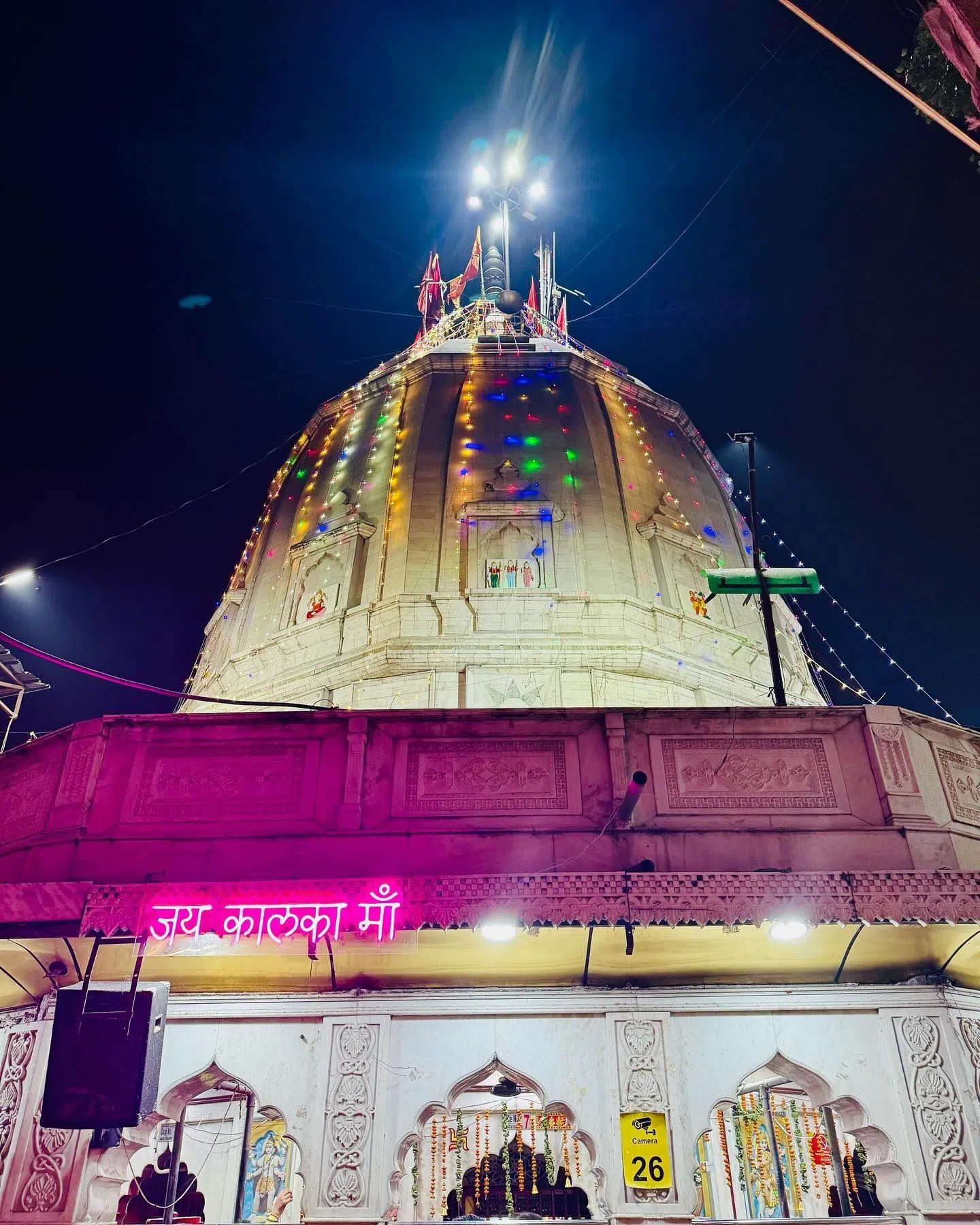
Entry is free. Shoe minding, flowers or prasad run ₹10 to ₹50, and shoes stay at the stalls. The lanes are tight, so walk in twos and threes, skip Tuesdays and Navratri if you have a large party, and take a guide if you have one.
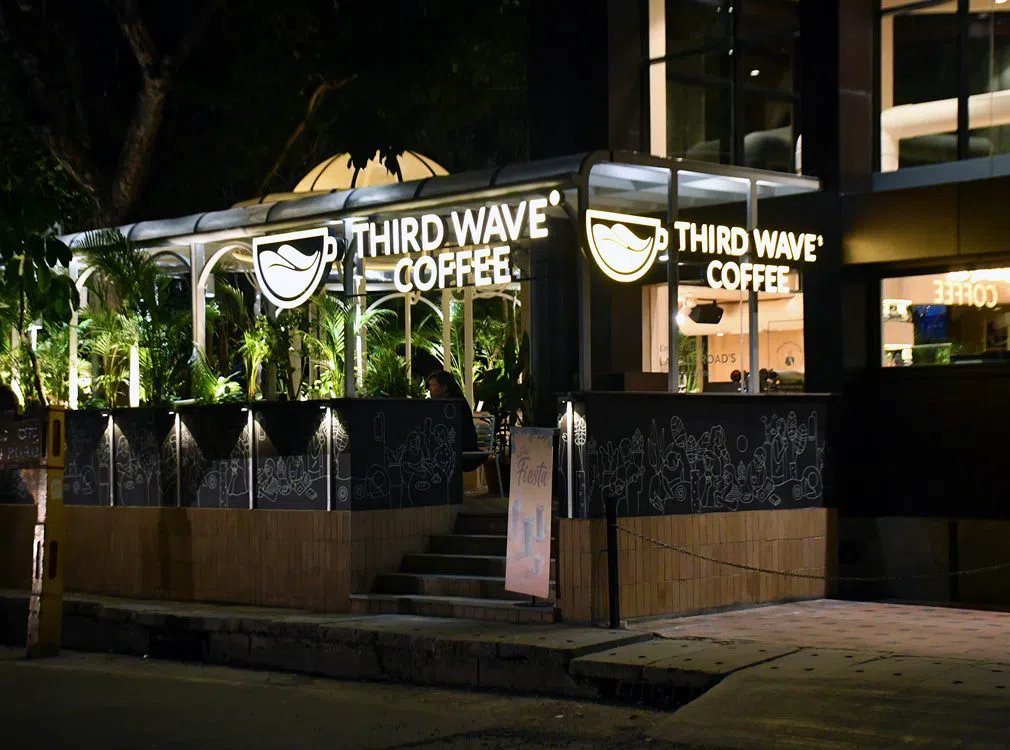
Third Wave Coffee, Kalkaji (E-Block market, Kalkaji) sits on the walk back, an upper-ground-floor corner café with pale wood and exposed brick, an espresso bar with a visible grinder stack and bench seating along the glass. There is no café inside the Bahá'í gardens, so this is the closest proper coffee to the temple. Prices are ₹250 to ₹500 per person, ₹₹. It takes no bookings and opens from early morning until late. The seats fill in the evening with a long-stay laptop crowd.
Nehru Place, lunch and a SIM

Nehru Place Market (Nehru Place) lies a kilometre from the temple and is one of Asia's busiest electronics markets. The plaza is 1970s concrete, with stacked office towers, cables and hand-painted signboards, pavement stalls of laptops, phone cases and printer cartridges, and the metro viaduct along one edge. Street snacks and repairs cost ₹20 to ₹200. Come for a cheap phone repair or a SIM, and to watch Delhi work at close range. It is a public plaza with no door policy of any kind. Watch your bags.
Epicuria Food Mall, Nehru Place (Nehru Place metro station podium) is built onto the station itself, two stops or a short cab from the temple, a glass-fronted food court with terrace seating under string lights and rows of branded restaurant frontages over the concourse. There are dozens of restaurants and bars, Karim's and Sagar Ratna among them, along with beer-and-burger chains, ₹₹ to ₹₹₹, ₹600 to ₹1,500 for two. Most will take a walk-in table of six to 10. Phone ahead for a larger party.
ISKCON and Akshardham

ISKCON Temple Delhi (Hare Krishna Hills, East of Kailash) is 2 km from the Lotus Temple, with white shikhara towers on the ridge, a broad stepped approach and a carved marble hall of chanting devotees. Entry is free. It opens at 4:30 a.m. and runs to 9 p.m., with the sanctum curtained between 1 p.m. and 4 p.m. Time the visit around the aarti. Beside the hall, the Glory of India Vedic Cultural Centre runs a robotics-and-light exhibition on timed tickets.
Govinda's, ISKCON Delhi (inside the temple complex) is a cool marble-floored dining hall with long buffet counters of sattvic thali dishes and devotional art on the walls. The kitchen is pure vegetarian, without onion or garlic, and serves no alcohol. The buffet is ₹500 to ₹900 a head. Sittings are fixed: lunch from midday to mid-afternoon, dinner in the evening, and the hall shuts between them.
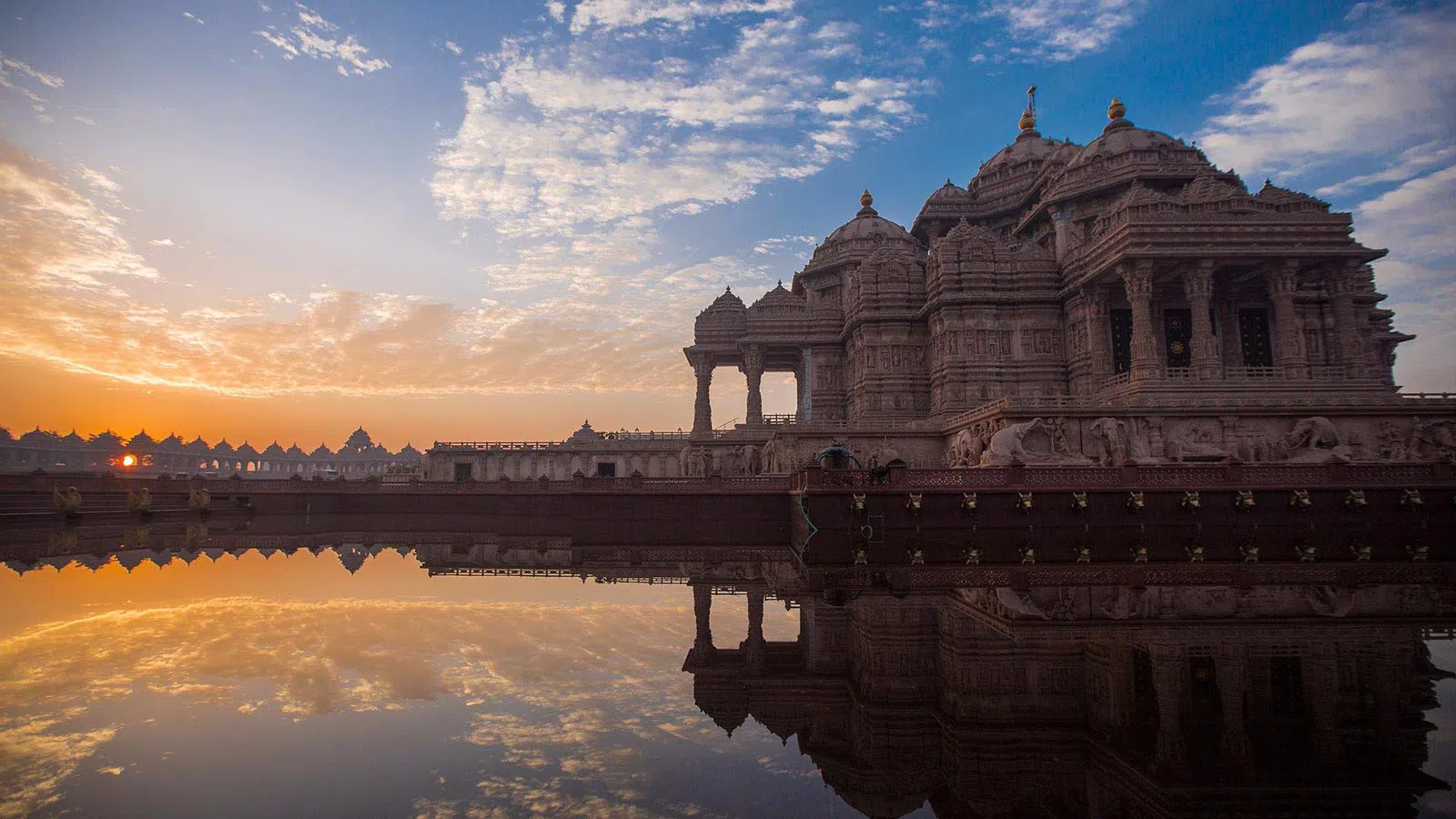
Swaminarayan Akshardham (Noida Mor) is where to go if you want to compare modern Indian religious architecture, a vast pink sandstone and white marble mandir with 234 carved pillars and elephant plinths, formal step-wells and a musical fountain, across the Yamuna. Temple darshan is free, and the exhibitions are ₹260 for adults and ₹160 for children. Opening runs 10 a.m. to 8 p.m. with last entry early evening, and it closes on Mondays. Security is airport-grade. Phones, cameras and smartwatches are banned inside and go to the free cloakroom, so allow extra time at the entrance.
Nizamuddin, Humayun's Tomb and Sunder Nursery
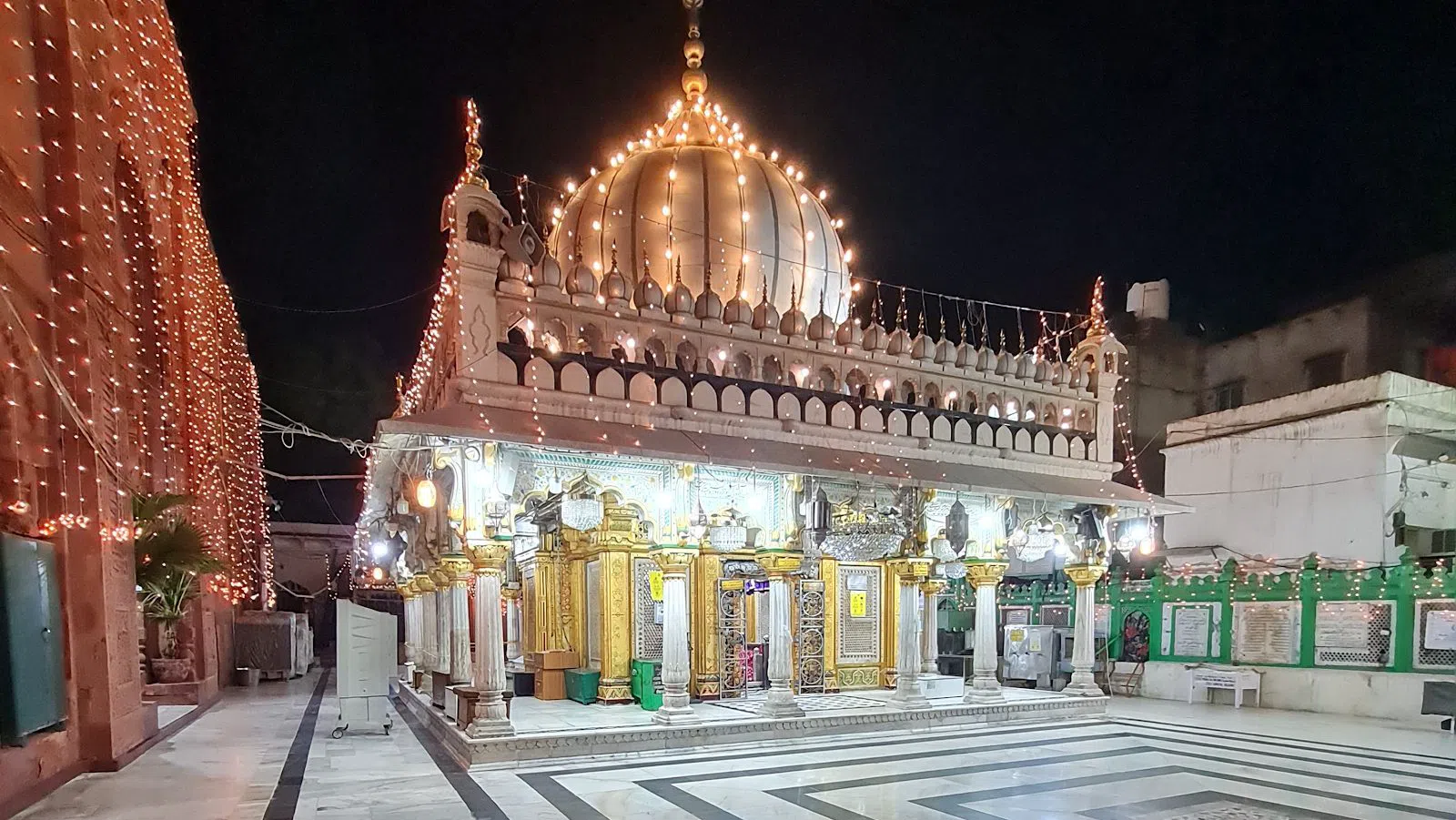
Hazrat Nizamuddin Dargah (Nizamuddin basti) is a white marble shrine behind a latticed jali screen under a green-and-gold canopy, reached on foot through narrow lanes of kebab grills and rose-petal and chadar sellers. The crowd is barefoot and the courtyard itself is small. Entry is free, shoe minding is ₹10 to ₹50, and donations are voluntary. Thursday evening qawwali follows the Maghrib prayer, 6 p.m. to 6:30 p.m. in winter and later in summer, so arrive before the prayer if you want a place. Dress modestly, with head and legs covered. Women pray in a separate area and are not admitted beyond the veranda. Keep valuables close in the lanes.
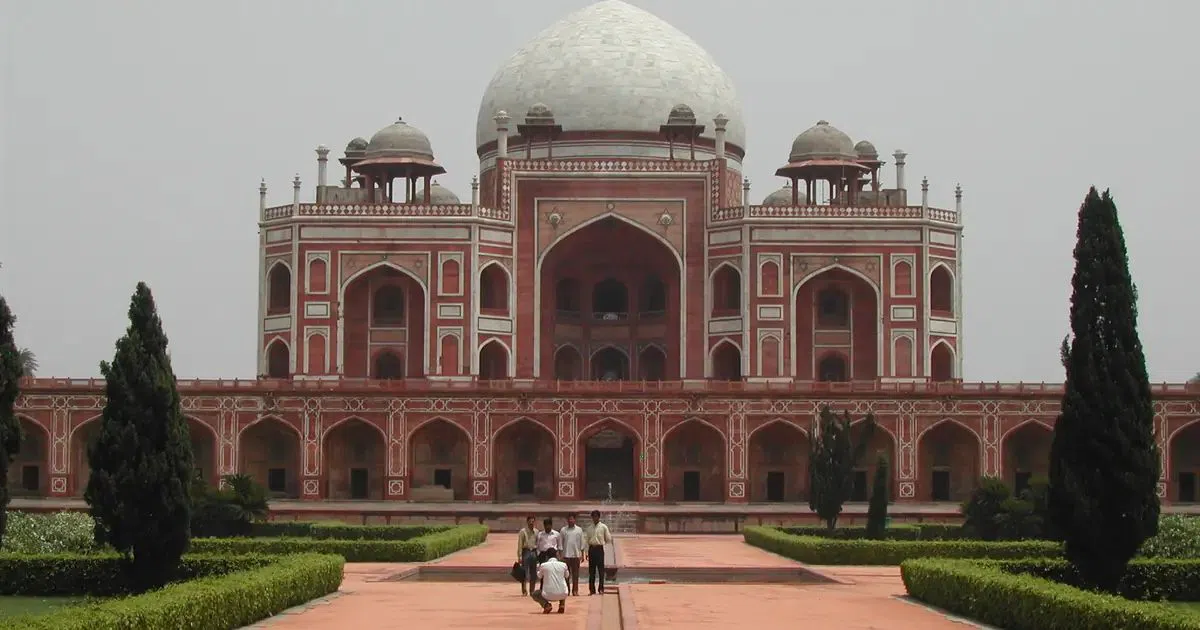
Humayun's Tomb (West Gate, 6 km north of the Lotus Temple) is a red sandstone and white marble double-domed Mughal tomb on a high arcaded plinth, set in a char-bagh of water channels and causeways. Tickets are ₹35 for Indian nationals and ₹550 for foreign nationals, with under-15s free, bought at the counter or online. Licensed guides wait at the gate and coaches park outside the complex. It opens every day from sunrise to sunset. Take the first hour, when the causeways are empty and the light comes side-on across the dome.

Humayun's Tomb World Heritage Site Museum (beside the tomb complex) is sunken and largely underground, with stone-clad courtyards open to the sky and lit galleries of Mughal artefacts, scale models and a 1:1 section of a dome. It explains how the whole Nizamuddin ensemble fits together, which nothing else on the site does. Entry comes with the complex ticket, and combined passes with Sunder Nursery sell at the gate. Entry is timed, and the first hour after opening is quietest. Add 60 to 90 minutes. Most of it sits below ground and holds up in the heat.

Sunder Nursery (next to Humayun's Tomb) is a 90-acre restored Mughal park, built around a central sandstone water axis with a scalloped cascade, six Mughal-era domed tombs standing in open lawns, a bonsai house and a wetland lake with birdlife. The gate is ₹50 for Indian adults, ₹200 for foreign nationals and ₹25 for children aged 5 to 12 and seniors. It opens every day with no weekly closure, 7 a.m. to 10 p.m., last entry 9:30 p.m. Picnics are allowed if you carry your own food and clear up. In winter this is the green space to use after the temple shuts.

Lodhi Colony, Dilli Haat and Qutub Minar
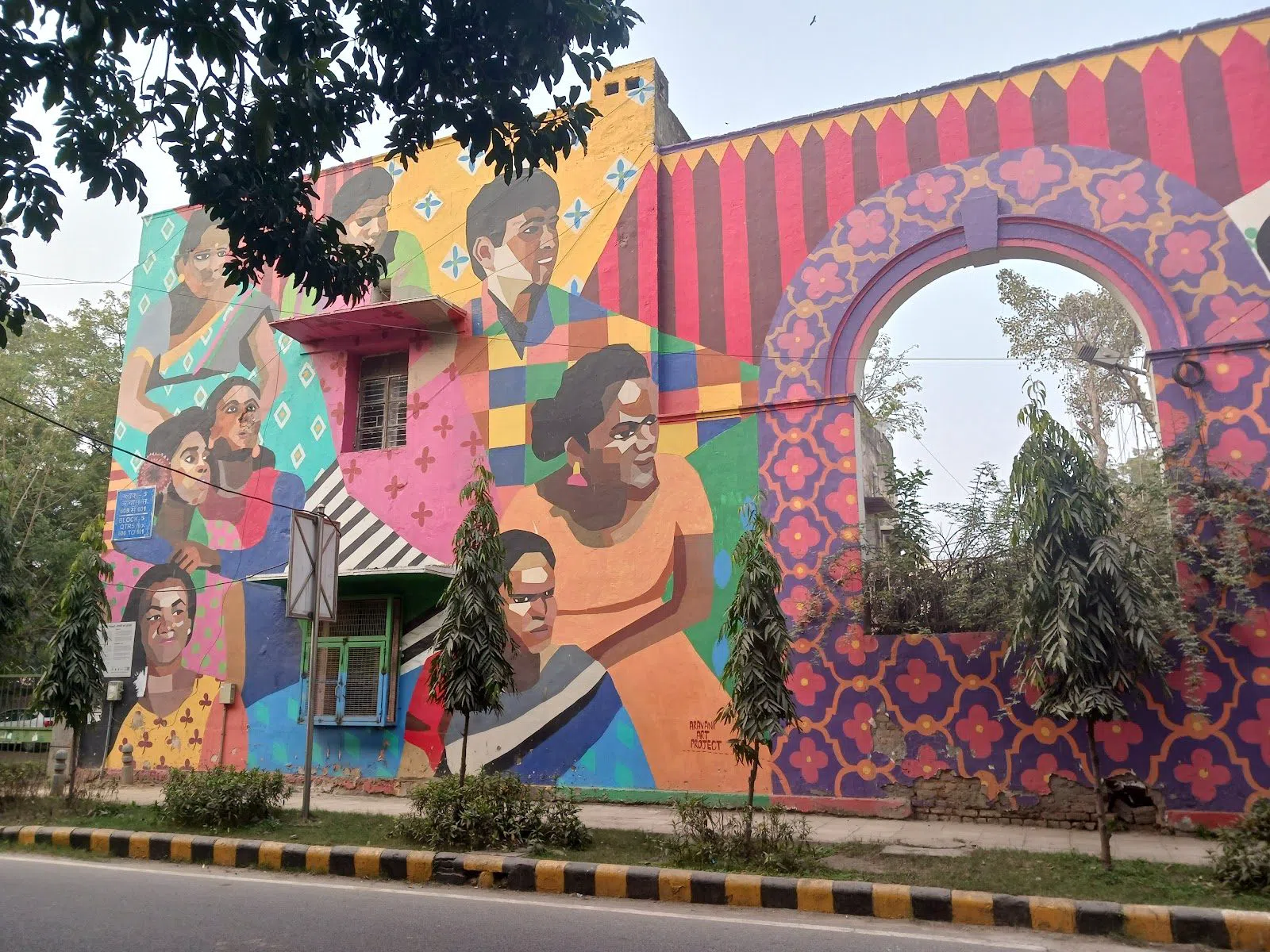
Lodhi Art District (Lodhi Colony) is India's first open-air public art district, run by the St+art India Foundation and still being added to: repeating 1940s government-housing arches and barrel vaults carrying more than 50 full-wall murals, tree-lined service lanes, washing lines strung above the artwork. It is free, outdoors and self-guided at any hour. Start from the Khanna Market end, where the murals are densest. People live here, so keep the noise down.
Dilli Haat INA (opposite INA Market) is an open-air brick-paved craft village of thatched stall canopies and state-by-state handicraft huts, with a food plaza of regional kitchens under awnings and plenty of outdoor seating. Delhi Tourism runs it, the gate ticket is under ₹50, and stallholders rotate every fortnight. Prices are close to fixed and come direct from the artisans, and the food plaza covers the north-east states. It opens daily 11 a.m. to 8 p.m. Nothing is sold at the Lotus Temple itself, so this is where to buy souvenirs.
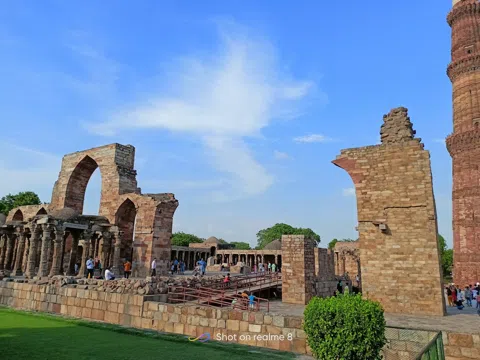
Qutub Minar Complex (Mehrauli) is a fluted 72.5 m red sandstone tower in five tapering storeys, banded with Kufic inscription, standing over the ruined Quwwat-ul-Islam mosque arcade and the iron Ashoka pillar. It is 14 km out and makes up the other half of most Old and New Delhi itineraries that take in the Lotus Temple. Tickets are ₹35 for Indian nationals and ₹550 for foreign nationals, with under-15s free. You cannot climb the tower, and visitors circulate the grounds instead. It opens daily 7 a.m. to 5 p.m. and runs an evening light-and-sound show. Go early.
Who it suits
The Lotus Temple suits a visitor who wants quiet, a building worth looking at, and no transaction at the door. It asks for bare feet, a single-file queue, silence and no photograph of the interior. Anyone who came for the story of the nine-sided plan will get more from the information centre than from the hall.
Before you go
Mondays are the day to avoid, with the Lotus Temple and Akshardham both closed, and the temple needs no ticket or reservation on any other day. Reserve a guided day in advance if you want to be driven, and buy the monument tickets at the counter or online.
See the Delhi guide and the Delhi hotel search.
出发之前
How much does it cost to enter the Lotus Temple?
Nothing. Entry is ₹0 for everyone, there is no ticket to buy, and you do not need to book or hire a guide. The information centre in the gardens and the basement exhibition under the petals are ₹0 too.
Which day is the Lotus Temple closed?
Monday, for maintenance. It opens Tuesday to Sunday, 9 a.m. to 7 p.m. from April to September and 9 a.m. to 5:30 p.m. from October to March. Swaminarayan Akshardham also closes on Mondays, so you would lose both if you came on a Monday.
Can you take photographs inside the Lotus Temple?
No. You cannot take photographs inside the prayer hall, and nobody speaks in there. You leave shoes and bags at the counters outside, then walk the last stretch barefoot.
How does the queue work, and when is it shortest?
Visitors go through the gardens in single file, and ushers send large school and tour parties into the hall in batches. Coaches drop their passengers at the Kalkaji Mandir side. Arrive at opening, before the coaches, and use the information centre while the queue clears.
What else can you see near the Lotus Temple?
Kalkaji Mandir is a 10 to 15 minute walk from the gate. Nehru Place Market is a kilometre away and ISKCON Temple Delhi 2 km. Humayun's Tomb and its museum are 6 km north, and Sunder Nursery next door stays open until 10 p.m.