Especial Delhi
Humayunpur es donde Delhi come del Noreste
Quince cocinas en un callejón del sur de Delhi que sirven comida naga, manipuri, mizo, assamesa, birmana e himalaya: qué pedir, cuánto cuesta y qué locales pueden sentar de verdad a tu grupo.
Por Nandita RaoFrom the Chandni Chowk galis to the new-Delhi tasting menus
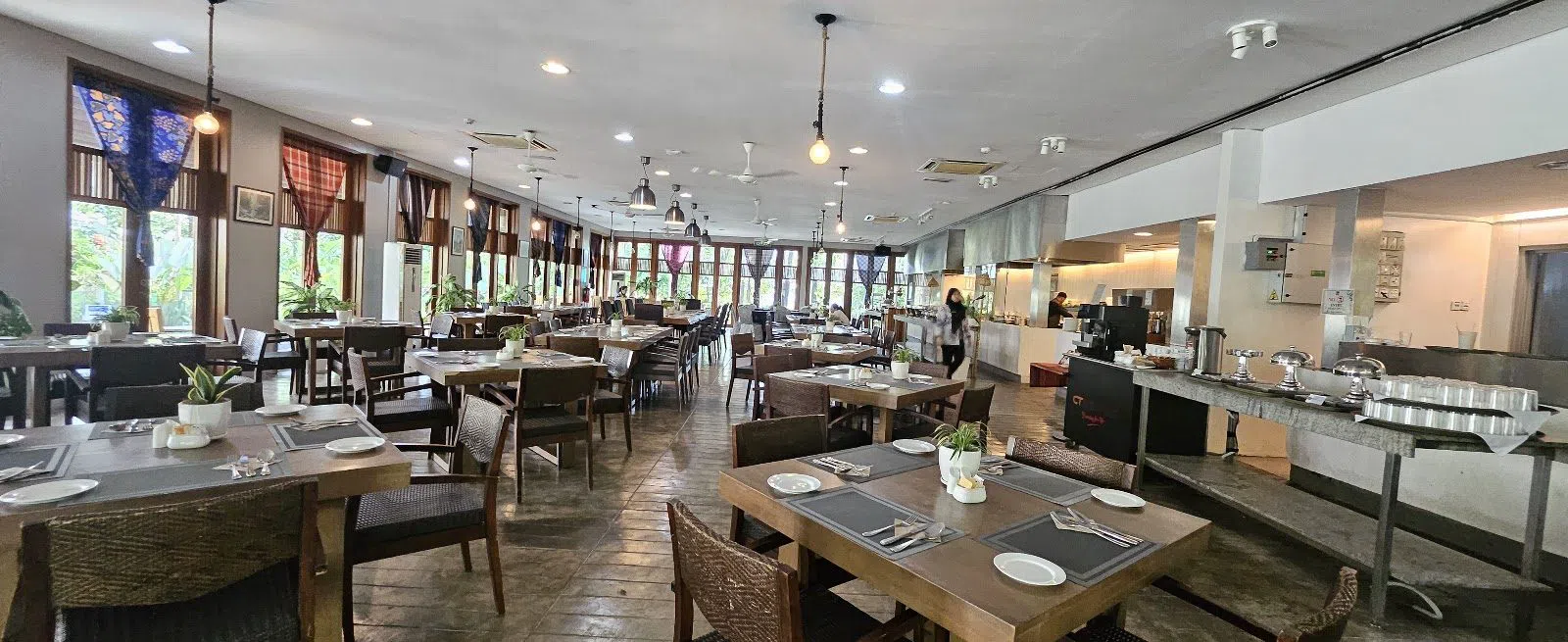
El callejón huele a cerdo ahumado antes de que hayas leído un solo cartel: esa nota dulce y ceniza que baja de las cocinas del primer piso, cortada por café tostándose y la acidez de vinagre del eromba de alguien. Humayunpur es una aldea urbana encajada en Safdarjung Enclave, en el sur de Delhi, unos cientos de metros de edificios estrechos y carteles pintados a mano, y dentro de ellos hay más cocinas del Noreste de India que en el resto de la ciudad junta. Cocina naga, manipuri, assamesa, mizo, nepalí, tibetana y birmana, casi toda por menos de ₹800 para dos, y toda a un paseo que dura cuatro minutos si no te detienes. Te detendrás.
Aprende los fermentos antes de pedir
Aquí es fácil pedir mal, y la culpa se la llevan las cocinas. Tres ingredientes sostienen casi toda esta comida. El axone (también lo verás escrito akhuni) es soja fermentada: penetrante en la olla, suave en el plato, una columna vertebral sabrosa y profunda más que una excentricidad. El brote de bambú, fresco o fermentado, aporta un mordisco verde y ácido que tu paladar leerá como acidez. El hentak es una pasta de pescado fermentado de Manipur y es el más contundente de los tres, un sabor que aterriza cerca de una anchoa muy fuerte.
Nada de esto pica por picar, aunque los chiles son de verdad: king chilli en las cocinas nagas, el chile sirarakhong hathei más abajo en el callejón. El aceite y la masala son la parte medida. La carne se ahúma, se hierve o se fríe en seco; las verduras se hierven; la salsa suele ser un caldo fino y limpio. Si llegas esperando un gravy indio del norte, pensarás que la comida está poco sazonada durante unos cuatro bocados, y luego llega el humo y no volverás a pensarlo. Pide un plato con fermento y uno suave en tu primera sentada, en lugar de comprometer a toda la mesa con el axone.
Planifica tu viaje a Delhi
Precios en directo de nuestros socios de reservas.
Cancelación gratuita en muchas habitaciones. Podemos recibir una comisión cuando reservas.
Las cuatro cocinas nagas
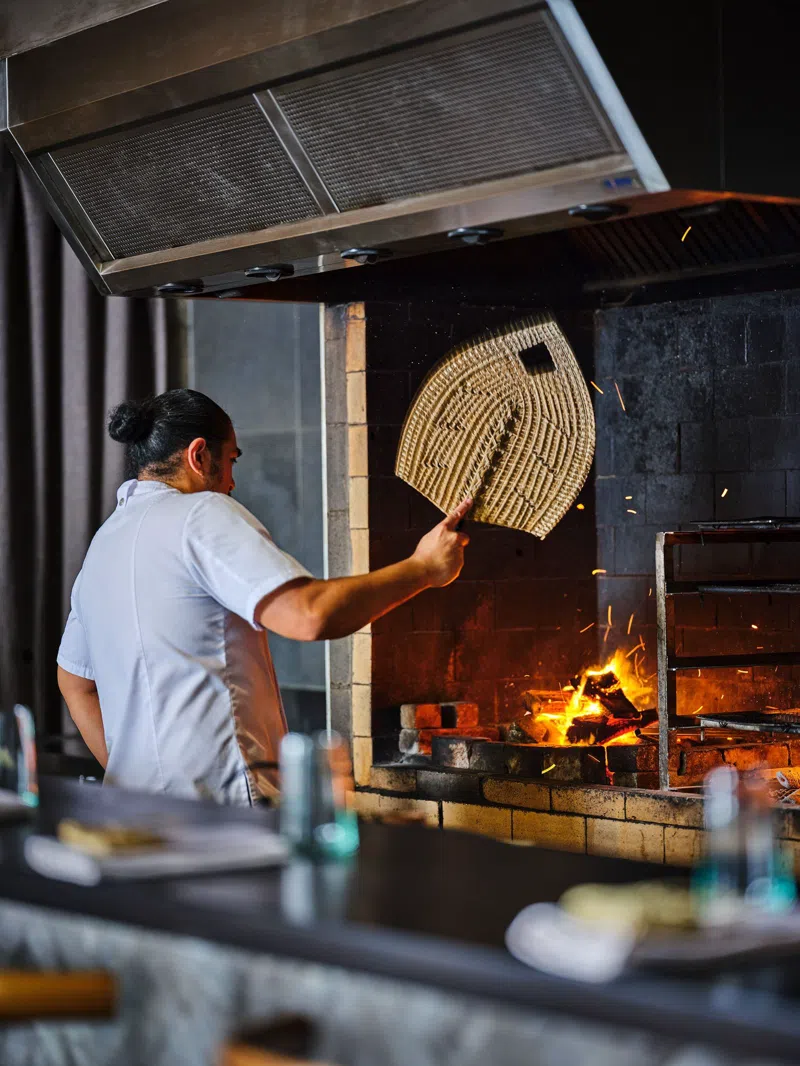
Hornbill (Humayunpur, Safdarjung Enclave) es a la que todos se refieren cuando dicen que vinieron por comida naga. Rakesh Singh lo abrió en 2008 y sigue siendo el referente de la cocina casera naga en la ciudad, con axone y brote de bambú traídos de Nagaland en lugar de imitados localmente. El cerdo ahumado con axone es el plato por el que se conoce el callejón, y es la razón para subir las escaleras. La pega es el local: unas 12 a 15 plazas, solo sin reserva, no se aceptan reservas. Un grupo de cinco o más no se sentará junto en hora punta. Divideos en parejas o ven en las horas tranquilas; abre de 13:00 a 22:45 todos los días. Presupuesto de ₹500-700 para dos.
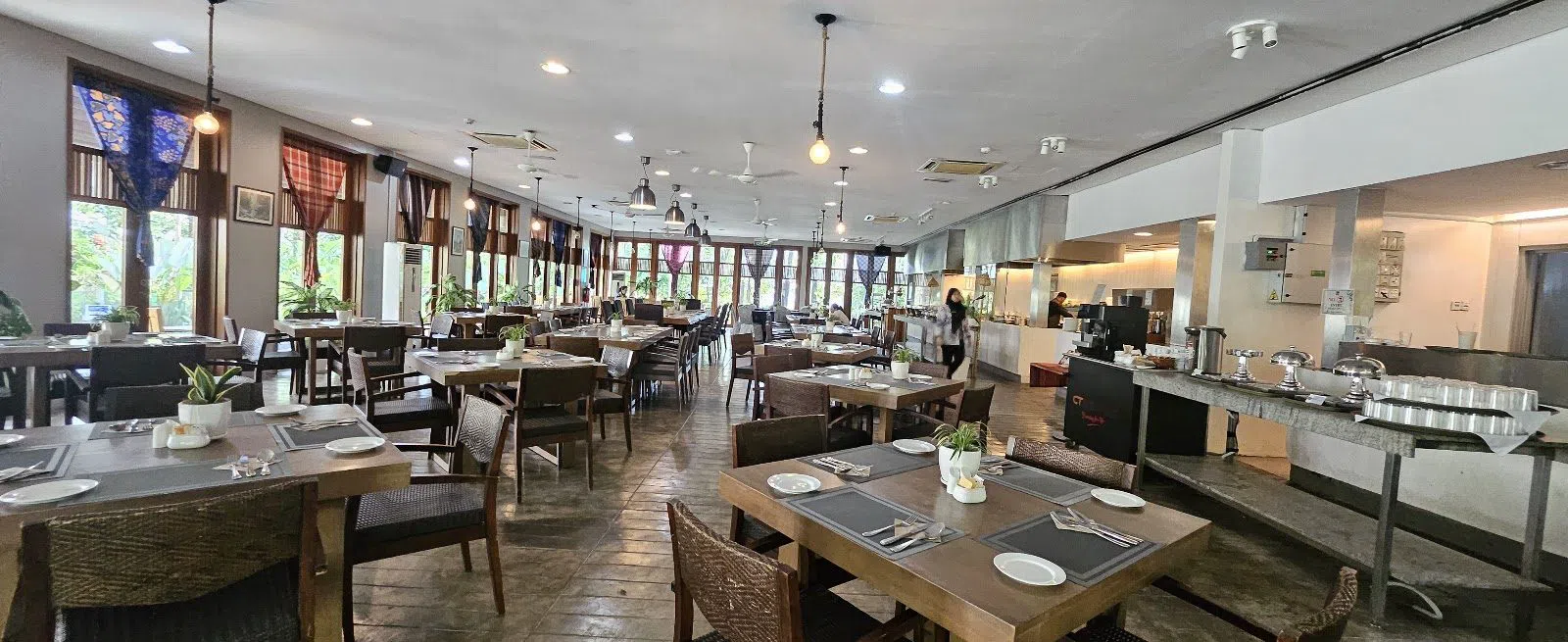
Cuando Hornbill está lleno, y lo está a menudo, Shilloi Restaurant (Humayunpur) es adonde ir en su lugar, y no pierdes nada por ello. Tiene la mejor valoración de cualquier cocina naga del callejón, un 4,5, cocina bien la comida tribal y mantiene un horario absurdamente largo, de 11:30 a 23:45, los siete días de la semana, lo que lo convierte en el recurso fiable a horas raras. Local pequeño, sin reserva, viable para cuatro a seis y justo por encima de eso. ₹600-800 para dos.
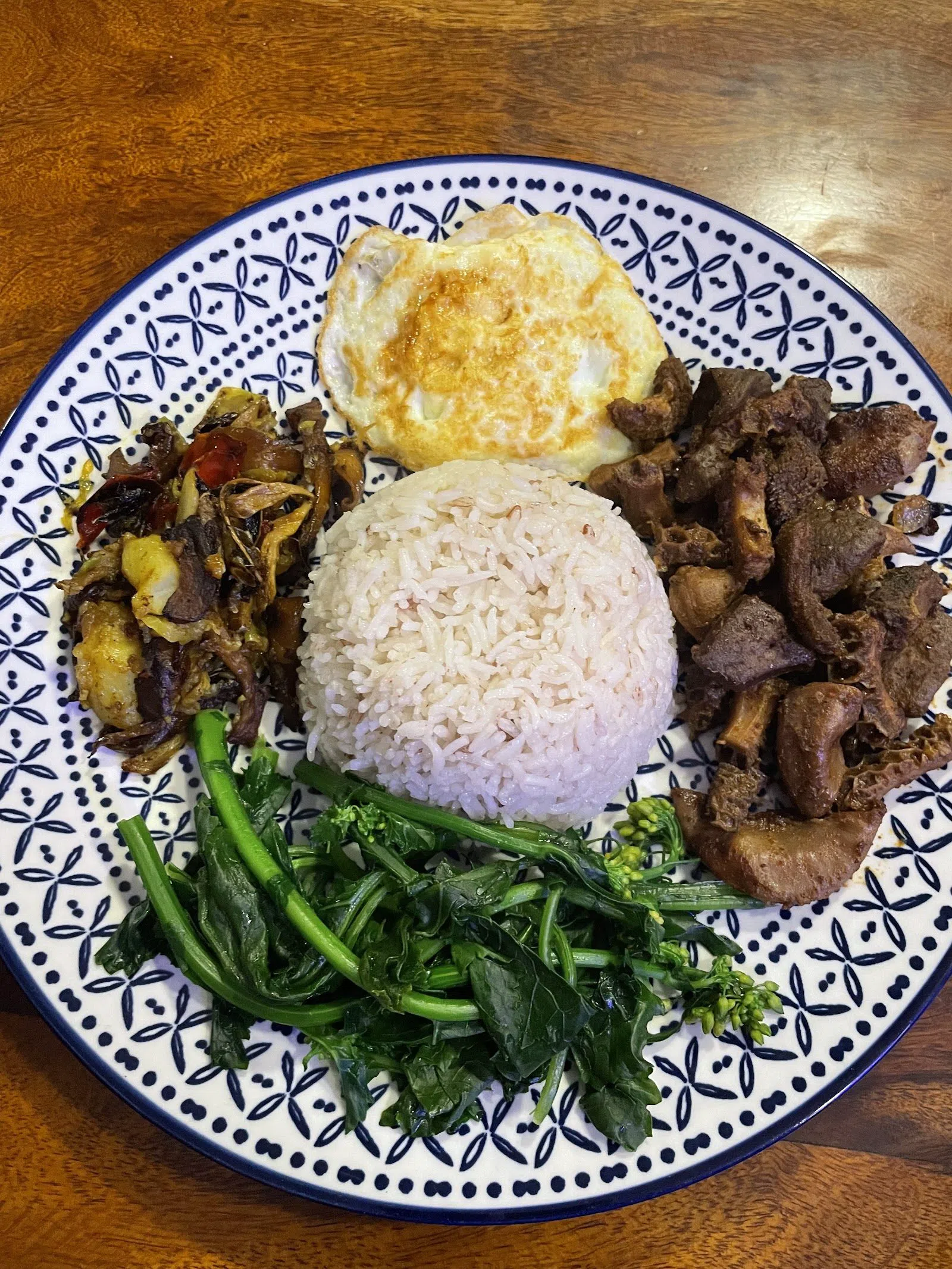
Angami Nagamese Kitchen (Humayunpur) resuelve el único problema real de horarios de la ruta: casi todo el callejón duerme por la mañana. Es la única cocina naga de aquí que abre a las 9:00, así que es la parada viable para desayunar o comer temprano antes de que todo lo demás levante la persiana. La cocina es específicamente angami y, algo inusual en un menú naga, hay platos vegetarianos, lo que importa si alguien de tu grupo no come cerdo. Comedor sencillo sin reserva, bien para grupos pequeños, ₹500-700 para dos.
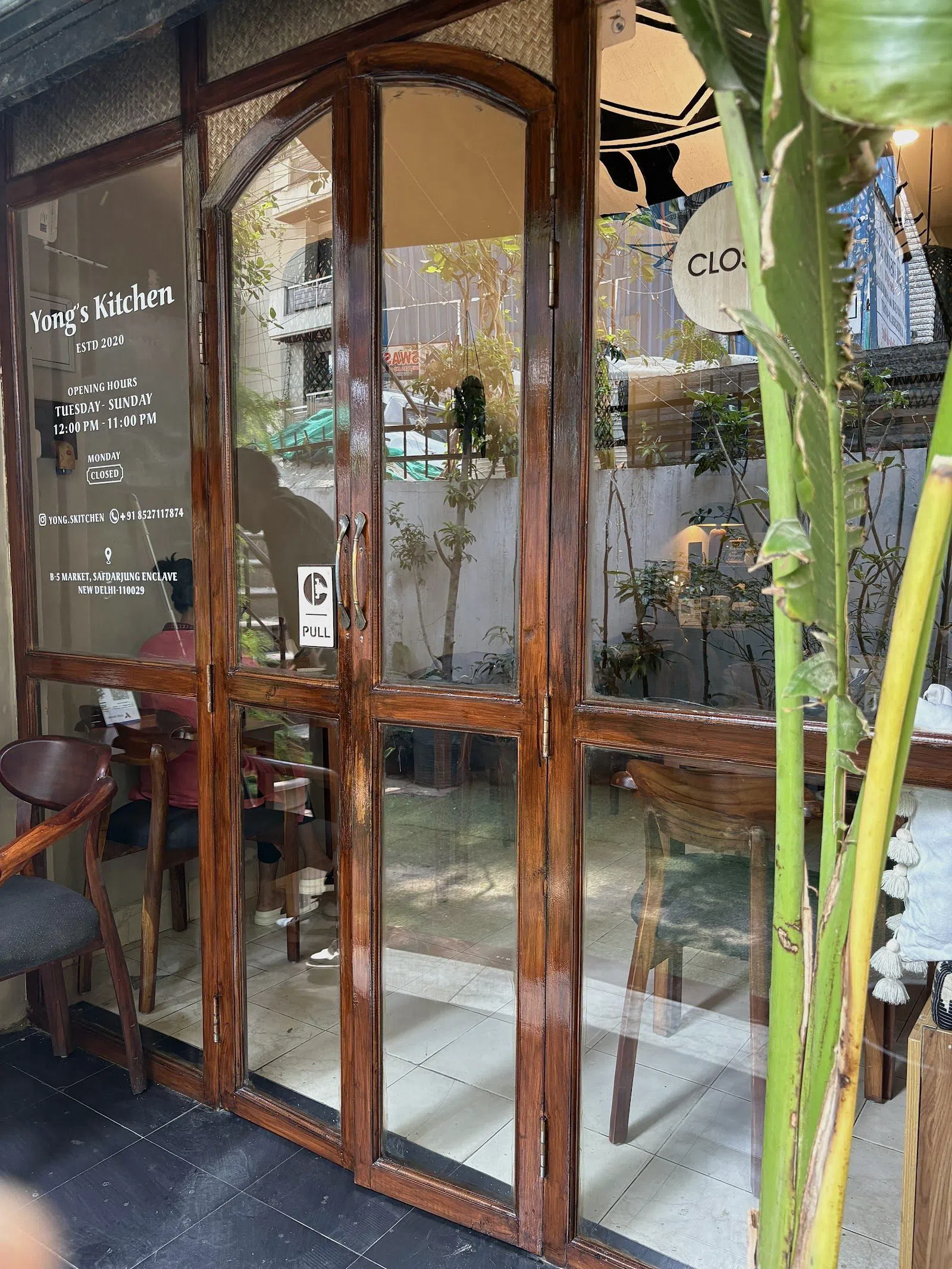
Yong's Kitchen (Humayunpur) es el formato atípico. Sirve una fuente comunal de marisco hervido sazonada con hentak, que se come con las manos, y no hay nada parecido en la ciudad. La fuente es para cuatro a seis personas, pero sé honesto con el local: es pequeño e íntimo y se abarrota enseguida. Cuenta con ₹800-1.400 para dos, el más caro del conjunto naga. Cierra los lunes, abre de martes a domingo, de 12:00 a 23:00, y ese cierre de los lunes sorprende a más visitantes que cualquier otro dato de esta calle.
Comer manipuri de tres maneras
La comida meitei de Manipur es la otra gran especialidad del callejón, y puedes probarla en tres niveles de precio muy distintos.
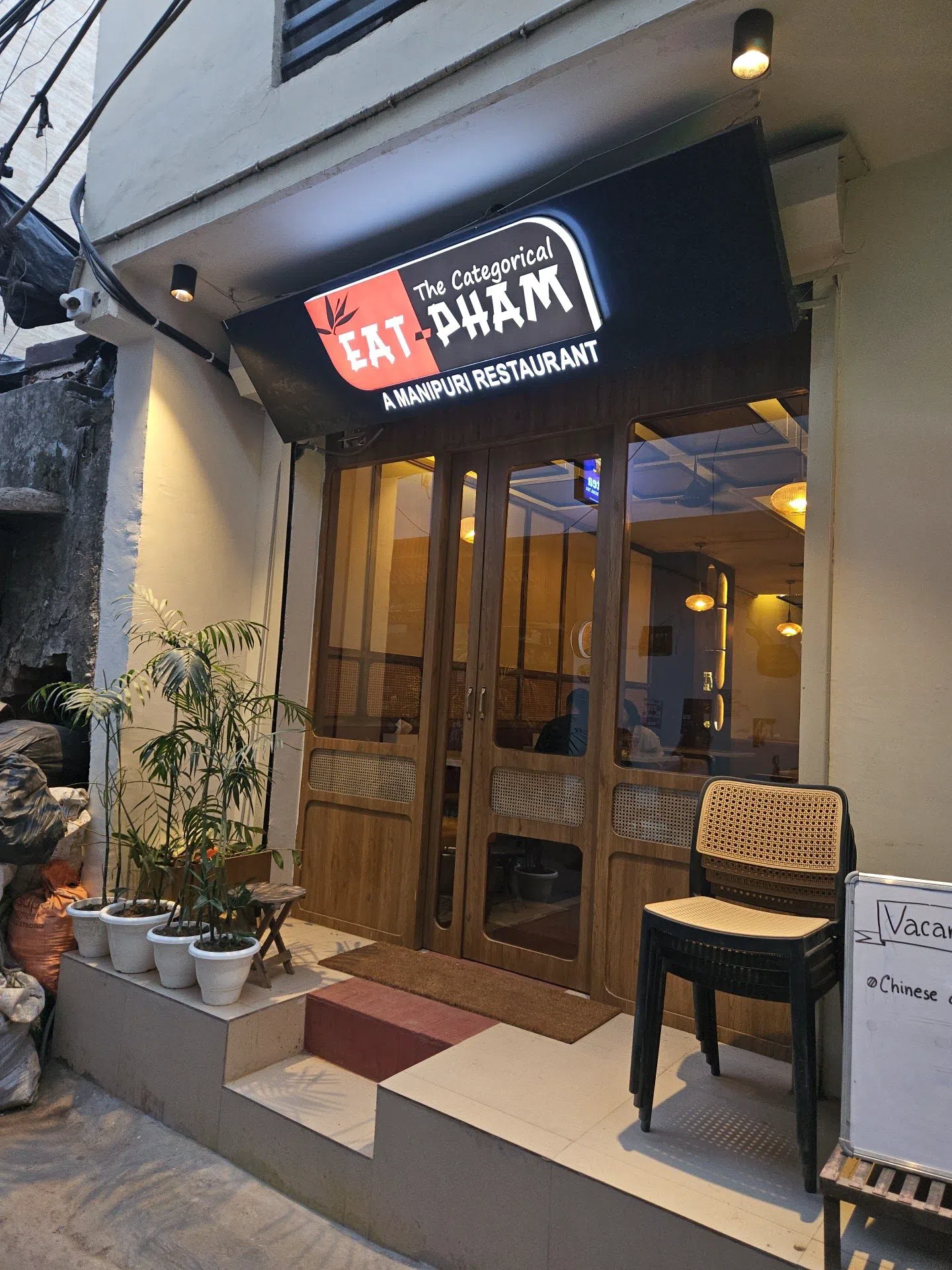
Empieza por The Categorical Eat-Pham (Humayunpur), la introducción más clara a la cocina meitei en todo Delhi. El thali es lo importante: hawai thongba, kangsoi y eromba en una sola sentada, para que aprendas la gramática de la cocina en lugar de apostarlo todo a un único plato desconocido. Empezó con tres mesas y ahora tiene unas tres veces ese tamaño, lo que lo convierte en la mejor opción para grupos de la ruta. Además sigue estando casi siempre lleno, así que llama con antelación si sois seis o más. ₹500-700 para dos.
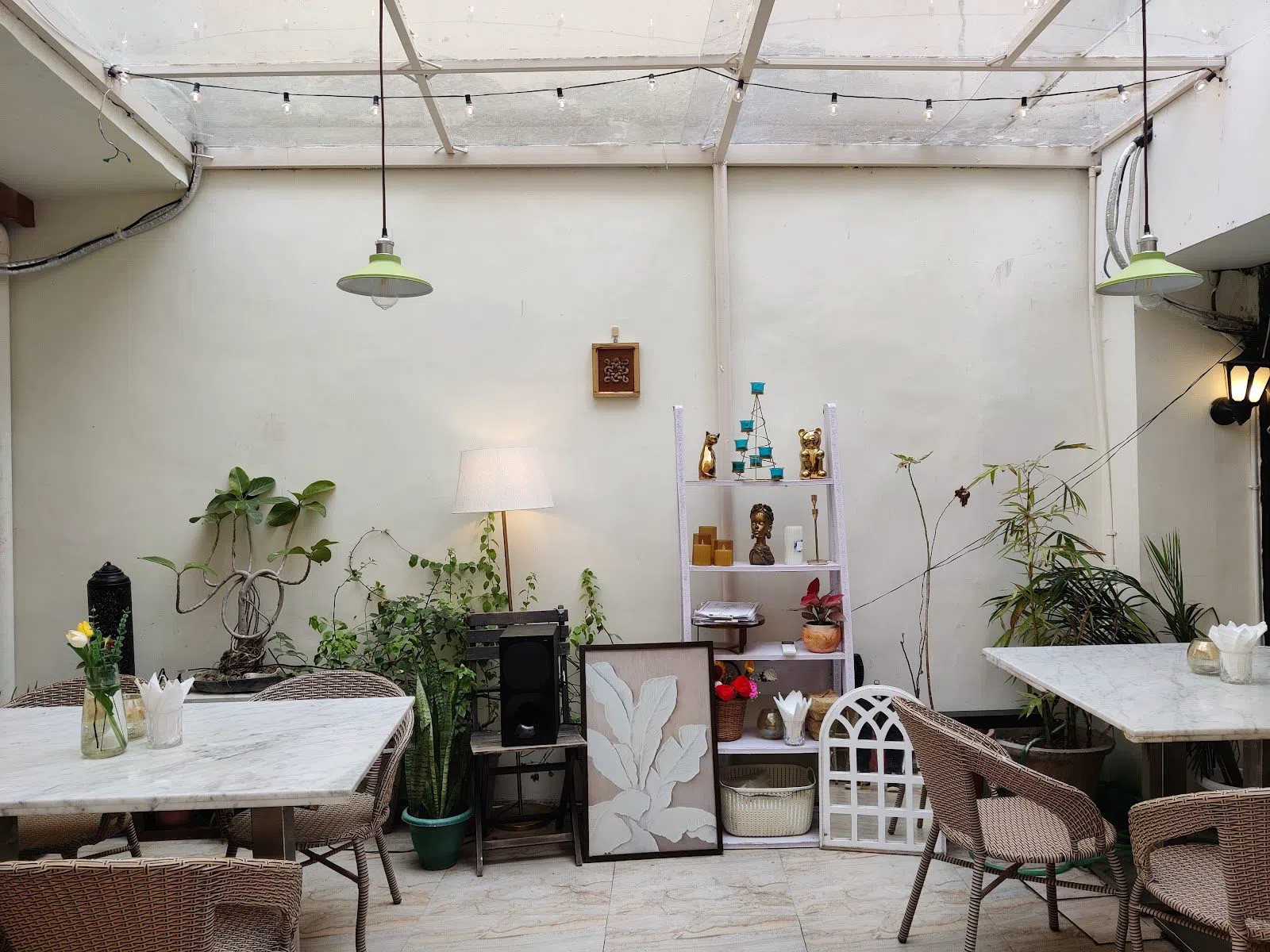
Hentak (Humayunpur) es el otro extremo, el más refinado. El chef Nikesh Asem lo abrió en soft launch en julio de 2025 junto a Araba Laitonjam, y es la única cocina del callejón que lleva la cocina manipuri a territorio de alta gastronomía: pescado fermentado integrado en pasta, madhujan reinterpretado como bollería. También es el único restaurante formal con servicio de mesa real, lo que lo convierte en el local más apto para grupos de Humayunpur; reserva con antelación para una mesa grande. ₹1.200-1.800 para dos, es decir, unas tres veces una comida de thali. Come aquí después de haber comido las versiones tradicionales, no antes. Las reinterpretaciones solo funcionan si conoces los originales.
Mahelal's (Humayunpur) es un café y tostador de café manipuri que abrió en octubre de 2024, cocina con chile sirarakhong hathei, arroz negro y pimienta de montaña, y tuesta en casa granos cultivados en Nagaland. Es el único lugar que vincula el producto del Noreste con un programa de café serio. Dos cosas que tener en cuenta: solo abre por las tardes, desde las 17:30 con la cocina cerrando a las 21:00, y cierra los martes. El buffet comunitario de los domingos a ₹699 por persona es la jugada para grupos; si no, el café es pequeño, así que reserva para un grupo más grande. A la carta, ₹500-800 para dos.
Assam, Mizoram y Myanmar en una sola calle
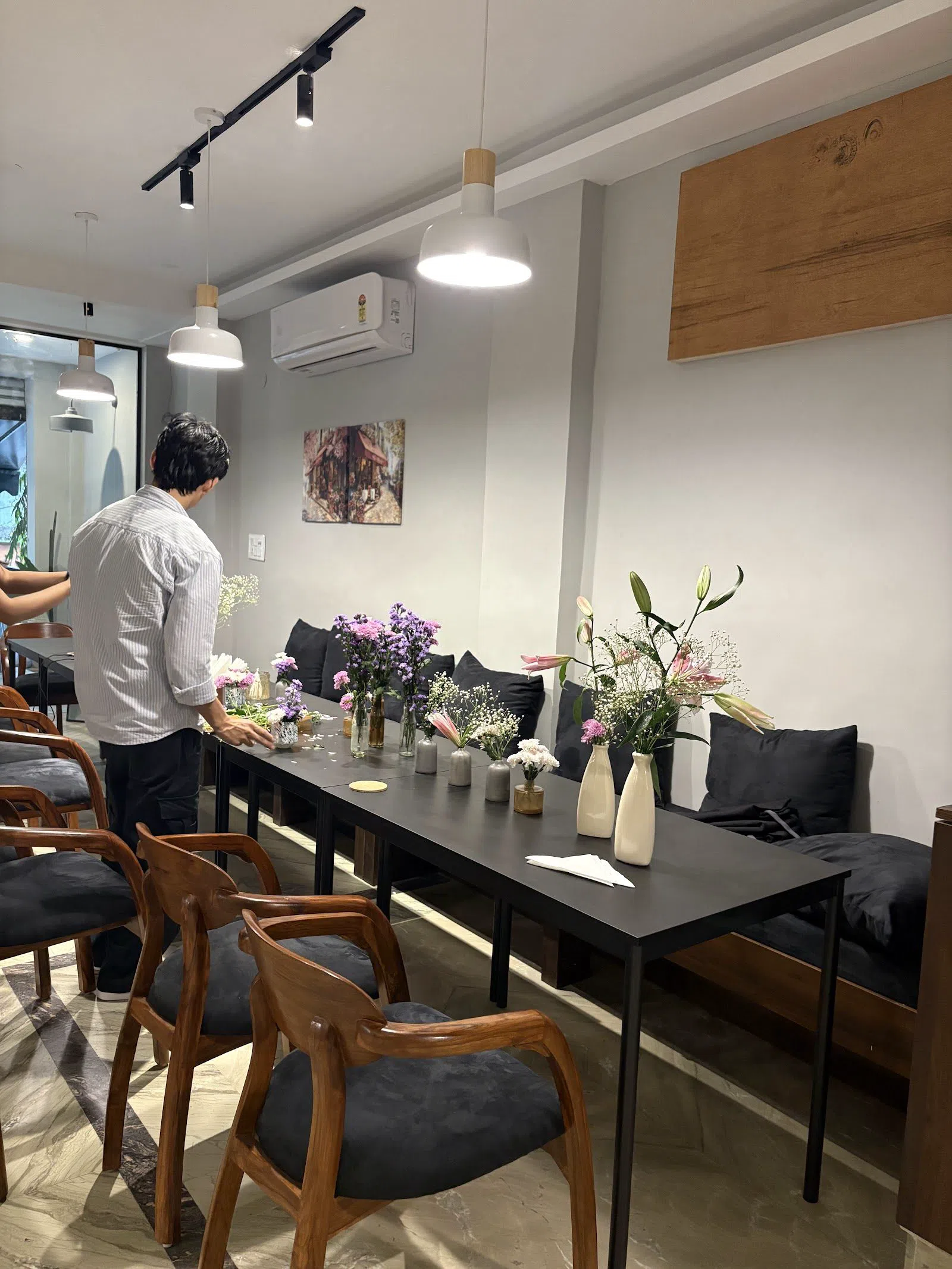
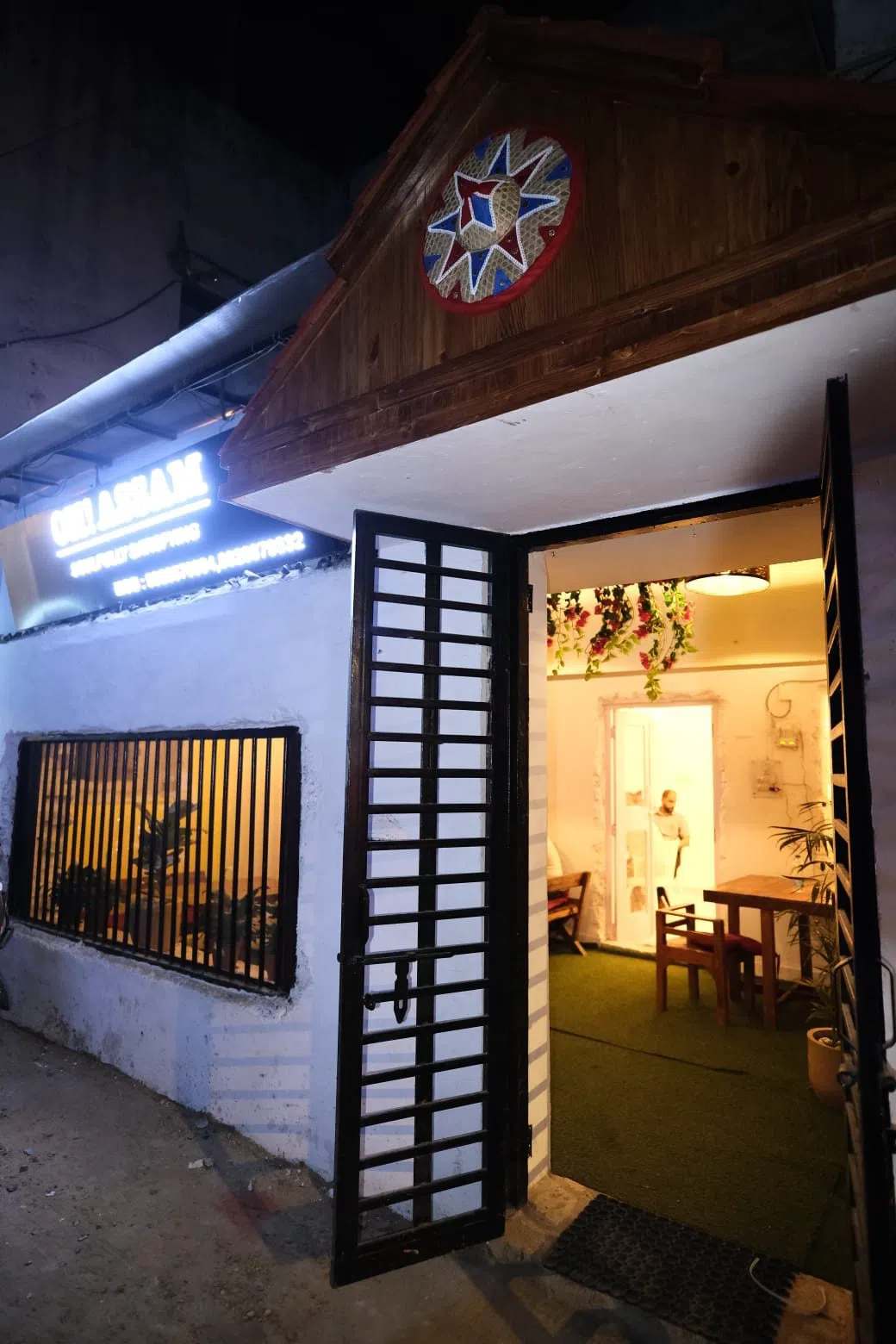
Oh! Assam (Humayunpur) lo lleva Rubi Brahma, que se instaló en el callejón en 2017 para cocinar la comida con la que creció. El khaar y el pato con sésamo negro son las razones para venir (el khaar es una preparación alcalina distinta a todo lo demás en la ruta, más sabroso-suave que ácido), y los thalis son la vía más fácil para un primerizo que quiera amplitud. Es un comedor informal que admite grupos con comodidad, con confirmación de apertura de 12:00 a 23:00 todos los días, valorado con 4,4 en varios cientos de reseñas. ₹450-600 para dos, o ₹250-450 por plato: la comida formal sentada más barata de esta lista.
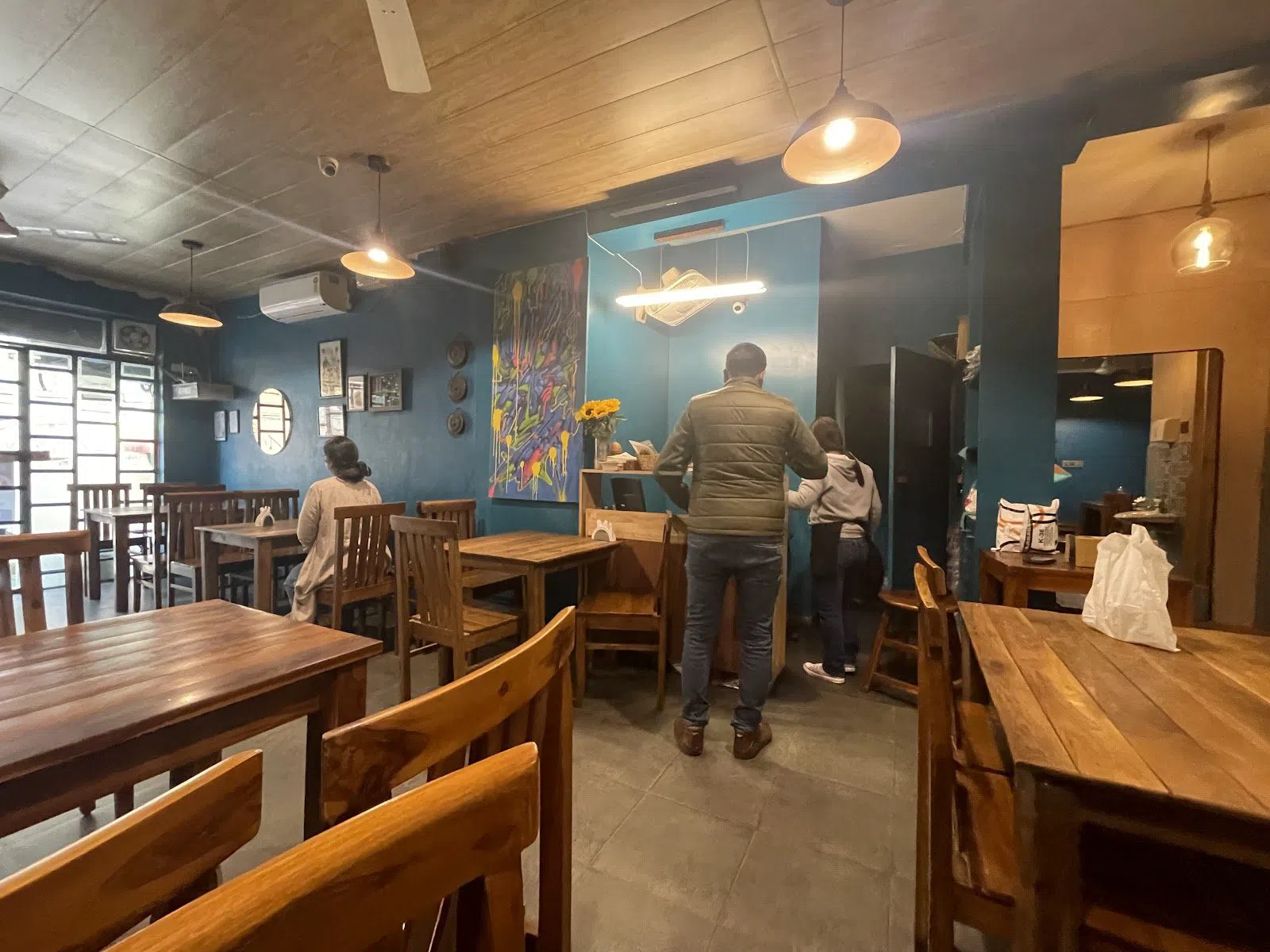
Mizo Diner (Humayunpur) es uno de los poquísimos lugares en India que sirve comida mizo comercialmente, lo que por sí solo justifica la parada. Pide bai, chow satui leih y el cerdo doblemente frito con cacahuetes, y toma la cerveza de arroz. También es el más espacioso de los locales antiguos y apto para sillas de ruedas, así que maneja grupos sin dramas, y abre de 11:00 a 23:00 todos los días. Valorado con 4,4 en casi 600 reseñas. ₹600-800 para dos.
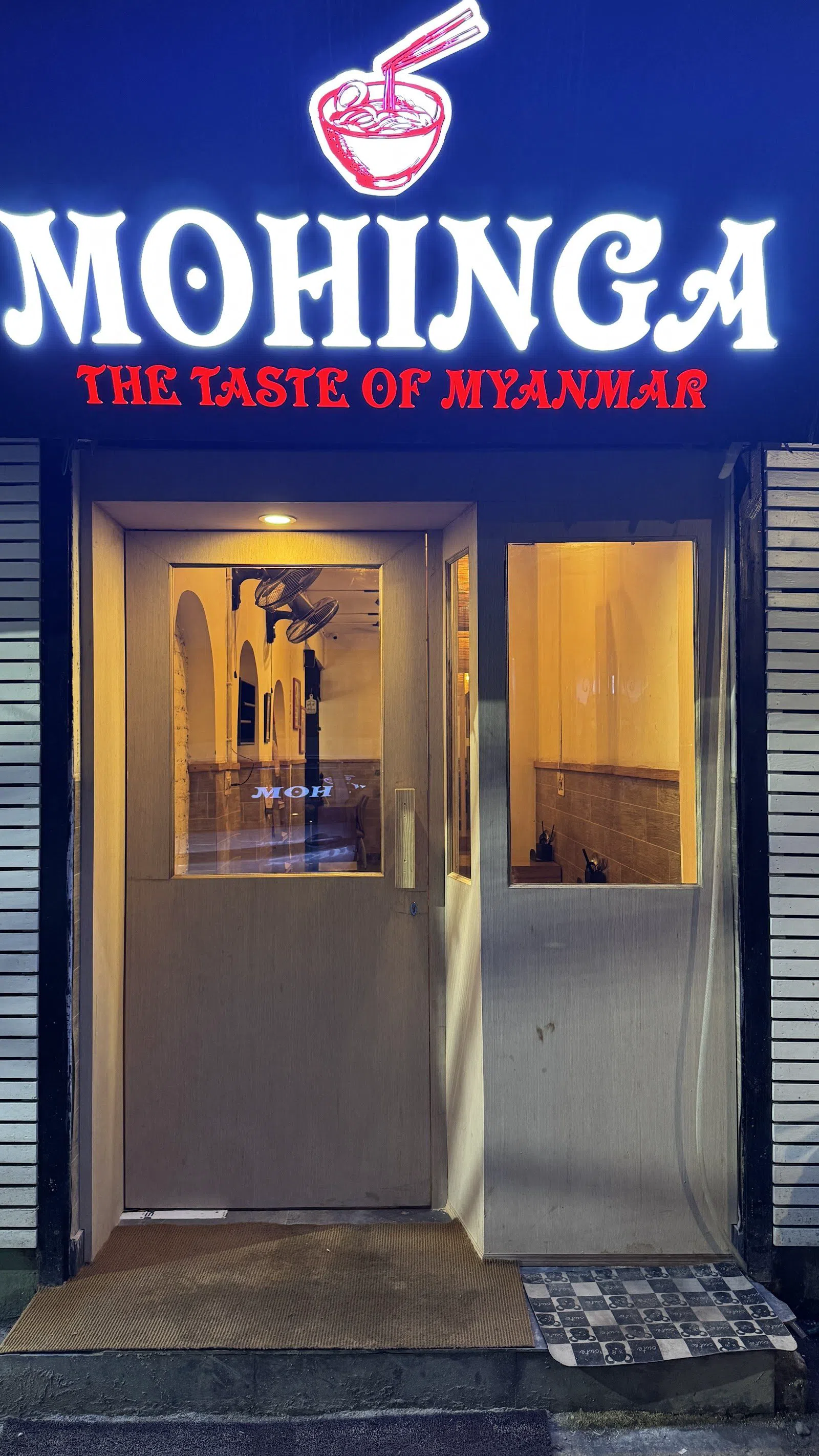
Mohinga The Taste Of Myanmar (Humayunpur) lleva la ruta más allá del Noreste indio, hasta lo que lo rodea. Delhi casi no tiene cocina birmana fuera de este callejón, y el mohinga (la sopa de desayuno de bagre y fideos de arroz) y el laphet thoke, la ensalada de hoja de té fermentada, aquí son las versiones reales y no aproximaciones panasiáticas. Comida informal, de 11:00 a 23:00 todos los días, admite grupos, pero reserva en hora punta. ₹600-900 para dos.
Los locales que resuelven un grupo mixto
Si llegas con gente de distinto atrevimiento, tres sitios mantendrán la paz.
Bhansaghar (Humayunpur) está junto a la entrada del callejón, con una fachada azul que lo convierte en el punto de encuentro natural, y es la mejor opción por defecto cuando apareces con un grupo y no has reservado. Un comedor amplio y cómodo que abarca cocina nepalí, assamesa y tibetana, así que resuelve el problema de la mesa mixta en un solo menú. Valorado con 4,5 sobre casi 1.000 reseñas, abre de 13:00 a 23:00. 600-800 ₹ para dos.
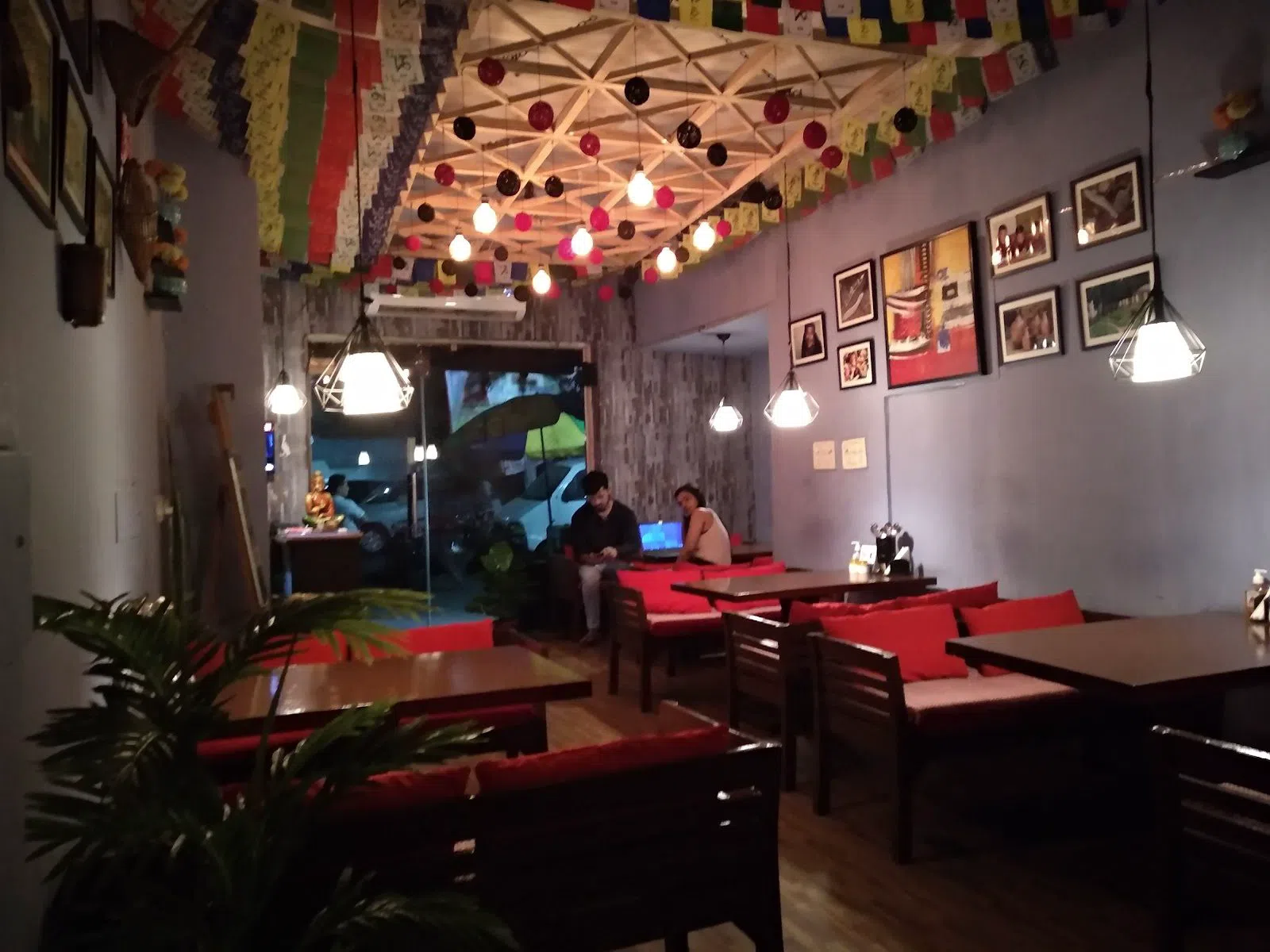
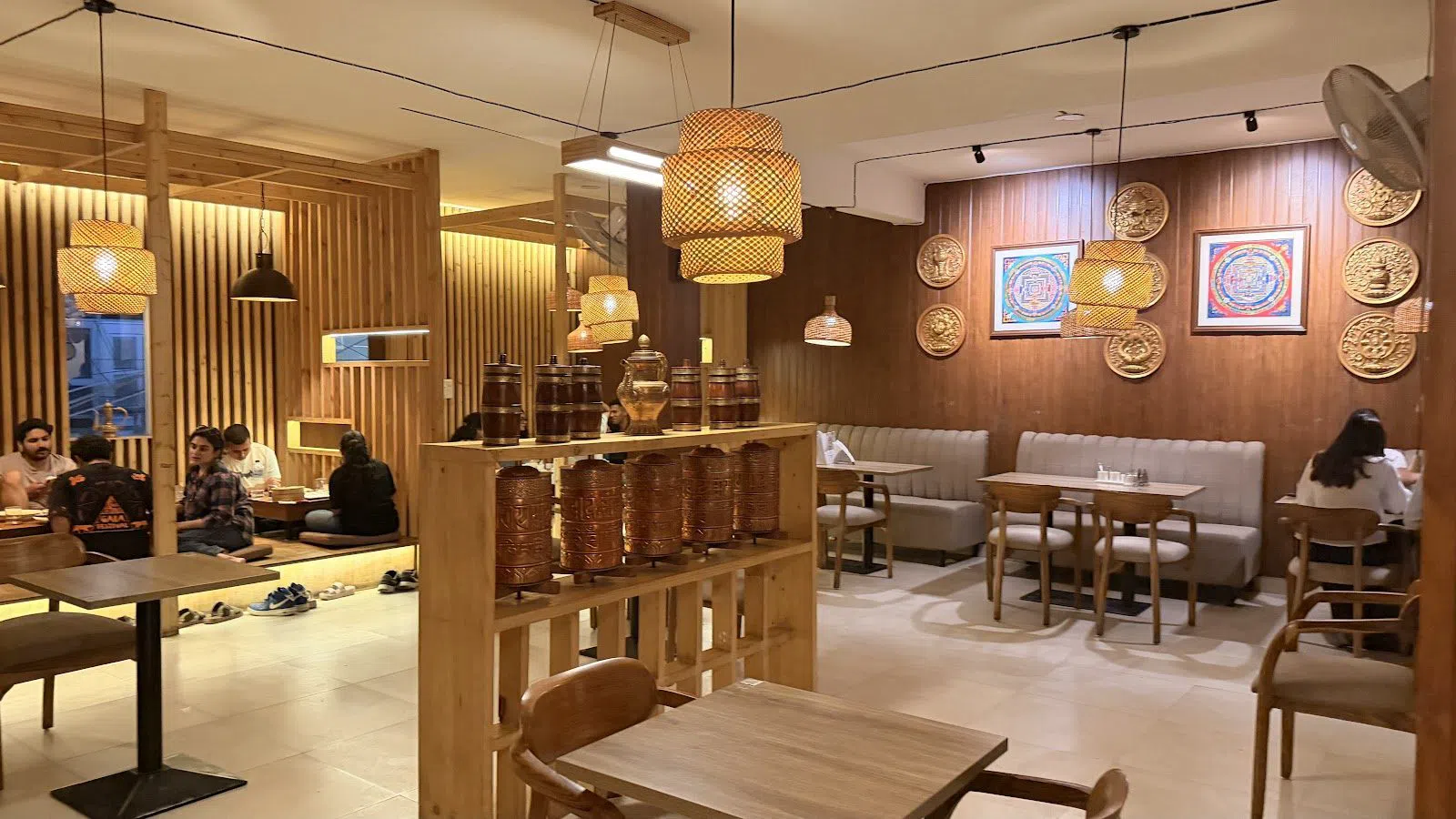
Lha Kitchen (Humayunpur) lleva en marcha desde 2018 y tiene un 4,3 sobre casi 1.500 reseñas. El thakali thali ilimitado es el plato con mejor relación calidad-precio de la zona: 290 ₹ en versión vegetariana y 390 ₹ con cerdo, acompañado de chatamaari, choila y sekuwa. Es una sala en el primer piso con capacidad real, lo que va bien para grupos. El servicio está partido, eso sí, de 13:00 a 16:15 y luego de 18:00 a 22:30, y ese cierre de las 16:15 ha arruinado más de un almuerzo tardío. Tenlo en cuenta. 600-800 ₹ para dos si te sales del thali.
Yo Tibet (Humayunpur) es el aterrizaje más suave de la ruta si el axone y el pescado fermentado son un paso demasiado grande para el primer día. Lo que se pide son mokthuk, thenthuk y laphing de cerdo, la sala tiene un tamaño decente y aguanta hasta alrededor de las 23:30 los siete días de la semana, lo que lo convierte en la parada nocturna para grupos cuando las cocinas más pequeñas ya han apagado los fogones. 400-600 ₹ para dos.
Una sala tranquila entre plato y plato de cerdo
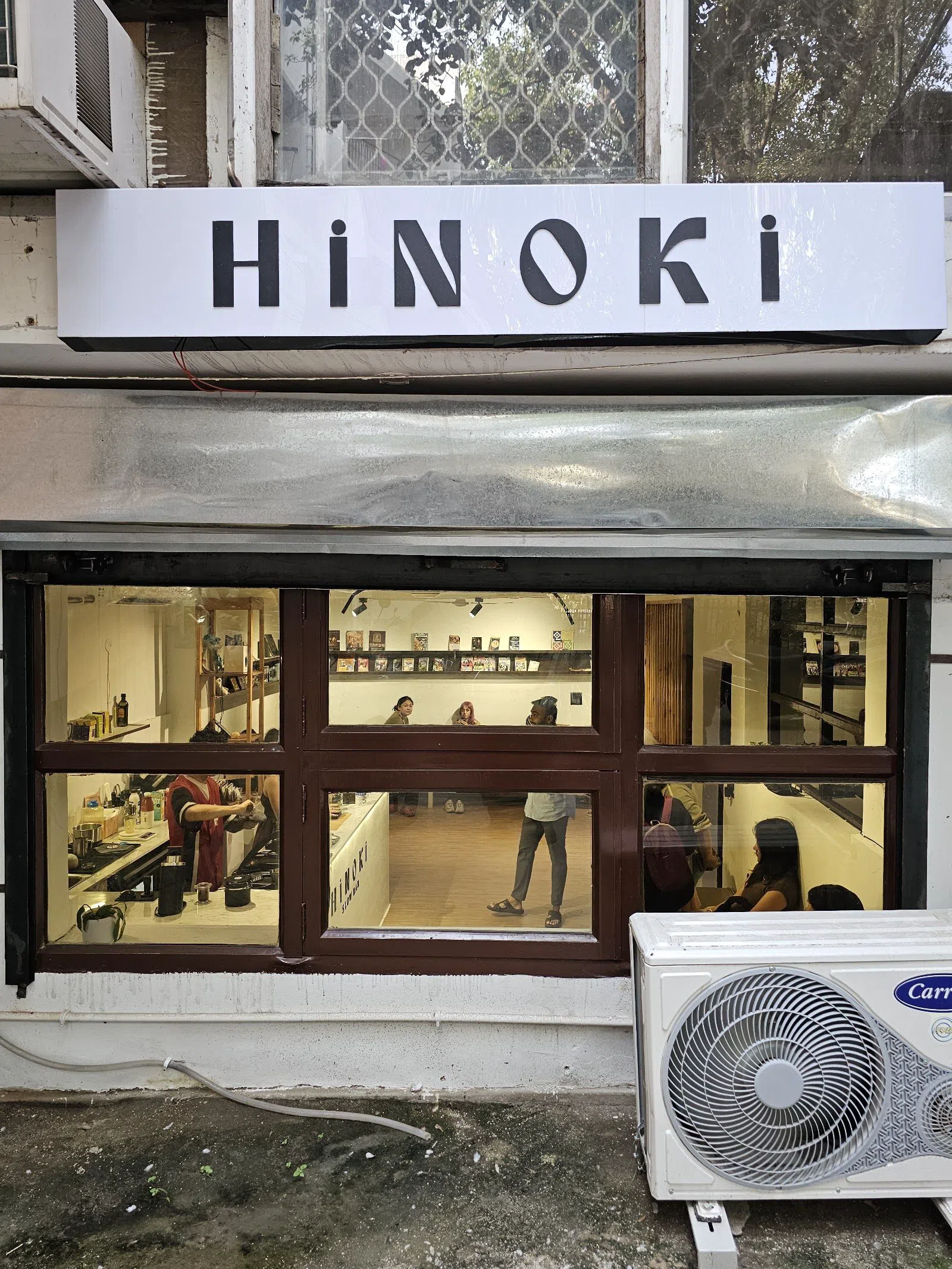
Hinoki Slow Bar (Humayunpur) se sale del tema a propósito y encaja mejor a mitad del día que al principio o al final. Es el primer slow bar como es debido de Delhi, fundado por Urvi Singh y Deepanshu Saini, con café preparado a mano por goteo al momento. El silencio es la razón para parar, no la comida. Ven de dos en dos o de cuatro en cuatro; es pequeño y está pensado para la calma, y un grupo grande echa por tierra todo el sentido de la sala. 400-600 ₹ para dos.
Llévate el callejón a casa
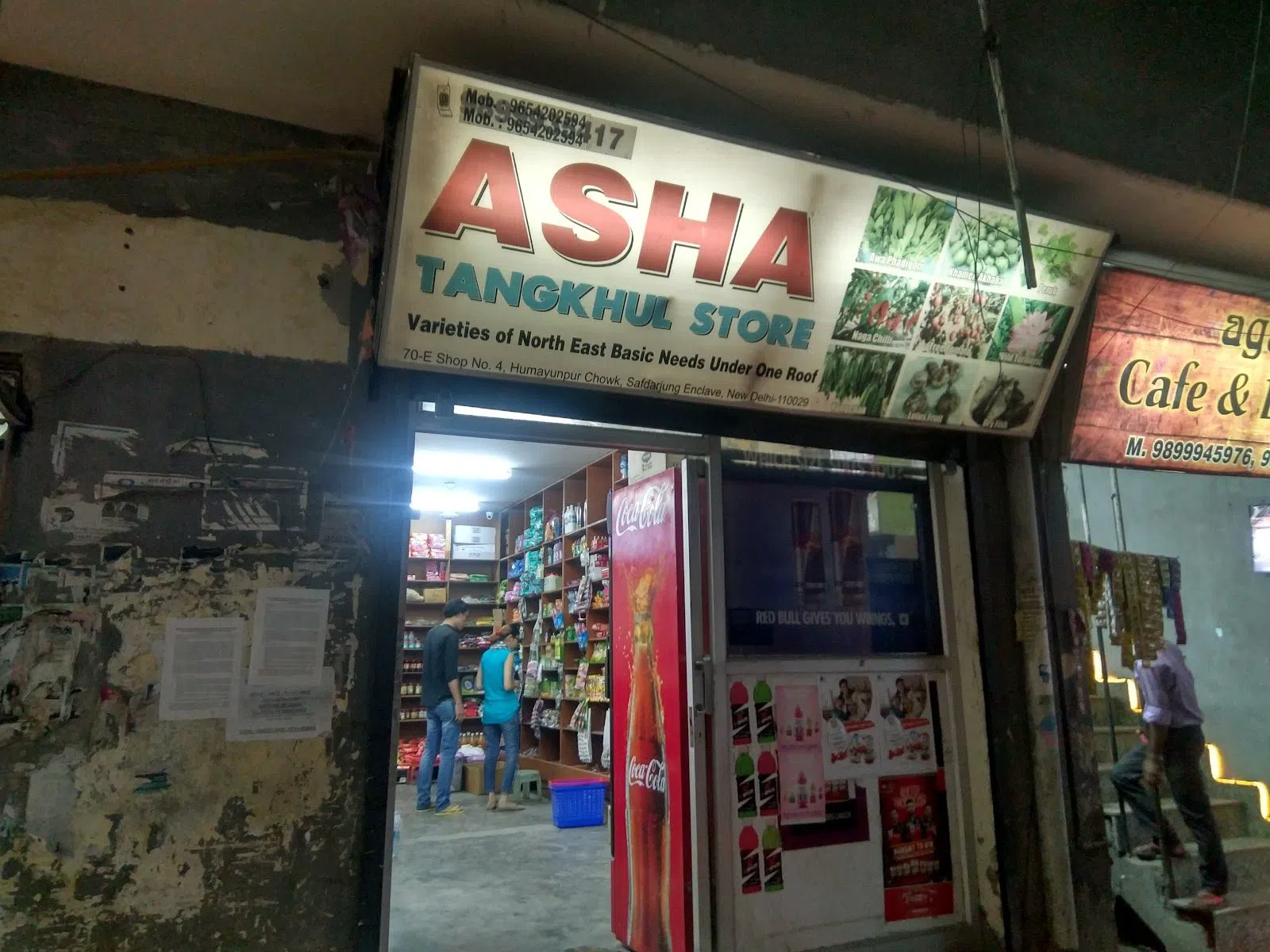
Asha Tangkhul Store (Humayunpur) es una tienda, no un restaurante, y explica todo lo demás que hay aquí. Lleva en marcha unos catorce años, la abrió alguien que había pasado años trabajando en la cocina de un gran hotel de Delhi antes de montarla, y fue uno de los primeros sitios de Humayunpur en vender comida cocinada junto a la tienda de ultramarinos. De aquí salen los ingredientes de los restaurantes (axone, brotes de bambú, pescado seco, chiles) y es la única parada de la ruta que puedes llevarte a casa. Con 100-500 ₹ llenas una bolsa. Curiosea de dos en dos o de tres en tres; el pasillo no admite un grupo turístico.
Puertas, grupos y los horarios que pillan a la gente
Nada en este callejón tiene política de puerta en el sentido de terciopelo y guardaespaldas. La limitación son los metros cuadrados. Hornbill, Shilloi, Yong's Kitchen y Hinoki Slow Bar son salas pequeñas donde un grupo de seis es un problema, no una reserva. Hentak, Bhansaghar, Lha Kitchen, Mizo Diner y Yo Tibet son los que tienen capacidad de verdad. The Categorical Eat-Pham y Mahelal's aceptan un grupo, pero quieren que avises.
Memoriza los cierres antes de ir: Yong's Kitchen cierra los lunes, Mahelal's cierra los martes y solo abre a partir de las 17:30 con la cocina parando a las 21:00, y Lha Kitchen cierra a mediodía de 16:15 a 18:00. Angami Nagamese Kitchen a las 9:00 es la única opción temprana. Si quieres sitio en las salas pequeñas sin esperar, evita el almuerzo del fin de semana y el agobio de las 20:00 a las 21:30.
Planificar el día
Green Park es la estación de metro más cercana; desde allí es un trayecto corto en auto o un paseo de unos quince minutos hasta Safdarjung Enclave, y el propio callejón se recorre de punta a punta en unos minutos. Las calles de dentro son demasiado estrechas para los coches, así que los coches de aplicación te dejan en la boca de la aldea y no delante de ninguna puerta concreta. Fija la fachada azul de Bhansaghar como punto de encuentro y muévete a pie desde ahí. Si quieres poder volver tambaleándote después del cerdo y la cerveza de arroz, alójate por Green Park o Hauz Khas; empieza con una búsqueda de hoteles en Delhi y ve tirando desde ahí hacia fuera.
Lleva efectivo. El pago digital es casi universal en la ciudad, pero la señal del móvil en una sala de primer piso en un callejón estrecho no es lo mismo que en la carretera principal, y las cocinas más pequeñas cuadran la cuenta más rápido en billetes. Guarda billetes pequeños para la tienda de ultramarinos.
Un día completo y sensato son tres paradas para comer más un café: un plato temprano en Angami Nagamese Kitchen, un almuerzo de thali en The Categorical Eat-Pham u Oh! Assam, una hora tranquila en Hinoki y luego cerdo ahumado en Hornbill o Shilloi por la noche. Eso sale a unos 700-900 ₹ por cabeza, café incluido. Cambia la noche por Hentak y estarás en 900 ₹ por cabeza solo en esa comida, lo que sigue estando por debajo de lo que cuesta un plato principal en la mayoría de restaurantes de esa ambición en otras partes de la ciudad. Dos personas pueden comer extraordinariamente bien aquí todo el día por 2.000 ₹ en total.
Ve con hambre, ve con menos gente de la que crees y cómete lo fermentado. El resto de la ciudad, dónde alojarte y qué más merece tus tardes, está en nuestra guía de Delhi.
Antes de ir
¿Cómo llego a Humayunpur y dónde está exactamente?
Humayunpur es una aldea urbana dentro de Safdarjung Enclave, en el sur de Delhi. La estación de metro más cercana es Green Park y, desde allí, hay un breve trayecto en auto o unos quince minutos a pie. Los conductores de apps de transporte te dejarán a la entrada de la aldea y no en un restaurante concreto, porque los callejones interiores son demasiado estrechos, así que queda en la fachada azul de Bhansaghar, junto al acceso, y entra caminando desde ahí.
¿Qué debería pedir si nunca he comido comida del Noreste?
Empieza por un thali en lugar de un solo plato. El thali meitei de The Categorical Eat-Pham (hawai thongba, kangsoi, eromba) o los thalis assameses de Oh! Assam te dan el abanico en una sola sentada por ₹450-700 para dos. Si la soja fermentada y el pescado fermentado te parecen demasiado el primer día, el mokthuk y el thenthuk de Yo Tibet o el thali thakali de Lha Kitchen son aperturas más fáciles. Deja el cerdo ahumado con axone de Hornbill para cuando ya te hayas hecho con el terreno.
¿Hay algo aquí para vegetarianos?
Sí, pero sé selectivo. Angami Nagamese Kitchen sirve platos vegetarianos, algo inusual en un menú naga. El thali thakali vegetariano de Lha Kitchen cuesta ₹290 y es ilimitado. El thali manipuri de The Categorical Eat-Pham incluye preparaciones de verduras, aunque el eromba y varios clásicos se basan en pescado fermentado, así que pregunta antes de pedir en lugar de darlo por hecho.
¿Puedo hacer esta ruta con un grupo de ocho?
No en los locales pequeños. Hornbill tiene unas 12-15 plazas y no acepta reservas de ningún tipo, así que un grupo de más de cuatro no se sentará junto en hora punta; Shilloi, Yong's Kitchen y Hinoki Slow Bar son igual de ajustados. Para ocho personas, ve a Hentak (servicio de mesa formal, reserva con antelación), Bhansaghar, Lha Kitchen, Mizo Diner o Yo Tibet, todos con capacidad real. El buffet de los domingos de Mahelal's a ₹699 por persona también funciona para un grupo si reservas.
¿Cuánto cuesta un día en la ruta?
Unos ₹700-900 por persona por tres paradas para comer y un café si te ciñes a los thalis y a las cocinas de precio medio; la mayoría de los locales cuestan ₹450-800 para dos. La fuente comunal de marisco de Yong's Kitchen sube a ₹800-1.400 para dos, y cenar en Hentak son ₹1.200-1.800 para dos. Suma ₹100-500 en Asha Tangkhul Store si quieres llevarte ingredientes a casa. Lleva efectivo para las cocinas más pequeñas.