
Long before Delhi had ring roads, it had rivers of water running through squared-off gardens, engineered so a walker felt no season change: shade underfoot, symmetry overhead, a channel splitting every quarter into a smaller mirror of itself. That geometry — the Persian charbagh, four parts divided by water and built to represent paradise on earth — survives in more corners of the modern capital than most itineraries admit, hidden behind traffic medians and Metro exits from Nizamuddin to Shalimar Bagh. This is a route through the gardens that actually shaped Delhi, not the ones packaged into a two-hour stopover between the Red Fort and the airport.
The City's Green Lung
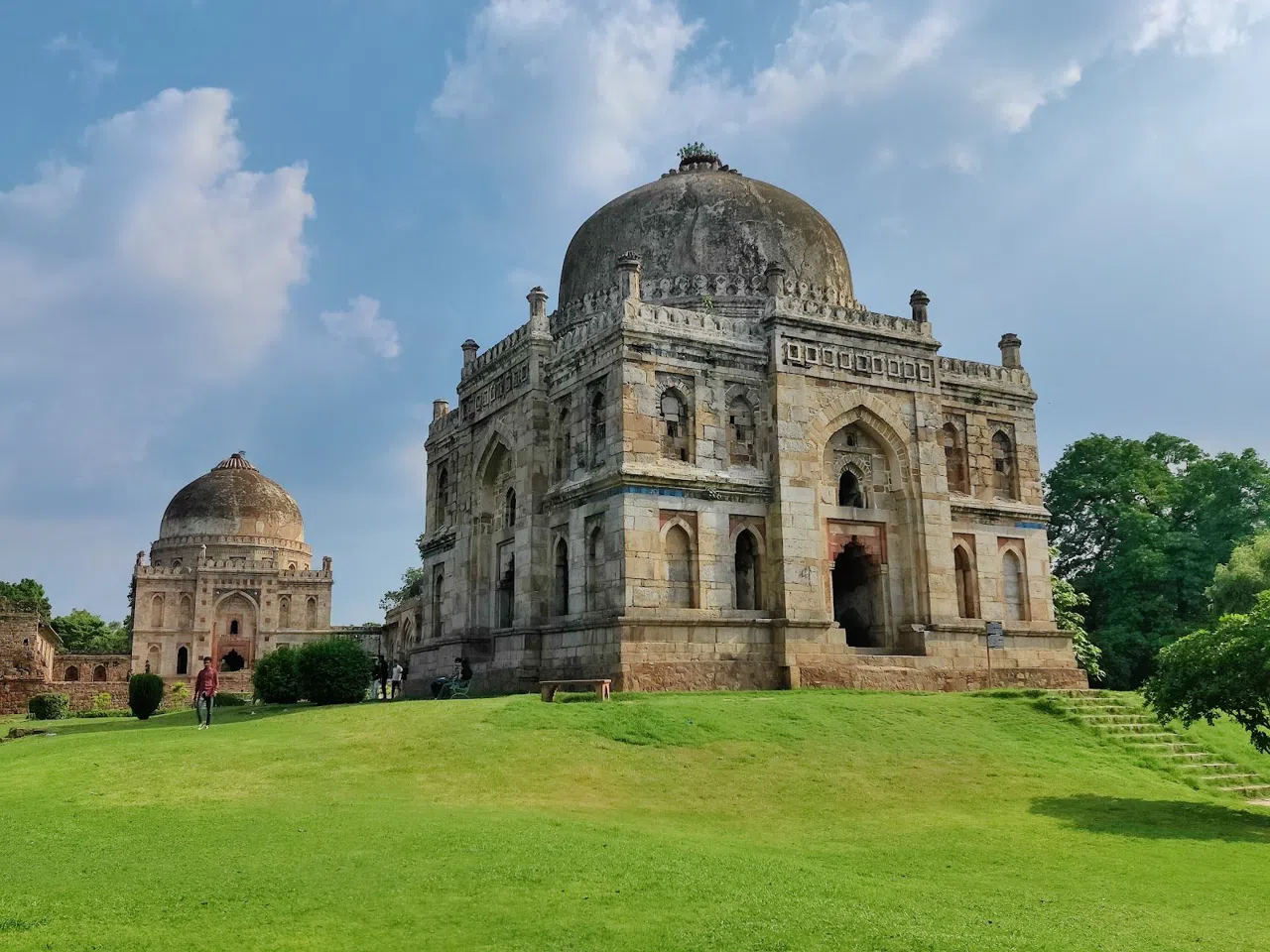
Lodhi Gardens (Lodhi Road) is the garden most visitors already know without knowing its history: joggers at dawn, schoolkids playing cricket, couples on benches, a wedding photographer working the light around Sikandar Lodi's tomb. It predates the Mughals by a few decades — the tombs scattered through its roughly 90 acres belong to the Lodi and Sayyid dynasties, built across the 15th and early 16th centuries — but it opens this list because it's the anchor everything else sits around: the green lung the Mughals inherited, expanded on, and eventually eclipsed with grander ambitions elsewhere in the city. Entry is free, there's no booking system of any kind, and it absorbs large groups without friction — a tour party of forty and a solo reader with a paperback coexist here without either noticing the other. The nearest gates sit off Lodhi Road and the Khan Market side; the closest Metro is Jorbagh on the Yellow Line, about a 15-minute walk. Go at opening if the point is quiet, or late afternoon if the point is watching Delhi actually use its parks.
Where the Charbagh Began
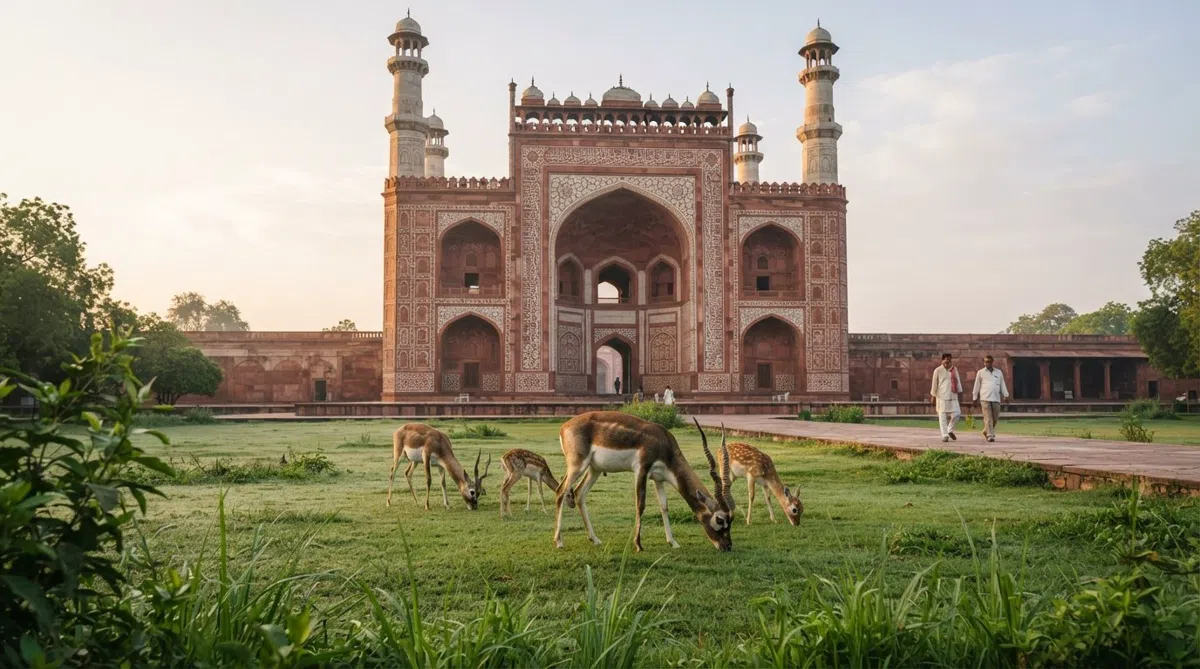
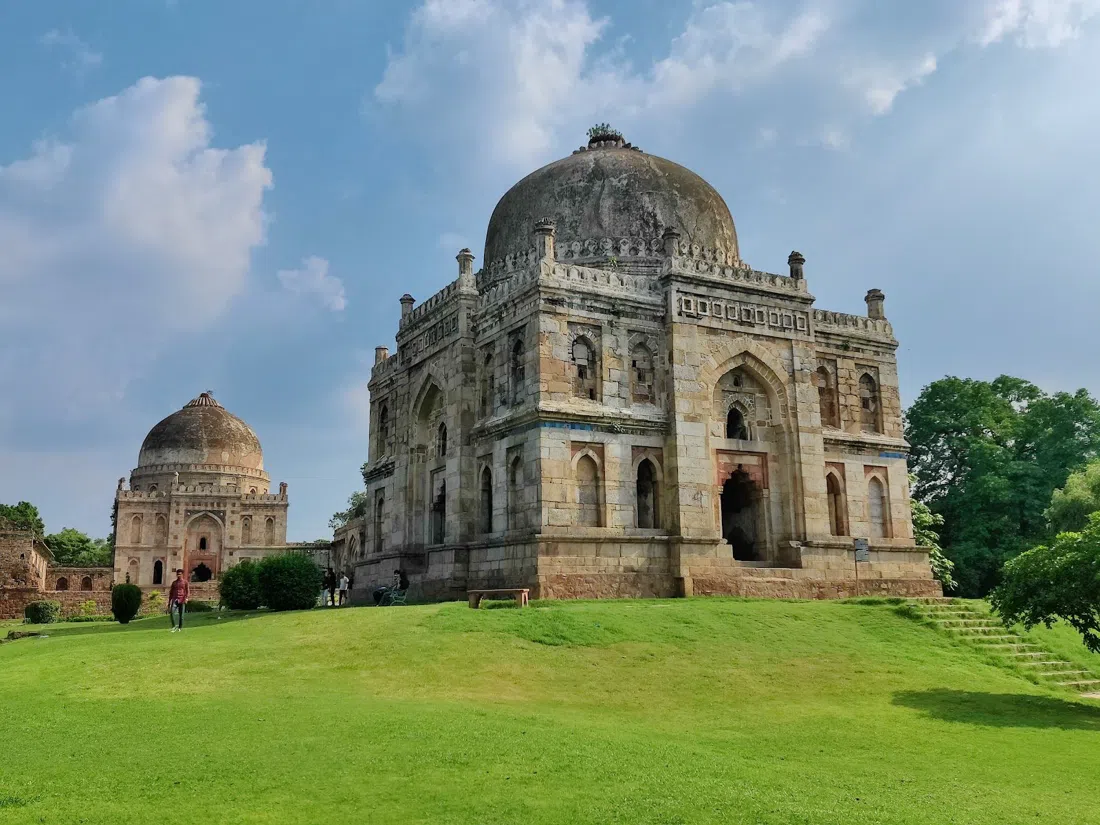
Humayun's Tomb (Nizamuddin) is the reason the word charbagh matters in Delhi at all. Built in 1570 for the second Mughal emperor, it's the first monumental garden-tomb in India laid out on the four-quarter Persian plan, and its geometry, raised platform and red sandstone-and-marble palette became the direct template for the Taj Mahal seventy years later. This is a UNESCO World Heritage Site run accordingly: ASI-ticketed at ₹40 for Indian nationals and ₹600 for foreign nationals, open daily 6am to 6pm. Groups are routine and guided tours easy to arrange, but for larger parties book ahead through the official ASI portal (asi.paygov.org.in) rather than queuing at the gate — tour buses stack up by mid-morning through the cooler months. Go early if you want the water channels photographed without a hundred other people in frame.
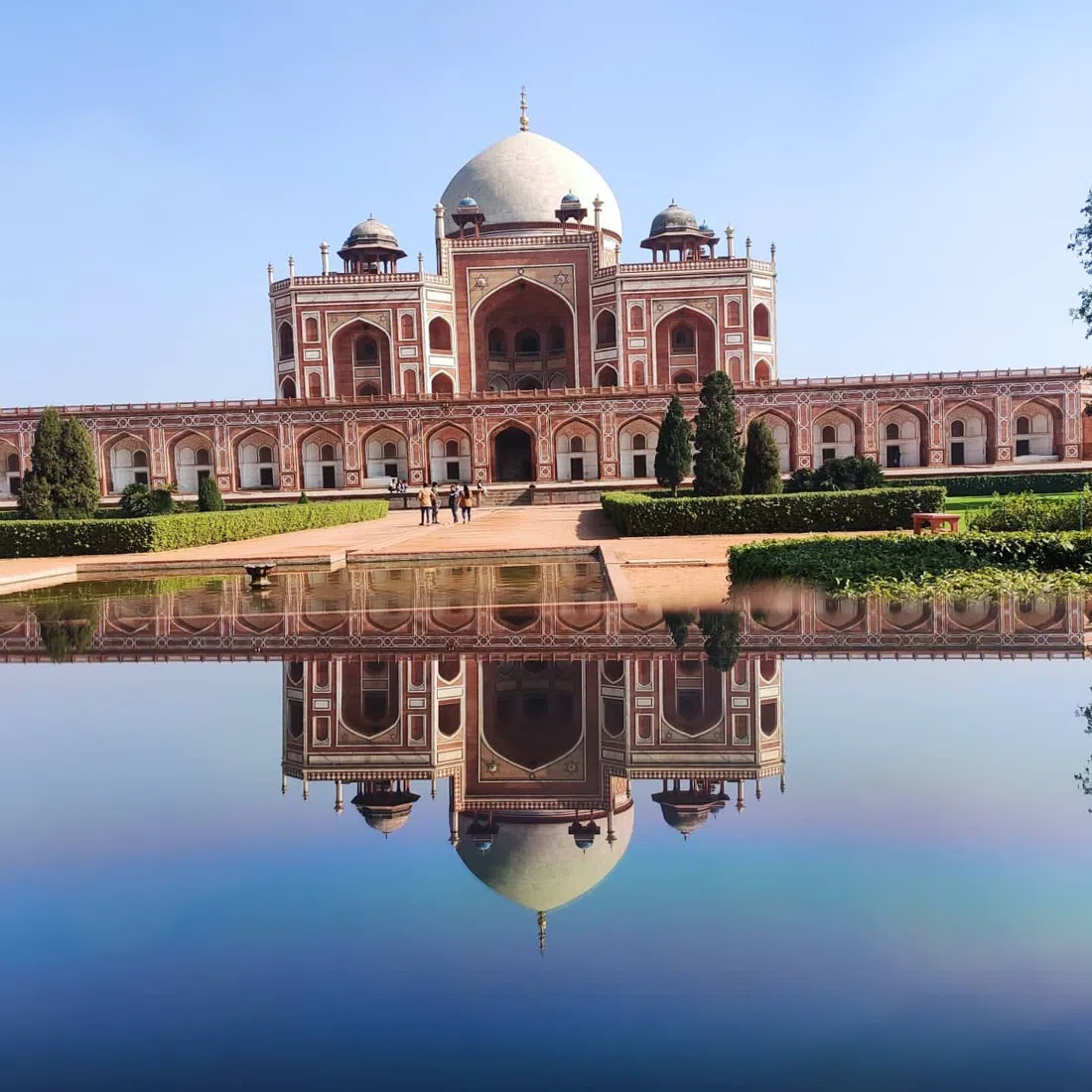
Immediately next door, Sunder Nursery (Nizamuddin) is the newer, more curated version of the same idea: a contemporary paradise-garden layout by the Aga Khan Trust for Culture that folds genuine Mughal-era monuments into landscaped lawns, a bonsai collection and a lake that draws visiting birdlife through the winter. It made TIME's "World's Greatest Places" list, and it earns the slot — this is a site built for slow, guided walks rather than a rushed pass-through, and the paths and signage reflect that. Tickets run ₹35 for Indian nationals and ₹100 for foreign nationals, open daily. It suits groups as comfortably as couples, with wide lawns and no real bottleneck points, and a connecting gate lets many visitors do Humayun's Tomb and Sunder Nursery back to back as an easy half-day.
The Charbagh's Last Word
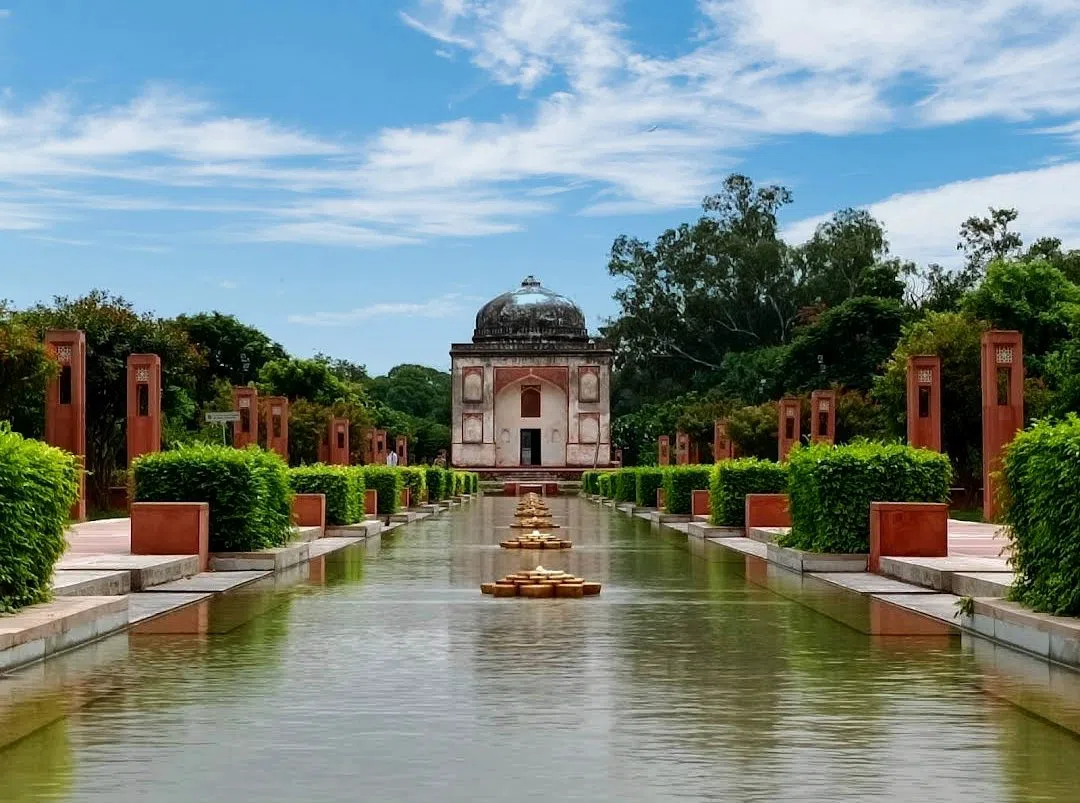
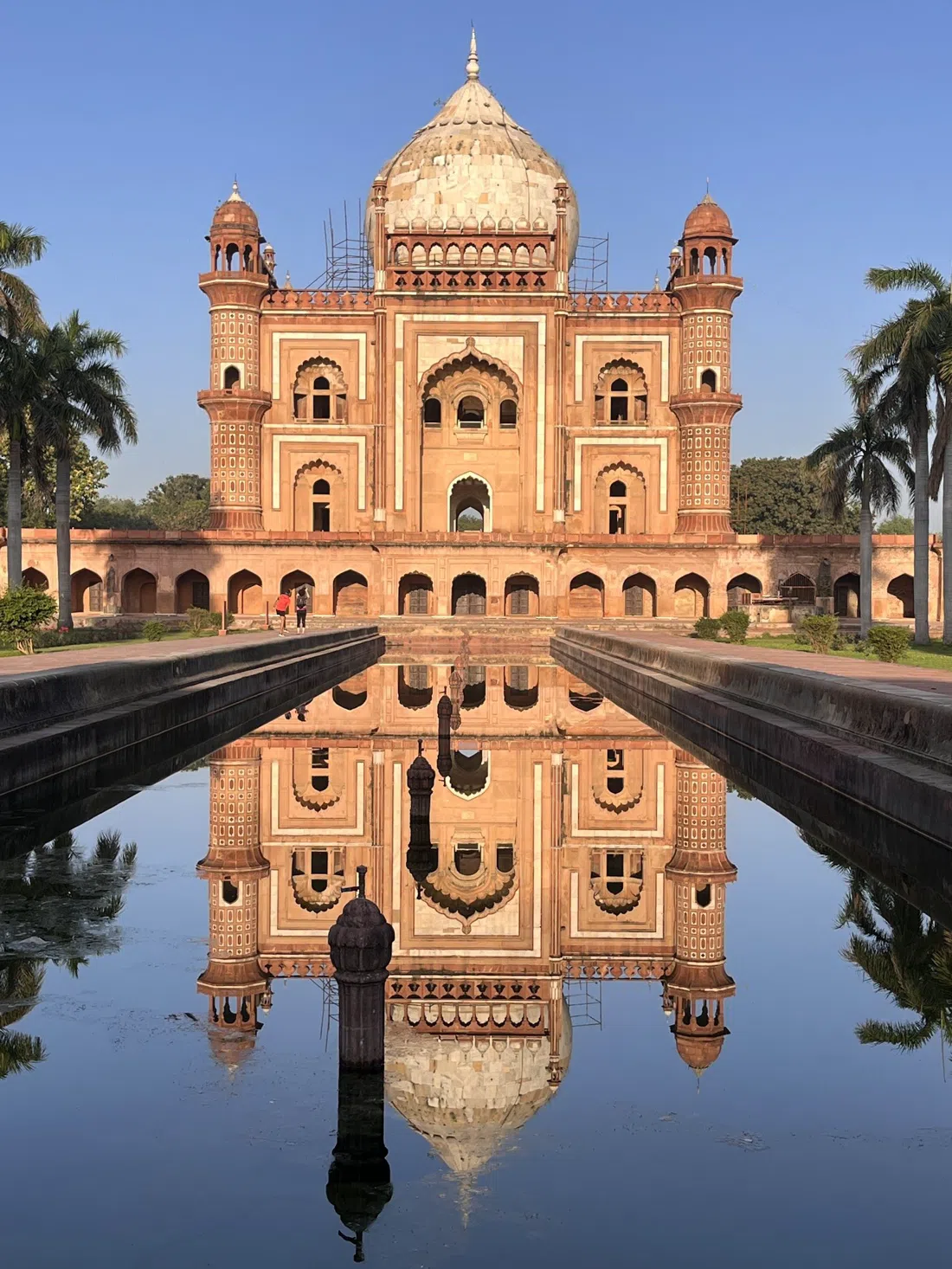
Safdarjung's Tomb (near Safdarjung Airport, south Delhi) is the bookend few itineraries plan for. Built in 1754, nearly two centuries after Humayun's Tomb, it's the last significant garden-tomb the Mughals built in Delhi before the empire's slow contraction — the same four-quarter logic, but a noticeably less confident hand, with marble reused from older monuments as the imperial treasury thinned out. It rarely sees a fraction of Humayun's Tomb's footfall, which is exactly the appeal: quiet paths, working water channels, and space to actually sit still. ASI-ticketed at ₹25 Indian / ₹300 foreign, open daily 7am to 5pm, and it handles groups easily without ever feeling crowded. Read the two tombs together — same design language, two centuries apart — and the arc of the whole tradition clicks into place.
Gardens Behind Fortress Walls
Not every Mughal garden in Delhi sits inside a tomb complex — some were built for living in, tucked behind defensive walls.
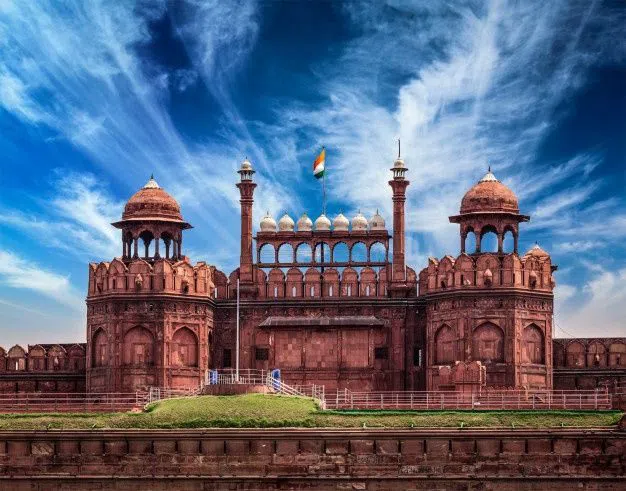
Red Fort's Hayat Bakhsh Bagh (Old Delhi) is the most literal "life-bestowing garden" in the city: a formal water-channel garden laid out directly behind the fort's marble halls, routinely skipped by visitors who stop at the Diwan-i-Khas and never walk the extra few hundred metres north. ASI-ticketed at ₹35 Indian / ₹500 foreign, it's built for large groups — security screening for bigger parties is standard, so budget extra time for it — and as of an ASI order in February 2026 it's open every day of the week, including the Monday closures that used to catch visitors out. The nearest Metro is Lal Qila on the Violet Line's Old Delhi extension, or Chandni Chowk on the Yellow Line, a 10-minute walk through the market.
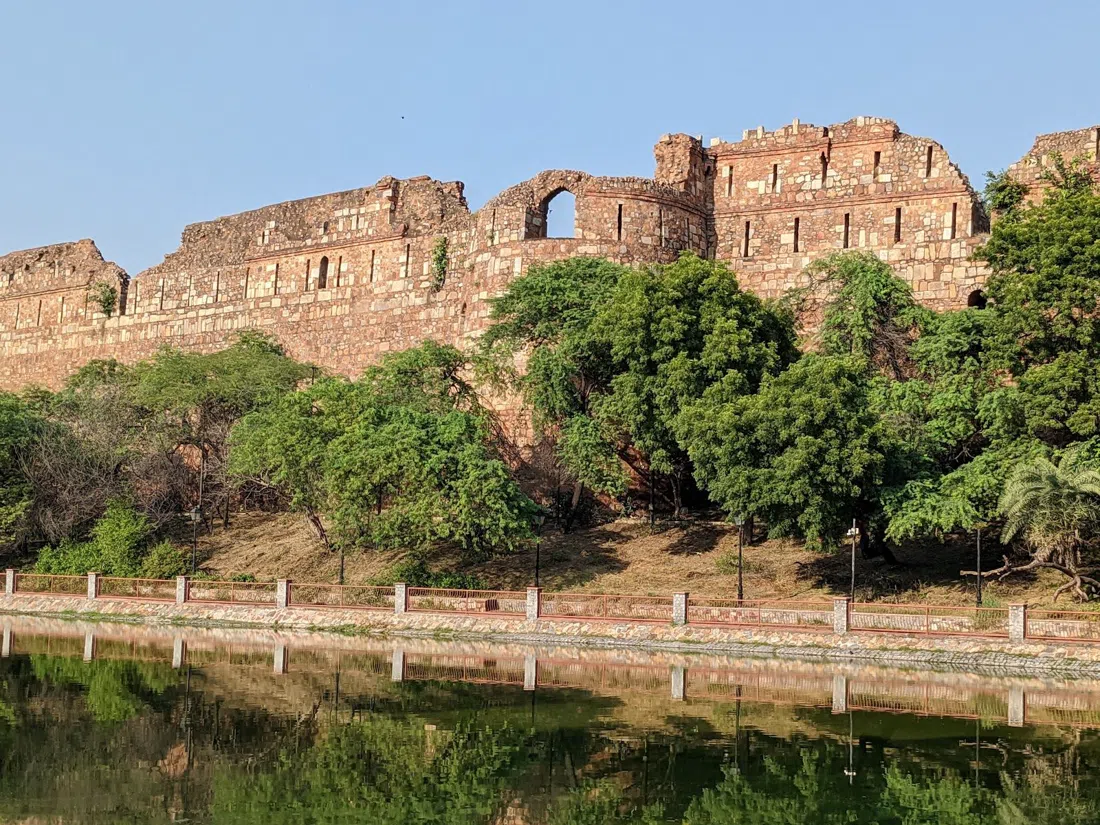
Purana Qila (near Pragati Maidan) flips the sequence: a Sher Shah Suri-era fortress with Mughal-period garden additions layered in after Humayun retook Delhi, so formal garden geometry sits inside a much older, rougher fortress shell. It's ASI-ticketed at a modest ₹5 Indian / ₹200 foreigner, open sunrise to sunset, and groups are common throughout the day. If your visit runs into the evening, the "Ishq-e-Dilli" sound-and-light show plays most nights except Friday, and it's worth timing a trip around if the fort's history interests you as much as its garden does.
The Overlooked Mughal Gardens
Three gardens that rarely make a first-time visitor's list, and that's exactly their appeal.
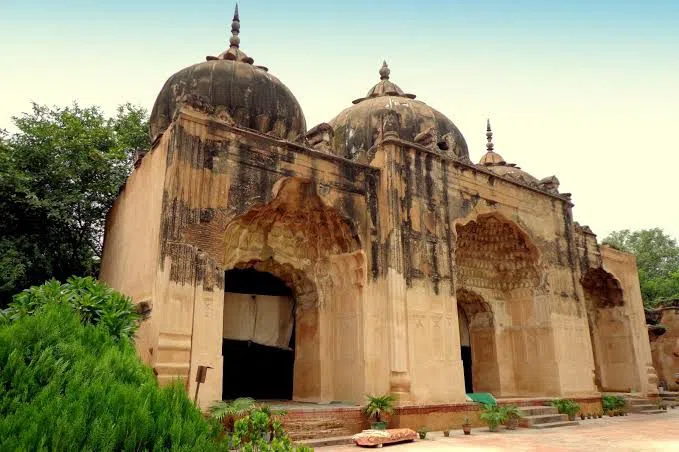
Qudsia Bagh (near Kashmere Gate, north Delhi) is a genuine Mughal-era garden ruin, laid out in the 18th century by Qudsia Begum, consort of the emperor Muhammad Shah. It's free, unticketed, has no facilities on site, and suits a small group or a couple far better than a coach party — there's little infrastructure and no real crowd to absorb one. It's one of the last extant Mughal gardens in the city and genuinely overlooked; most Delhi guides skip it entirely.
Roshanara Bagh (Kamla Nagar, north Delhi) was built by Roshanara Begum, Shah Jahan's daughter, and went through a DDA/ASI restoration completed between 2022 and 2024. It functions today as a working public garden — free, open 6am to 11pm, groups welcome — with a migratory-bird lake that draws a genuinely different crowd from the tomb gardens: dog walkers, birdwatchers, badminton players at dusk. One caveat worth knowing before you go: the attached Roshanara Club, inside the same grounds, is separately members-only, so don't expect to wander into the clubhouse itself.
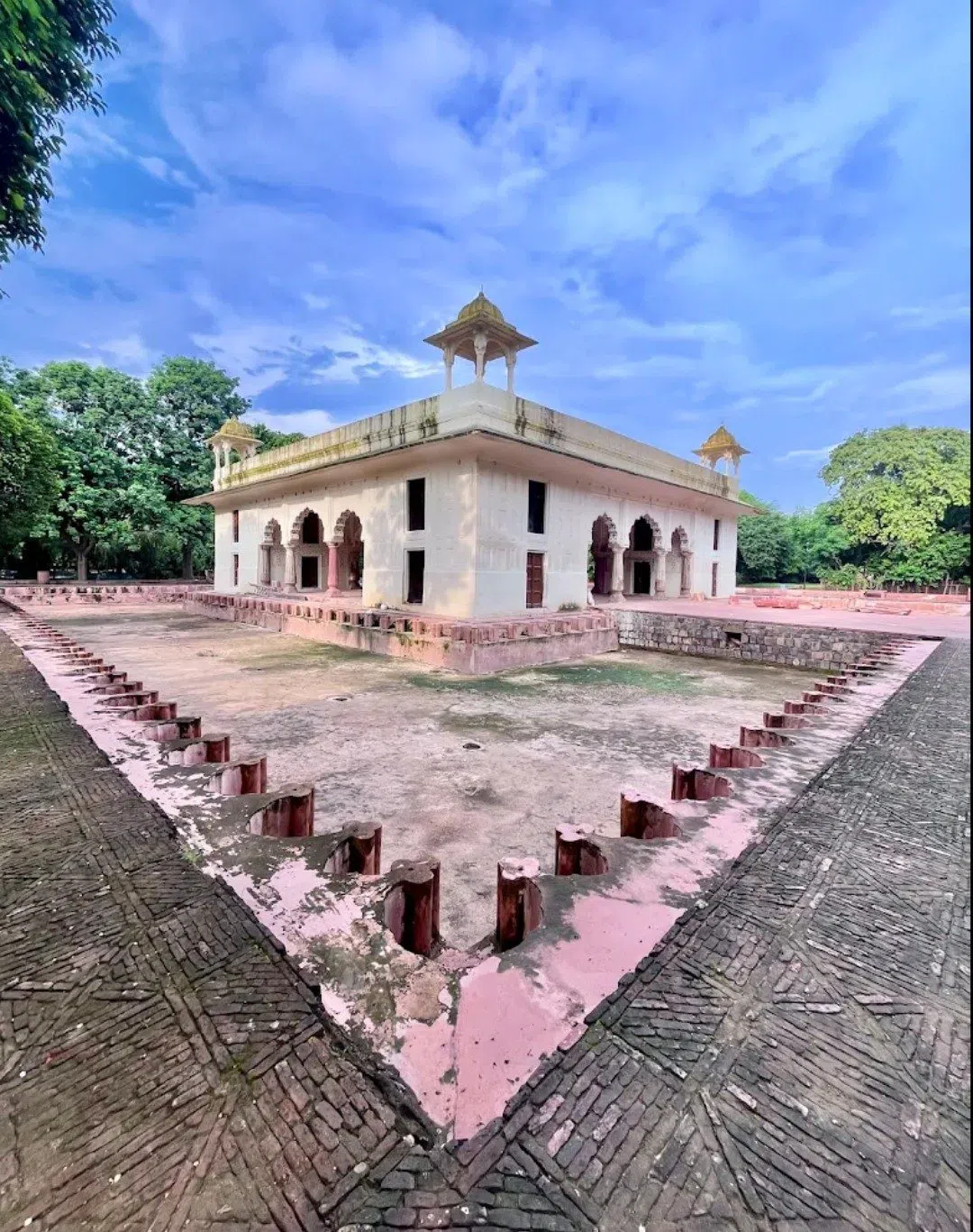
Talkatora Garden (central Delhi, near Talkatora Stadium) rewards a visit for the design alone. It's one of the few Mughal gardens left in Delhi still following its original terraced "char-manzil" stepped layout, rather than the flat charbagh geometry used everywhere else on this list — the level changes give it a visual rhythm the others don't have. Free, open daily 6am to 7pm, groups welcome, and usually close to empty outside morning walking hours.
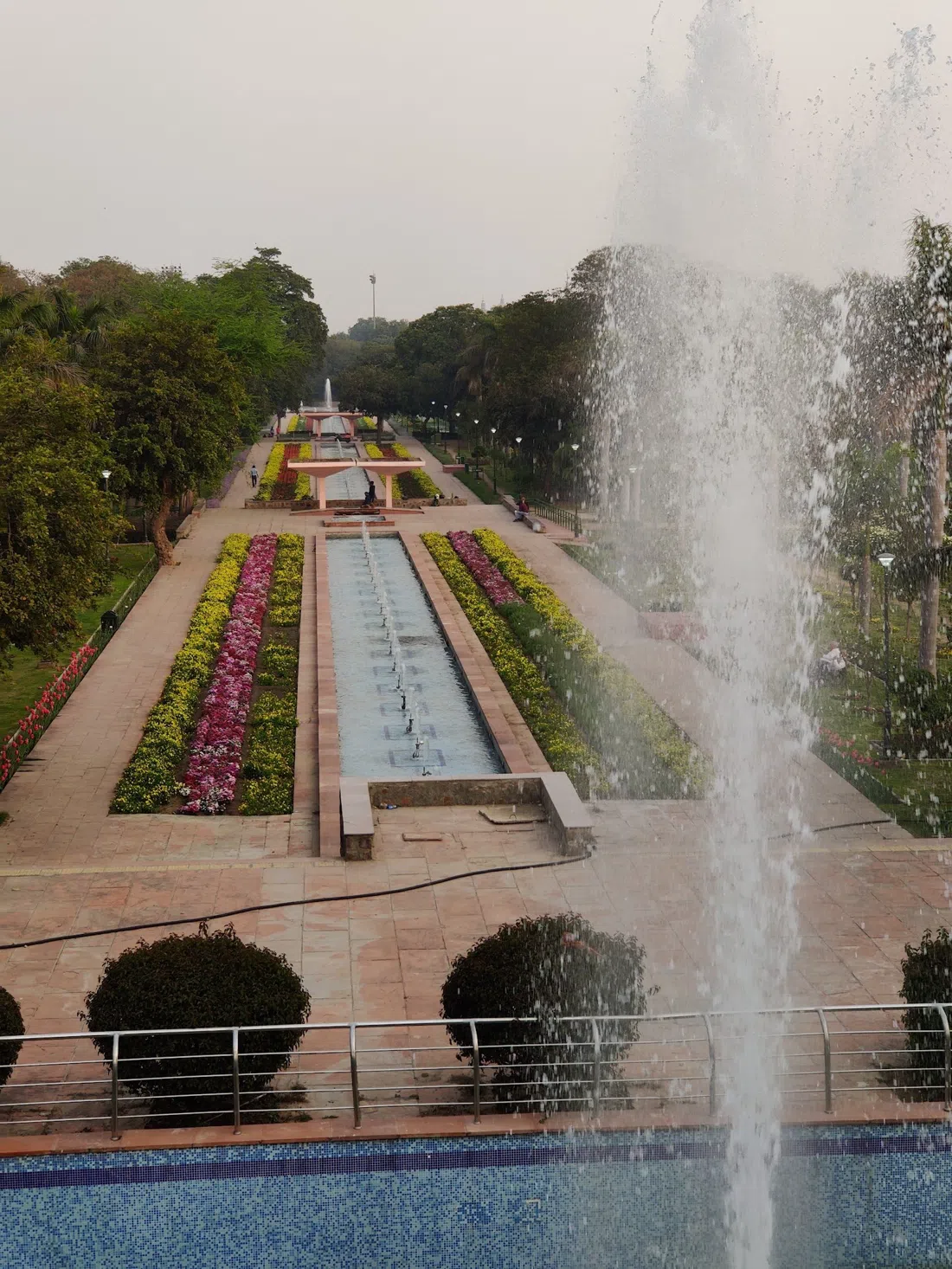
A Newly Reopened Pavilion
Sheesh Mahal, Shalimar Bagh (north Delhi) is the genuinely new story on this list. The restored Mughal pavilion reopened on 2 July 2025 after a year-long ASI and DDA restoration, and it's worth the trip for that alone — this is where Aurangzeb was crowned in 1658, a fact most visitors standing in front of it don't know. The wider walled garden that originally connected to the pavilion remains gated off pending further restoration work, so treat this as a pavilion visit rather than a full garden circuit. It's free, open sunrise to sunset, and suits a small-to-medium group comfortably; photography inside the Mahal itself is restricted, so don't plan a shoot around it — go for the building and the history, not the pictures.
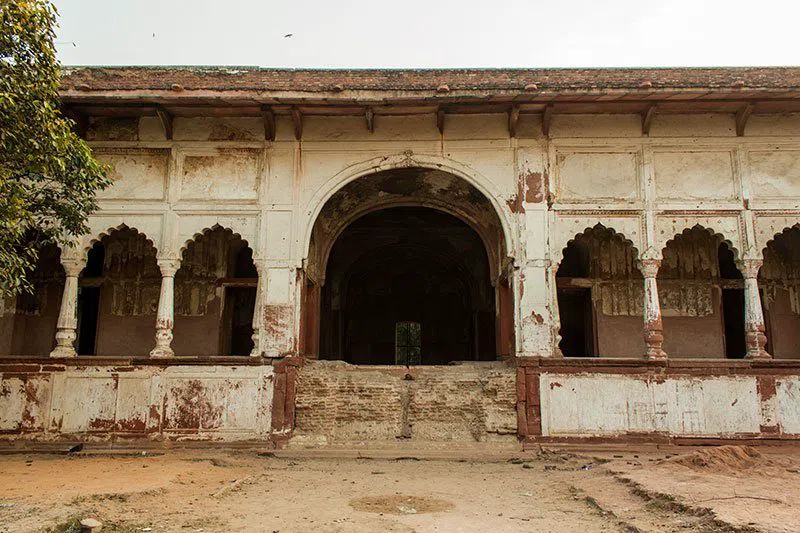
Quiet Corners Beyond the Gardens
Two more stops round out a Mughal-Delhi day without technically being Mughal gardens themselves.
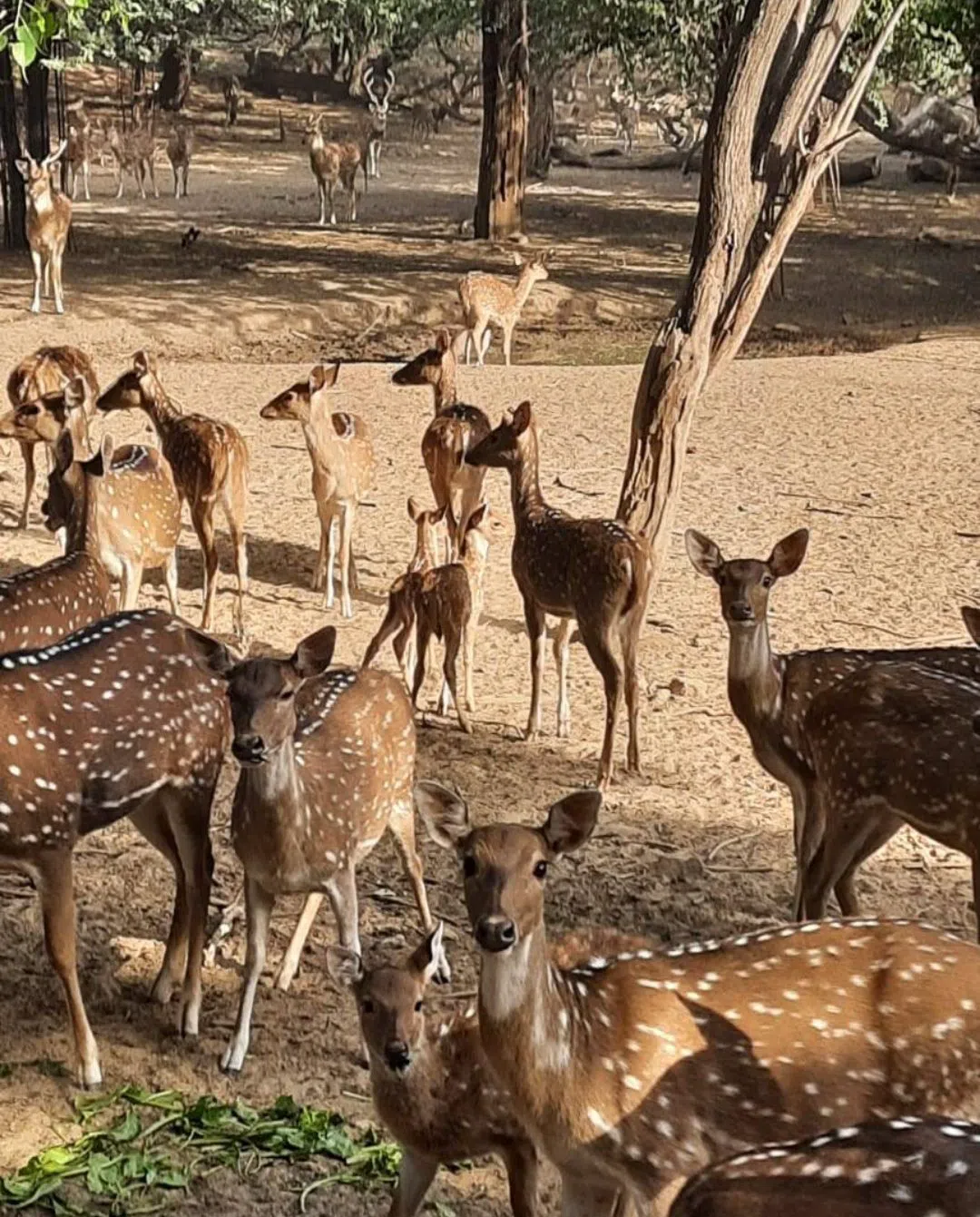
Deer Park (Aditya Nath Jha Park), Hauz Khas is Tughlaq-era, not Mughal, but it sits directly beside the Mughal-flavoured Hauz Khas complex and gives the day something none of the formal charbaghs offer: actual animals, dense shade cover, and a lake with no ticket booth at all. Free, open daily, no restrictions, and it works for a group as easily as a solo wander before or after Hauz Khas Village.
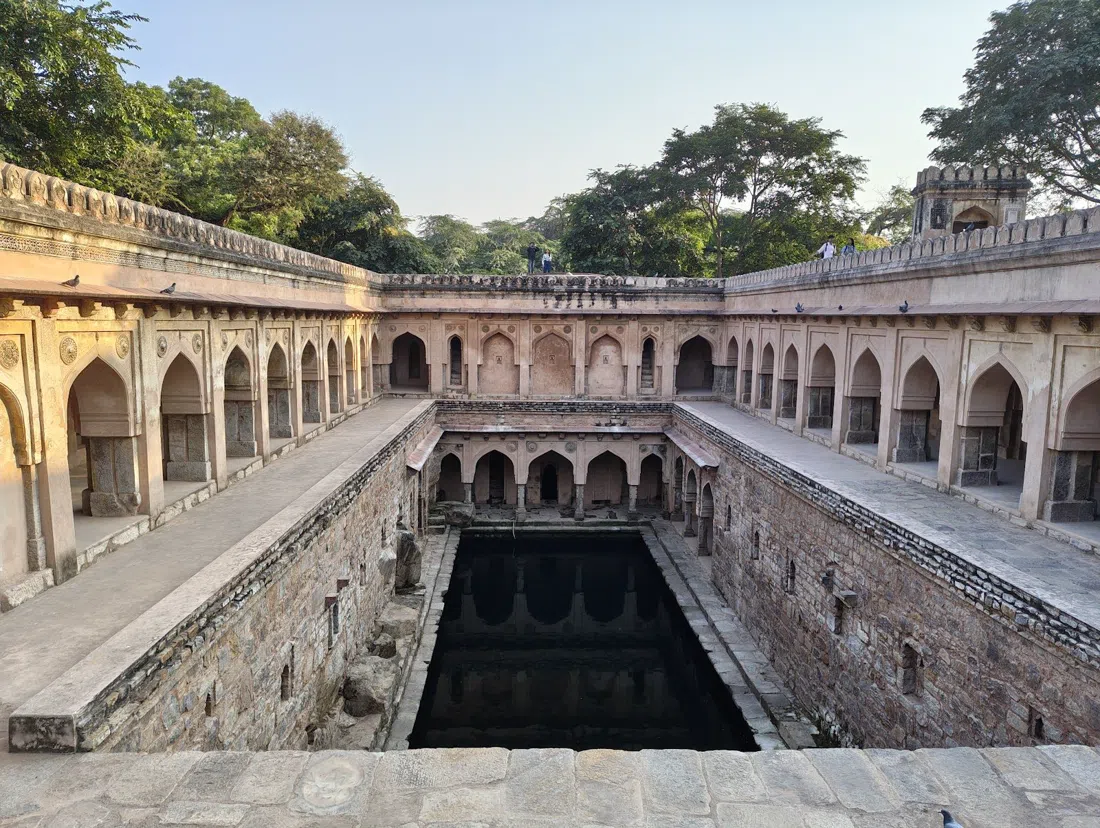
Mehrauli Archaeological Park (south Delhi) is the honest closer for anyone who wants Delhi off the postcard route. It isn't a formal garden — it's a genuinely dense, quiet concentration of Mughal-era and pre-Mughal structures scattered through open parkland, free to enter, open 7am to 5pm. Guided heritage walks run here regularly and are bookable in advance (through platforms like GetYourGuide), which is worth doing on a first visit since the park has no signage system to speak of. There's a nominal ASI fee for entering a handful of specific protected structures inside, but the park itself costs nothing.
Planning the Trip
Book a base and work outward — see the Delhi hotel search for options near Nizamuddin or Lodhi Road, both of which put you within walking or short-auto distance of half this list, or check the full Delhi guide for the rest of the city beyond its gardens.
Getting around: the Delhi Metro reaches most of these directly — Jorbagh for Lodhi Gardens, JLN Stadium or Nizamuddin (Pink Line) for Humayun's Tomb and Sunder Nursery, Lal Qila or Chandni Chowk for the Red Fort, Qutab Minar for Mehrauli. Auto-rickshaws and ride-hailing apps cover the rest cheaply; agree the fare or confirm the meter is running before you get in.
Cash and tickets: ASI sites now take card payment at the gate, but carry small cash regardless — nursery kiosks, autos and some smaller sites still expect it. Foreign-national ticket prices run considerably higher than Indian-national prices across every ASI site on this list; that's standard national heritage policy, not a scam, and worth budgeting for if you're covering several sites in one day.
Timing: everything here opens at or near sunrise and most close by 5–7pm — nothing on this list is an evening activity except the Purana Qila sound-and-light show. Between April and September, go at opening; the shade in these gardens is real, but Delhi heat by midday is not something tree cover fully solves. November to February is the comfortable season for a full day of walking between sites.
Budget: a day covering three or four ASI-ticketed sites — Humayun's Tomb, Sunder Nursery, Safdarjung's Tomb, the Red Fort — runs roughly ₹200 in entry fees for Indian nationals, or upward of ₹1,400 for foreign nationals, modest by international museum standards. The free sites — Lodhi Gardens, Qudsia Bagh, Roshanara Bagh, Talkatora Garden, Sheesh Mahal, Deer Park, and the Mehrauli park itself — cost nothing beyond transport. Mixing a free day with a ticketed day is the easiest way to see the whole tradition without it ever feeling like a checklist.