The Delhi issue
Standing under India Gate and walking Delhi's Central Vista
The arch is free, never closes and takes 20 minutes, so the war memorial behind it, the Janpath galleries and dinner on Pandara Road can fill the rest of the day.
By Bram VerhoevenA Dutchman reading Delhi one neighbourhood at a time
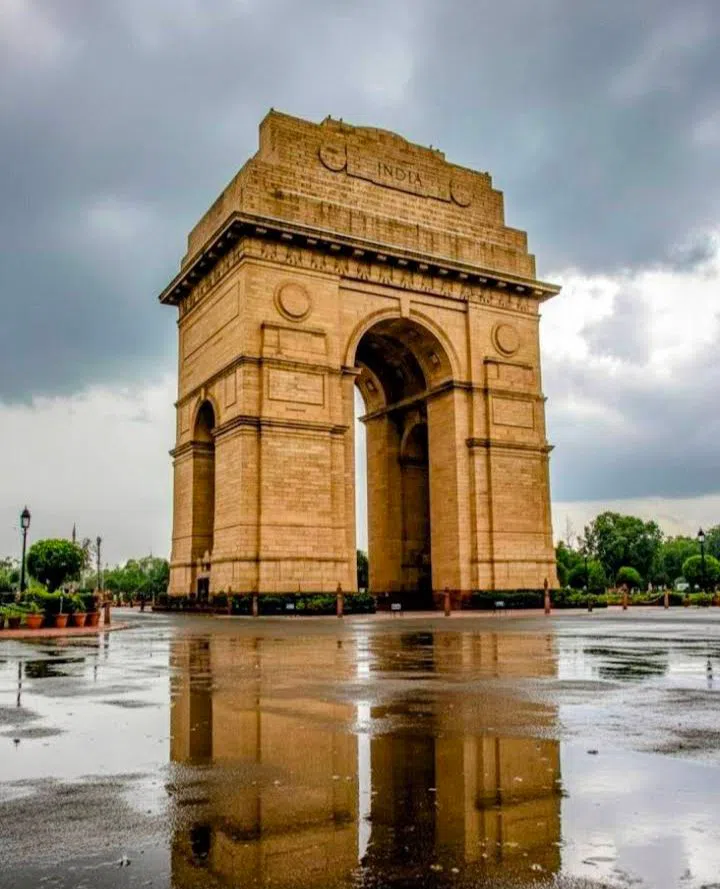
India Gate costs nothing to visit and never closes. The arch rises 42 metres over the centre of a six-road hexagon, with 13,300 soldiers' names cut into its pale-and-red sandstone. Twenty minutes covers it.
What you see under the arch
India Gate (C-Hexagon, Central Vista) is open public ground with no door policy and no limit on numbers, which is why walking groups and guided coach parties use it freely. Coaches cannot stop on the hexagon itself. They drop at the side avenues, and the last stretch in is on foot.

Directly behind the arch, under the Lutyens canopy that used to stand empty, is a black granite statue of Netaji Subhas Chandra Bose. None of it is ticketed, and none of it needs more than 20 minutes. Plan it as a short stop and you have planned it right.
Plan your Delhi trip
Live prices from our booking partners.
Free cancellation on many rooms. We may earn a commission when you book.
Where the Amar Jawan Jyoti burns now
First-time visitors photograph the arch and leave, missing the National War Memorial (immediately south-east of India Gate), where the Amar Jawan Jyoti flame now burns. Four concentric granite chakra circles are sunk below lawn level, 25,942 soldiers' names are etched on curved honour walls, and the eternal flame stands at the base of a tall central obelisk. Bronze Param Vir Chakra busts form a semicircle.

Entry is free. Every visitor needs photo ID at the gate, and the hours are seasonal: 9 a.m. to 7.30 p.m. from November to March, 9 a.m. to 9 p.m. from April to October. Leave time for the security screening before those hours run out on you.
Walking Kartavya Path
Kartavya Path (Central Vista Avenue) was renamed from Rajpath in 2022 and rebuilt as three kilometres of red-granite processional walkway between clipped lawns, rows of trees and refurbished water canals. Rashtrapati Bhavan's dome closes the view at the far western end. Boating runs on the stretches near Krishi Bhawan and Vanijya Bhawan.

The avenue is unrestricted public space, and you can picnic on the main lawns. Eight numbered vending plazas and amenity blocks sit along the edges with ice-cream carts, and they absorb a large party easily. Snacks and boating run ₹ to ₹₹.
Jaipur House and the Janpath galleries

National Gallery of Modern Art (Jaipur House, on the India Gate hexagon) is a cream-coloured butterfly-plan princely palace crowned by a single dome, in its own garden. Inside are 17,000 works surveying modern Indian art, with the early modern canvases hung in cool high-ceilinged rooms. Entry is ₹20 for Indian visitors and ₹500 for foreign nationals, and students under 18 with school ID go free. It closes on Mondays and national holidays. Bags and large cameras are not allowed in the galleries, so plan a cloakroom stop on the way in.
National Museum (Janpath and Maulana Azad Road junction) is a 10-minute walk from the arch, a low 1950s modernist sandstone block built around a circular central courtyard. It holds five thousand years of the subcontinent: the Harappan dancing girl bronze and the Chola temple bronzes in dim spotlit cases, with a Buddhist relic gallery beyond. Tickets are ₹20 for Indian visitors and ₹650 for foreign nationals, and the audio guides come in several languages.
Check the state of the building before you commit a morning to it. The Arms and Armour, Textiles and Jewellery galleries are shut for renovation, and the collection is moving to the new Yuge Yugeen Bharat museum in the old North and South Blocks.
Teen Murti and the Pradhanmantri Sangrahalaya
Pradhanmantri Sangrahalaya (Teen Murti) sits three kilometres west of the arch, a curved steel-and-glass drum wrapped around the 1930s colonial Teen Murti Bhavan, its roofline shaped like a cupped hand holding a chakra. The galleries are dark and interactive, with AR screens and a holographic podium. It is the most modern of the museums in the Central Vista area, and it takes three to four hours.

Entry is ₹100 for an adult online, a little more at the gate, and it is timed. The museum closes on Mondays, the ticket counter shuts at 5 p.m., and a light-and-sound show runs at 7 p.m.
Saturday morning at Rashtrapati Bhavan
Rashtrapati Bhavan (western end of Kartavya Path) is a vast copper-domed Lutyens palace in red and cream sandstone. The President's Bodyguard wheel across the gravel Forecourt on black horses in scarlet-and-gold turbans, watched from behind iron railings. The Change of Guard runs every Saturday, and from 10 October 2026 it moved to 7.30 a.m. to 8.30 a.m.

Slots are pre-booked only. Online registration is ₹50 per visitor and entry is at Gate 38. The portal caps each individual, small-group, school or college booking at 50 visitors, so a bigger party has to split across bookings. Amrit Udyan garden slots are free, and the gardens open only in set windows, February to March and mid-August to mid-September.
Bikaner House on Pandara Road
Bikaner House (Pandara Road) is a five-minute walk from the hexagon, a butter-yellow Lutyens-era princely bungalow with white columns and a deep porte-cochère. Contemporary canvases hang in converted drawing rooms, and the lawn courtyard is strung with gallery marquees.

Exhibitions are free walk-ins, 11 a.m. to 7 p.m., and the 2026 programme runs almost without a gap. Delhi Contemporary Art Week lands each late summer. Private views and launches are invitation-only, so an evening visit can meet a closed door. The café is ₹₹.
Crafts, a fort and lunch across the road
National Crafts Museum & Hastkala Academy (Bhairon Marg, opposite Purana Qila) is 2.5 kilometres from the arch, and it is the museum in this part of the city where things are being made in front of you. Village-style open courtyards and mud-plastered huts hold towering terracotta Ayyanar horses and a carved teak haveli facade re-erected in the open air. Weavers work at looms under tiled shelters. Entry is free for Indian visitors and around ₹300 for foreign nationals, which the counter will confirm, and the hours are 10 a.m. to 6 p.m., Tuesday to Sunday.

Café Lota (Gate 2, National Crafts Museum) is the strongest food stop near the Central Vista, open 8 a.m. to 9.30 p.m. daily and cooking lesser-known regional Indian food. You sit at open-air tables under mature trees on cane and rattan chairs, brass lota water jugs on each table, exposed brick and craft-textile screens around you. The bill runs ₹₹ to ₹₹₹. Tables are tight and walk-in queues build at lunch, so phone ahead for parties of more than six.

Purana Qila (opposite the crafts museum) opens 7 a.m. to 5 p.m. every day and is the oldest thing in this part of Delhi. Massive rubble-and-sandstone bastioned walls and a tall arched gateway enclose the red-and-white banded Qila-i-Kuhna mosque, with its marble-inlaid mihrab, lawns and a stepwell below the ramparts. Tickets are ₹30 for Indian visitors and ₹300 for foreign nationals, still cameras are free and a video camera is ₹25. Buy online to skip the gate counter. With the crafts museum and Café Lota across the road, the three make one clean half-day.

Dinner on Pandara Road and shopping at Khan Market
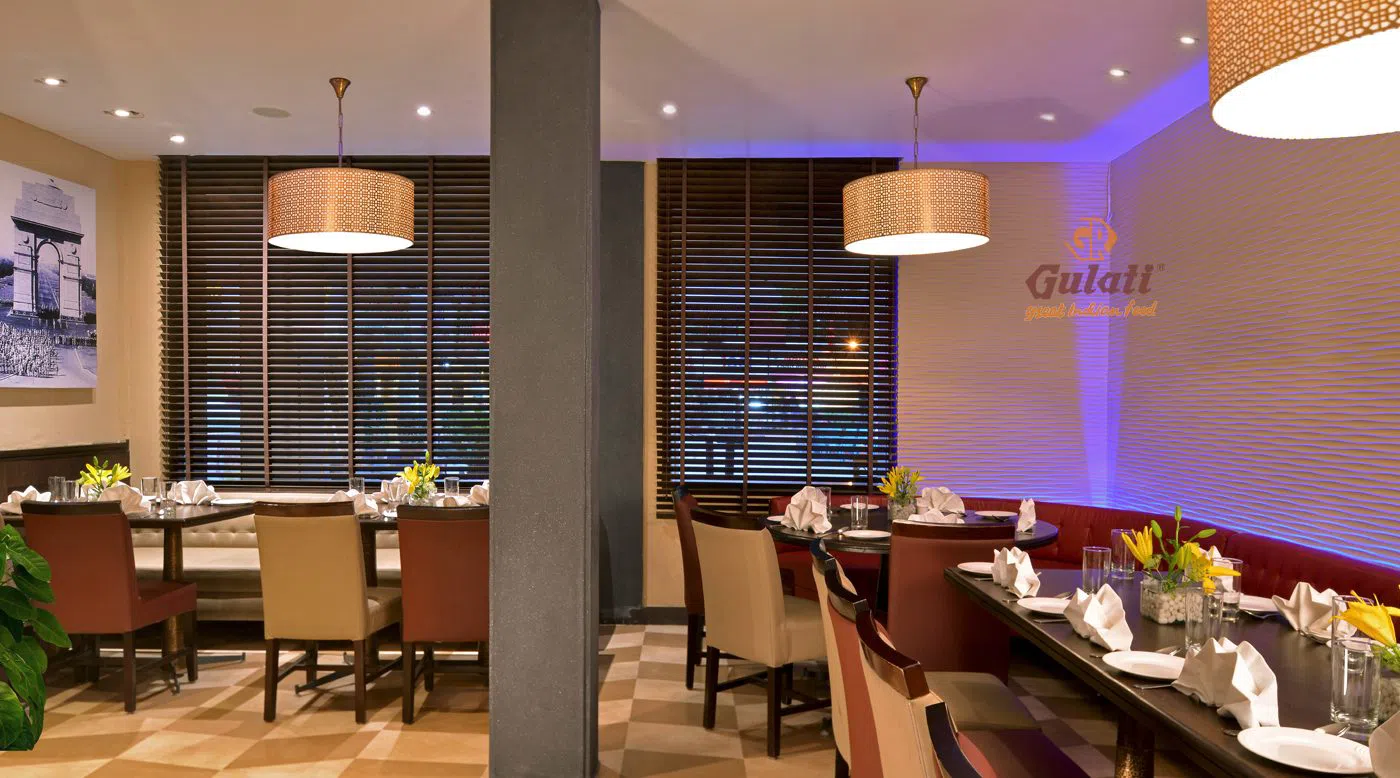
Gulati (Pandara Road Market) is a 10-minute walk from the arch and opens noon to midnight. Sizzling iron platters of kebabs and copper handis of butter chicken cross a low-lit mirrored dining room behind a colonnaded arcade shopfront, and the room is priced at ₹₹ to ₹₹₹. It has been the default post-India Gate dinner for Delhi families since long before the Central Vista rebuild. Reservations are taken by phone. Expect a wait at 9 p.m. on a weekend.
Khan Market (one kilometre from the arch) has its own metro station on the Violet Line. The 1951 horseshoe of two-storey whitewashed shopfronts carries hand-painted signage, with narrow service lanes behind and first-floor cafés above the bookshops. Bahrisons and Full Circle are the bookshops. Fabindia and Kama Ayurveda sell things worth carrying home, and Khan Chacha and Big Chill do the eating. Most shops run 10.30 a.m. to 8 p.m. How many people a place will seat without a booking varies from one restaurant or upstairs café to the next.

Jantar Mantar and Lodhi Garden
Jantar Mantar (Sansad Marg) is a 20-minute stop on the way towards Connaught Place, open 9 a.m. to 6 p.m. daily. Salmon-pink plastered masonry instruments stand on a small lawn ringed by high-rises: a giant inclined ramp sundial, curved hemispherical bowls sunk into the ground, cylindrical walled structures. The site is small and fills quickly, and it reads better slotted into a wider cultural day. Indian tickets are ₹20 online and ₹25 at the gate, foreign nationals pay ₹250 online and ₹300 at the gate, and under-15s go free.
Lodhi Garden opens 6 a.m. to 7.30 p.m. daily and costs nothing. Fifteenth-century grey-stone domed tombs stand in mown English-style parkland, Bara Gumbad and the blue-tiled Sheesh Gumbad among them, and you walk straight into the Sayyid and Lodhi tombs with no ticket and no queue. An arched stone bridge crosses a dry nullah, and early on the joggers and parakeets have the place to themselves. Go at opening, before the Central Vista heat arrives. Amplified music and commercial shoots need permission.

Gurudwara Bangla Sahib
Gurudwara Bangla Sahib is open 24 hours, every day of the year, a short auto ride from the arch. A golden onion dome rises above white marble terraces and the large Sarovar tank reflects it, with barefoot head-covered crowds crossing warm stone. The free community kitchen serves 9 a.m. to 3 p.m. and 7 p.m. to 10 p.m., steel trays and vast cauldrons filling the langar hall.

Entry and the langar are free, with donations optional. Cover your head, leave your shoes at the counter and keep your legs covered. Half an hour here will stay with you longer than most of the ticketed stops in this part of Delhi.
Tickets, queues and whether to take a guide
The arch has no ticket, no queue and no closing hour. Where you do pay, the online route is the one that saves you standing around. ASI tickets for Purana Qila and Jantar Mantar are sold online and at the gate, and buying online keeps you out of the counter line. Rashtrapati Bhavan cannot be done at the door at all.
Guided city tours that take in India Gate run every day of the week, and they book up steadily. Book ahead if your dates are fixed. A guide buys you transport between sites that sit kilometres apart and someone to explain the stone. It does not buy entry to the arch, which stays free to anyone who walks up.
India Gate rewards a short visit. It suits a visitor who treats the arch as the first stop on a Central Vista walk and keeps the rest of the day for the memorial, the galleries and a Pandara Road table.
Best time to go
Come back at dusk. The whole arch is floodlit against a dark lawn, and the evening lighting does more for this monument than for any other in the city. For the middle of the day, the galleries at Jaipur House are high-ceilinged and cool, and they are the right move in heat or rain.
Mondays close the National Gallery of Modern Art, the Pradhanmantri Sangrahalaya and the crafts museum. Saturday is the only day the Change of Guard runs. In January, Kartavya Path is closed from Vijay Chowk to India Gate for the Republic Day rehearsals and the parade itself.
Planning notes
Build the day around the Monday closures and the January avenue closure, book Rashtrapati Bhavan and any guided tour ahead, and carry photo ID for the war memorial gate. See the Delhi guide and the Delhi hotel search.
Before you go
What does it cost to visit India Gate?
Nothing. India Gate is open public ground, with no ticket and no cap on numbers, and the National War Memorial immediately south-east of it is free too. The memorial does ask every visitor for photo ID at the gate.
How long do you need at India Gate?
Twenty minutes covers the arch itself. The National War Memorial behind it adds the time you spend at security screening, and if you want a longer day in the area the Pradhanmantri Sangrahalaya at Teen Murti is a three to four hour visit on its own.
What is the best time of day to see the arch?
Dusk. The whole arch is floodlit against a dark lawn, and the evening lighting makes more difference here than at Delhi's other monuments. Early morning suits Lodhi Garden instead, which opens at 6 a.m., before the Central Vista gets hot.
What is closed on a Monday near India Gate?
The National Gallery of Modern Art at Jaipur House (which also shuts on national holidays), the Pradhanmantri Sangrahalaya and the National Crafts Museum all close on Mondays. India Gate, Purana Qila, Jantar Mantar and Gurudwara Bangla Sahib are open every day.
How do you see the Change of Guard at Rashtrapati Bhavan?
Book a slot in advance on the official portal, because you cannot walk up on the day. Registration online costs ₹50 per visitor and you enter at Gate 38. From 10 October 2026 the ceremony runs every Saturday, 7.30 a.m. to 8.30 a.m., and any one booking, whether individual, small group, school or college, is capped at 50 visitors.