The first thing you notice is that the traffic has stopped for a reason. Somewhere ahead a brass band in braided tunics is playing at a volume built for open fields, a man in a turban is inching forward on a white mare under a moving ceiling of chandeliers carried on poles, and forty relatives are dancing in the road with no intention of hurrying. Between mid-November and February this happens in Delhi thousands of times a night, and if you arrive without knowing that, you will spend your trip mildly confused about why the city is dressed up and why every decent hotel quotes you a strange price for a Saturday.
This is the season the city runs on. Nobody organises it centrally and no sightseeing itinerary will hand it to you, but it is visible from the pavement, it shapes what you can book and what it costs, and in one place in central Delhi a complete stranger is genuinely welcome to sit at the back of a ceremony.
When the season runs and why it clusters
North Indian weddings are not spread evenly across the year. Auspicious dates, shubh muhurat, are calculated from the Hindu calendar and published annually, and the bulk of them fall in a cold-weather window that opens around mid-November. There is then a well-known lull of roughly a month from mid-December, when the sun's transit makes dates inauspicious, before the calendar reopens in late January and runs hard through February and into spring. Sikh and Muslim ceremonies follow their own calendars, so something is always happening, but the crush is unmistakable: a single auspicious Saturday in late November or early December can see several thousand weddings across the city.
The practical consequence for a visitor is that hotel rooms, cars, drivers and restaurant tables in certain districts tighten on precisely those dates, and loosen again during the lull. If your dates are flexible, the second half of December is the calmest and cheapest stretch of the whole winter, and the weather is at its best, with daytime highs in the low twenties and nights that genuinely need a jacket. The trade-off is the air. November and December are the worst weeks of Delhi's year for smog, and anyone with a respiratory condition should plan around that honestly rather than hope.
The band, the mare and the road that stopped
The procession blocking your taxi is a baraat, the groom's party travelling to the venue, usually covering the last few hundred metres at walking pace so that everyone gets their dance. What makes it look so theatrical is that almost none of it is improvised. It is hired, as a package, from outfitters who have done nothing else for decades.
Chawla Band (offices at Karol Bagh, Tagore Garden and Rohini) has been trading since 1973 and supplies the whole kit: the brass band, the dhol players, the white ghori, the baggi carriage and the walking light-bearers with their generator-fed chandeliers. Packages run from around ₹25,000 for a modest band up to ₹1.5 lakh and beyond once you add the horse, the carriage and the full light line. December weekends are booked months in advance, which is worth knowing if you are with a travel outfit that wants to charter a band, a ghori and a baggi for its own event. That is bookable directly, and they are used to the request.

Watching one is free and requires nothing of you. Stand on the pavement, stay out of the road, and let the procession pass rather than trying to thread through it. Photographing the band, the horse and the lights is fine and nobody will mind. Photographing the groom's face at close range is a different thing and reads as intrusive. Every so often someone will wave you in to dance, which is meant sincerely and is the single best thing that can happen to you in Delhi in December; do not invite yourself.
The one wedding a stranger can honestly attend
Gurudwara Bangla Sahib (Connaught Place, off Ashoka Road) is open 24 hours, free, and explicitly welcoming to all faiths and nationalities, in groups of any size. Through the winter mornings, and heavily on auspicious dates, Anand Karaj services run in the main hall: the Sikh marriage ceremony, in which the couple circle the Guru Granth Sahib four times while the hymns are sung.
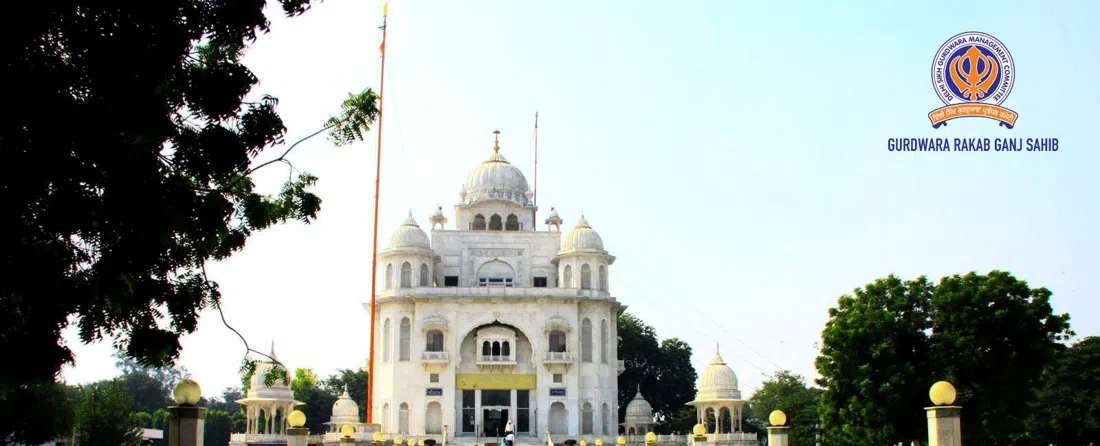
You can sit at the back of one. That is the deal, and it is worship you are being permitted to attend rather than a performance laid on for you. Cover your head, and scarves are lent at the entrance, leave your shoes at the free counter, wash your feet in the shallow channel on the way in, and sit cross-legged on the floor, men to the right and women to the left, keeping your feet pointed away from the scripture. Do not photograph the couple. Do not walk up the central aisle. Stay put or leave quietly.
The langar, the free community kitchen, serves from 9am to 3pm and again from 7pm to 10pm, and eating there, seated in rows on the floor and served by volunteers, tells you more about the culture behind the wedding than any ballroom will. The nearest metro is Patel Chowk on the Yellow Line, about ten minutes on foot; Rajiv Chowk is fifteen. Go on a weekday morning if you want the ceremonies without the weekend crowd.
The palace end of the market
At the top of the scale, Delhi weddings are hosted in buildings that were designed to make a state occasion of anything.
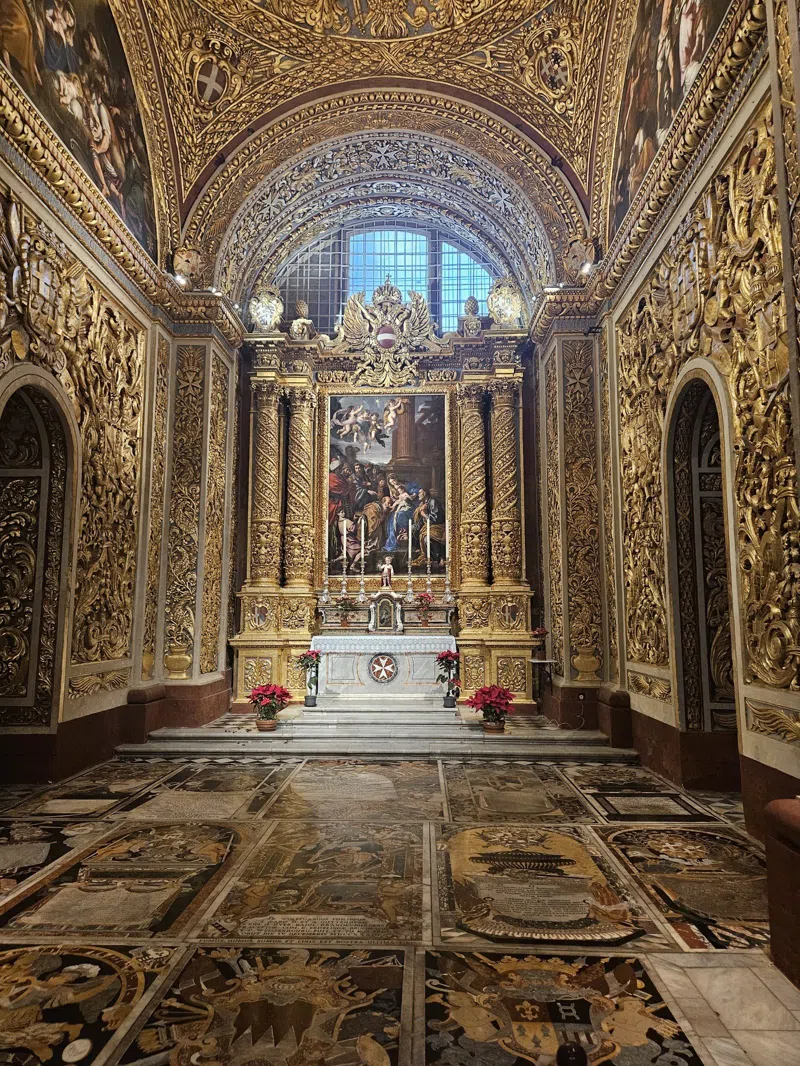
The Imperial New Delhi (Janpath, in the Lutyens' quarter) has what is probably the last authentic sprung-floor ballroom in the country. The Royal Ballroom holds around 500, with lawns for the overflow, and in-house catering runs roughly ₹5,500 to ₹9,000 per head before anything else is counted; a full multi-day wedding here is quoted in crores. November and December Saturdays are commonly held close to a year out, which tells you most of what you need to know about the season. You cannot walk in on a wedding, but you do not need to: non-guests can book afternoon tea or dinner and see the corridors of colonial-era art, the marble and the palms on their own terms. The Violet Line's Janpath station is at the gate.
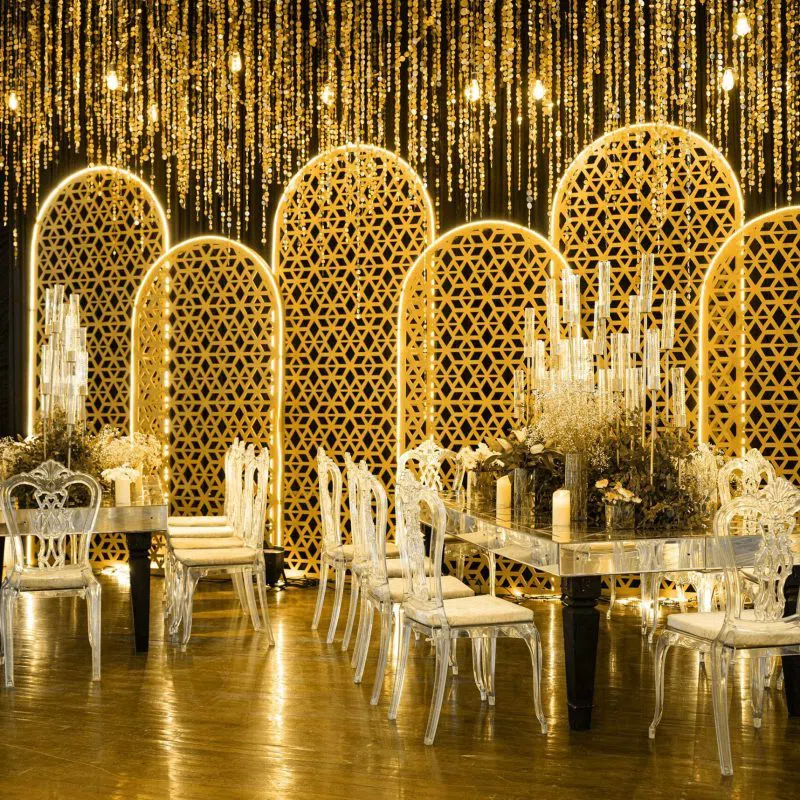
The Leela Palace New Delhi (Chanakyapuri, the embassy district) is the other pole of the same tier: regal ballrooms, a palace terrace built for the sangeet, a dedicated wedding planning team and a comfortable several hundred guests. Catering starts around ₹6,000 a head and everything else is on enquiry. This is the template for the maximal north Indian winter wedding, with gold, mirror-work, a terrace of dancers and a fleet of cars. In season, a drink at the bar is worth the money purely to watch the logistics of three functions being turned around in a day. Chanakyapuri is thin on metro; take a taxi and allow for the diplomatic-zone road closures.
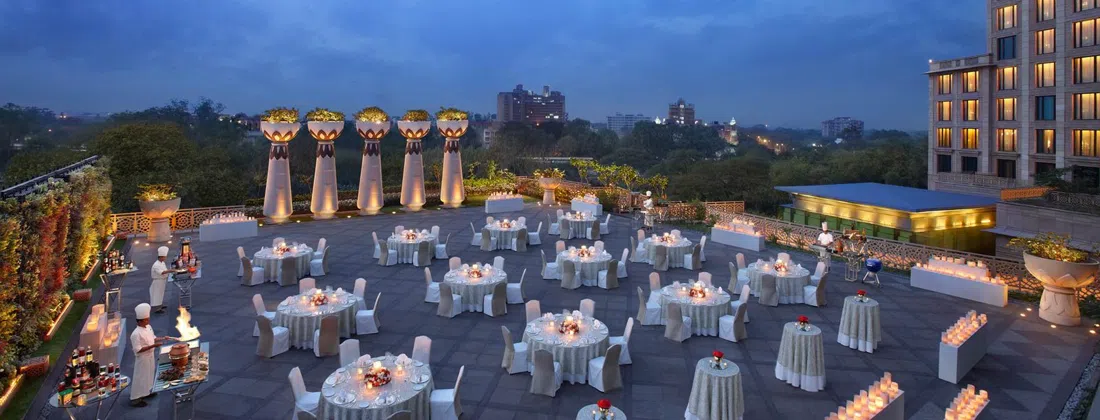
A Mughal courtyard instead of a ballroom
Haveli Dharampura (Old Delhi, in the lanes south of Chandni Chowk) is the one place where you can attend a shaadi-scale evening in a restored eighteenth-century courtyard rather than a function room. The restoration won a UNESCO award and it is the only genuine luxury heritage hotel inside the old city. It takes events for up to about 150 guests with in-house décor, catering and alcohol, and rooms start around ₹15,000, though there are only thirteen of them.
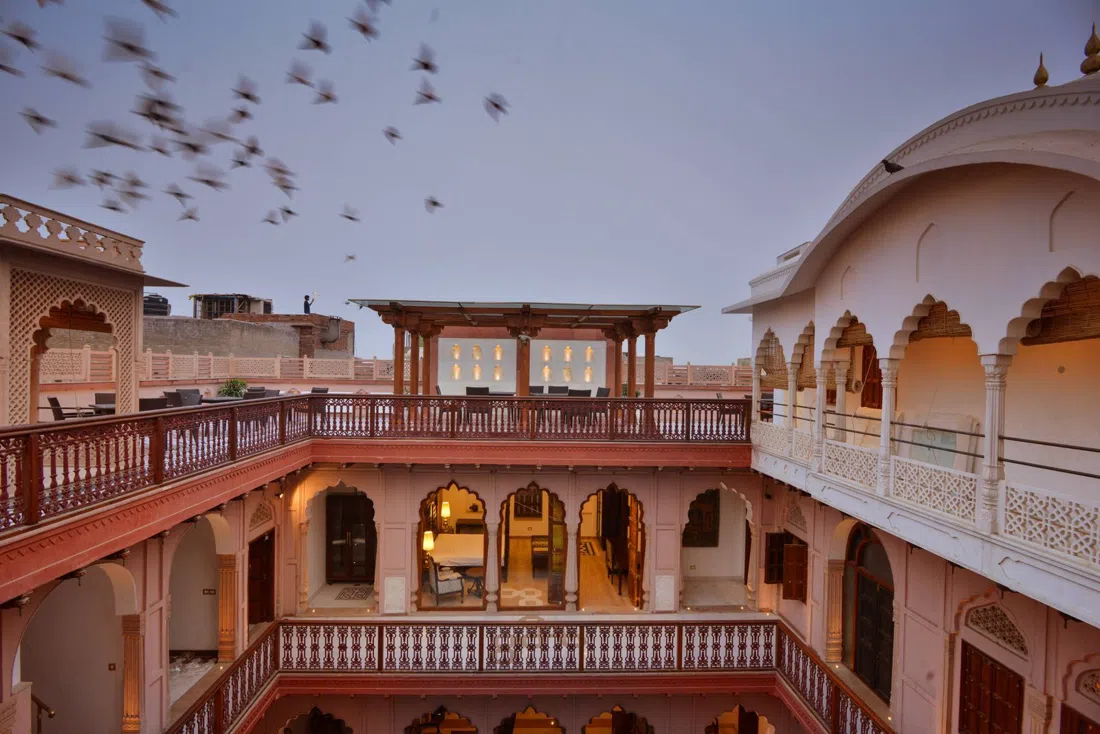
If you are not invited to a wedding, the nightly kathak-and-dinner sitting is bookable for small groups at roughly ₹2,500 and up per head, and it is the easiest way to see the building. Reserve; thirteen rooms and one courtyard means walk-ins do not work. The approach is on foot or by cycle rickshaw through lanes a car cannot enter, which is a large part of why you stay there. Chandni Chowk on the Yellow Line or Jama Masjid on the Violet Line, then five minutes of very slow, very good street.
What most Delhi weddings actually look like
The palace hotels supply the photographs. The volume is somewhere else entirely.
The Tivoli New Delhi (south Delhi's banquet belt) is the flagship of a group that industrialised the format: 130 rooms, four event spaces, quoted capacity from 150 to 2,000 guests, with Oakwood Hall alone seating around a thousand. Per-head catering sits in the ₹2,500 to ₹4,000 band. On a December night, three separate weddings can be running on one property, each with its own entrance, its own band arriving and its own buffet line, and the staff will move all three without anyone in any of them noticing the other two. It is unglamorous to write about and it is what most Delhi weddings genuinely look like.
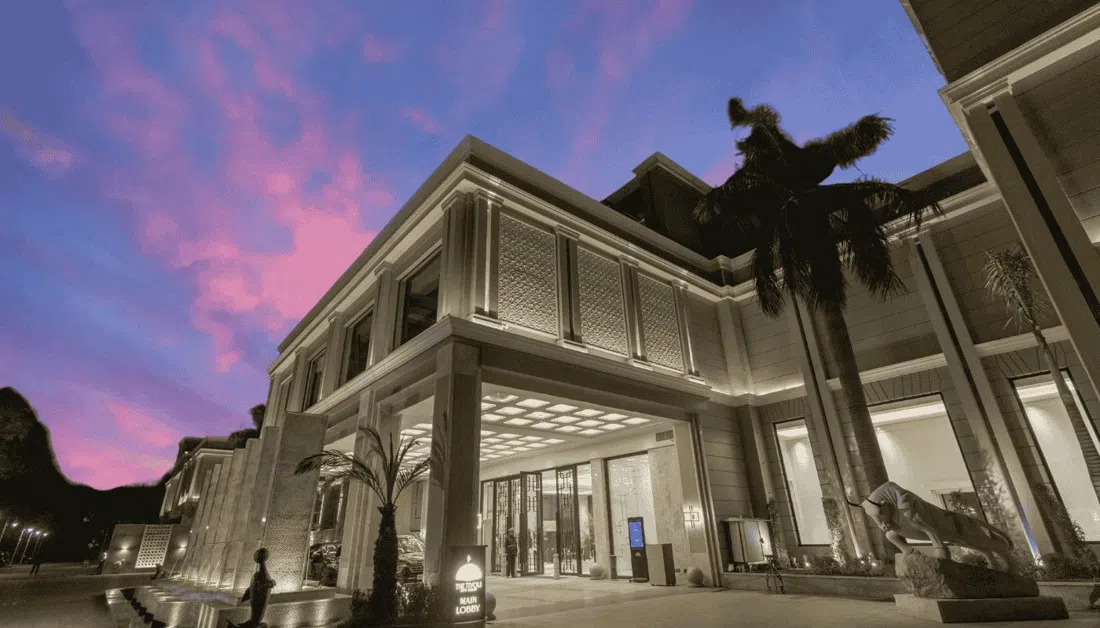
Further south, Pavilion by FNP Venues (the Chhatarpur farm strip) is built for 400 to 1,500 guests with parking to match, on an enquiry-and-site-visit basis with in-house décor and catering. It is run by FNP, which began life as the florist Ferns N Petals, so the flowers and the venue are the same business, which shows how completely Delhi's wedding trade has integrated itself. Catering runs roughly ₹2,000 to ₹3,000 a head. The Chhatarpur corridor is the densest concentration of wedding venues in the country in December; drive down it after dark and the farmhouse gates are lit for a kilometre at a stretch. Chhatarpur station on the Yellow Line puts you at the top of the strip, and an auto covers the rest.
If you are flying in as a guest
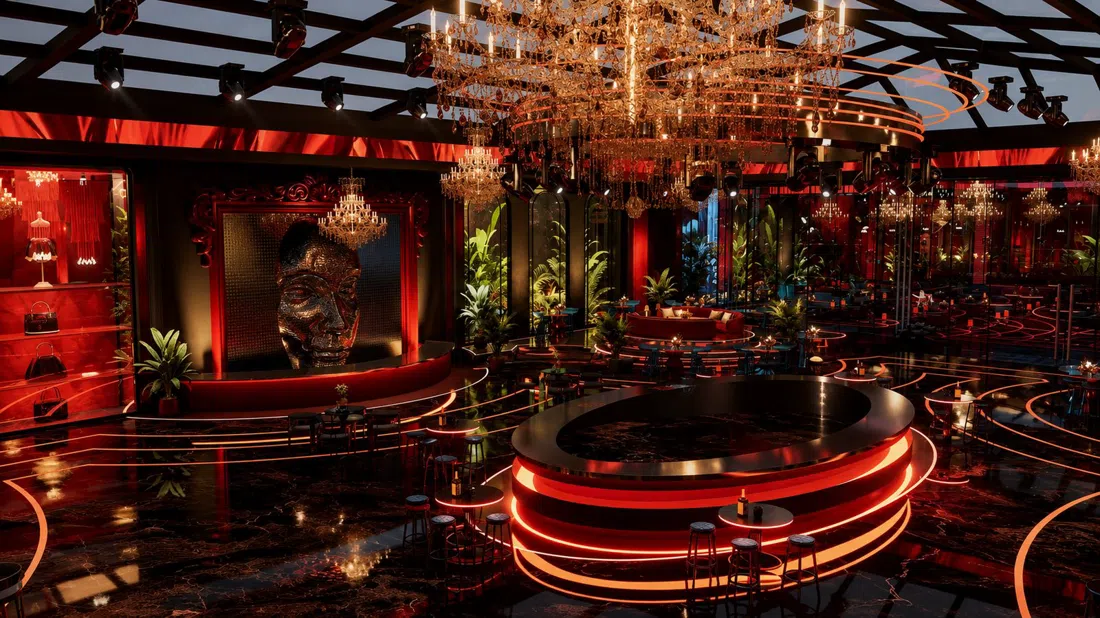
The Roseate New Delhi (out on the highway towards the airport) is the deliberate antidote to the thousand-guest hall. It hosts roughly 48 to 200 guests across 50 rooms, arranges overflow nearby, and, unusually, allows external decorators, DJs and photographers rather than forcing its own. Rooms start around ₹37,600 and catering from about ₹6,000 a head, ₹6,500 non-veg, taxes on top.
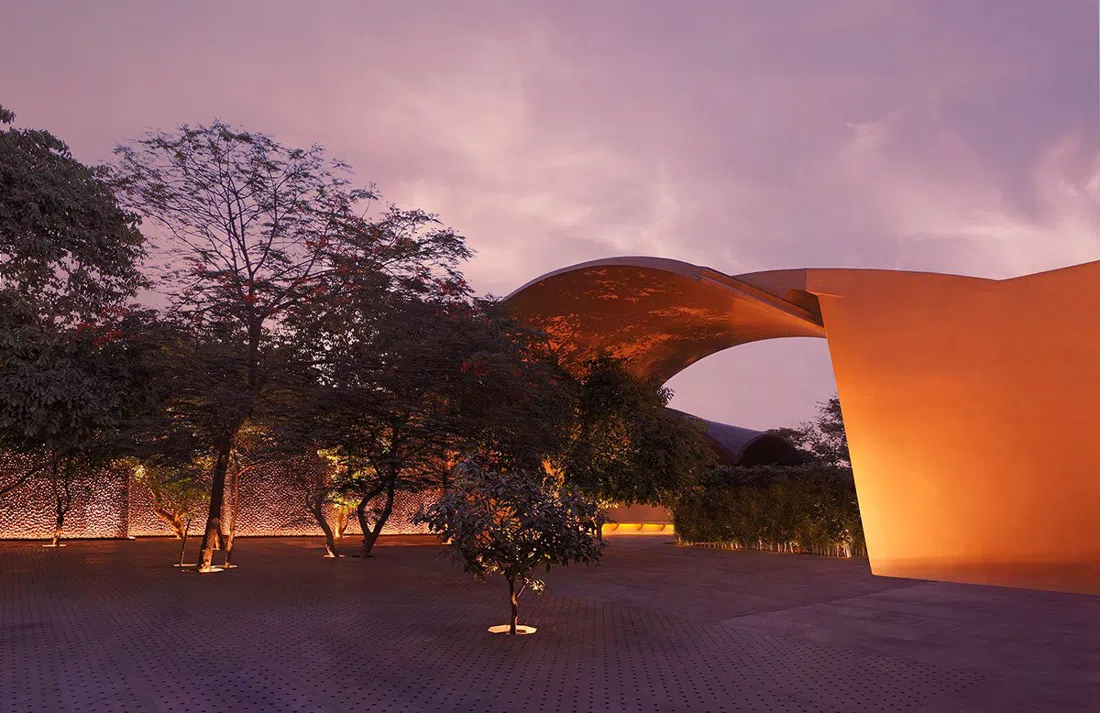
For a foreign guest doing a three-day wedding, the argument is practical rather than aesthetic. It is twenty minutes from the terminal, it is quiet enough to sleep in the gaps between functions, and the water and the black-bottomed pool are a genuine relief after a night that ended at three. Its size is also its problem. It sells out first in winter, so it is the booking to make before the flights. If it has gone, widen the search early rather than late; a full run of options across the city is on the Delhi hotel search, and the rest of the city's basics are in the Delhi guide.
Clothes, gifts and the timing nobody tells you
If you are invited, dress up. Under-dressing is the only real error, and colour is expected. Avoid white, which is worn for mourning at Hindu funerals, and go easy on black; for women, avoid a full red outfit at a Hindu wedding, because that is the bride's. A kurta or a well-cut jacket is plenty for men. Shoes come off at the gurdwara and at many home ceremonies, so wear something you can slip out of twenty times.
Cash gifts go in an envelope in amounts ending in one (₹501, ₹1,100, ₹2,100) because the extra rupee marks the sum as ongoing rather than closed. Alcohol is free-flowing at hotel and farmhouse receptions and entirely absent from gurdwara functions and most Muslim ones; take the cue from the room rather than asking. And the timing is the thing that catches every visitor: the card says 7pm, the couple arrives around ten, dinner is served after that, and leaving before you have eaten is read as a small insult. Plan to be out past one and nap in the afternoon like everybody else.
Practical notes
The metro is the fastest way across the city by a wide margin in season, but the last trains leave the terminals around 11pm, which is before most receptions serve dinner. Have a ride-hailing app loaded and expect surge pricing and long pickup waits around Chhatarpur and the south Delhi banquet belt on a Saturday night. Allow an extra forty minutes for anything crossing central Delhi on an auspicious date.
Digital payment is universal among residents but awkward for most foreign cards, so carry notes for autos, rickshaws in the old city lanes, tips and shagun envelopes. Keep a stack of ₹100s and ₹500s.
Peak dates are the fortnights either side of the mid-December lull, plus late January into February. If you want the spectacle, come then. If you want cheap rooms and clear roads, come during the lull.
Watching costs nothing: the bands, the processions and Bangla Sahib are all free, langar included. Seeing the interiors without an invitation costs the price of afternoon tea at a Lutyens hotel or roughly ₹2,500 a head for dinner and kathak in an Old Delhi courtyard. Hosting is a different universe: ₹2,000 to ₹3,000 a head at a farmhouse, ₹2,500 to ₹4,000 in a big banquet hall, ₹5,500 to ₹9,000 at the palace end, and a baraat outfit from ₹25,000. Whichever end you are at, book in October at the latest. By November the calendar has already closed.