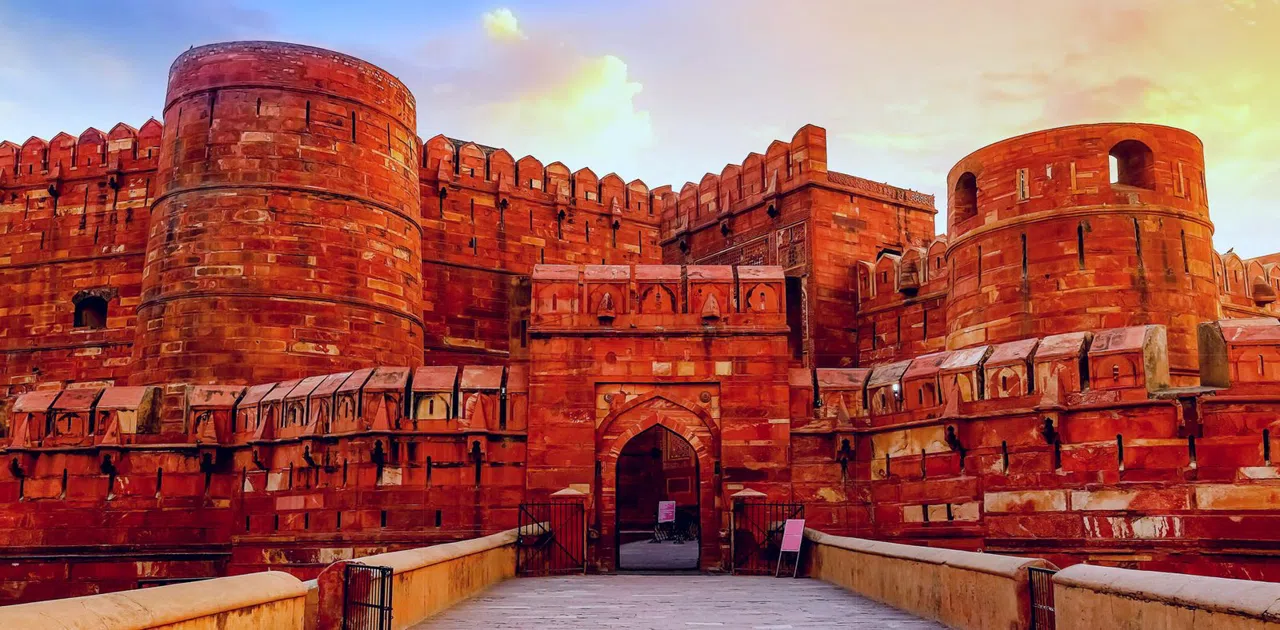
Lal Qila is red the way old brick is red, not postcard scarlet but a dusty rose that shifts through the day, deepest in the first hour after sunrise and again in the last light before the gates close at nine. From the pavement on Netaji Subhash Marg the walls run on and on and give almost nothing away. Behind them is not a palace in the European sense but a walled city of lawns, water channels, barrack blocks and a handful of surviving marble pavilions. The difference between a good visit and a hot, baffling one comes down almost entirely to what time you arrive and which ticket you are holding when you get there.
What stands behind the walls
Red Fort (Lal Qila) (Netaji Subhash Marg, Old Delhi) was Shah Jahan's new seat when he moved the Mughal capital here in the 1640s, and it stayed the centre of the empire until the British took it in 1857. That second half of the story is the one that explains what you see: after the uprising the fort became a garrison, much of the palace was cleared, and long rows of colonial barracks went up on the open ground. So the lawns are not Mughal planning but absence, and knowing that changes the walk. You are reading a fragment, not a complete building.
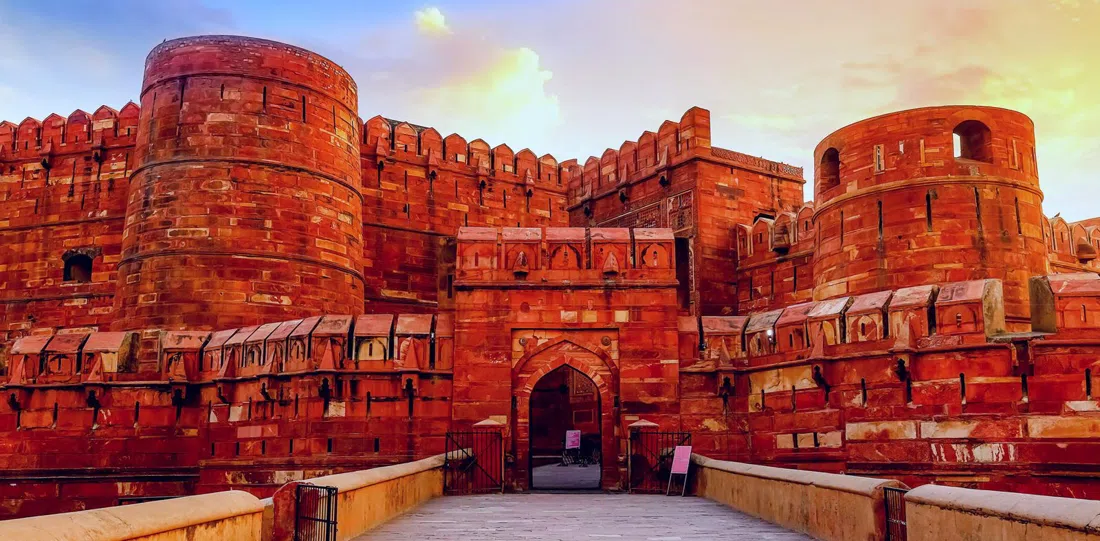
The standard route runs straight through the middle. You enter at Lahori Gate, pass under the vaulted bazaar, cross a wide open court to the drum house, and reach the Diwan-i-Am, the hall of public audience, where the emperor's throne alcove still sits in inlaid stone at the back of a deep colonnade. Past that, strung along the eastern wall above the riverbed, is the row of marble pavilions people actually come for: the Diwan-i-Khas, the Rang Mahal with its carved lotus pool, the hammam, the small white Moti Masjid, and the garden terraces of Hayat Bakhsh Bagh at the northern end. None of them takes long on its own. The pleasure is cumulative: you walk the same riverfront line the court walked, with the city noise held off by the walls.
Chhatta Chowk and the first pinch-point
Everybody passes through Chhatta Chowk (inside the fort, immediately past Lahori Gate), and almost everybody stops. It was the covered arcade where the imperial household bought silk and jewels; today it is artificial jewellery, painted wall hangings and 'antiques', and the prices are tourist prices. Expect roughly ₹100 to ₹1,500 for trinkets, and haggle without embarrassment. It is included in your fort ticket because it is simply the way in.
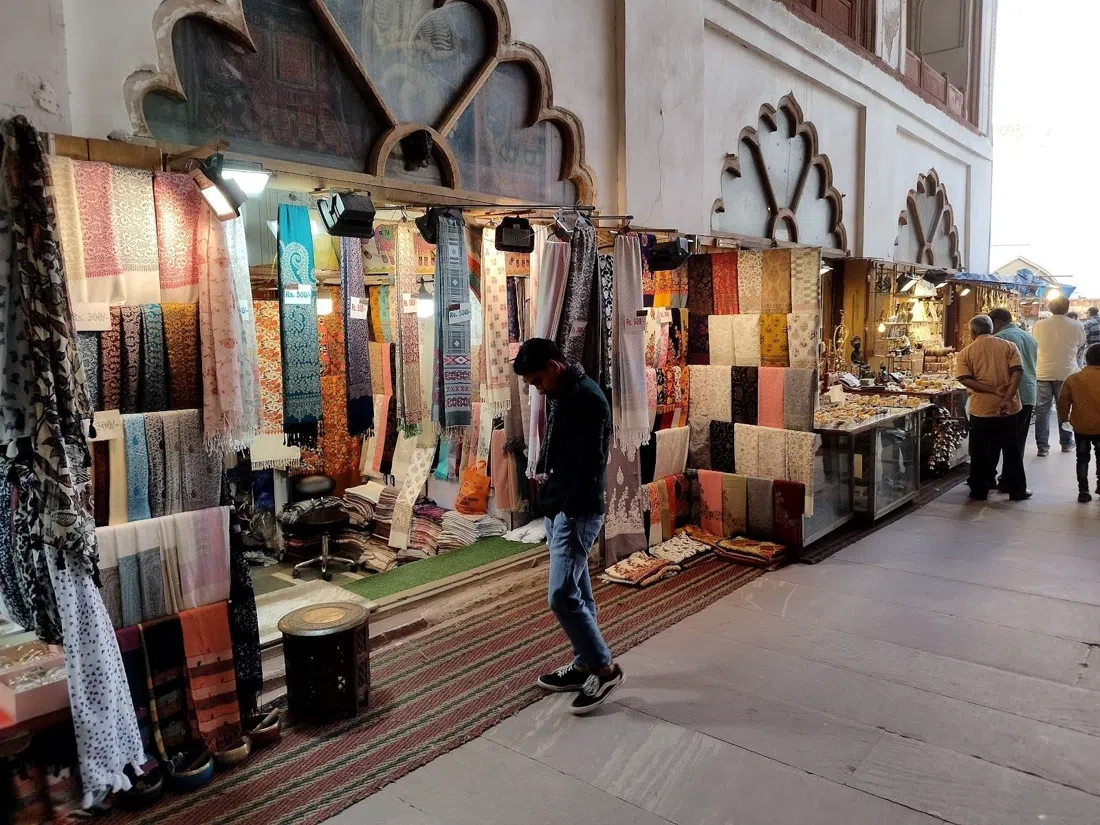
For couples it is a pleasant five minutes of shade. For any group larger than four it is the single worst place in the complex to browse as a block, because the arcade is narrow and the whole visitor flow is squeezing through it. Agree a meeting point at the far end (the open court beyond the drum house is obvious and shaded on one side) and let people shop at their own pace. Do your buying on the way out, not the way in, so nobody carries bags around the lawns for two hours.
The museums inside the fort
This is where ticketing catches people out. The plain fort ticket does not get you into the museums; the combined fort-plus-museums ticket does, at ₹870 for foreign visitors and ₹56 for Indian visitors. If you want any of the interiors, buy the combined one at the start, because walking back to the counter later is a twenty-minute round trip you will resent.
The one to prioritise is the Red Fort Archaeological Museum (Mumtaz Mahal, riverfront range), housed in a surviving palace pavilion and the only museum on site that is genuinely about the Mughals rather than the twentieth-century freedom struggle. Three galleries plus a section on Bahadur Shah Zafar, the last emperor, tried and exiled from this building's own neighbourhood. Delhi Tourism lists it 9:15am to 4:30pm, open all days. The rooms are small and sound carries badly, so if you are with a guide and a group, filter through in tens rather than crowding one gallery.
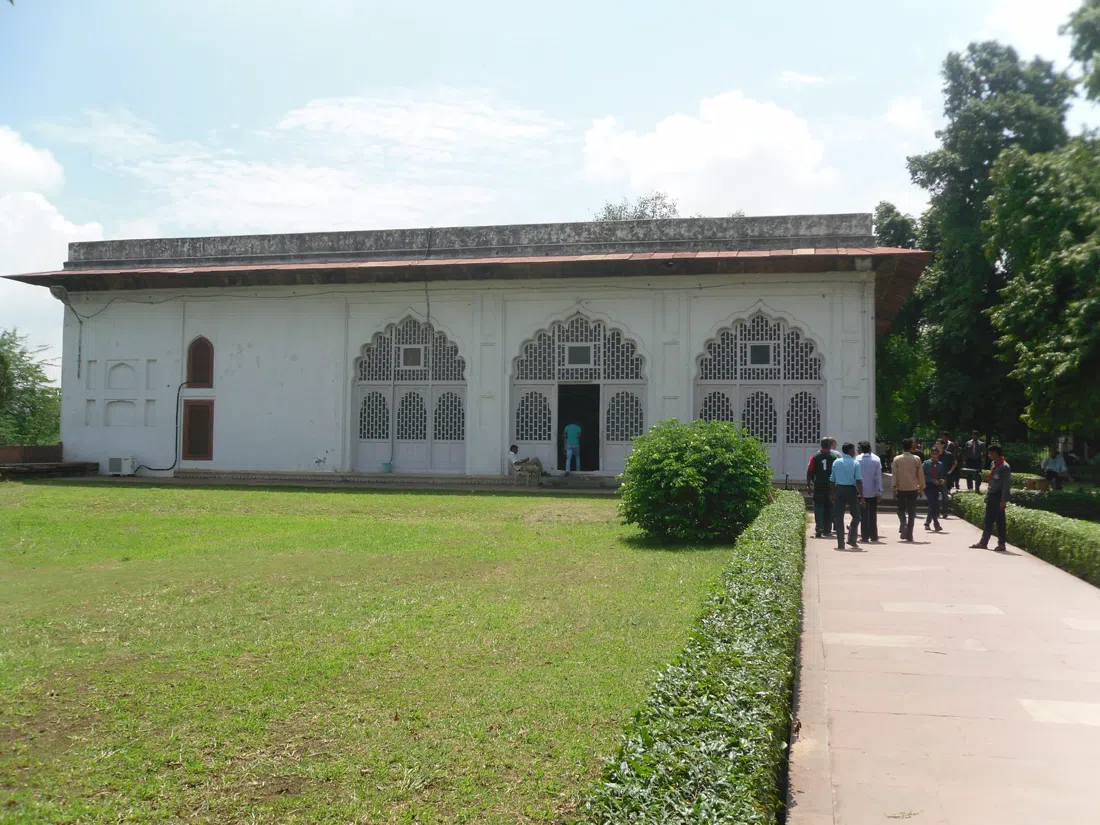
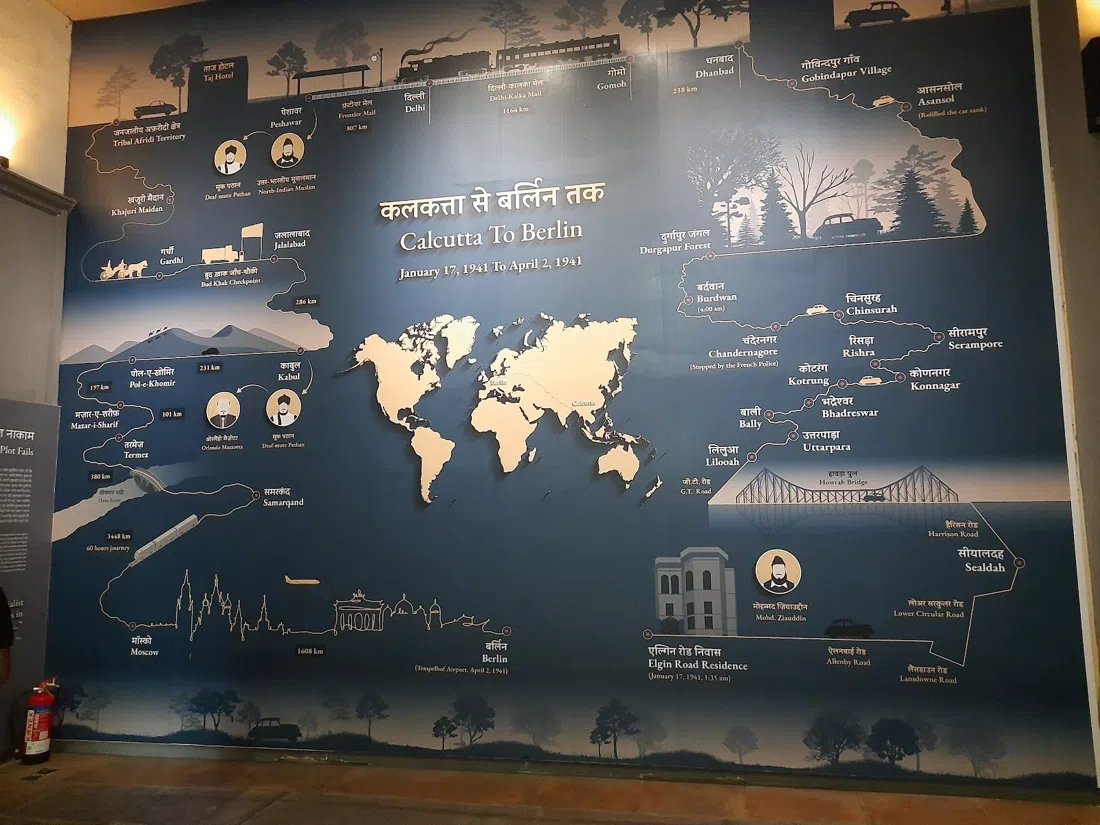
In the colonial barracks on the western side sit the five 'Kranti Mandir' museums opened in 2019. The pick of them is the Subhas Chandra Bose and Indian National Army Museum (Kranti Mandir barracks, west side), roughly 9am to 5pm, which uses the barracks where INA officers were tried after the Second World War. Its neighbours (Yaad-e-Jallian, the 1857 museum, and Azaadi ke Diwane with its Cellular Jail replica) are worth about twenty minutes each if the weather is against you. One correction worth carrying: the art museum that used to occupy Barrack 4 closed in April 2022, so any guide or blog sending you there is out of date.
Across the bridge to Salimgarh
If you want away from the crowd, go to the northern end. Salimgarh Fort (across the bridge at the fort's north edge) is the other half of the UNESCO-listed Red Fort Complex and most visitors never cross to it. It predates Shah Jahan's fort, was absorbed into it, then served as a colonial prison, and is now a freedom fighters' memorial (Swatantrata Senani Smarak) with a small free museum open roughly 9am to 5pm. Your Red Fort ticket covers the crossing.
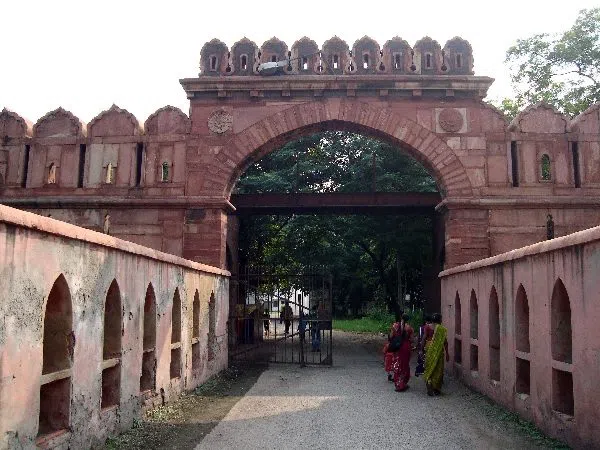
What you get is ruin and quiet: broken bastions, scrub, the railway running past on its embankment, and perhaps a dozen other people. It is rough underfoot and not step-free, so it is a poor idea for anyone with mobility trouble and a bad one in flip-flops. For groups it is the best thirty minutes in the complex precisely because nobody is competing for the same photograph.
The fort after dark
After 5:30pm the gate works differently. Jai Hind — Light and Sound Show (Red Fort grounds, run by the Sabhyata Foundation) is a separate operation from the Archaeological Survey, with its own ticket (from about ₹250, rising to ₹500, ₹1,000 and ₹1,500 by row), and after 5:30pm that show ticket alone is what gets you through security. It is a projection and narration piece across four centuries of the fort's history, voiced by Amitabh Bachchan, with two shows a night, Hindi first and then Hindi/English.

Two warnings, because this is the stop readers most often get wrong. Start times move with the season, roughly 6:00pm and 7:15pm in winter and 7:30pm and 8:45pm in summer, and the schedule runs in blocks rather than continuously, so check the actual date before building an evening around it. And there is no show on Mondays, even now that the fort itself opens on Mondays. It is the most group-friendly thing on this page: seating is in reserved rows, blocks can be booked online, and the foundation handles group arrangements directly. Arrive thirty to sixty minutes early for the security check, which is slower in the dark than people expect.
Tickets, queues and the security check
Entry is through Lahori Gate and it is airport-style: bag scan, frisking, separate men's and women's queues. That split is the detail that wrecks timings for families and tour groups, because the two lines move at different speeds, so arrange to regroup past the gate rather than trying to stay together through it. At busy hours the wait can run to an hour.
Tickets are ₹600 at the counter for foreign visitors and ₹550 online, ₹35 for Indian visitors, with under-15s free. The ₹50 difference is not the reason to buy online; skipping the counter queue is. Pre-buy, screenshot the QR in case the signal at the gate is poor, and if you are a group of more than six, buy as one block and split into two arrival lines.
As for guided versus unguided, a guided option exists and is attached to this page, and the bookable tours here carry 13,583 traveller reviews, with the top one rated 4.9 out of 5 from 5,445 reviews, running seven days a week. A guide is genuinely useful inside the Diwan-i-Am and in front of the riverfront pavilions, where almost nothing is labelled in a way that explains what was lost. If you would rather read than listen, the fort works perfectly well unguided; what a tour mostly buys you is context and someone else dealing with the gate.
Access, dress and the rules that actually bite
The fort has no door policy. It is a public monument and takes groups freely. Inside, paths are broad and mostly flat along the central axis, which makes the main route manageable with a wheelchair or a pushchair; Salimgarh and the barrack interiors are not. There is little shade between the gate and the pavilions. Carry water, because distances inside are longer than the map suggests.
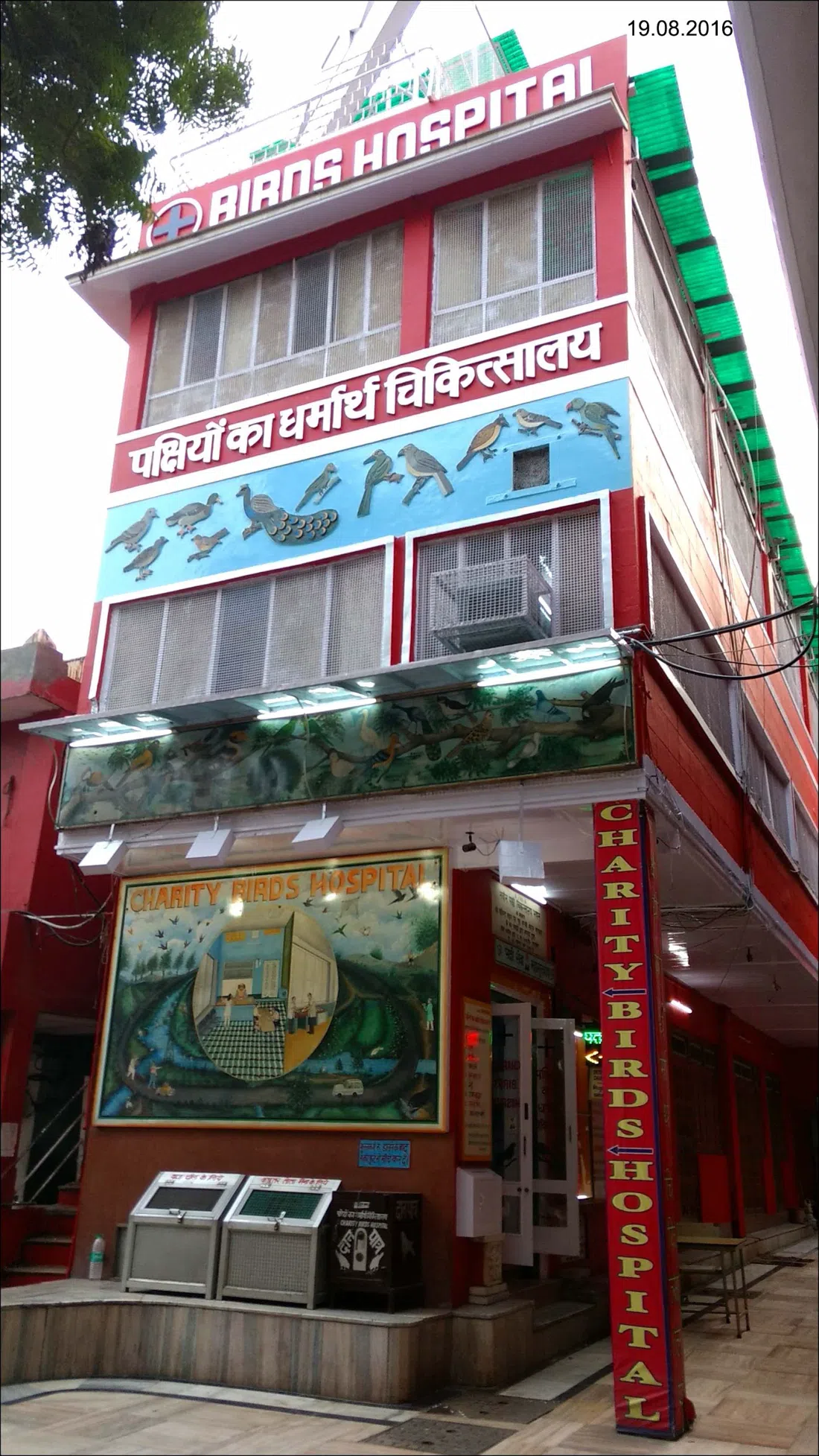
The rules get stricter at the religious sites nearby, and they are not negotiable. At Shri Digambar Jain Lal Mandir and Jain Charity Birds Hospital (directly across the road from the fort entrance), shoes and all leather come off (belts, wallets, bag straps), shoulders and knees stay covered, and there is no photography inside the hospital. Delhi's oldest Jain temple plus a free bird hospital running since 1930 that treats around 15,000 birds a year, and it is almost always skipped despite being ninety seconds from the gate. Note the split hours: roughly 5:30 or 6:00am to noon and again in the evening, closed through the middle of the day, while the hospital itself is open 8am to 8pm daily.
Seeing the fort whole
The fort is impossible to read from inside, because you are always within it. The fix is a ten-minute walk to Jama Masjid (Masjid-i Jahan-Numa, at the end of Chawri Bazar side of the old city), where the courtyard sits high above the street and the southern minaret, when it is open, gives the only view that shows Shahjahanabad as a plan rather than a sequence of lanes: the fort walls, the rooflines, the whole grid Shah Jahan laid out.
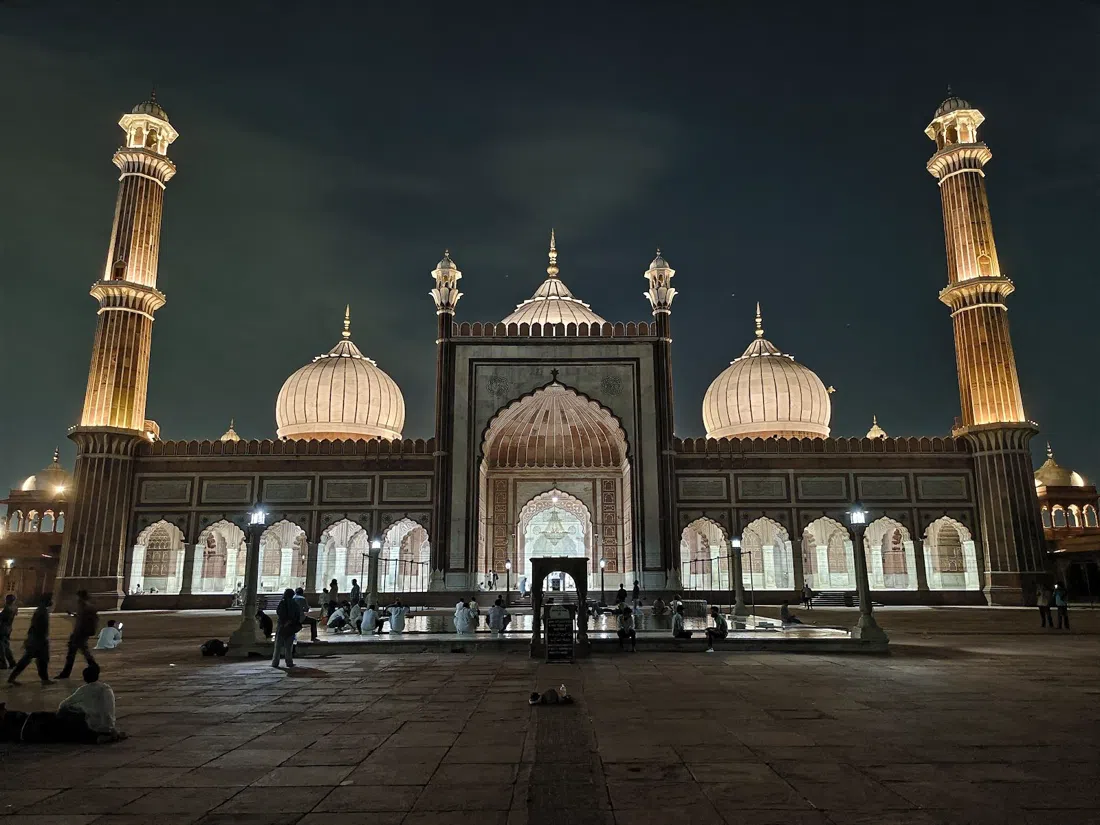
Entry is free for Indian visitors and Delhi Tourism lists ₹400 for foreign visitors, with roughly ₹100 extra for the minaret climb and camera charges quoted on the day. Shoes off at the gate, shoulders and knees covered, robes for hire at the northern gate. Non-worshippers are kept out during the five prayer times and at Friday midday, so build slack into the plan. And treat the minaret as a bonus, never a promise: access is at the mosque's discretion and closes without notice.
What to do with the rest of the morning
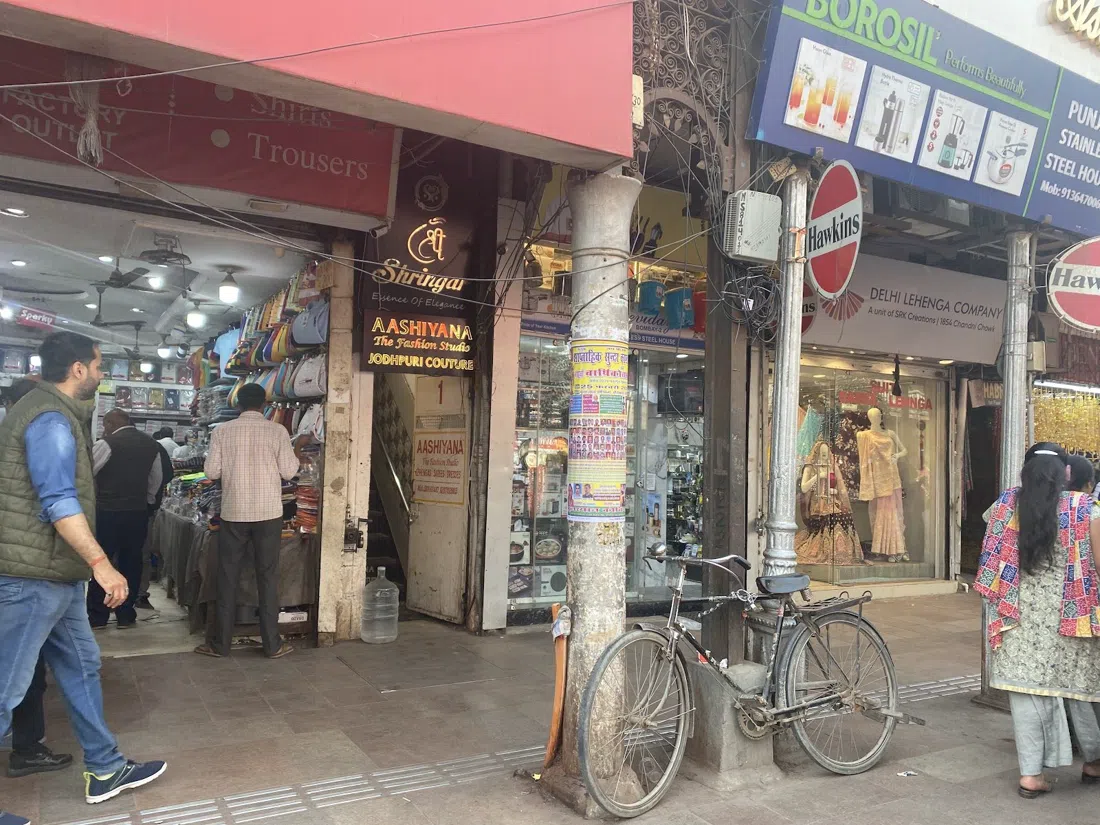
The street outside has changed more than the fort has. Chandni Chowk (the main bazaar spine, Old Delhi) is now barred to motorised traffic from 9am to 9pm, with a ₹20,000 fine on the gates, leaving the spine to pedestrians, cycle rickshaws and e-rickshaws. The 'total chaos' cliché is out of date on this stretch: a cycle rickshaw end to end costs about ₹100 to ₹200, and the walk now suits first-timers and older travellers. The side lanes, however, are exactly as they were.
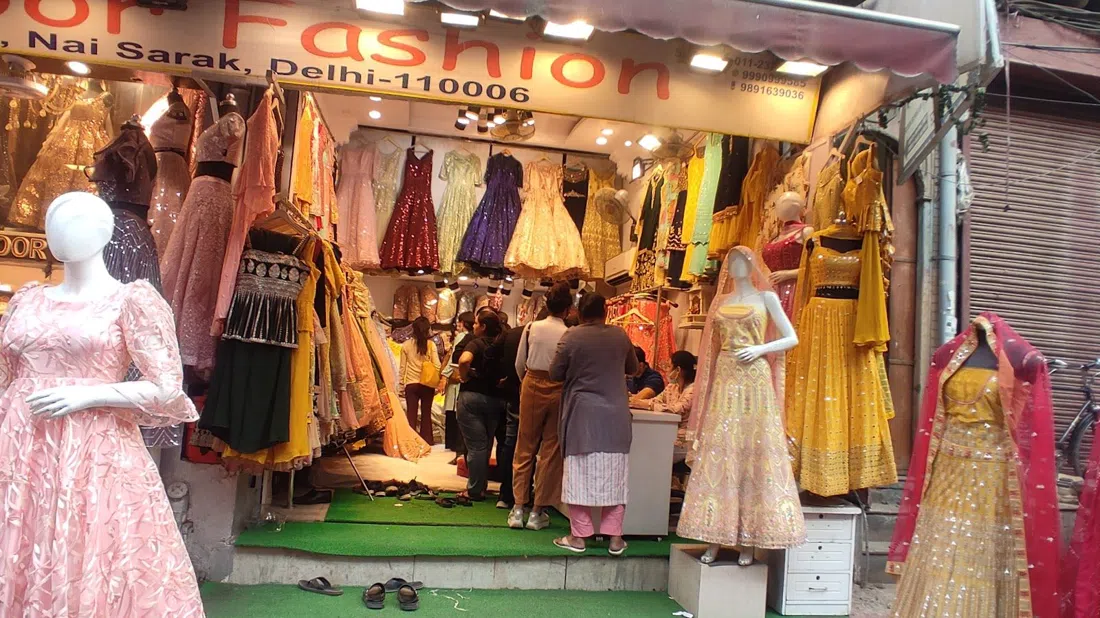
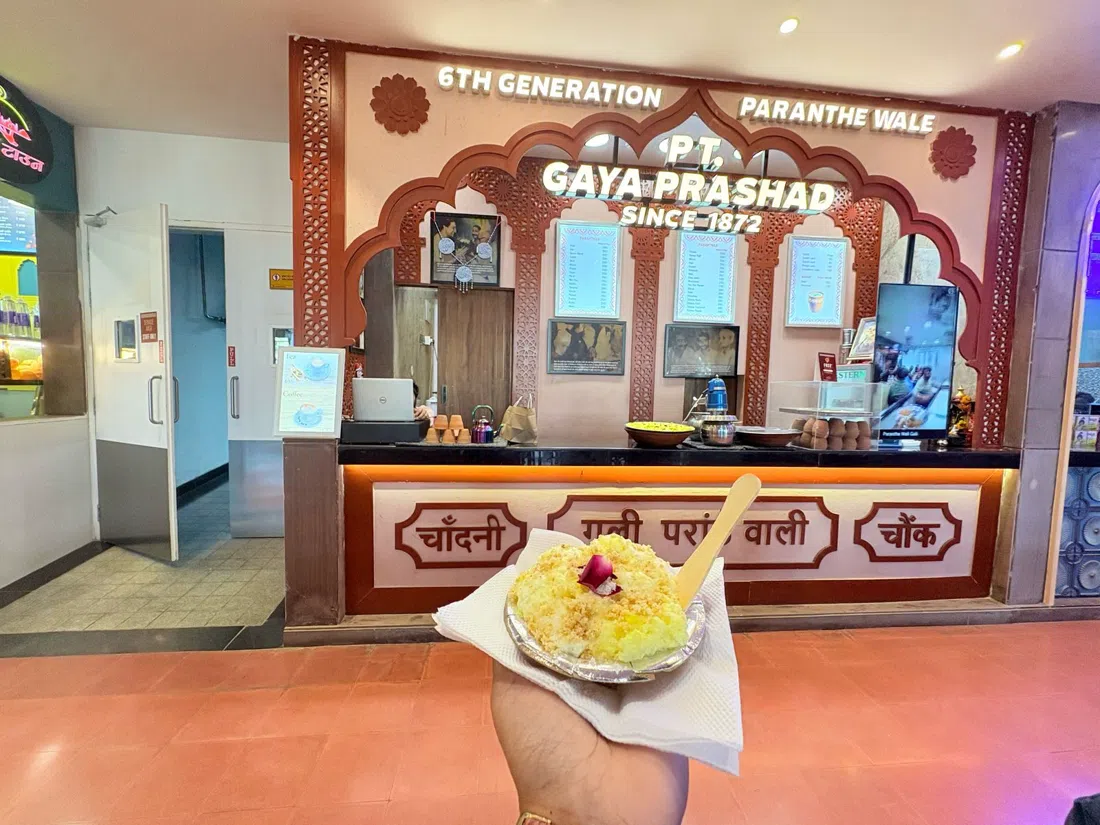
Eat in sequence. Old Famous Jalebi Wala (Dariba Kalan corner, Chandni Chowk) opens around 7:30 to 8:00am and fries in pure desi ghee with khandsari sugar. It is ₹100 to ₹200 for 250g, eaten standing at a pavement counter, which makes it the natural first stop before the fort opens up. Pt. Gaya Prasad Shiv Charan Paranthe Wale (Paranthe Wali Gali) has been trading since 1872 and seats four to six at a time, so groups queue in the lane and eat in relays; ₹60 to ₹150 a paratha, and the point is the odd fillings (rabri, dried fruit, banana) rather than the potato ones. For lunch after the fort, Karim's (Gali Kababian, behind Jama Masjid) is the default at its original 1913 address, ₹400 to ₹900 a head, still family-run; seating is split across small rooms and reservations do not really happen, so go off-peak or accept being separated. Vegetarians will struggle there, which is better said now than at the table.
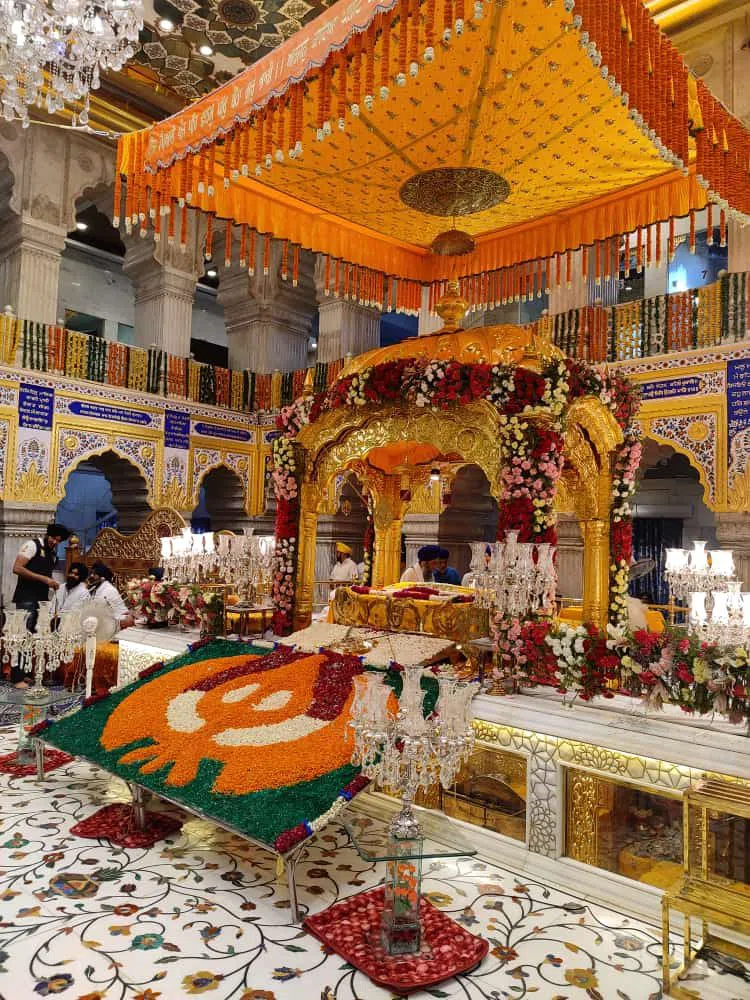
Two more stops change the texture of the day. Gurudwara Sis Ganj Sahib (Chandni Chowk) is open round the clock, five minutes from the fort, heads covered with scarves lent at the entrance, shoes and socks off. Its langar feeds anyone, in any number, free. It stands on the site of Guru Tegh Bahadur's execution, and that is the reason to go rather than the architecture. Khari Baoli (west end of Chandni Chowk) is Asia's largest spice market and a working wholesale trade, not an attraction: stay single-file, keep out of the porters' way, expect ₹200 to ₹800 a kilo, and time it deliberately, since it shuts on Sundays and shops only really get going from late morning. The chilli dust is rough on asthma.
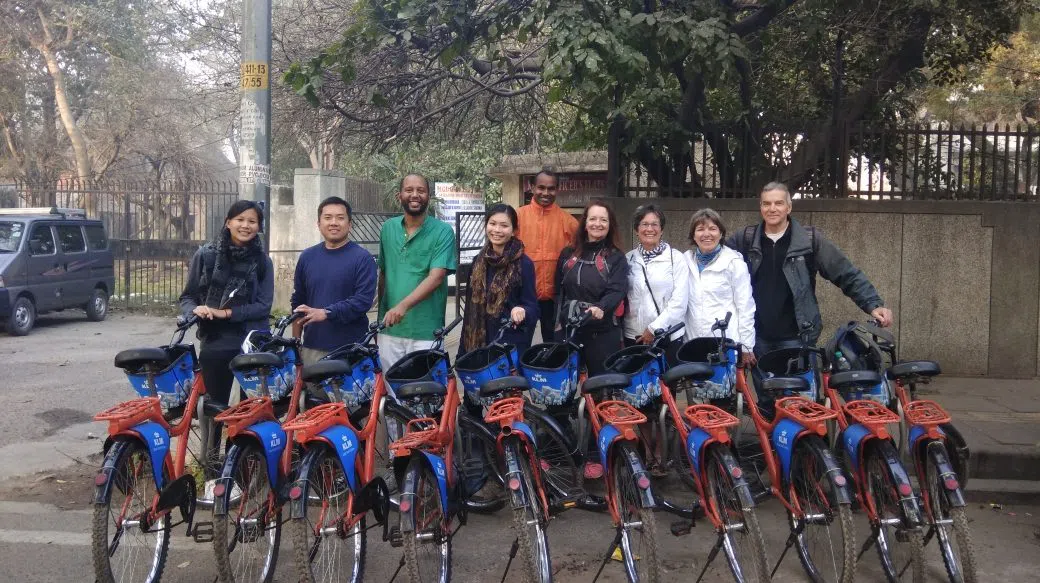
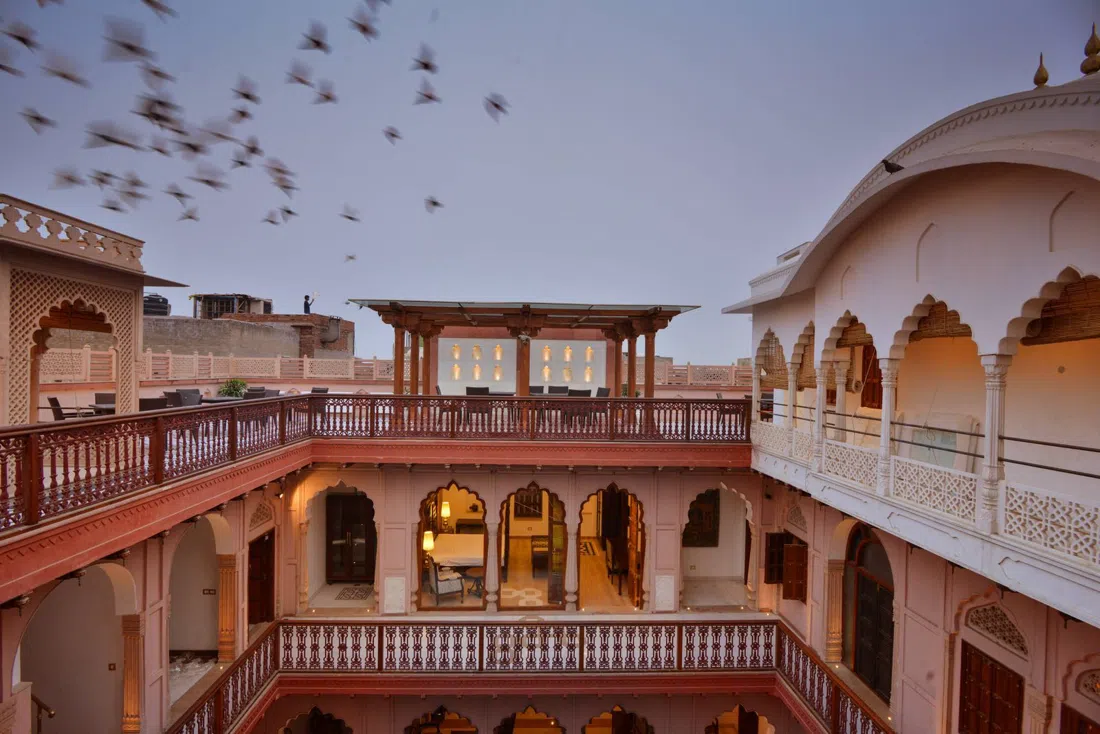
If you want a comfortable, air-conditioned counterpoint to all of that, Haveli Dharampura (Gali Guliyan, Dharampura) has a restored courtyard with kathak and ghazal evenings and a rooftop that takes in the fort, Jama Masjid, Sis Ganj and Lal Mandir at once. Dinner runs ₹2,000 to ₹3,500 a head, reviews are mixed on value, and it is small enough that you must book. Go for the setting and the view, not the menu. And for the earliest possible version of this whole route, DelhiByCycle (pick-up in Old Delhi) has been running since 2009 with 40,000-plus riders; its Shahjahanabad ride starts at 6:30am, costs about ₹1,850 to ₹2,200 for four hours, and wraps by around 10:30am, which lines up neatly with being at the fort gate early. Fixed numbers, so book as a block, and confirm by WhatsApp because their site is thin on detail.
Is the Red Fort worth it
Yes, with a condition. If you expect an intact Mughal palace you will be disappointed within twenty minutes, because most of it is gone and the lawns can feel like a municipal park with very good walls. If you go understanding that you are walking the surviving riverfront of a cleared imperial city, and you buy the combined ticket, see the Mumtaz Mahal galleries and cross the bridge to Salimgarh, it is the most substantial two to three hours of history in the city, and it anchors everything else in Old Delhi.
It suits almost everyone. Couples get the quiet corners at the northern end. Families get space to let children run and free entry under 15. Groups are genuinely easy here, which is unusual in this part of town; the complaint is the security queue, not the monument. The travellers it suits least are people on a tight half-day who want one photogenic monument: for them the walls from outside, the mosque rooftop view and a bazaar walk may be the better trade.
Best time to go
First entry at sunrise, every time. Hours are listed sunrise to 9pm, and the fort is now open seven days a week: the Archaeological Survey ended the old Monday closure by an order of 13 February 2026, effective 16 February, so the Monday advice in most older guides is simply wrong. Arriving within the first hour buys you cool air, low sun on the sandstone, an empty Chhatta Chowk, and a security queue measured in minutes.
Season matters more than day of week. October to March is the comfortable window, with January mornings genuinely cold and hazy; April to June is brutal on the unshaded stretches between pavilions, and if you must go then, be inside by 7am or come for the evening show instead. The monsoon months bring deep green lawns, sudden heavy rain and far fewer people, which is a fair trade if you carry a cover.
The one hard gap to plan around is the annual pre-Independence Day shutdown. In 2026 the complex is closed from 15 July to 15 August, when it becomes a controlled zone for the Prime Minister's address. If your trip falls in that month, the fort is off the table. Walk the walls from outside, go up at the mosque, and read the Delhi guide for what to do instead. Avoid Sunday if Khari Baoli matters to you, and avoid Monday evening if the light and sound show does.
Practical notes
Getting there. Lal Qila station on the Violet Line puts you a three-minute walk from the ticket counters and is the obvious choice. Chandni Chowk station on the Yellow Line is better if you are eating first, since it drops you at the bazaar end; Jama Masjid station, also Violet Line, suits the mosque-first version. Do not drive: the bazaar spine is closed to cars 9am to 9pm and parking near the gate is miserable.
Money. Carry cash in small notes. The fort counters and the formal restaurants take cards or UPI, but the paratha lane, the jalebi counter, rickshaws and every spice shop run on cash and will not have change for a ₹500 note at 8am.
Timing. Two hours for the fort alone; three if you take the combined ticket and the museums seriously; four with Salimgarh and a slow walk back out. Add an hour for the mosque, and keep the light and sound show as a separate evening rather than tacking it onto a long day.
Budget. A foreign visitor doing this properly spends roughly ₹870 on the combined fort ticket, ₹400 plus ₹100 at the mosque, ₹200 on street food, ₹500 on lunch and ₹250 upward on the evening show, comfortably under ₹2,500 for a full day, or around ₹100 for an Indian visitor doing the same monuments. Guided tours here start from 37 USD per person. For somewhere to sleep within a rickshaw ride of the walls, start with a Delhi hotel search and filter for the old city rather than the airport belt; the early-start advice only works if you are not crossing town at 5am.