Especial Delhi
Nizamuddin, Delhi's quarter of tombs and qawwali
The dargah has qawwali after dark, the 90-acre park next door holds six Mughal tombs, and a stepwell from 1321 is still fed by its spring. Tickets, hours and door rules for each.
Por Bram VerhoevenA Dutchman reading Delhi one neighbourhood at a time
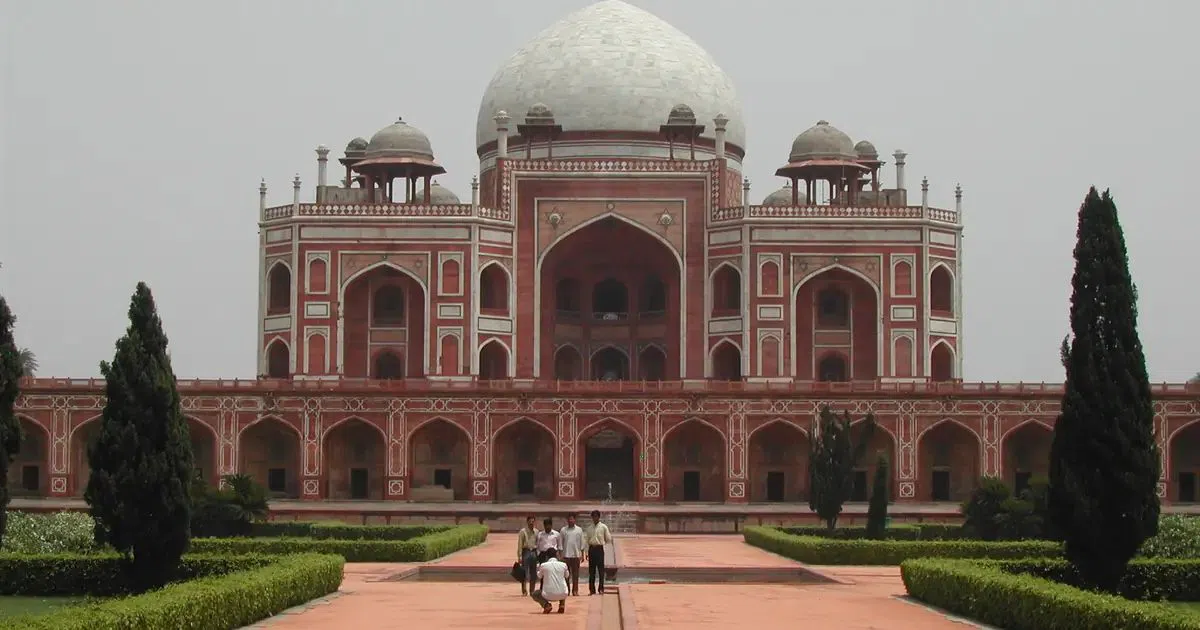
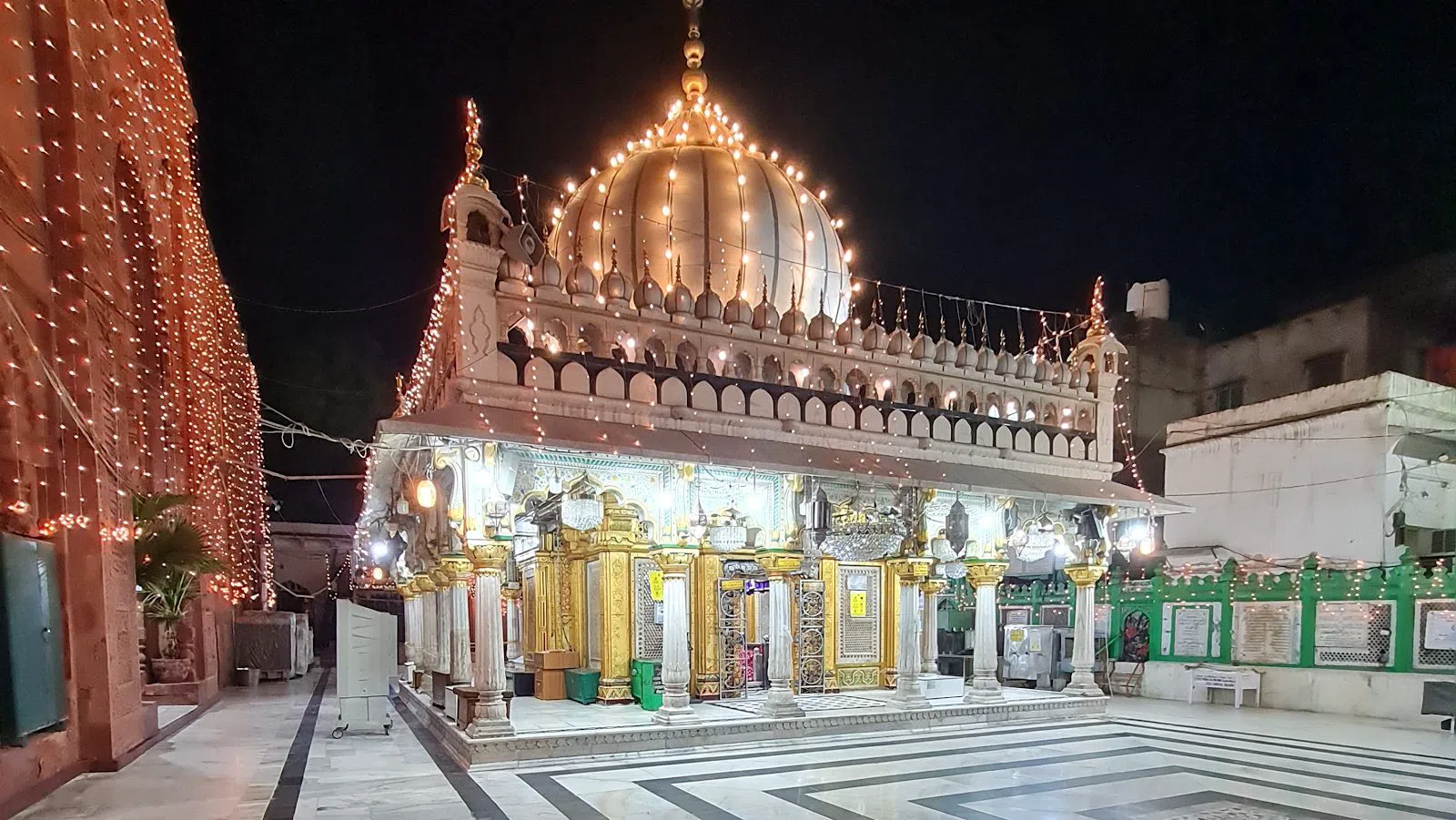
Most evenings after Maghrib prayer, qawwals sit down with harmonium and dholak in the open courtyard of Hazrat Nizamuddin Dargah (Nizamuddin Basti), barefoot devotees filling the marble around them. The Thursday session draws more than a thousand people. A few hundred metres away in the same quarter, the red sandstone and white marble dome of Humayun's Tomb (Nizamuddin) sits on a high arcaded plinth in a walled garden split by four water channels.
Humayun's Tomb and what shares its ticket
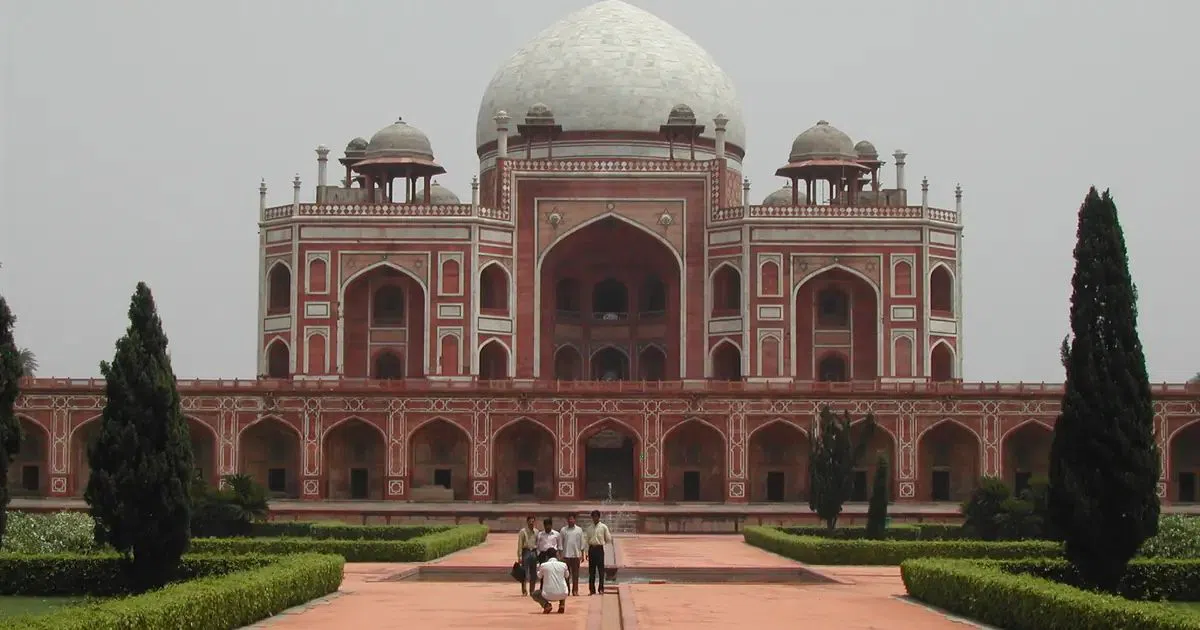
You come in through a tall gateway. The mausoleum holds the centre of a charbagh, red sandstone inlaid with bands of white marble, a white marble dome doubled over the chamber below, four shallow channels running out across the garden. This is the building the Taj Mahal was modelled on.
Entry through the Archaeological Survey counter is ₹35 for Indian and SAARC visitors. Other nationalities pay ₹550. A joint ticket adding Sunder Nursery and the site museum is ₹115, or ₹950 for other nationalities. Book online and you skip the counter queue.
The same ticketed precinct holds Isa Khan's octagonal tomb-garden of 1547 and the restored Nila Gumbad, so allow two hours rather than one. Guides, school groups and tour parties go in daily, and the precinct is large enough to absorb them without feeling full.
Planeje sua viagem para Delhi
Preços em tempo real dos nossos parceiros de reserva.
Cancelamento grátis em muitos quartos. Podemos receber uma comissão quando você reserva.
Humayun's Tomb site museum
Humayun's Tomb World Heritage Site Museum (Nizamuddin) is sunk entirely below ground. You walk down a stepped sandstone well built on the pattern of a baoli, into low vaulted galleries under illuminated geometric plaster ceilings. More than 500 objects cover seven centuries of Nizamuddin, and the one everybody stops at is the huge copper finial restored from the tomb's own dome.

It opened in July 2024, and it explains the quarter better than anything standing above ground, which is a good argument for doing it before the tomb rather than after. Tickets are timed. Entry is ₹50 for Indian and SAARC visitors and ₹300 for other nationalities. Children aged five to 12 pay ₹25.
Opening is 10:00 to 21:00, with last entry at 20:00. The museum closes Mondays and on national holidays. An underground link runs from the galleries straight through to Sunder Nursery, which is the most comfortable way to cross between the two on a hot afternoon.
Sunder Nursery
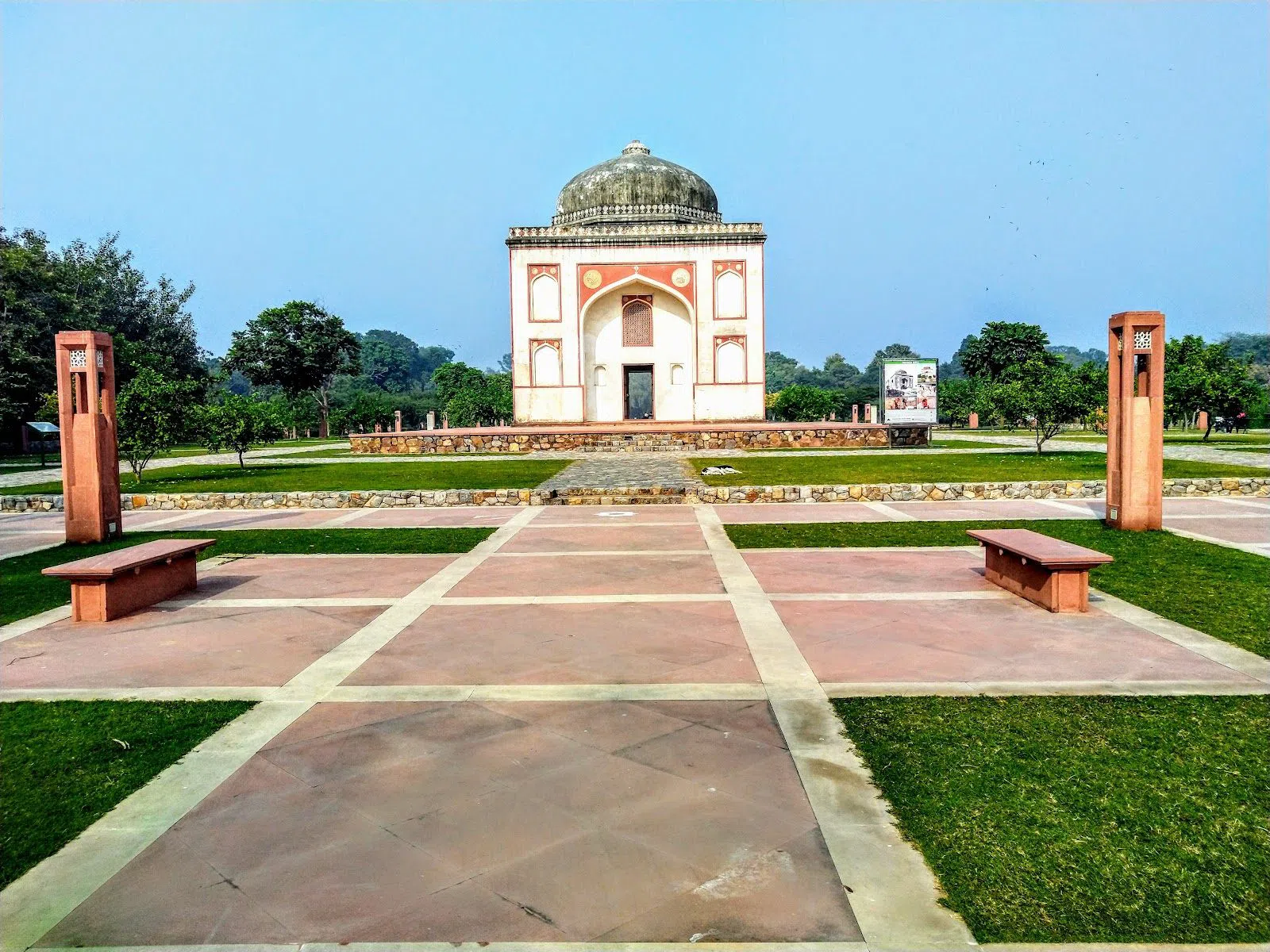
Sunder Nursery (Azim Bagh, Nizamuddin) covers 90 acres along a central axis of stepped water channels and fountains, with lawns on either side. Six Mughal tombs rise straight out of the grass. Inside the walls there is also a bonsai house, a rose garden, a lake-and-marsh zone for birds and an open-air amphitheatre used for ticketed festivals.
Gates open at 07:00 and close at 22:00, every day, so you can still be inside well after dark, which no other garden in the city allows. The paths are wide and level, and weekend heritage and nature walks leave the Coffee Kiosk at 11:00 and 16:00.
Entry is ₹50 for Indian adults and ₹200 for other nationalities. Children aged five to 12 pay ₹25, and under-fives and disabled visitors go free. The nursery is the reason Nizamuddin now fills a whole day instead of a morning.
Qawwali at the dargah
The shrine is a small white marble building with a scalloped-arch verandah and lattice jalis under a bulbous dome, chandeliers and strings of rose garlands hanging above the floor. Qawwals sit in the open courtyard most evenings after Maghrib prayer, and the hour that follows is the thing worth planning your day around.
Entry costs nothing and the shrine is open daily from 05:30 to 22:00, later on Thursdays. Offerings are optional, though you should expect to be asked for donations at the shoe stands and inside.
Leave your shoes at the stalls for ₹10 to ₹20. Cover your head and your limbs. Women cannot enter the innermost chamber.
This is a working shrine reached by narrow lanes. A large group should split up at the entrance to the lanes, and on a Thursday you want to arrive before 18:00.
Free stops in the basti lanes
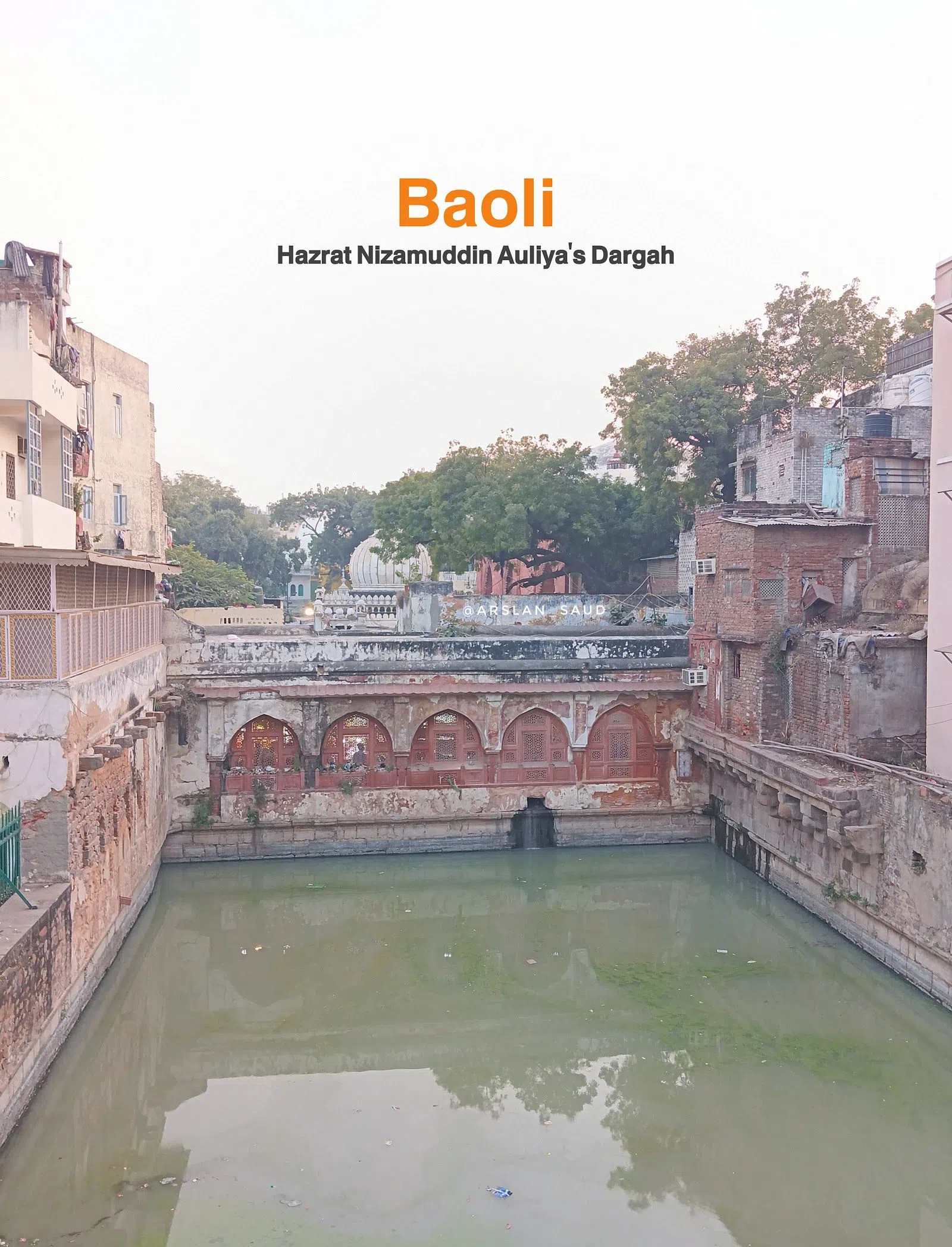
Nizamuddin Baoli (Nizamuddin Basti) sits behind a low gate off the shrine lane. It was built around 1321, in the saint's own lifetime, and it is still spring-fed. The stepwell drops in a deep rectangle between the houses, green water at the bottom, arched recesses cut into the walls, local boys diving off the upper ledge. Entry is free and unticketed. The viewing ledge is tight, so take people down a handful at a time. The gate is sometimes shut, so ask at the dargah before you walk round.
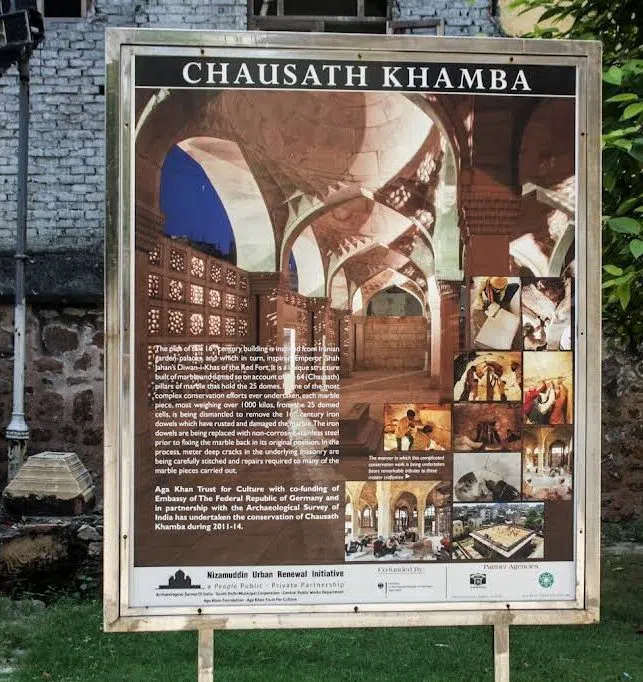
Chausath Khamba (Nizamuddin Basti) is two minutes from the shrine crowds and startlingly quiet. The hall dates from 1623 to 1624. A grid of 64 slender square pillars holds up 25 shallow domes, all of it white marble, with pierced screens on every side striping daylight across the floor. Entry is free and the walled courtyard takes a crowd. The Urs Mahal hall opposite is used for qawwali during the Urs and on festival days, and the pillared hall itself is the quarter's regular venue for staged qawwali and Urdu recitals.
Mirza Ghalib's Tomb and the Ghalib Academy (Nizamuddin Basti) is what brings Urdu readers to Nizamuddin. The grave is a small white marble slab under a canopy in a railed courtyard, and the enclosure is kept locked, so ask at the academy office for the key.
The plain mid-century academy block next door hangs portraits, Urdu manuscripts and miniature paintings around a bust of the poet, which turns a five-minute grave visit into a proper stop. Entry is free, the academy is open 10:00 to 18:00 and closes Sundays, and the rooms are small.
Sabz Burj and Rahim's Tomb
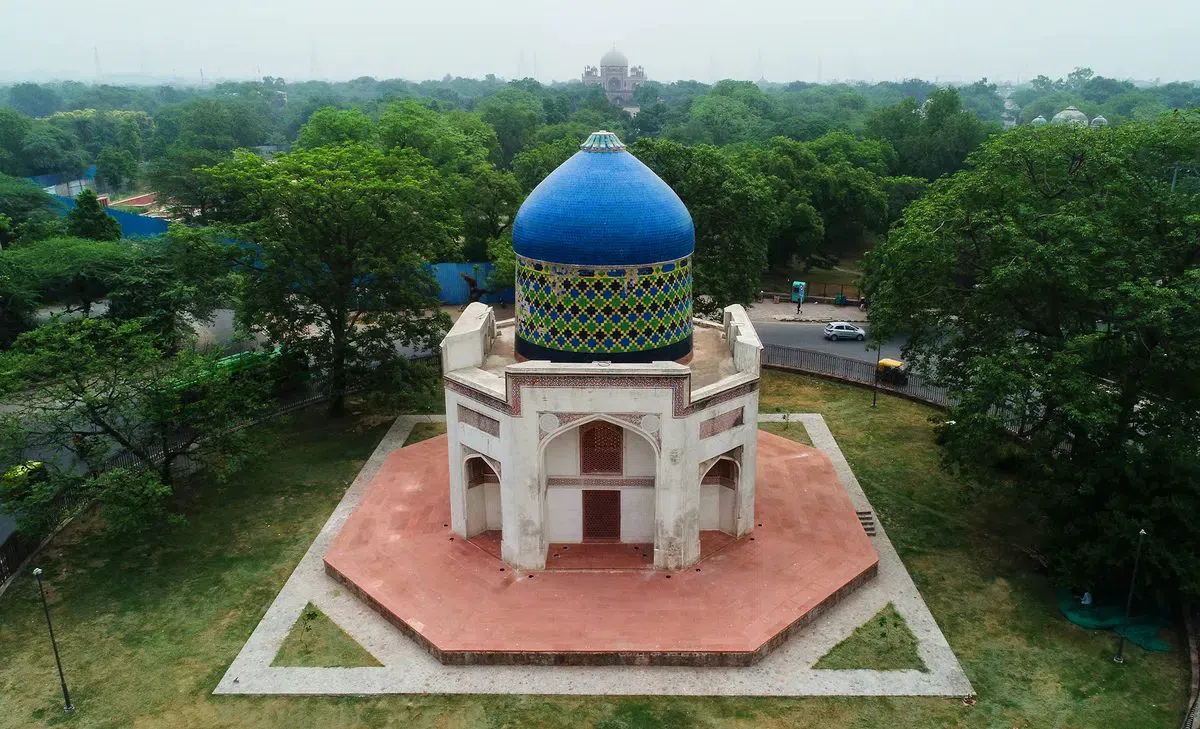
Sabz Burj (Mathura Road) is the marker that tells you you have reached Nizamuddin. The octagonal 1530s tomb stands marooned on a traffic roundabout, its drum re-clad in turquoise and blue glazed tiles under a tall dome, and painted Mughal ceiling patterns were rediscovered inside during the restoration of 2018 to 2021. One of the earliest Mughal buildings in India, it had spent the previous century as a ruin on a traffic island. Viewing is from the outside only: look across from the Humayun's Tomb side and do not cross Mathura Road on foot.
Rahim's Tomb (Nizamuddin East) is 700 m south of Humayun's Tomb, across the same road. It was built in 1598 for the wife of Akbar's poet-general, then stripped of its marble to build Safdarjung's tomb. A restoration that ran a decade finished in 2020, re-cladding the bare upper walls in red sandstone and rebuilding the dome.
What stands there now is a huge square mausoleum of rubble and sandstone on a high plinth, in a restored walled garden with long water channels. It is the emptiest of the big monuments here and rarely busy at any hour. ASI entry is nominal and the gate is often unstaffed.
Walking the lanes with Sair-e-Nizamuddin
Sair-e-Nizamuddin Heritage Walks (Nizamuddin Basti) are led by young guides from the basti, a youth self-help group trained up by the Aga Khan Trust's renewal project, so the money and the storytelling both stay in the quarter.
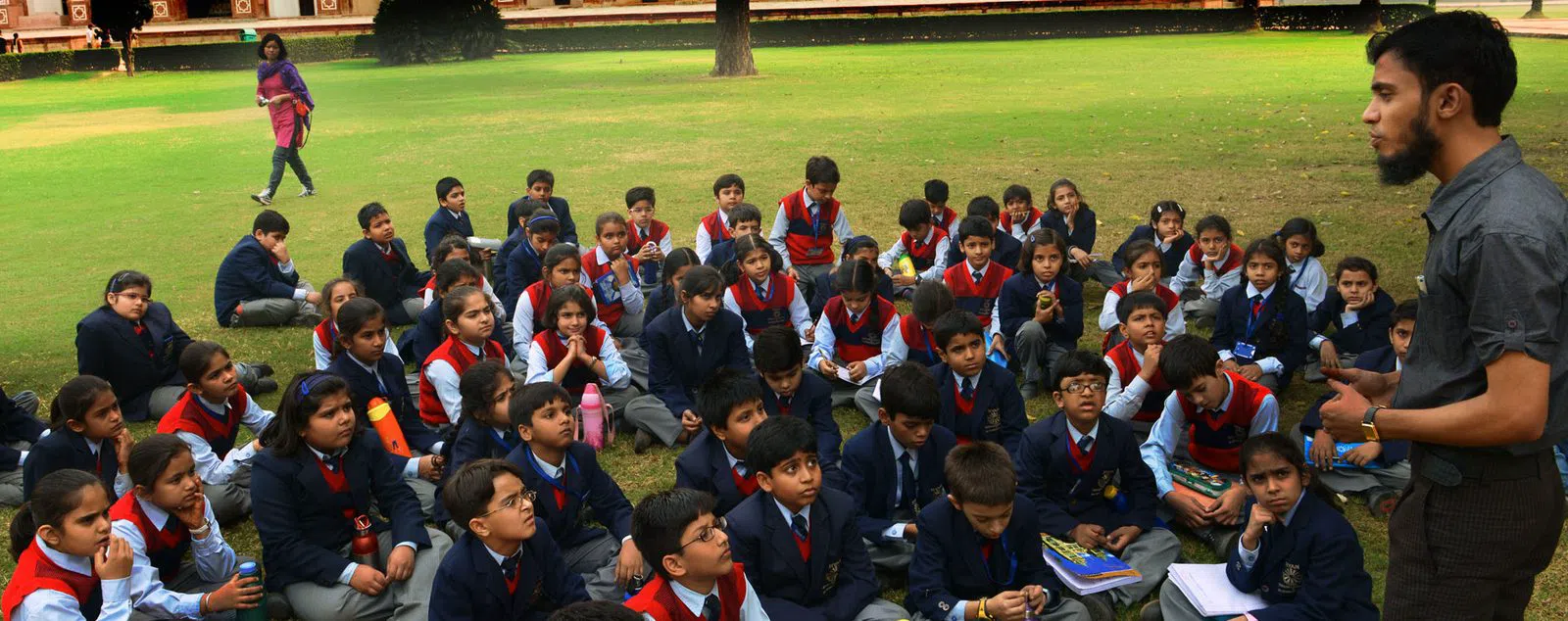
Standard walks run from free to ₹200 per person, and private group walks cost more. Weekend slots are 08:00 to 10:00 and 16:30 to 18:00, covering the basti, the Humayun's Tomb complex, Sunder Nursery and Rahim's Tomb. Book ahead for a weekday or a private time.
The lanes are shoulder-width and thread between butchers' stalls and tiled shrine gates before coming out onto the nursery lawns, and they need a local to make sense of. Gurdwara Damdama Sahib is a five-minute detour on the Humayun's Tomb side.
Eating in Nizamuddin
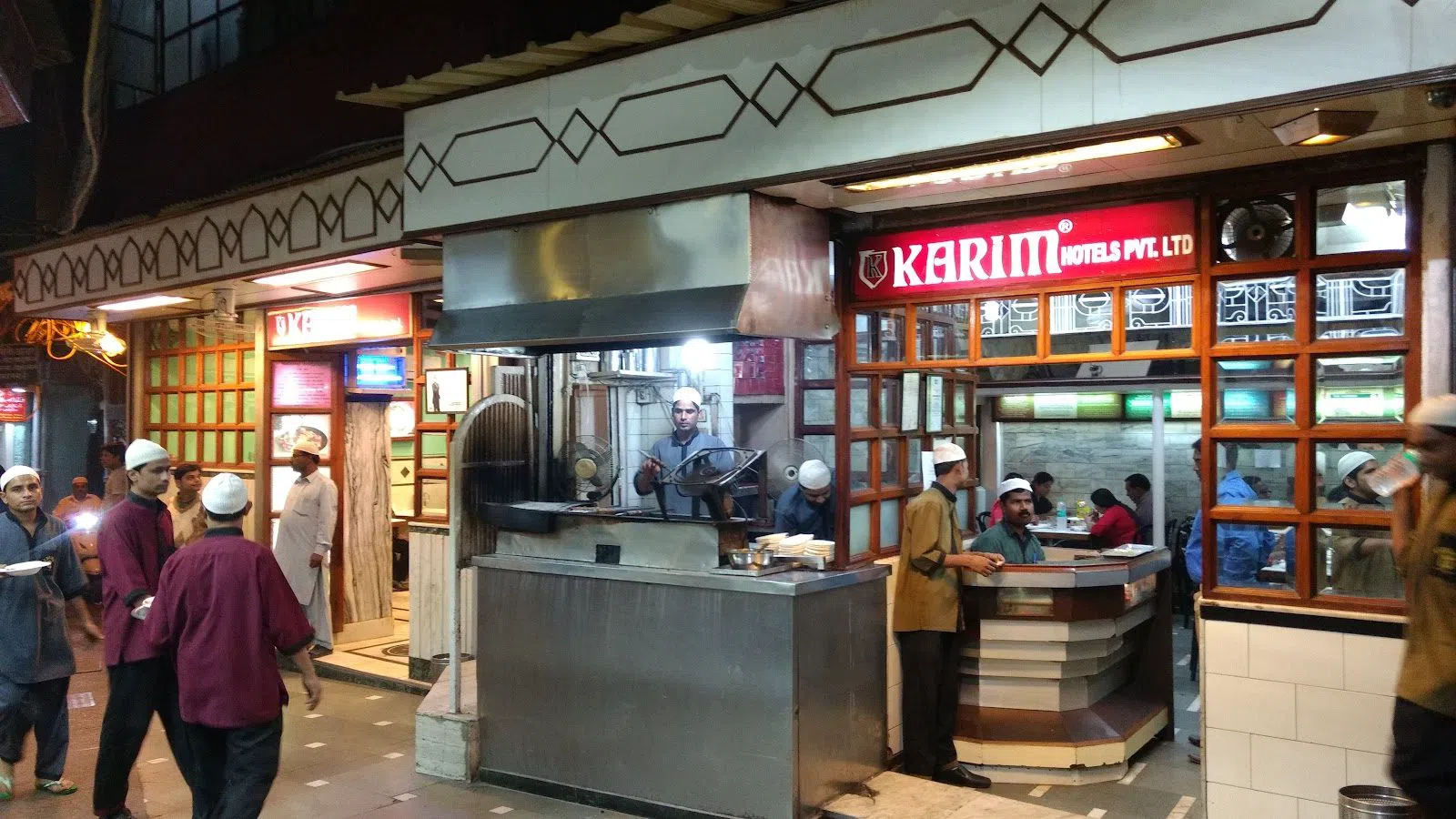
Karim's Nizamuddin (Nizamuddin Basti) is five minutes from the dargah, the branch of the Jama Masjid institution. Cooks work a coal tandoor by the door and tandoori rotis arrive in stacks. The nihari comes in a steel thali, dark, with a marrow bone standing upright in it. Order the mutton nalli nihari and ignore the rest of the menu. Two people eat for ₹600 to ₹900, and prices have crept up. No bookings are taken, so at peak you wait, in a plain tiled dining room spread over several floors. Hours are 09:00 to past midnight. This is the famous name in the lane, and the nihari is why.
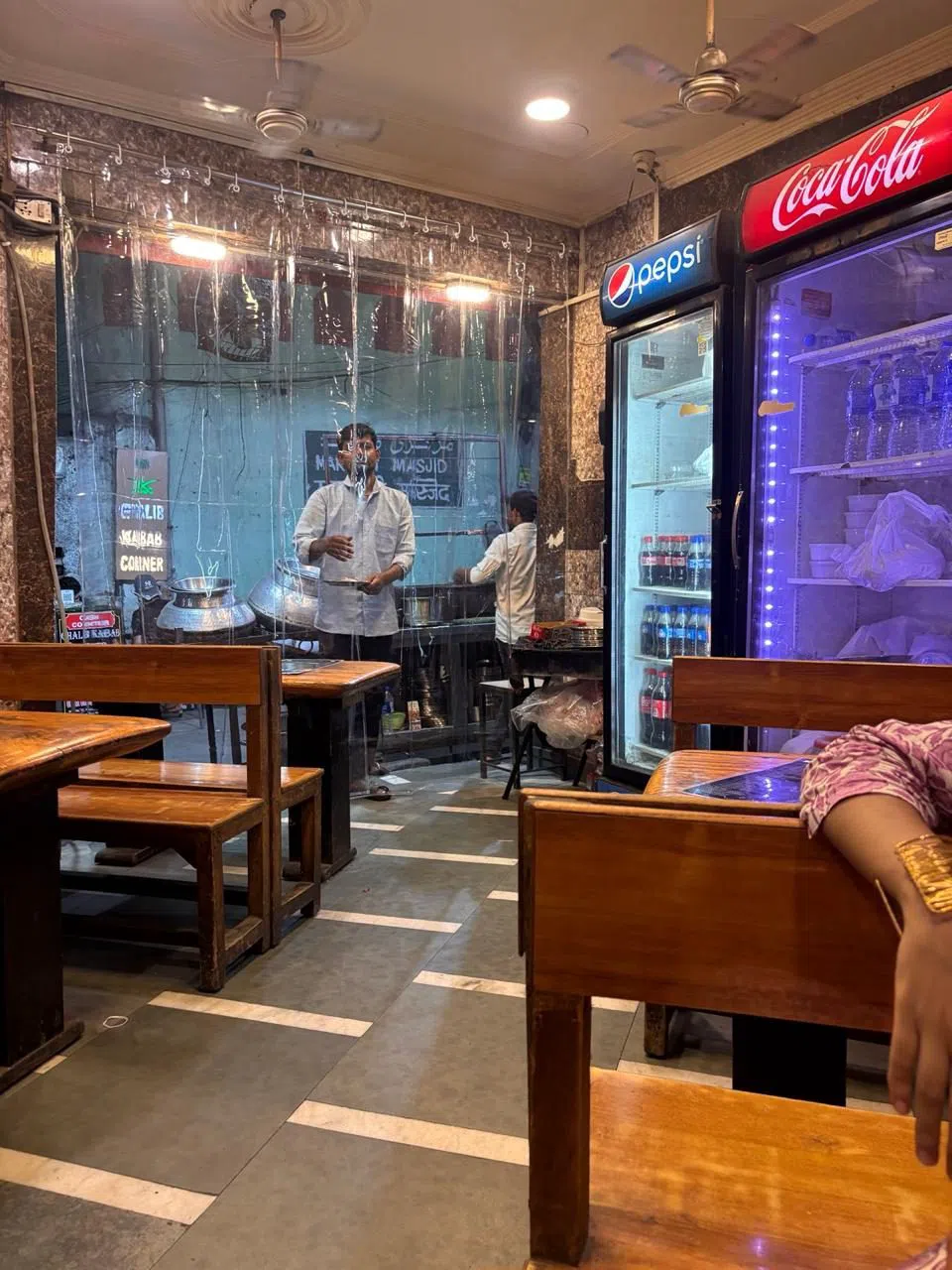
Ghalib Kabab Corner (Ghalib Road, near Lal Mahal) has worked the same corner for 60 years and won an award at a Delhi kebab festival. Skewers sit over a long coal grill at the pavement edge and shami kebab patties fry flat on a black iron tawa, handed over on paper plates under a hand-painted signboard. The kebabs are crisp outside and almost liquid inside, and ₹150 to ₹350 feeds two. It is a standing counter with a couple of benches. The meat is mostly buffalo and mutton, so vegetarians should eat elsewhere.
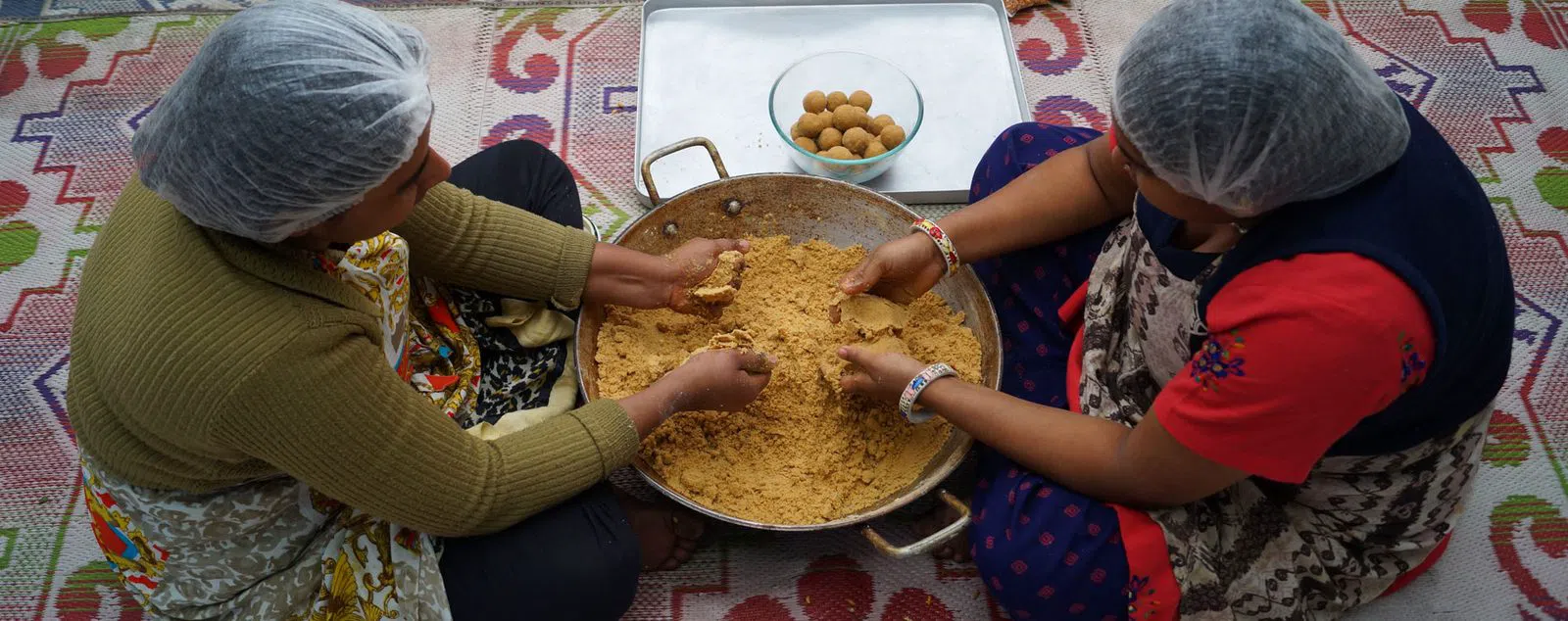
Eleven women from the basti cook together at Zaika-e-Nizamuddin (Nizamuddin Basti), working Nizamuddin household recipes 700 years old that no restaurant here serves. Trays of hand-pressed kebabs and a heavy pot of slow-pounded haleem come out of a small tiled kitchen. Catering platters and tasting spreads are the core business at ₹300 to ₹600 a head, and they will cater a walk or a picnic in the park. Order the haleem and the shami kebabs ahead. A kiosk version stands on Sunder Nursery's peripheral road by the Secret Garden, but check it is trading before counting on walk-up.
Café Dori (Sunder Nursery) occupies the heritage-site facility block beside the sunken museum, a pared-back room of concrete and pale wood with outdoor tables looking onto the lawns and the tombs. The kitchen does slow coffee, salads and plated continental food, and two people spend ₹1,500 to ₹2,500. It is air-conditioned, it has indoor and terrace seating, and it is the most reliable place in the precinct for cold water and a non-Mughlai vegetarian plate. Everyone at the table needs a Sunder Nursery entry ticket.
Where to stay
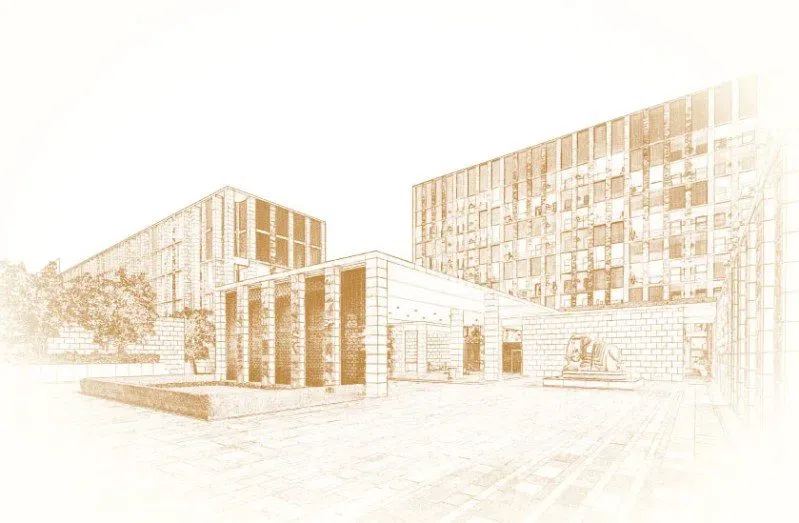
The Lodhi (Lodhi Road) is a 10-minute walk from the dargah, low grey-stone modernist wings in seven acres of garden, most rooms with a plunge pool on a private terrace. Rooms start at ₹30,000 a night. Two restaurants, two bars and meeting space sit on site, with the Delhi Golf Club greens along one side. The basti has no bar, so the dark library bar and the poolside bar here are the answer to where you get a drink.
Eleven (Nizamuddin East) is a five-room bed and breakfast in a 1960s bungalow at house number 11, on a leafy residential street 300 m from Humayun's Tomb. Rooms are hung with art and open off a shared sitting area. Breakfast is cooked to order and taken in a walled garden. A night with breakfast runs ₹8,000 to ₹10,000. With five rooms it fills early, so book well ahead, and ask the hosts about the lanes.
Planning your visit
The site museum closes Mondays and on national holidays, and the Ghalib Academy closes Sundays. Book the Humayun's Tomb ticket online, pre-order anything you want from Zaika-e-Nizamuddin, and reserve a weekday or private walk with Sair-e-Nizamuddin in advance.
See the Delhi guide and the Delhi hotel search.
Antes de ir
When is qawwali sung at Hazrat Nizamuddin Dargah?
Qawwals perform in the open courtyard most evenings after Maghrib prayer. Thursday is the big session and draws more than a thousand people, so arrive before 18:00. The shrine is open daily from 05:30 to 22:00, and later on Thursdays.
What should I wear at the dargah, and can women go in?
Cover your head and your limbs, and leave your shoes at the stalls for ₹10 to ₹20. Women can enter the shrine precinct but not the innermost chamber.
How much does Humayun's Tomb cost in 2026?
Entry is ₹35 for Indian and SAARC visitors and ₹550 for other nationalities. A joint ticket for Sunder Nursery and the site museum is ₹115, or ₹950 for other nationalities. Book online to skip the counter queue.
How late can I stay in Sunder Nursery?
Gates are open from 07:00 to 22:00 every day. Entry is ₹50 for Indian adults and ₹200 for other nationalities. Under-fives and disabled visitors go free. Weekend heritage and nature walks leave the Coffee Kiosk at 11:00 and 16:00.
Where do I eat near the shrine?
Karim's Nizamuddin is five minutes away and serves mutton nalli nihari; two people eat for ₹600 to ₹900 and it takes no bookings. Ghalib Kabab Corner on Ghalib Road is a standing counter for shami kebabs, open until 23:00. Café Dori, inside Sunder Nursery, has sit-down vegetarian plates, so you need a park ticket to reach it.