
Delhi is a city that has been built, buried, and rebuilt on itself for eight hundred years, and its strangest layer runs underground. Long before Shah Jahan raised the Red Fort, the Delhi Sultans were digging the other way — cutting stepped wells five and six storeys into the bedrock, engineering shade and cool air into the stone, and giving the city a way to survive the brutal weeks before the monsoon. Nine of these stepwells, or baolis, survive today in walkable condition, scattered from a lane off Connaught Place to a residential basti in Nizamuddin to a fort in the far south that almost no one visits. This is a guide to finding them, in the order that actually makes sense for a trip, not a list.
A word on the term first, because guides and drivers use it loosely: a baoli is not a well you draw water up from with a bucket. It is a well you walk down into, on stone steps that descend in flights toward a shaft of water at the bottom, often flanked by covered galleries where people once sat out the heat. Some are dry now, some still hold water, and one has genuinely never run dry in seven centuries. None of them require a guidebook's imagination to appreciate — they are immediately, physically impressive in a way that a lot of Delhi's more famous monuments, seen at a distance from a coach, are not.
The One Everyone Finds First: Agrasen ki Baoli, Connaught Place
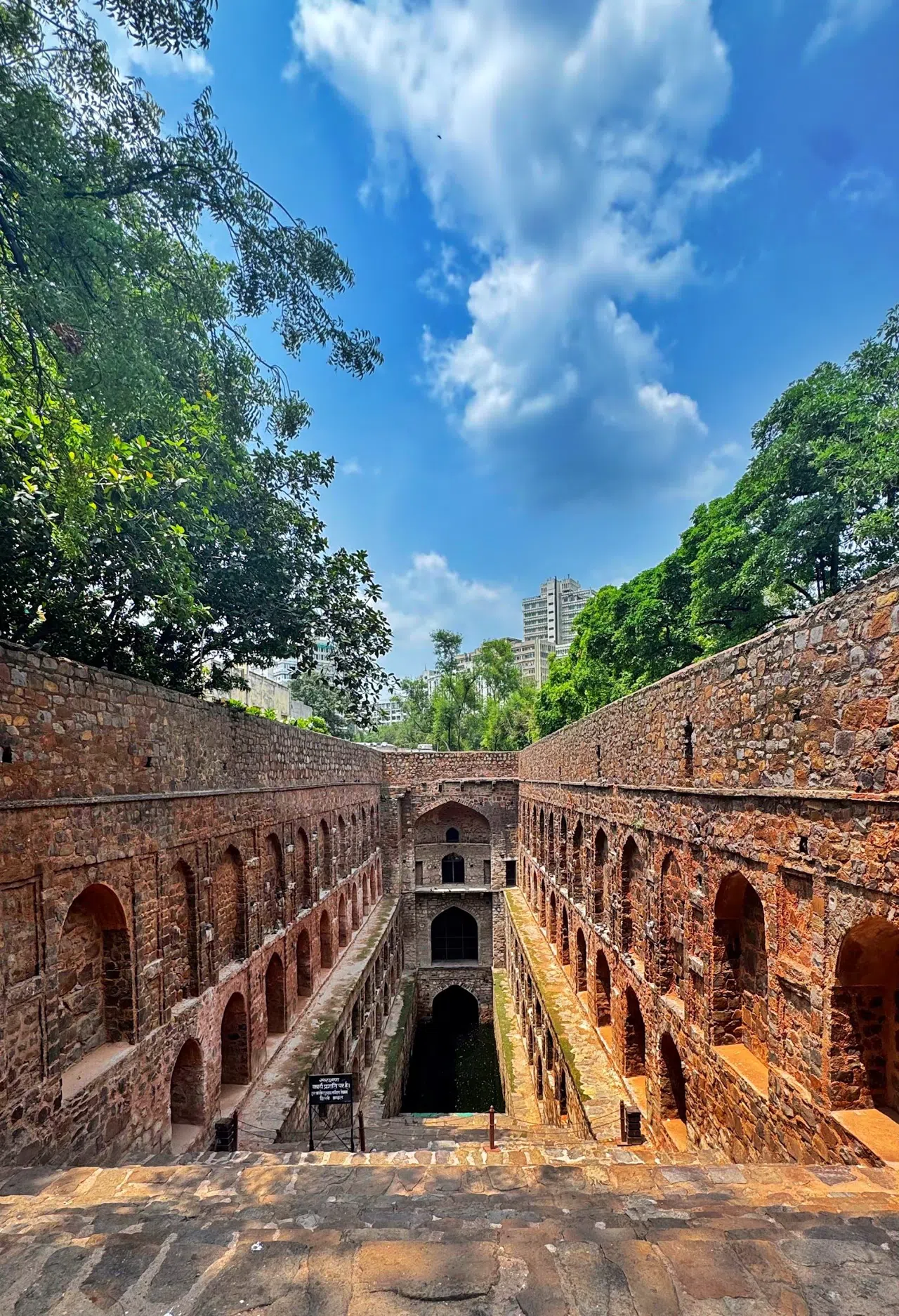
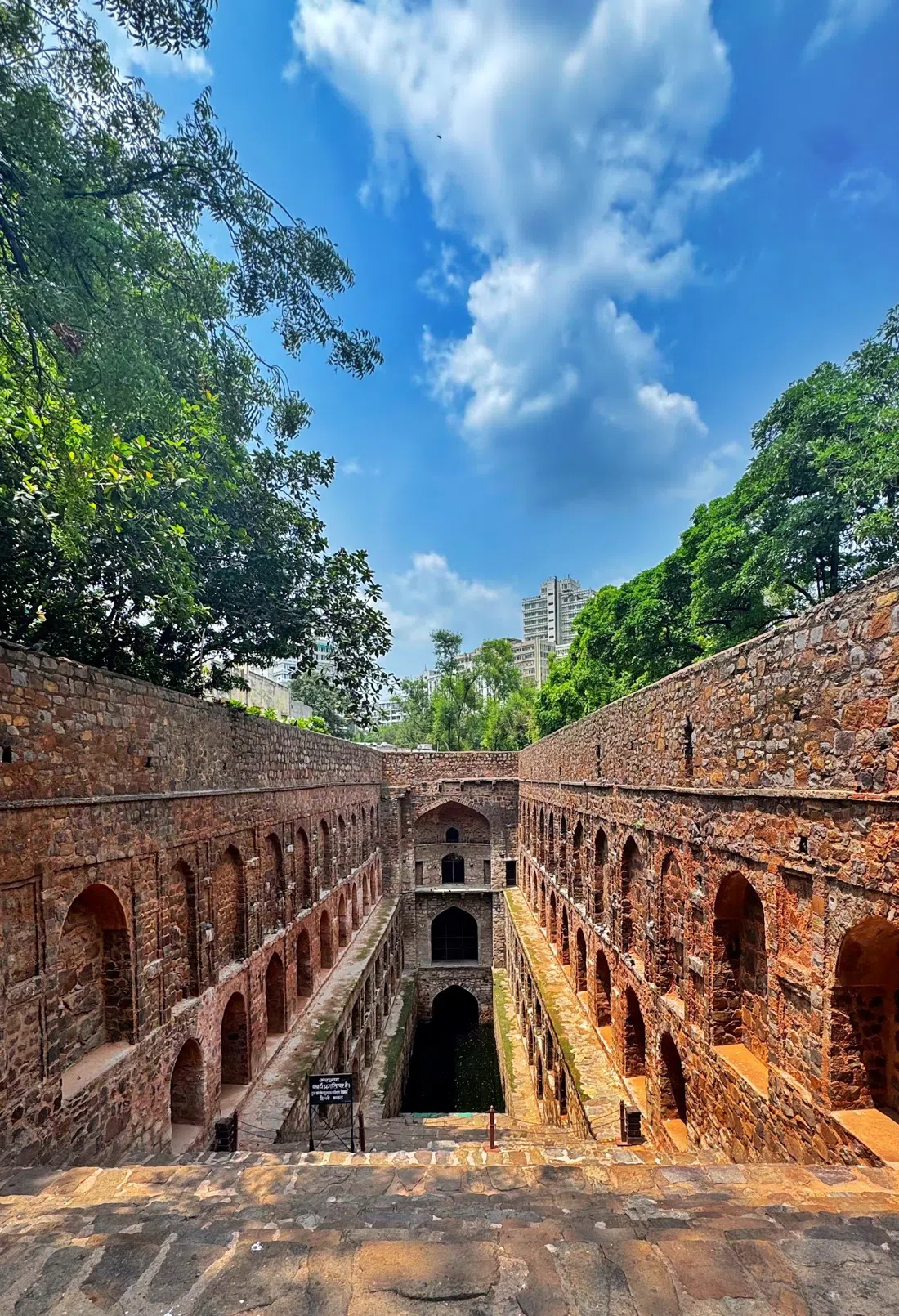
Agrasen ki Baoli [stepwell], tucked down a narrow lane off Hailey Road barely five minutes' walk from Connaught Place, is the baoli most visitors end up at, usually by accident on their first afternoon in Delhi. It is free, unstaffed, and open-air, which is exactly why it works as a first stop and exactly why it can feel like a photo queue by midday on a Saturday — tour buses and school groups cycle through constantly, and the 108 steps down to the water level get genuinely congested when a group is coming up as another is going down. Go early, ideally before 10am, or in the last hour before sunset when the stone goes amber and the crowd thins. The nearest metro stops are Barakhamba Road or Rajiv Chowk on the Blue and Yellow lines, both a ten- to fifteen-minute walk away — there's no dedicated station, so factor in the walk rather than expecting a metro exit to drop you at the gate. There's no ticket, no booking, and no real limit on time inside, so it suits everyone from a solo half-hour detour to a full tour group, though couples wanting a quiet moment should come outside the 11am–4pm window. It's the obvious anchor for a Delhi baoli itinerary precisely because it asks nothing of the visitor — no ticket, no dress code, no advance planning — but it shouldn't be the only one on the list, because it's also the least atmospheric of the nine once you've seen a couple of the others.
Mehrauli's Twin Wells: Rajon ki Baoli and Gandhak ki Baoli
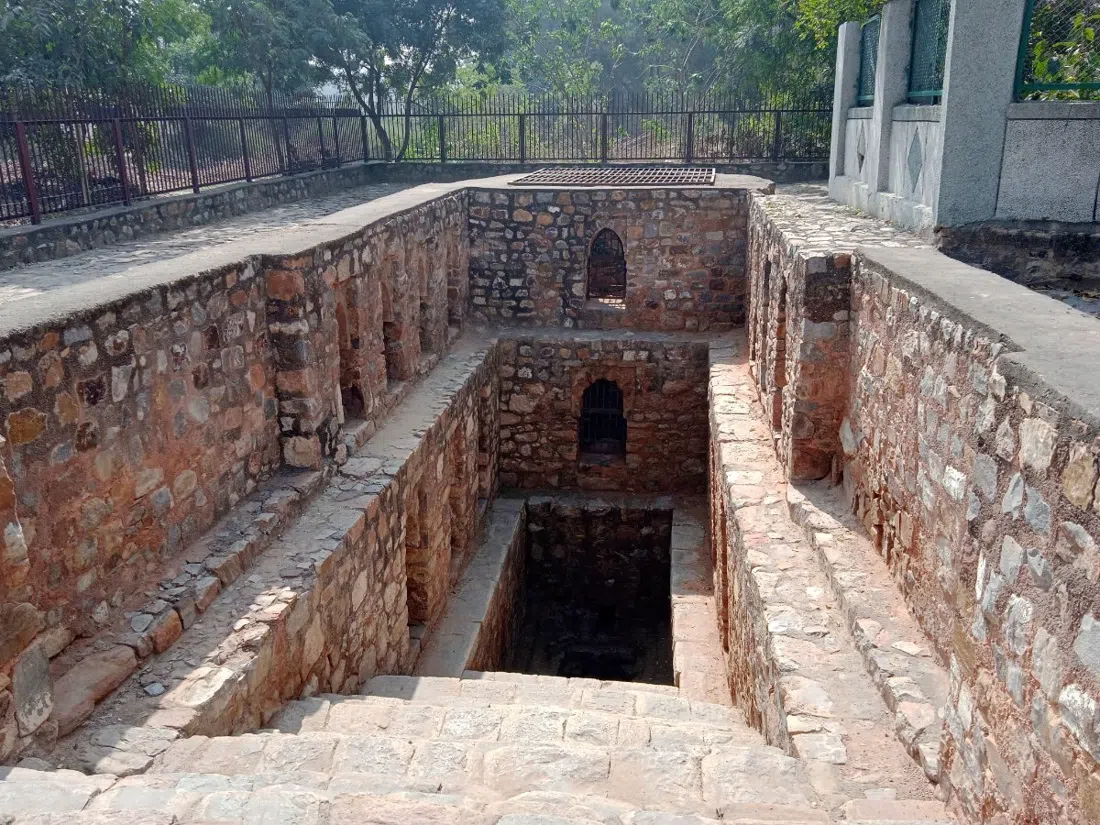
Inside Mehrauli Archaeological Park, a genuinely underrated green space that most visitors walk straight past on their way to Qutub Minar, sit two baolis worth treating as a single stop. Rajon ki Baoli [stepwell], set in the open park, reopened in May 2025 after a lime-plaster and desilting restoration carried out by World Monuments Fund India, and it now stands as the best-preserved baoli in the city — the arched galleries and stepped descent are legible in a way that's rare among Delhi's older ruins, which tend to have crumbled past the point of reading clearly. It's free, unstaffed, and set in an open park layout that suits small groups and guided heritage walks particularly well; there's space to gather people and explain what you're looking at without blocking a narrow stair, unlike at Agrasen ki Baoli. Two hundred metres away, Gandhak ki Baoli [stepwell] is Delhi's oldest surviving functional stepwell, built under Sultan Iltutmish in the early 13th century, predating almost everything else on this list by a century or more. It's also free and unstaffed, and the short walk between the two — through the park's scattering of tombs and ruined pavilions — is one of the more atmospheric ten minutes you'll spend in Delhi, largely because almost nobody else is doing it. The nearest metro is Qutub Minar station on the Yellow Line, about a fifteen-minute walk or a short auto ride from the park entrance; pair the visit with Qutub Minar itself, which is a two-minute walk further on, and budget half a day for the combination rather than trying to rush it before or after something else.
The Well That Has Never Run Dry: Nizamuddin Baoli
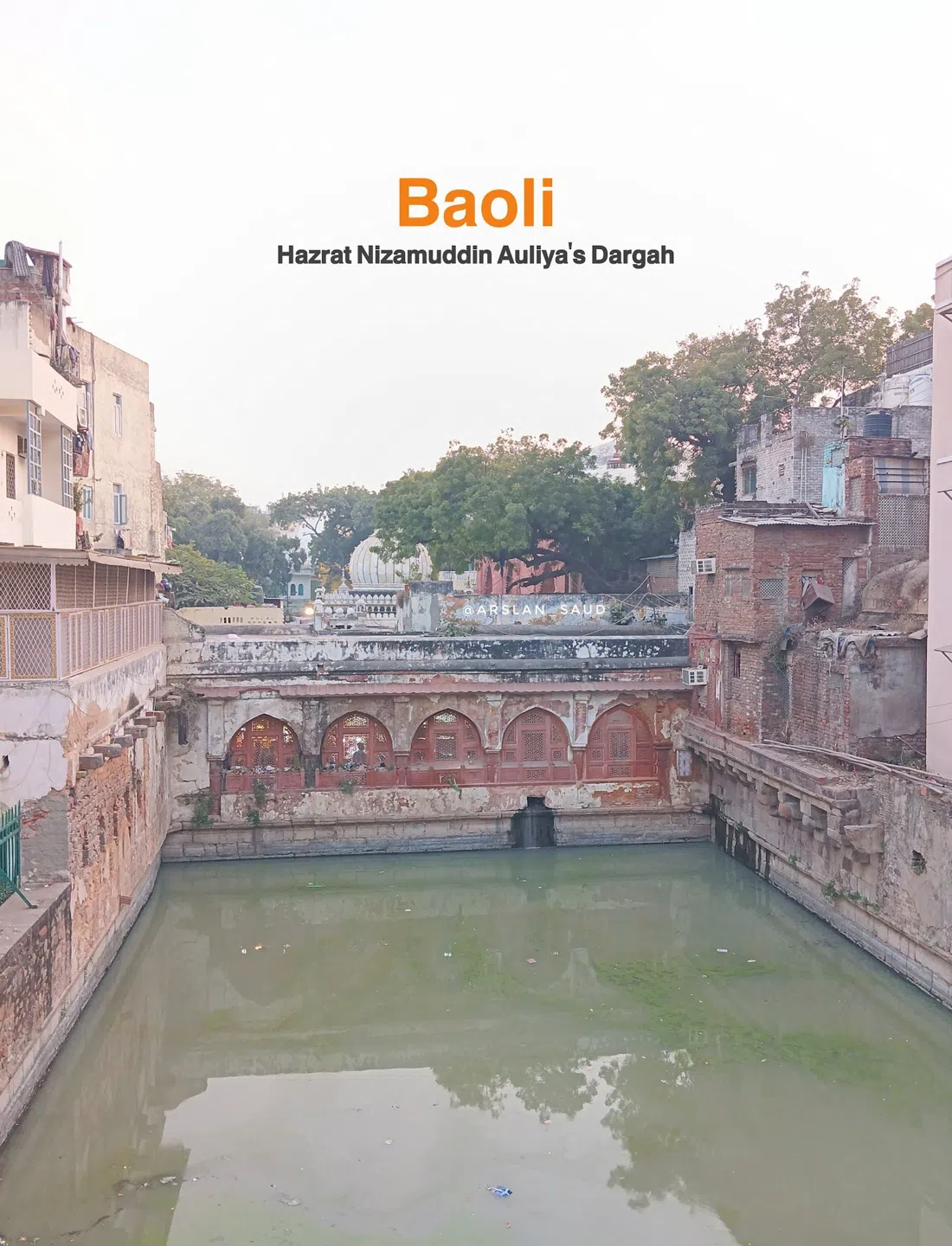
Nizamuddin Baoli [stepwell] is a different kind of place entirely, and it's worth understanding that before you go. It sits inside the dense residential basti around the Nizamuddin dargah, not in a park or a fenced monument compound, and it is, as far as anyone can tell, the only baoli in Delhi that has never gone dry in roughly seven hundred years — built by the Sufi saint Nizamuddin Auliya himself, and still very much a working part of the neighbourhood rather than a roped-off ruin. Local boys still jump from the surrounding balconies into the water on hot afternoons, which is the kind of detail that tells you this isn't a museum piece. It's free and unstaffed, but the setting means it rewards a small group with a local guide rather than a solo wander with a phone map — the lanes are narrow, unsignposted, and easy to get turned around in, and a guide will also get you to the water's edge rather than leaving you peering down from a balcony. Modest dress is expected throughout the basti given its proximity to the dargah — shoulders and knees covered is the safe rule for everyone, regardless of faith. The nearest metro is Hazrat Nizamuddin on the Pink Line, or the Nizamuddin stop is also served by suburban rail; either way, plan to walk the last stretch in, since vehicles can't get close to the baoli itself. Go in the late afternoon if you can, when the dargah's evening qawwali (typically Thursdays) gives the whole visit a natural second act.
A Stepwell Reborn in a Garden: Arab ki Sarai Baoli, Sunder Nursery
For visitors who want a baoli without the navigation of Nizamuddin or the crowd-management of Agrasen ki Baoli, Arab ki Sarai Baoli [stepwell (limited view)], inside the Sunder Nursery heritage garden next to Humayun's Tomb, is the most polished option on this list. It was, not that long ago, literally buried in rubble and debris, and the restoration that brought it back is a genuine good-news story in a field where "restored" often means "propped up." Entry to Sunder Nursery runs around ₹100 (it varies by season and any temporary exhibitions), and the manicured, well-signed grounds make this by far the easiest baoli to bring a larger group or an older relative to — there are paths, benches, and shade, none of which the free-standing baolis offer. It also sits directly beside the Humayun's Tomb UNESCO World Heritage site, so the sensible plan is to combine the two: Humayun's Tomb in the morning before the heat builds, Sunder Nursery and the baoli in the cooler late afternoon. The nearest metro is JLN Stadium on the Violet Line or Hazrat Nizamuddin on the Pink Line, both a short auto ride away rather than a direct walk.
The Fort Almost Nobody Visits: Tughlaqabad
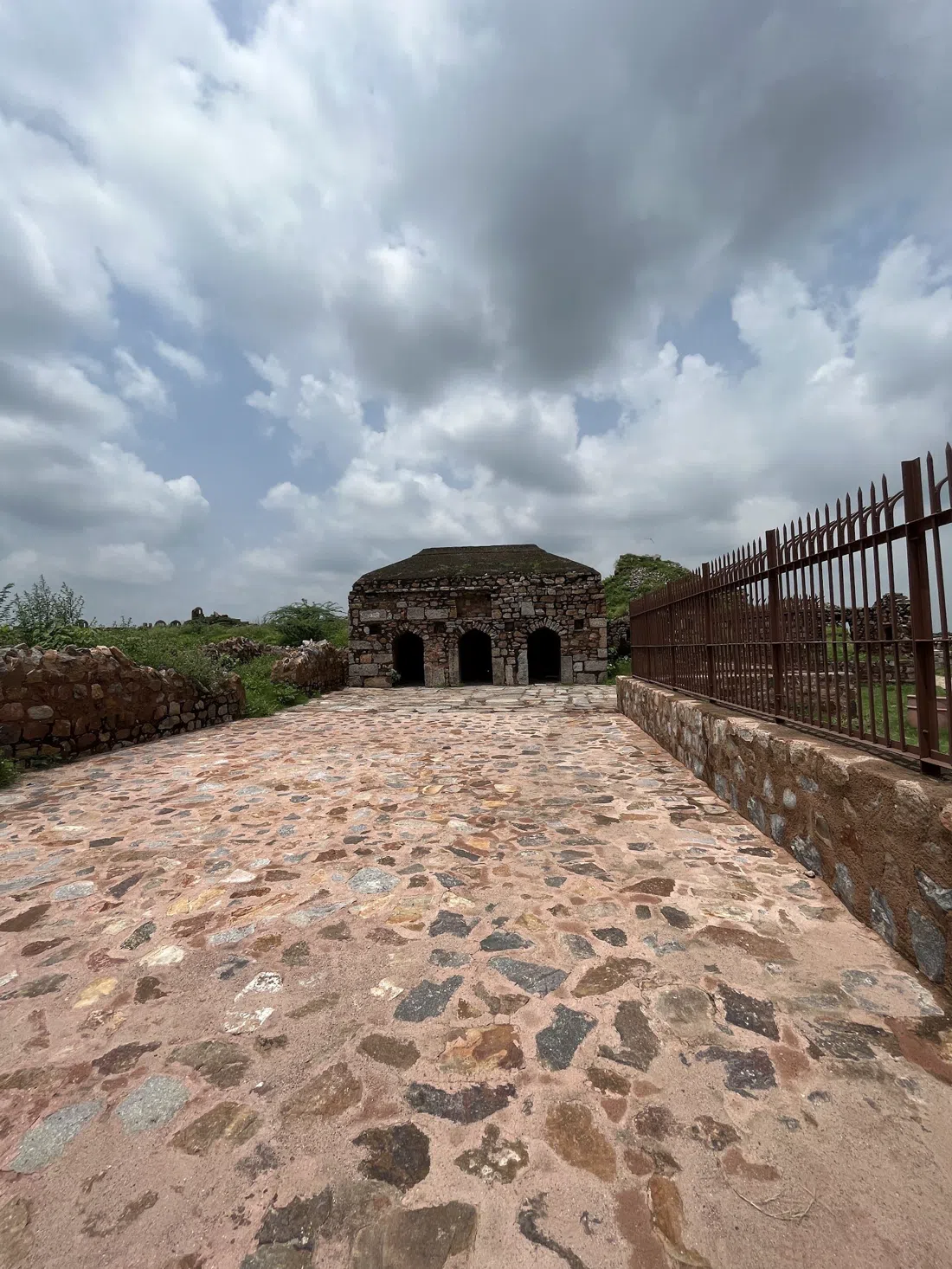
Tughlaqabad Fort Baoli, also called the East Baoli, is the reward for readers willing to go further than the standard circuit. Ghiyasuddin Tughlaq built thirteen baolis across his short-lived 14th-century capital; only two survive, and this is the more accessible of the pair, sitting inside a fort that sprawls across 6.5 square kilometres of scrubby ridge in south Delhi. Fort entry runs roughly ₹25–35, genuinely cheap for what you get, but the scale is the catch: this is not a fifteen-minute stop. Paths between ruined bastions and the baoli itself are long, exposed, and largely unshaded, so bring water, wear proper shoes, and don't go alone — a companion isn't a safety requirement so much as a practical one, since the fort is large enough that a twisted ankle on an empty stretch of wall is a genuine inconvenience. It suits small groups well precisely because there's room and time to explore without the crowd pressure of the central-Delhi sites, but it's a poor fit for anyone short on time or mobility. The nearest metro is Tughlaqabad on the Violet Line, about a fifteen-minute walk or a short auto ride from the fort gate. Go in the morning, both for the light on the stone and to avoid doing the long walk between bastions in peak heat.
Glimpsed, Not Entered: Purana Qila Baoli
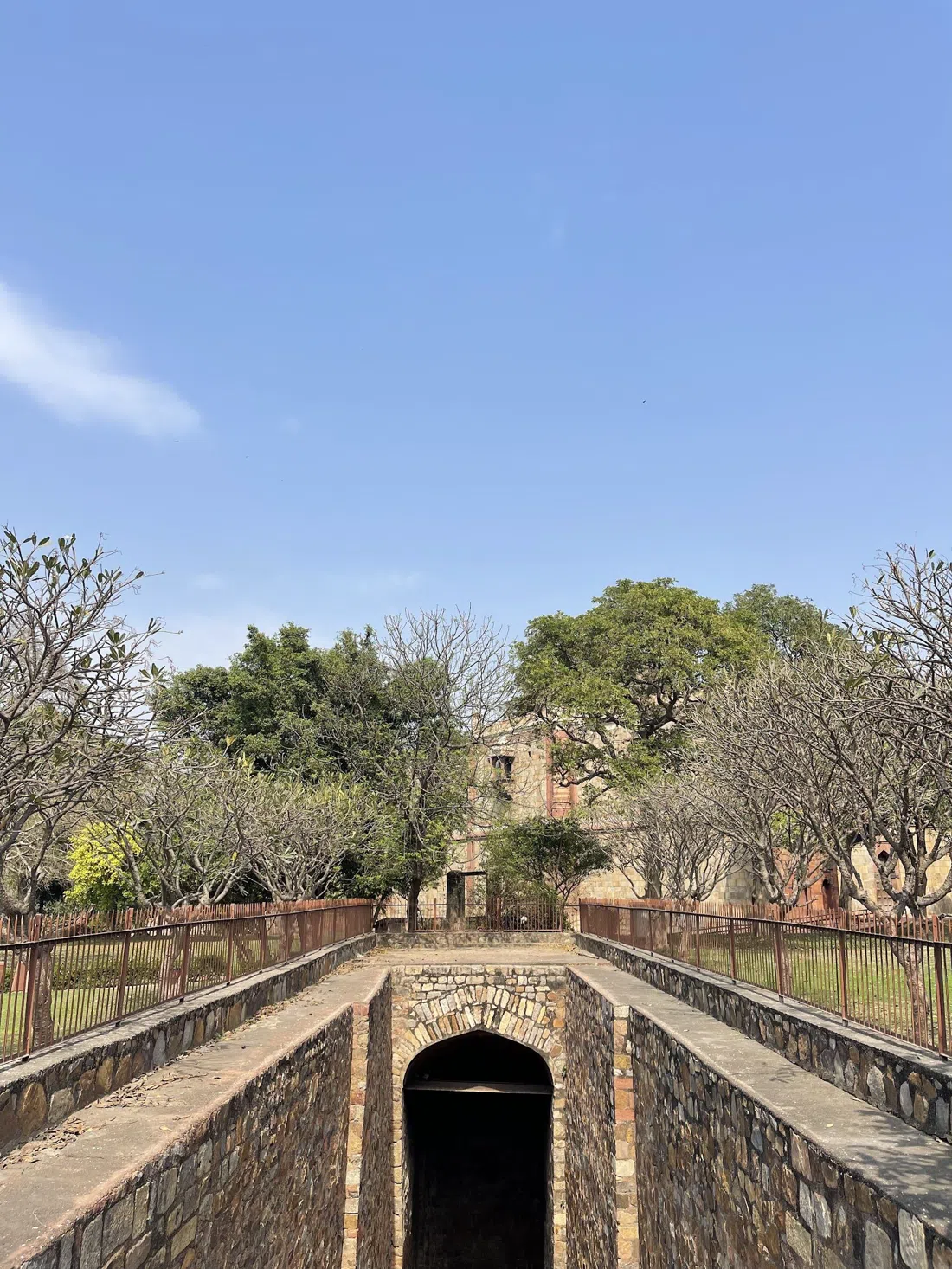
Worth including, with a clear caveat: the baoli inside Purana Qila [stepwell (limited view)] is one of the reasons to visit this underrated fort, but it isn't one you walk down into. It sits within the ticketed Purana Qila complex — entry runs around ₹35 for Indian nationals and roughly ₹550 for foreign visitors, a gap worth knowing about before you budget the day — and the well itself is viewed from behind a railing rather than entered, so temper expectations if a hands-on stepwell experience is the point of the visit. What you get instead is the fort itself, one of Delhi's oldest and least crowded major sites, built on a mound many historians associate with the legendary city of Indraprastha, plus a genuine glimpse of the well shaft dropping away below you. It's fine for groups and easy to combine with the National Zoological Park next door or Humayun's Tomb a short drive away. The nearest metro is Pragati Maidan on the Blue Line, a short walk from the fort entrance.
Further Off the Circuit: Wazirpur Baoli and Loharheri Baoli
Two more for readers who've done the central cluster and want somewhere genuinely quiet. Wazirpur Baoli, buried inside a suburban monument complex in R.K. Puram, is free and set in an open park, though the gates are sometimes chained shut outside daylight hours, so this is a daytime visit with a small group rather than a solo evening wander — check ahead if possible, or go with someone who's been before. It rarely appears on any tourist map, which is exactly its appeal for a reader who's already ticked off Agrasen ki Baoli and wants something that feels genuinely found rather than shown. Further out again, Loharheri Baoli, also called Dwarka Baoli, sits in far west Delhi near Dwarka and has one of the better stories of the nine: buried and entirely forgotten until 2011, when it was rediscovered and subsequently restored by the Archaeological Survey of India and INTACH. It's free, set in an open urban park, and easy for groups, but it's a genuine trek from central Delhi — this one makes most sense for readers actually based in or near Dwarka, or those making a deliberate day of Delhi's lesser-known heritage sites rather than trying to bolt it onto a Qutub Minar afternoon.
Getting There, Timing and Money
All nine baolis are reachable by Delhi Metro plus a short walk or auto-rickshaw ride — none has a metro exit directly at the gate, so budget ten to twenty minutes on foot or a five-minute auto beyond whichever station is nearest. Autos and app-based cabs (Uber and Ola both operate widely across Delhi) are the easiest way to string two or three sites together in a single day, especially for the Mehrauli pair or the Tughlaqabad detour, where public transport alone would eat most of the afternoon. Carry cash in small denominations — ₹10, ₹20, ₹50 notes — for auto fares and the ticketed sites' entry fees, since card machines are inconsistent at smaller monument gates even where a ticket booth exists. Of the nine, five are entirely free (Agrasen ki Baoli, Rajon ki Baoli, Gandhak ki Baoli, Nizamuddin Baoli, Wazirpur Baoli, Loharheri Baoli — six, in fact), and the remaining three sit inside ticketed complexes where the baoli is one part of a larger site rather than a standalone fee. Best light and lowest crowds at the open-air sites fall in the two hours after sunrise or the last two hours before sunset; midday between roughly 12pm and 3pm is best avoided both for comfort and because several of these descend well below street level with the heat pooling as you go down. April through June is Delhi's harshest stretch and worth avoiding for a baoli-focused day if your schedule allows it; October through March is markedly more comfortable for the walking this itinerary involves. For a base, anywhere within reach of the metro's Yellow or Violet lines keeps most of these sites within a reasonable radius — start your search with Delhi hotel search, and for the rest of what the city has to offer beyond its underground water architecture, the Delhi guide covers the wider picture. A realistic two-day plan: day one covers Agrasen ki Baoli, the Mehrauli pair, and Nizamuddin Baoli; day two covers Sunder Nursery and Purana Qila together, with Tughlaqabad as a half-day add-on for anyone with time and patience for the walk, and Wazirpur or Loharheri reserved for readers with a specific reason to be in that part of the city.