The first thing to get straight about Delhi is that its tombs are not gathered in a museum quarter. They sit at the end of residential lanes where a neighbour keeps the gate key, in parks where joggers loop past a sultan's grave at seven in the morning, and on roadsides where traffic passes within a few metres of a dome that has stood there for four hundred years. Accept that, and you get five centuries of dynastic politics, in stone, in roughly the order it happened.
Take this as a sequence rather than a checklist. Each ruling house in Delhi answered the one before it with a building, and the argument is legible on the ground if you visit in order: a first crude tomb assembled from the temples the Sultanate had just pulled down, then a century of stone used as fortification, then a garden tomb that becomes the template for the Taj, then a slow, visible decline into scavenged marble and unfinished masonry. You can walk it in three half-days. You can also do it badly in one long day and understand very little, because four of these places need a guide and two of them need a car.
Where the story starts, in Vasant Kunj and Mehrauli
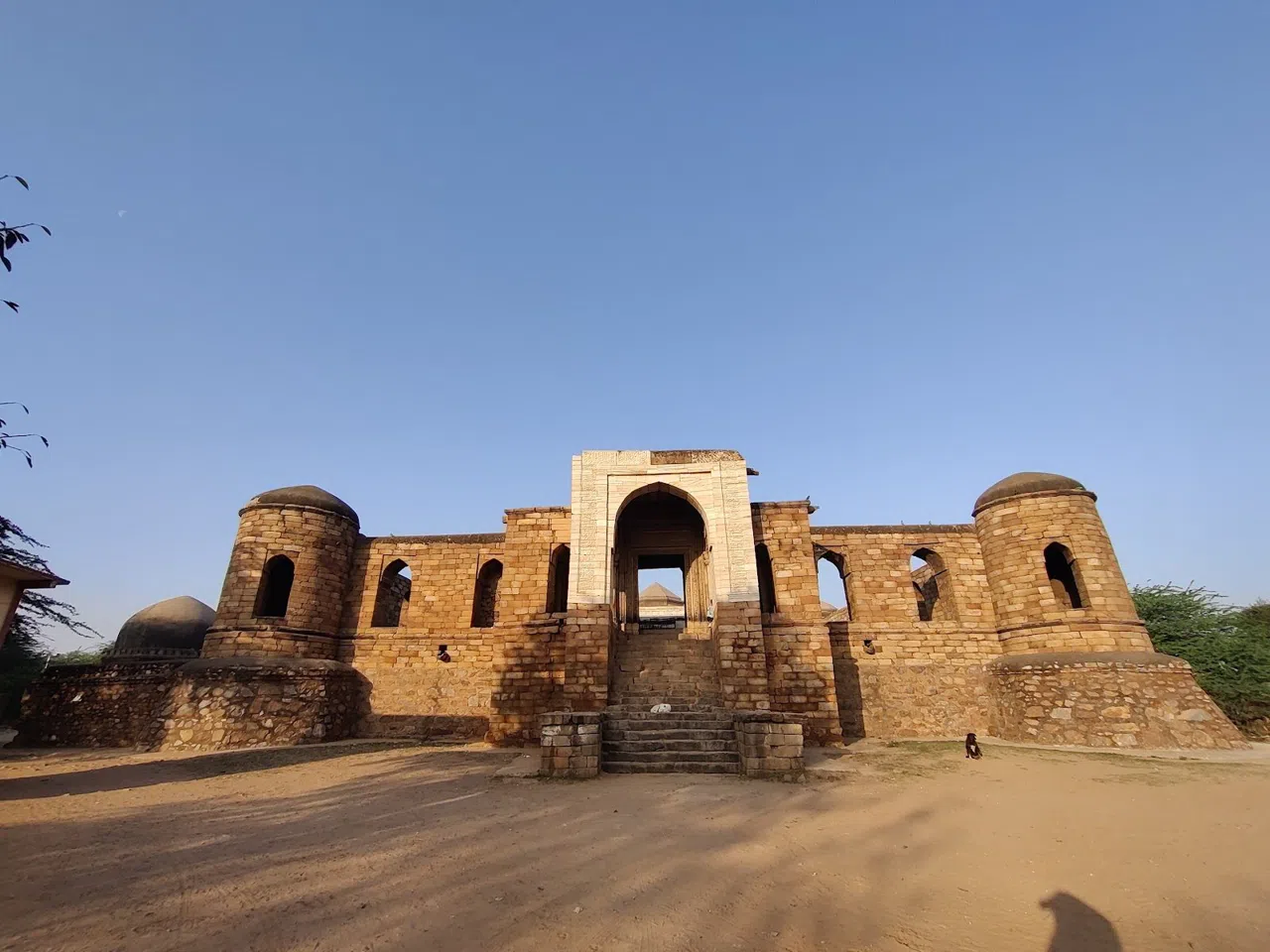
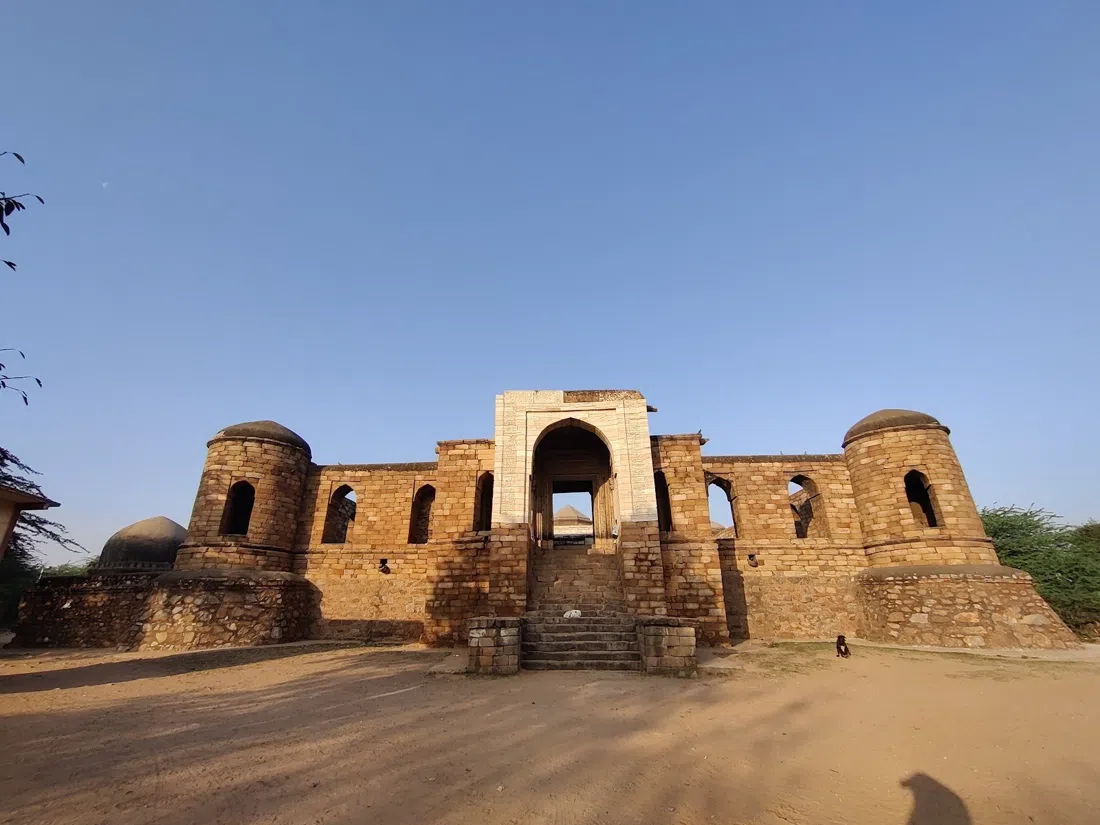
Sultan Ghari Tomb (Vasant Kunj, south-west Delhi) is the honest first stop, and almost nobody goes. Built in 1231 for Iltutmish's eldest son, it is the oldest Islamic mausoleum in India, and it looks less like a tomb than a small fortified platform, which is essentially what it is: an octagonal crypt sunk into a raised courtyard whose pillars and ceiling slabs were lifted straight out of demolished temples. A new ruling class built its first grave out of the stone of the people it had just defeated, and no later monument states that as plainly. There is a ticket booth with ASI caretakers, a nominal fee (a few rupees for Indian nationals, around ₹100 for foreign nationals) and no booking of any kind. The last approach is a dirt track past a police post, so history-walk operators bring small groups through regularly but a coach cannot get near it. Come with a taxi that will wait.
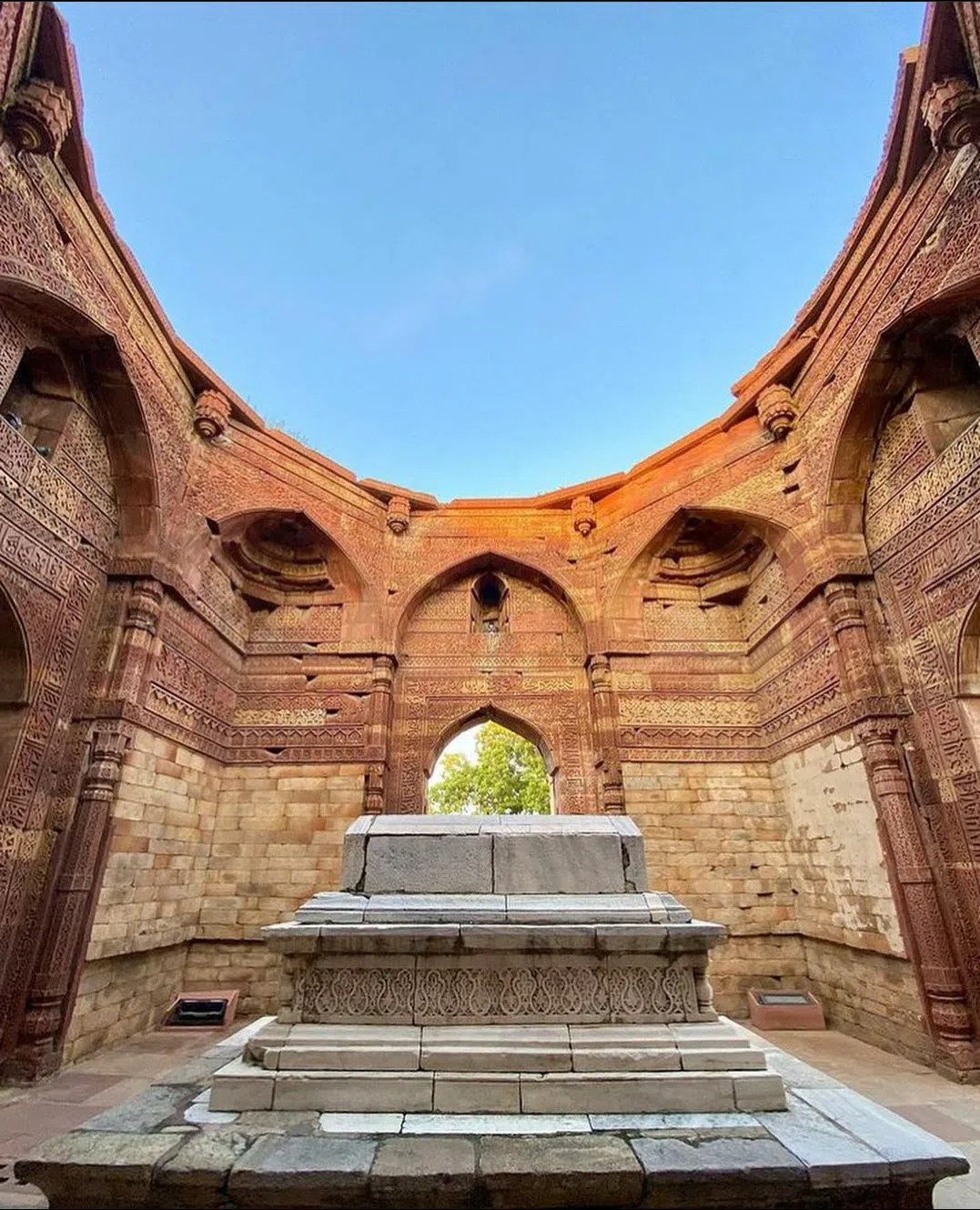
Qutb Minar Complex (Mehrauli) is where the same dynasty learned to build properly, and the room that matters is not the tower. The Tomb of Iltutmish, from about 1235, is the first monumental Islamic tomb raised in India, and its interior is the best surface in the city for reading what actually happened when Persian inscription met local stone-carving: bands of Quranic script cut by masons trained in an entirely different tradition, the lettering swelling and curling in ways no Central Asian workshop would have produced. Tickets are roughly ₹40 for Indian nationals and ₹600 for foreign nationals, under-15s free, sold online and at the gate. It takes coach groups and licensed guides all day and is heaving between 10am and 2pm, so arrive at opening. Two access notes for 2026: the Minar's internal stairway has been closed since 1981 and is not reopening, and ASI's current access list puts the first floor of the Hindu-remains corridor out of bounds.
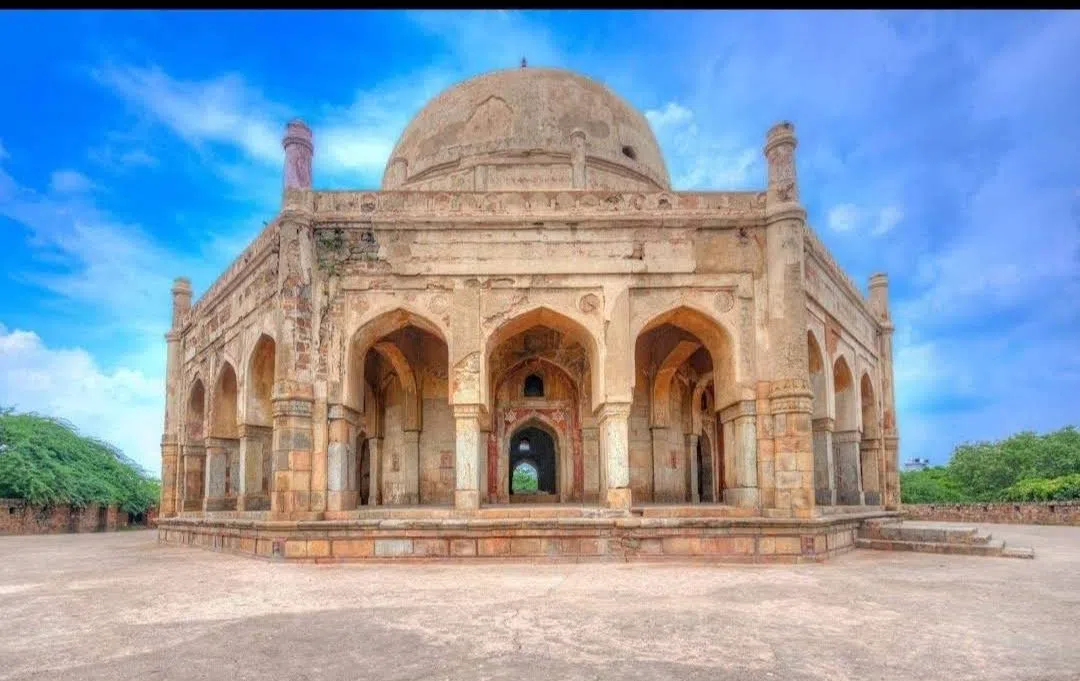
Adham Khan's Tomb (Mehrauli) sits about 400 metres from the Qutb gate and is worth fifteen minutes even though it belongs chronologically much later. Adham Khan was a Mughal general whom Akbar had thrown from a palace terrace in 1562, and Akbar then had him buried in a squat Lodi-style octagon, the shape of the dynasty the Mughals had displaced rather than the shape of the dynasty he served. It is the clearest example in Delhi of a tomb's form being used as a demotion. Free, unstaffed, open, and fine for two or three people; the internal passages are dark and uneven, so it is not a place to take a dozen at once.
Mehrauli Archaeological Park (Mehrauli) is the densest tomb landscape in the city and the place where the true arch and the true dome arrive in India, replacing the corbelled work you have just seen at the Qutb. Entry is free and the park is unfenced, but stretches of it are unsignposted and the paths fork without telling you anything, which is why the standard way to do it is a guided group walk. Operators run two to four hour walks here at roughly ₹950 per person. Two 2026 caveats worth planning around: ASI's access list has the Jamali Kamali tomb chamber closed to visitors, and Balban's tomb is under conservation. Both are usually the headline stops, so do not build the morning around either interior.
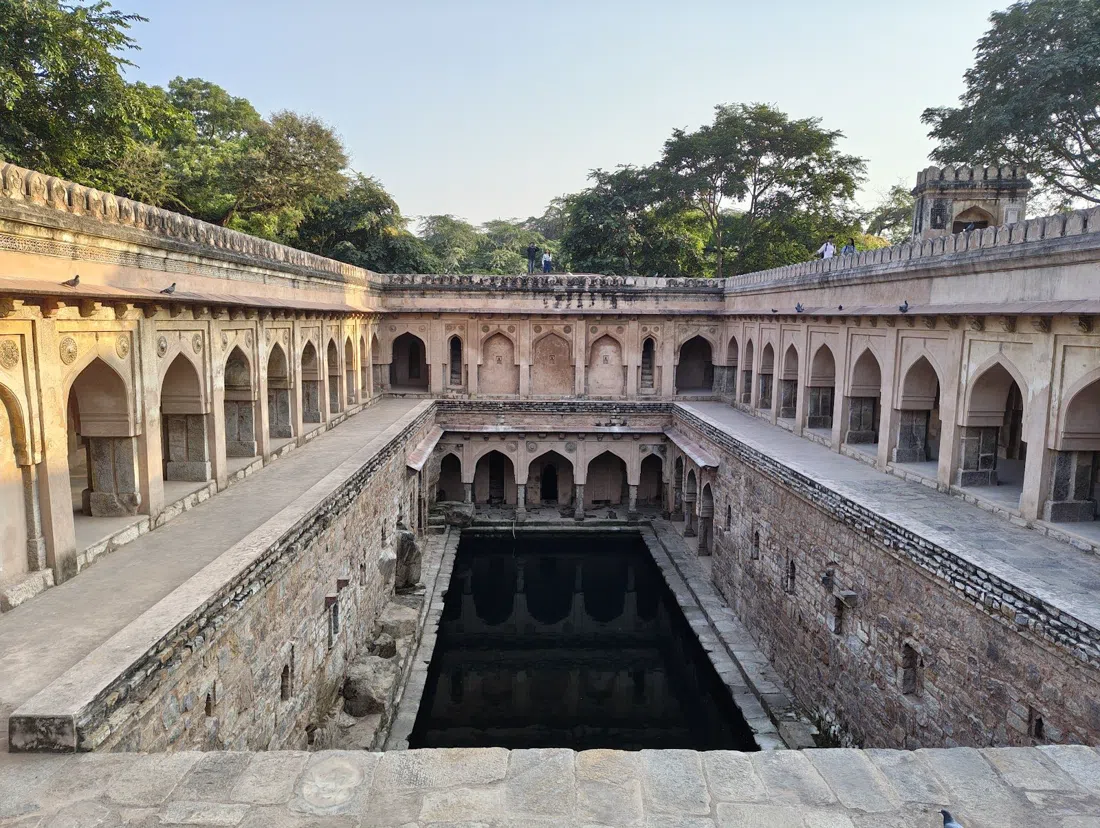
The ruler who was given no dome
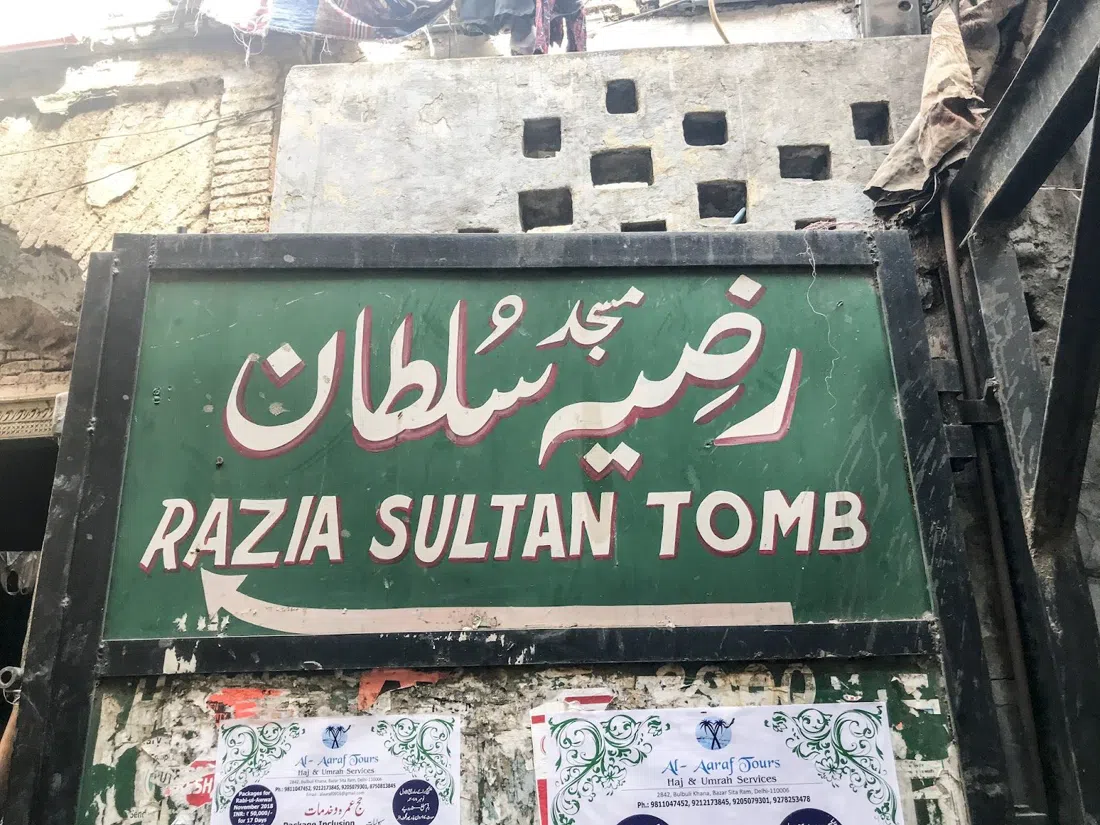
Tomb of Razia Sultan (Bulbuli Khana, off Turkman Gate in the old city) is the counterweight to every grand chamber in this piece. Razia was the only woman to rule the Delhi Sultanate, and her grave is two low stone platforms in a walled enclosure the size of a small courtyard, wedged into a dense residential quarter and reached through an alley you would never guess at from the main road. It is free and open in principle; in practice the gate is often locked and a neighbour holds the key. Go in twos and threes with a guide who knows the lane, not as a group, and be realistic about what you are coming for, because it is dilapidated and the story carries the visit rather than the architecture. These lanes are a working residential quarter with its own trades and rhythms, not the bazaar set that guidebooks tend to reduce the old city to. You are walking past people's front doors.
Tughlaq stone, built to survive a siege
Tughlaqabad Fort and the Tomb of Ghiyas-ud-din Tughlaq (south-east Delhi) is the hardest architecture in the sequence. The Tughlaqs built with battered, sloping walls of grey rubble stone, closer to military engineering than decoration, and the founder's tomb sits in its own miniature fortress across a causeway. Seen after the Qutb and before Humayun's Tomb, it explains the whole arc: this is what the tomb looked like when the point was to be impregnable rather than beautiful. It is a low ASI ticket, under ₹50 for Indian nationals and roughly ₹100 to ₹300 for foreign nationals, guides wait at the gate, and groups are handled freely. Allow two hours, go early, and take water, because the site is vast and there is almost no shade anywhere in it. ASI is refurbishing visitor facilities through 2026, so expect hoardings.
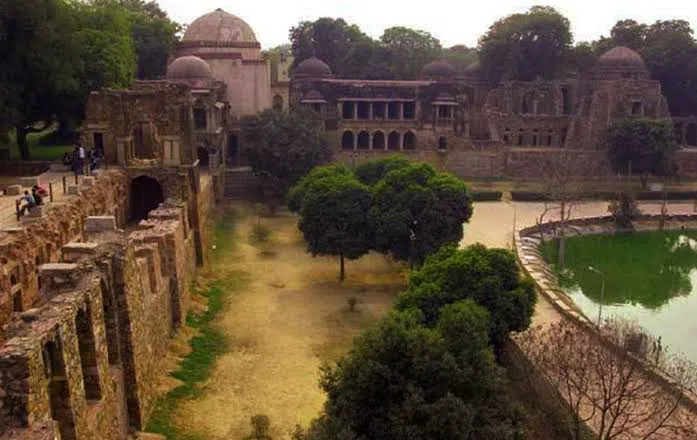
Hauz Khas Complex (Hauz Khas Village) carries the most useful fact in the whole dynasty story. Firoz Shah Tughlaq built a madrasa along the edge of a thirteenth-century reservoir and then had himself buried inside it, a sultan interred in his own university, with students' cells and lecture halls running away from his grave chamber in both directions. Entry is free, it is open to groups, and it sits at the far end of Hauz Khas Village, so it pairs naturally with lunch. Sunset is when the crowd arrives. ASI confirmed emergency structural repairs at the Hauz Khas group in 2026, so parts may be barricaded on the day. The area itself is at once a late-night bar strip, a designer-boutique lane and an ordinary residential colony where people are trying to park, rather than the single-note party district its reputation suggests.
Lodi Gardens is where the shape changes
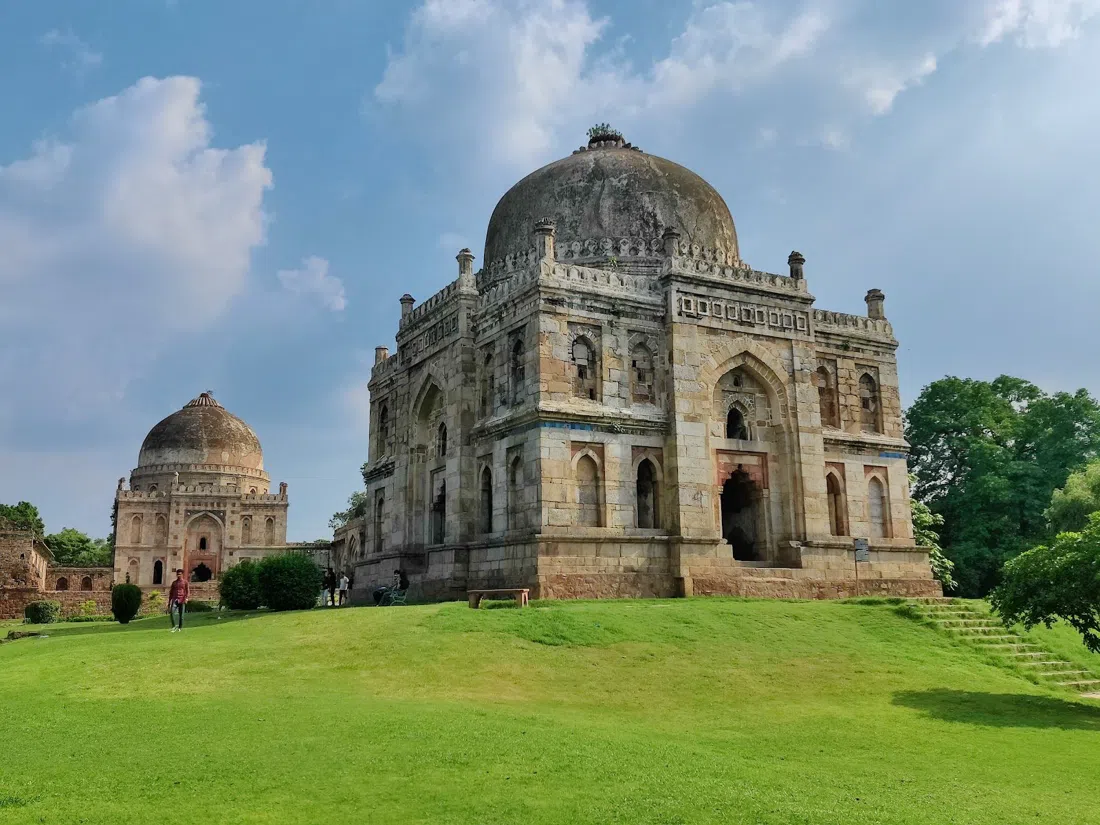
Lodi Gardens (Lodi Estate, central Delhi) is the hinge. The octagonal Sayyid and Lodi tombs scattered across these lawns, Muhammad Shah's, Sikandar Lodi's and the Bara Gumbad group, are the prototype that Mughal architects scale up one generation later: a raised plinth, an octagonal or square chamber, a dome on a drum, a garden setting. Walk it before Humayun's Tomb and the resemblance is unmissable. It is free, open from around 5 or 6am to 8pm daily, with flat paths, benches and shade, which makes it the easiest stop here for a mixed group of any age and stamina. A guide can talk without a ticket queue, and nobody has to climb anything.
The Mughal pivot at Humayun's Tomb
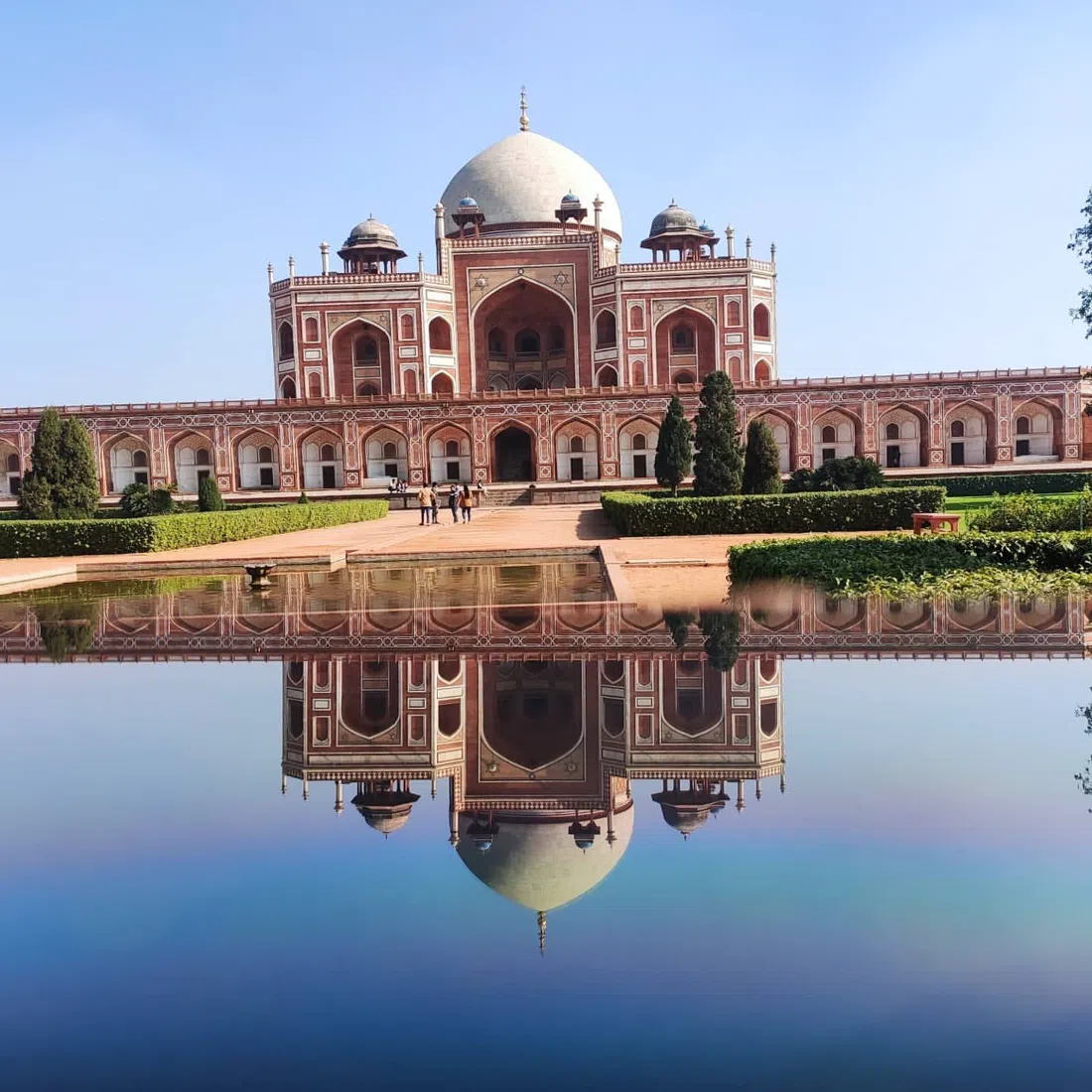
Humayun's Tomb (Nizamuddin East) is the pivot of the entire five-century argument: the first monumental Mughal garden tomb in India, red sandstone inlaid with white marble, set dead centre in a quartered water garden, and the direct ancestor of the Taj. It is also the best-value stop in the city, because Isa Khan's tomb, built for a noble of the Suri interruption that briefly threw the Mughals out, stands inside the same ticket about four hundred metres away. You can walk the change of dynasty in five minutes, one an octagonal enclosure in the old Delhi idiom, the other an imported Persian idea landed whole. It opens sunrise to sunset every day, tickets online or at the gate at roughly ₹40 for Indian nationals and ₹600 for foreign nationals, and it handles coaches and licensed guides routinely. The adjoining sunken World Heritage Site Museum, open since July 2024, runs 10am to 9pm, closes on Mondays and national holidays, takes group bookings, and charges a separate ₹50 or ₹300.
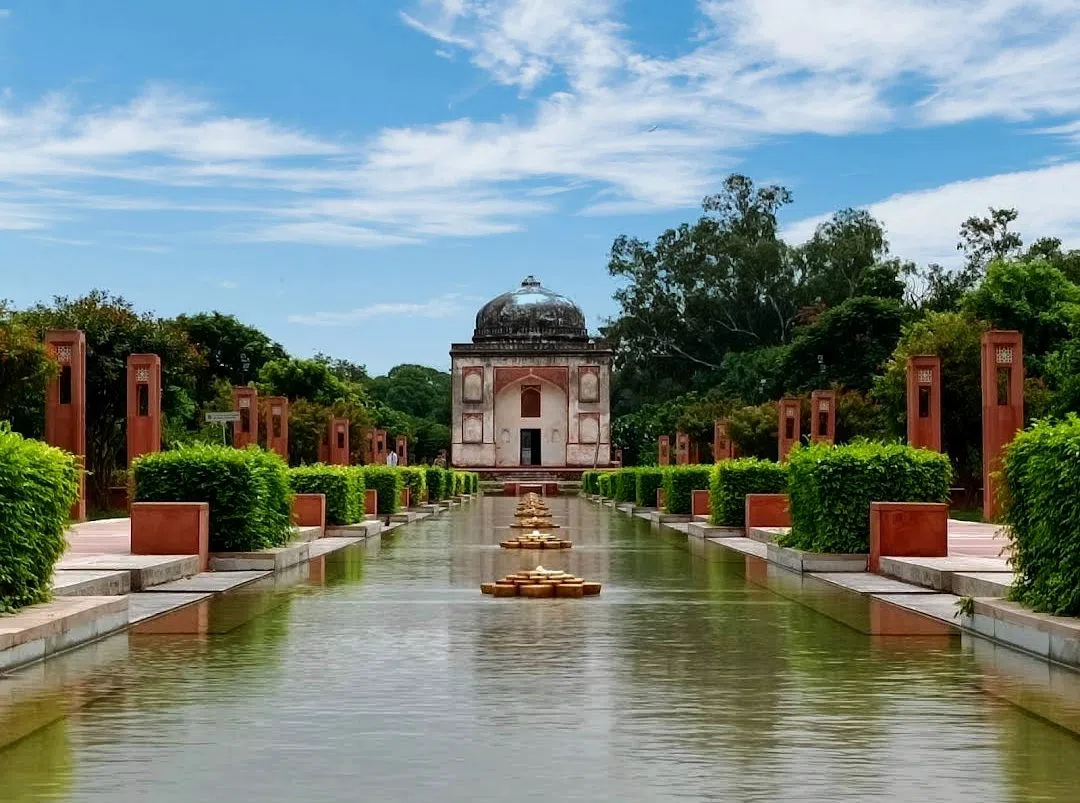
Sunder Nursery (Mathura Road, opposite Humayun's Tomb) answers the question the tombs themselves cannot. Mughal mausolea were never meant to stand on mown lawns; they sat inside working gardens with nurseries, water channels, fruit and shade. This is the one place in Delhi where you see that arrangement functioning, with its own cluster of sixteenth-century tombs threaded through planted beds. It is ticketed at ₹50 for Indian nationals and ₹200 for foreign nationals, ₹25 for children aged 5 to 12 and seniors, open 7am to 10pm with last entry at 9pm. It is comfortably the best-run heritage site in the city for a group with mixed stamina, and walks, school visits and events are bookable on 011-40700700 or [email protected]. Check the page before you go, because ticketed events can close off sections, and the Garden House and on-site museum were still under construction.
The basti everyone wanted to be buried beside
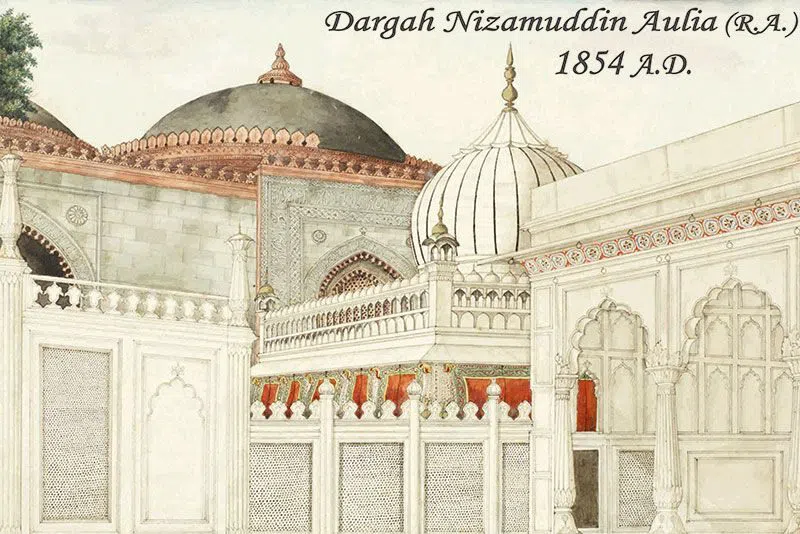
Hazrat Nizamuddin Dargah (Nizamuddin Basti) is the only tomb here that was never a monument. The shrine of the fourteenth-century Sufi saint has been in continuous use for seven centuries, with the poet Amir Khusrau and the Mughal princess Jahanara Begum buried in the same courtyard, and it is the honest answer to why emperors queued to be interred in this particular patch of ground. It is free and open to all faiths from 5am to 10:30pm. Thursday evening qawwali pulls something like 1,500 people, so bring two or three companions at most and arrive before Maghrib if you want to be inside rather than pressed against a wall. Shoes come off at the edge of the lane, heads are covered, and women cannot enter the inner tomb chamber, all of it better known in advance than at the threshold.
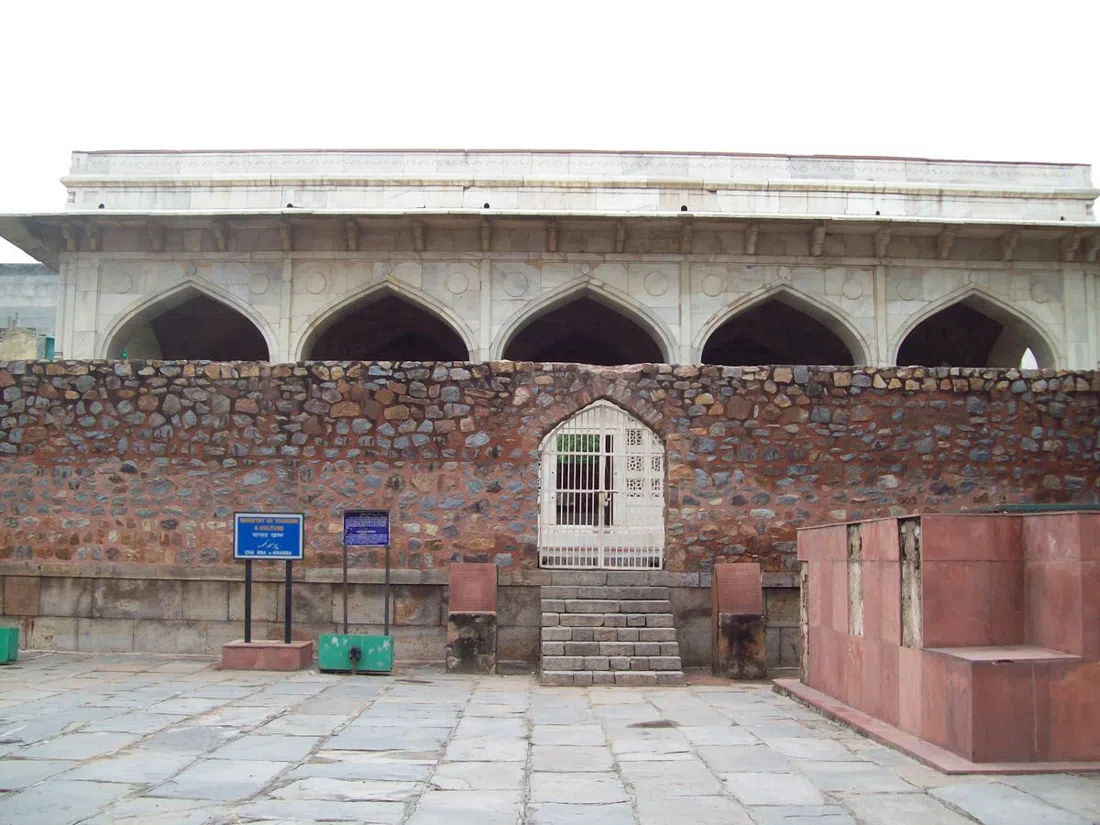
Chausath Khamba (Nizamuddin Basti) is the outlier of the whole survey and the reason to keep walking past the dargah. Built in 1623 and 1624 for Akbar's foster-brother, it is a flat-roofed marble pavilion of sixty-four columns, with no dome, no plinth and no garden, essentially a Timurid tent rendered in stone at the exact moment Mughal tomb design was at its most confident. The tradition branches sideways here instead of climbing. Entry is free, the courtyard is the largest open space in the basti and hosts ticketed qawwali and Sufi-music evenings, and the lanes around it are unmarked, so take a guide.
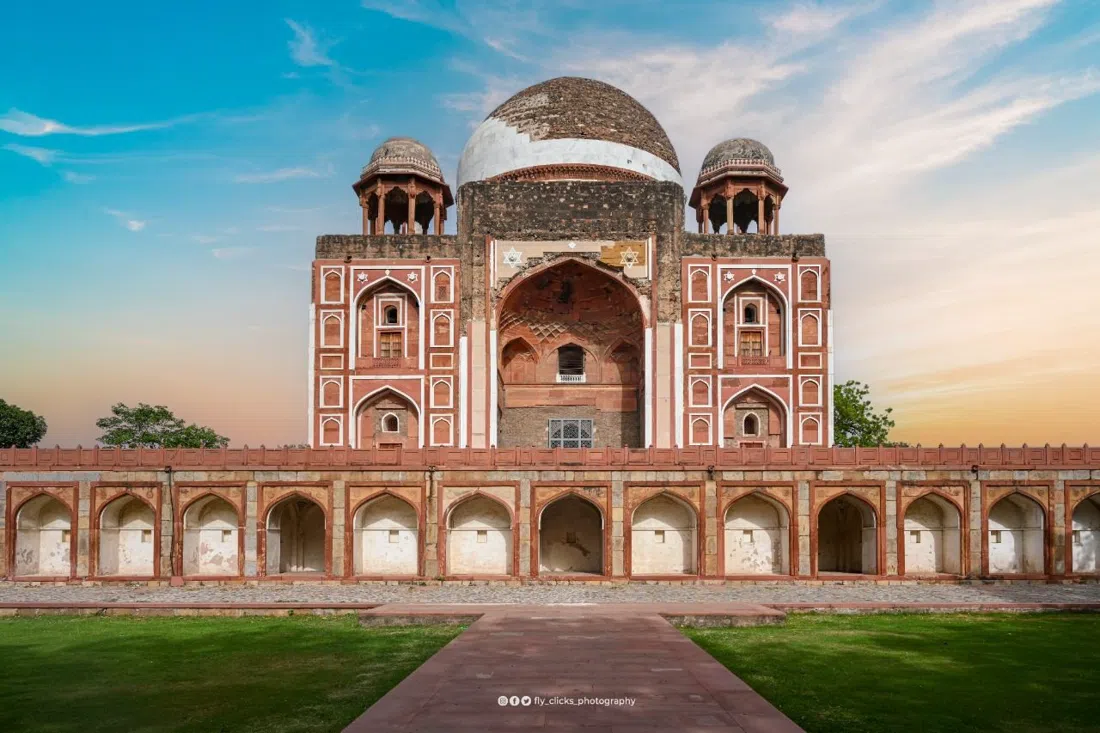
Tomb of Abdul Rahim Khan-i-Khanan (Nizamuddin, a kilometre down Mathura Road from Humayun's Tomb) is the standard second stop and rarely crowded. Akbar's general and poet built it in 1598 for his wife, the first great Mughal tomb raised for a woman, decades before the Taj, and its stripped, denuded surfaces are the result of theft rather than neglect: much of its marble and sandstone was carted off in the eighteenth century to build Safdarjung's Tomb. The ASI ticket is nominal, roughly ₹10 to ₹25 for Indian nationals and ₹200 to ₹300 for foreign nationals, and walking groups are handled easily.
How an empire runs out of money
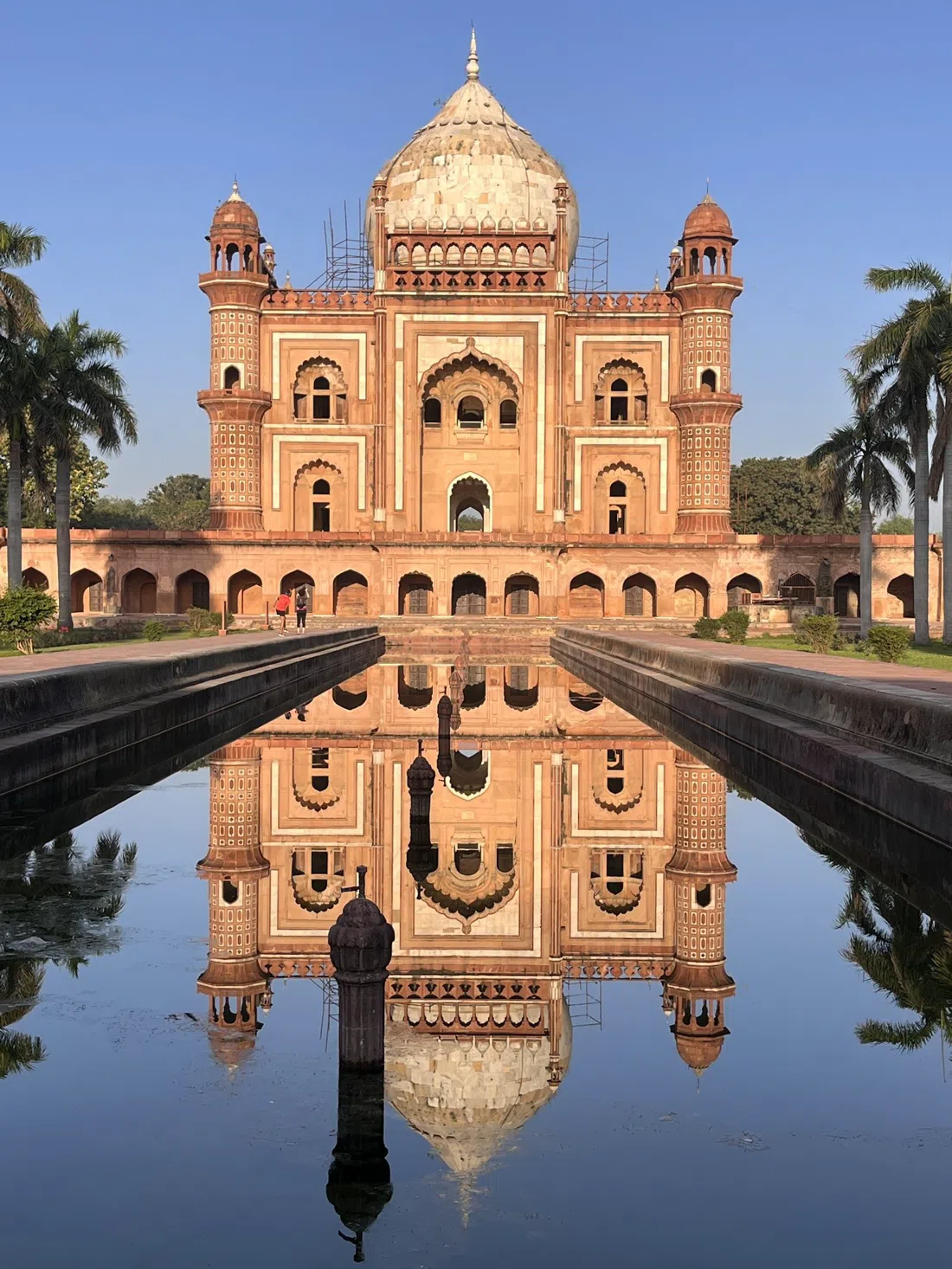
Safdarjung's Tomb (Lodi Road, by Jor Bagh) is the last monumental Mughal tomb in Delhi, finished in 1754, and it is built partly out of the stone removed from Khan-i-Khanan's. The proportions are off, the dome too bulbous and the plinth too narrow for the mass above it, and once you know where the marble came from, the whole thing reads as a court going through the motions on a budget it did not have. It is open 7am to 5pm daily at roughly ₹25 for Indian nationals and ₹300 for foreign nationals, takes groups and guides, and is quiet enough that a guide can actually be heard, which the Qutb is not. ASI lists mosque and chamber repairs ongoing in 2026.
Tomb of Mirza Najaf Khan (Najaf Khan Road, ten minutes from Safdarjung's Tomb) makes the point more plainly than anything else here. The last effective Mughal commander-in-chief died in 1782 and his tomb was simply abandoned mid-construction: a bare platform and an unfinished chamber standing on flat open lawns, with no dome ever raised. The masonry stops where the money did. It is free and open with easy level ground, which makes it the simplest group stop in the sequence, though ASI has proposed introducing ticketing, so check on the day.
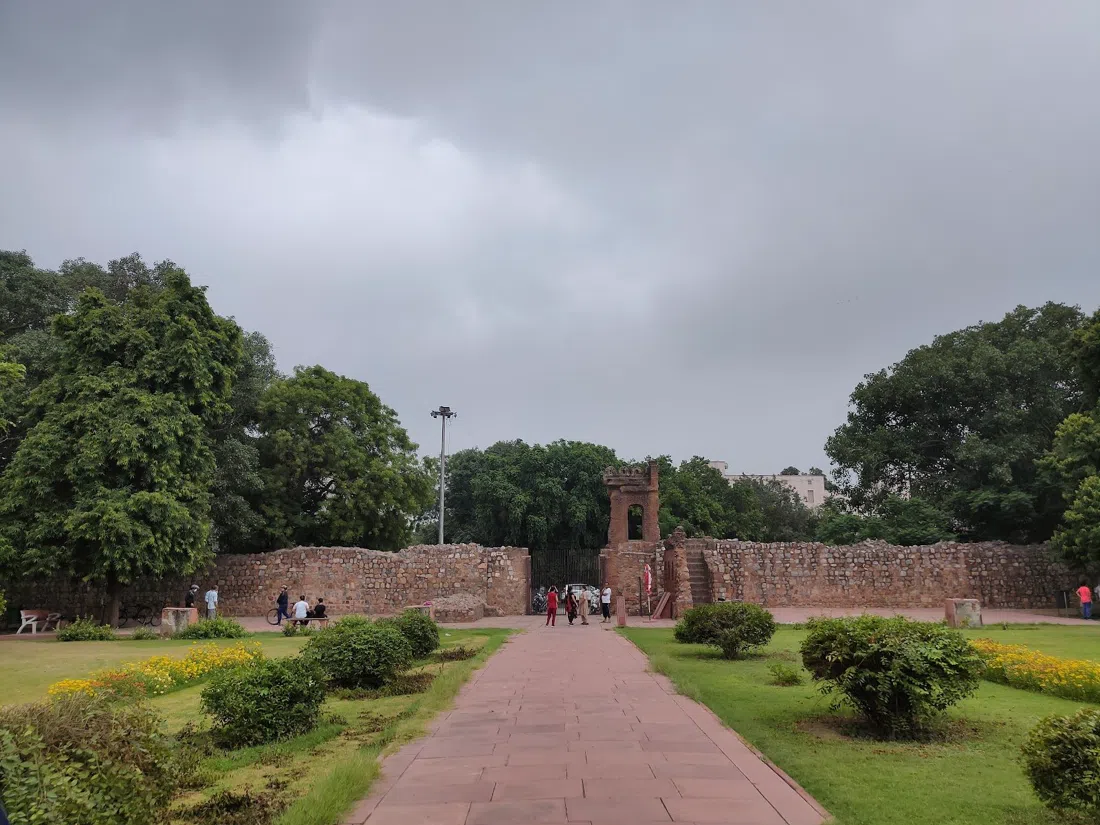
Zafar Mahal (Mehrauli village) closes it. Bahadur Shah Zafar, the last Mughal emperor, chose a grave plot for himself in the royal burial enclosure behind this late-Mughal palace and never got it; the British deported him to Rangoon in 1858 and he died there. The plot is still empty. Entry is free and it is open roughly 10am to 6pm, but know the state of it before you go: encroached, built over, vandalised and unstaffed, which is part of what the place now says. Small guided groups only, and heritage-walk operators fold it into Mehrauli itineraries, which is the sensible way to see it.
What it costs, how to move, and when to go
Split it into three half-days. Mehrauli first: Sultan Ghari by car, then the Qutb at opening, then Adham Khan's Tomb, the archaeological park with a booked walk, and Zafar Mahal. Nizamuddin second: Humayun's Tomb early, Khan-i-Khanan, Sunder Nursery through the middle of the day, the basti in the late afternoon. Central Delhi third: Lodi Gardens, Safdarjung's Tomb and Mirza Najaf Khan in a single loop, with Tughlaqabad added as an early start on any day you have a car.
On transport, the Yellow Line covers more of this than anything else: Qutb Minar station for Mehrauli, Hauz Khas for the complex, Jor Bagh for Safdarjung's Tomb, Lodi Gardens and Najaf Khan Road. JLN Stadium on the Violet Line is the nearest useful stop for Humayun's Tomb, and Chawri Bazar puts you within a fifteen-minute walk of Razia Sultan's lane. Every one of those stations still leaves you a one to three kilometre last mile, so budget for an auto or an app cab at each end. Sultan Ghari and Tughlaqabad are car-only in practice.
Carry cash in small notes. ASI booths, shoe-minding at the dargah, autos and most guides work in rupees, and change is a genuine problem at the smaller sites. ASI tickets for the Qutb and Humayun's Tomb can be bought online in advance, which saves the queue in high season. Reckon on roughly ₹1,800 to ₹2,200 in entry fees across the full circuit at foreign-national rates, well under ₹300 at Indian-national rates, plus about ₹950 for one guided heritage walk and ₹1,500 to ₹2,500 a day for a car with a driver if you are doing Tughlaqabad and Vasant Kunj properly.
Season matters more here than at most monuments because so much of this is unshaded ruin. October to March is the window; between April and June the open sites reach the low forties by midday and Tughlaqabad becomes genuinely unsafe to walk slowly. Start at opening every single day. For a base, Nizamuddin East, the Lodi Road area and Hauz Khas each put you inside one of the three clusters, so compare rates with a Delhi hotel search. The rest of the city, markets and food included, is covered in our Delhi guide.