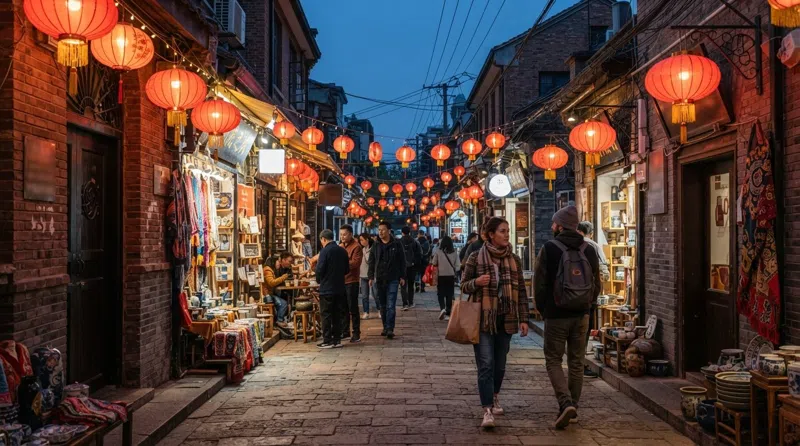
Chandni Chowk does not announce itself gently. By nine in the morning the main road is already a solid wall of cycle-rickshaws, wedding-shopping crowds and the smell of ghee hitting hot iron, and by noon the lanes running off it — Paranthe Wali Gali, Dariba Kalan, the alley behind Jama Masjid — have narrowed to shoulder-width with foot traffic. This is not a place to eat one big meal. It's a place to eat small ones all day, in the order the streets actually let you, starting stomach-empty and finishing somewhere near Fatehpuri Masjid with kheer on your fingers and no clear idea what time it is.
This walk is built around fourteen verified stops, grouped by lane rather than by dish, because in Old Delhi the geography decides the order more than your appetite does. None of these are ranked "best in Delhi" clickbait — some are 175 years old, one closed for nine years and only just came back, and at least one is barely known outside its own block. Go hungry, go early for the sit-down places, and carry small notes.
Paranthe Wali Gali: Where the Walk Starts
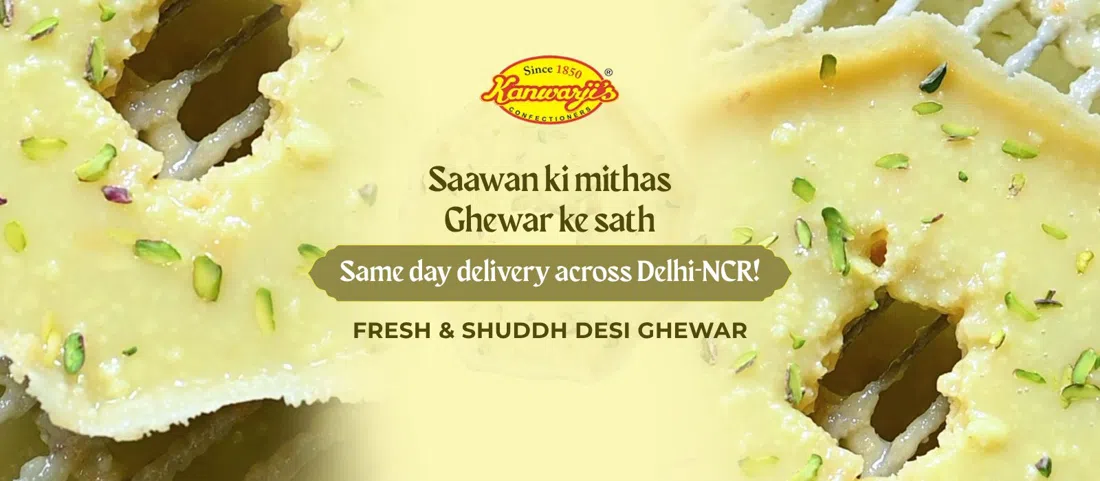
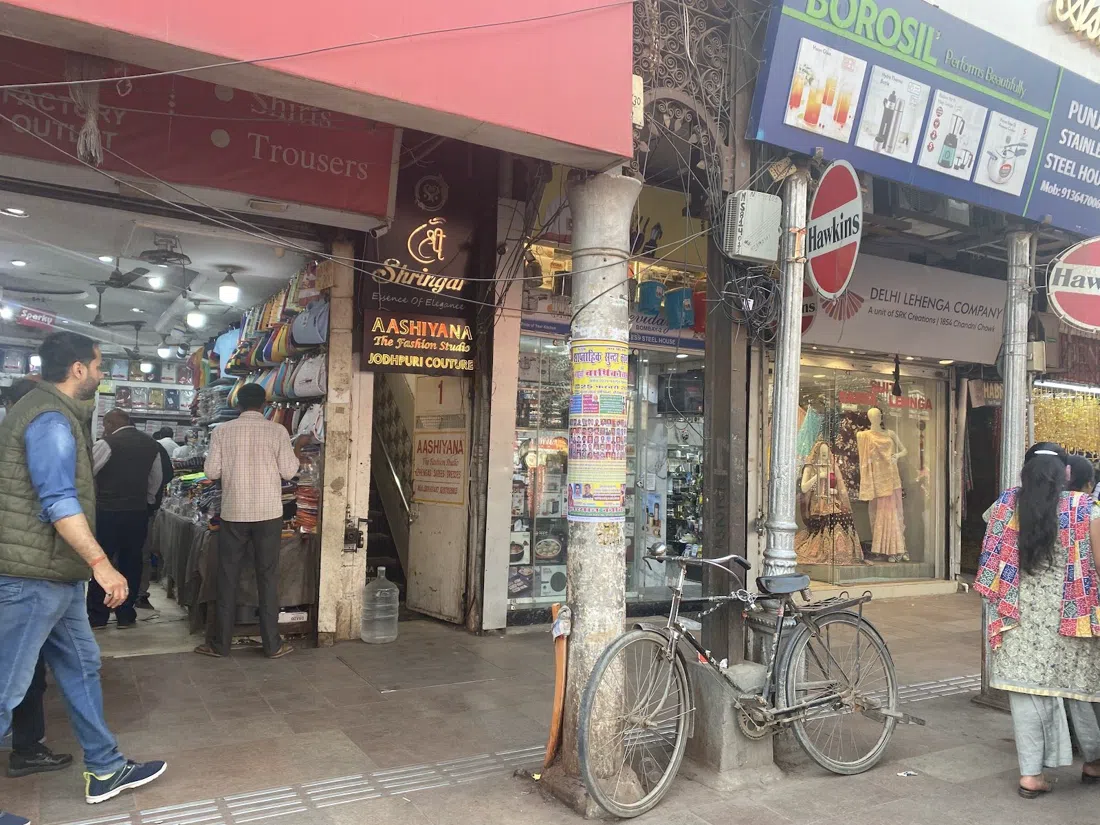
Turn off the main Chandni Chowk road into the lane that gave the neighbourhood its nickname and the first thing you'll see, right at the mouth of the gali, is Kanwarji's (Chandni Chowk, at the entrance to Paranthe Wali Gali) — a 175-year-old sweet and namkeen shop that's a natural warm-up stop before the parathas proper. It's a large retail counter, not a sit-down restaurant, so it comfortably absorbs a group of any size; go for the pista barfi, ₹100-300 for a portion, and eat it walking rather than trying to find a table, because there isn't one.
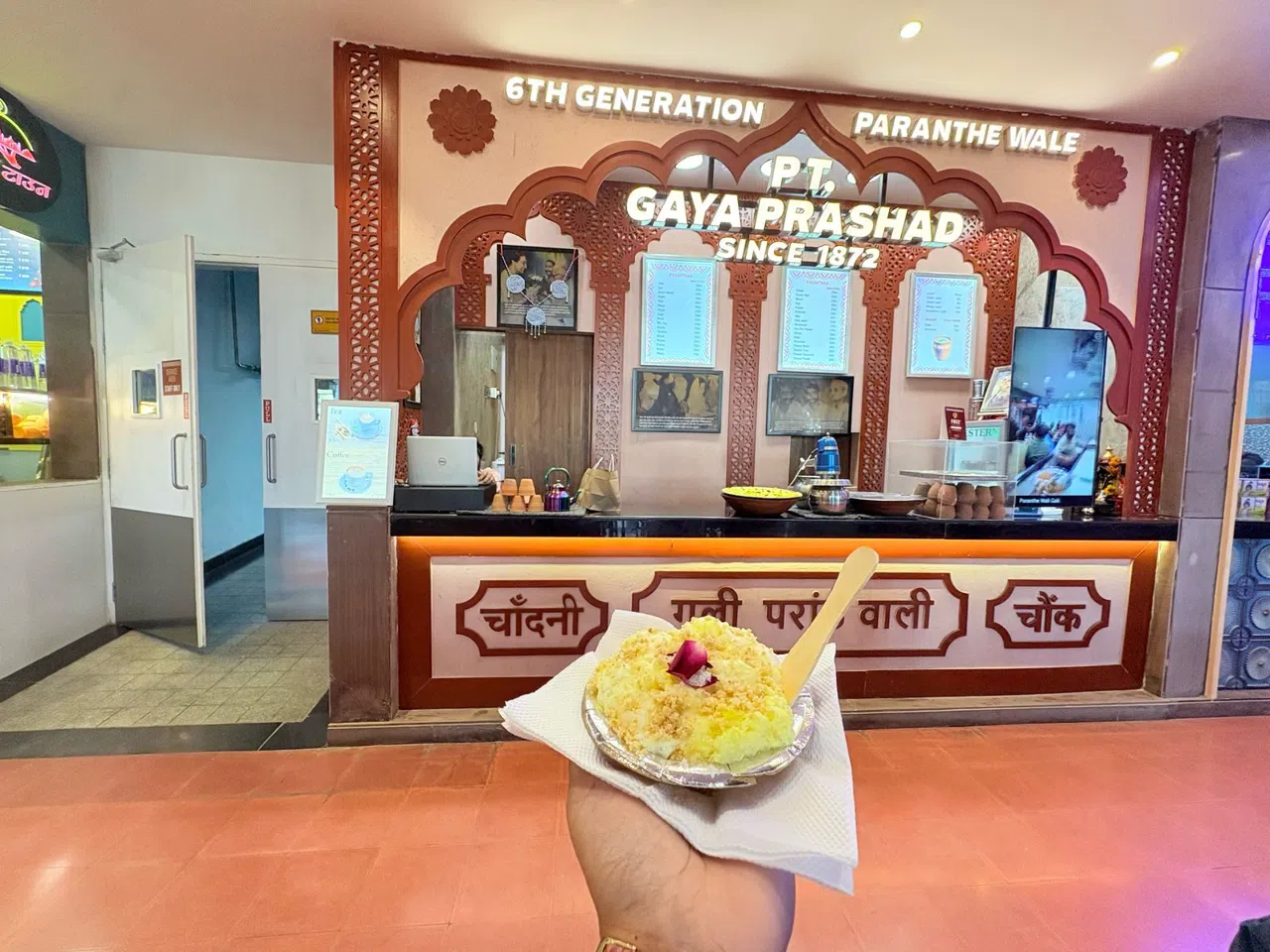
A few doors deeper in is Pt. Gaya Prasad Shiv Charan Paranthe Wale, the most-cited survivor of the twenty original parantha shops that gave this gali its name back in 1872. There's no reservation system — you queue, then perch on stools at a narrow counter, and it works fine for a group of four to six but gets genuinely awkward for anything bigger in a gali this tight. Order the stuffed paranthas by filling (potato, paneer, and the more unusual stuffed ones like banana or rabri if you want the shop's full range on display) and expect ₹300-400 for two. Go before 11am if you want to actually sit; after that the gali fills with both shoppers and other tourists doing the same walk you are, and the stools turn over slowly.
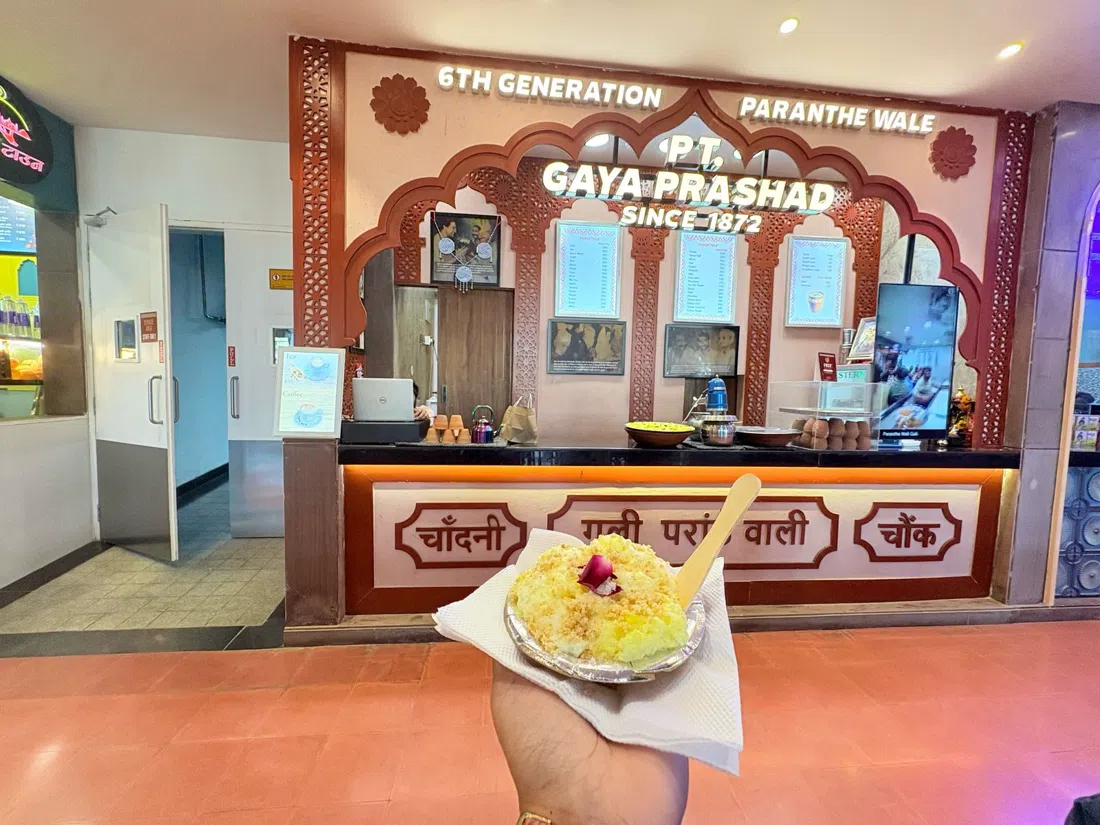
This is the loudest, most photographed stretch of the whole route, and it's worth doing first while you're still fresh enough to enjoy the crush — the lanes only get denser as the day goes on.
The Kebab Corner Behind Jama Masjid
A short walk or rickshaw ride from Chandni Chowk proper, the lane running off Jama Masjid is Old Delhi's Mughlai heartland, and it holds three of this walk's essential stops within a few minutes of each other.
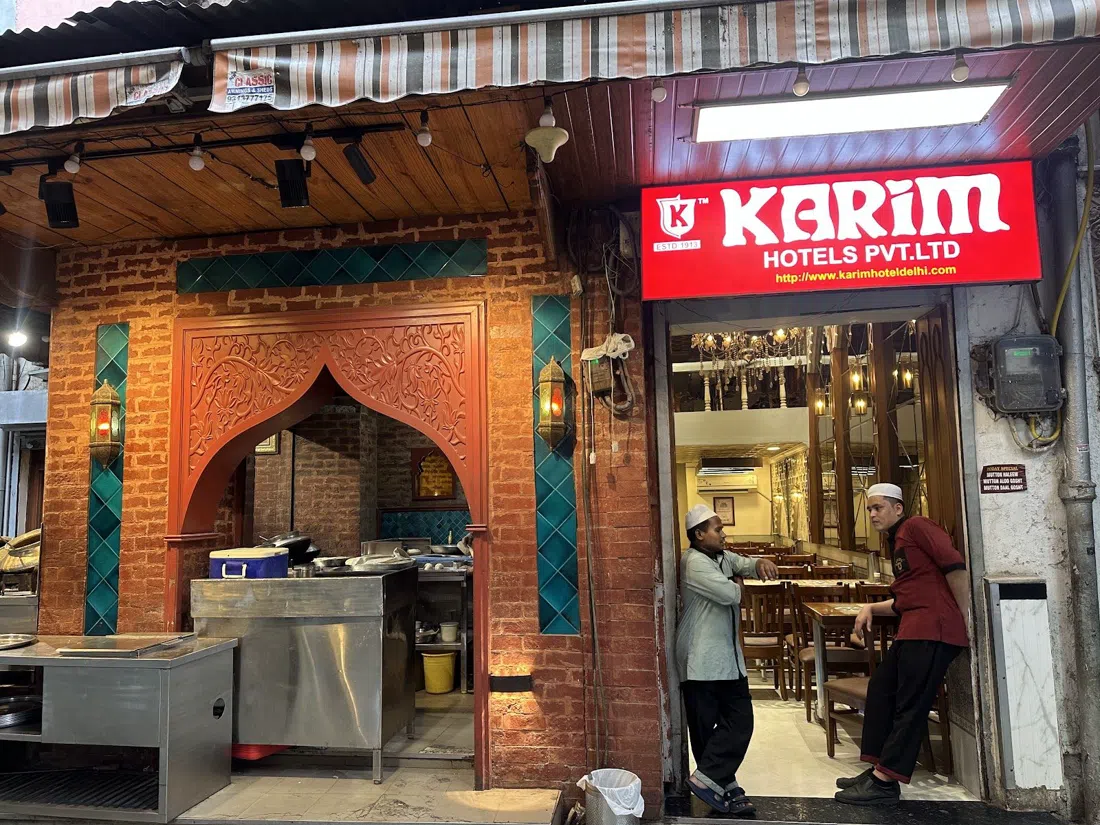
Karim's is the anchor: founded in 1913, spread over multiple floors, and built to handle groups in a way most of Chandni Chowk's street stalls simply aren't. That's also its trade-off — at lunch and dinner peak, particularly weekends, expect a genuine queue. Go for the seekh kebabs and the mutton korma, budget ₹800-1000 for two, and if you're travelling with a larger party, this is the one restaurant on the whole walk built to seat you together rather than scattering you along a counter.
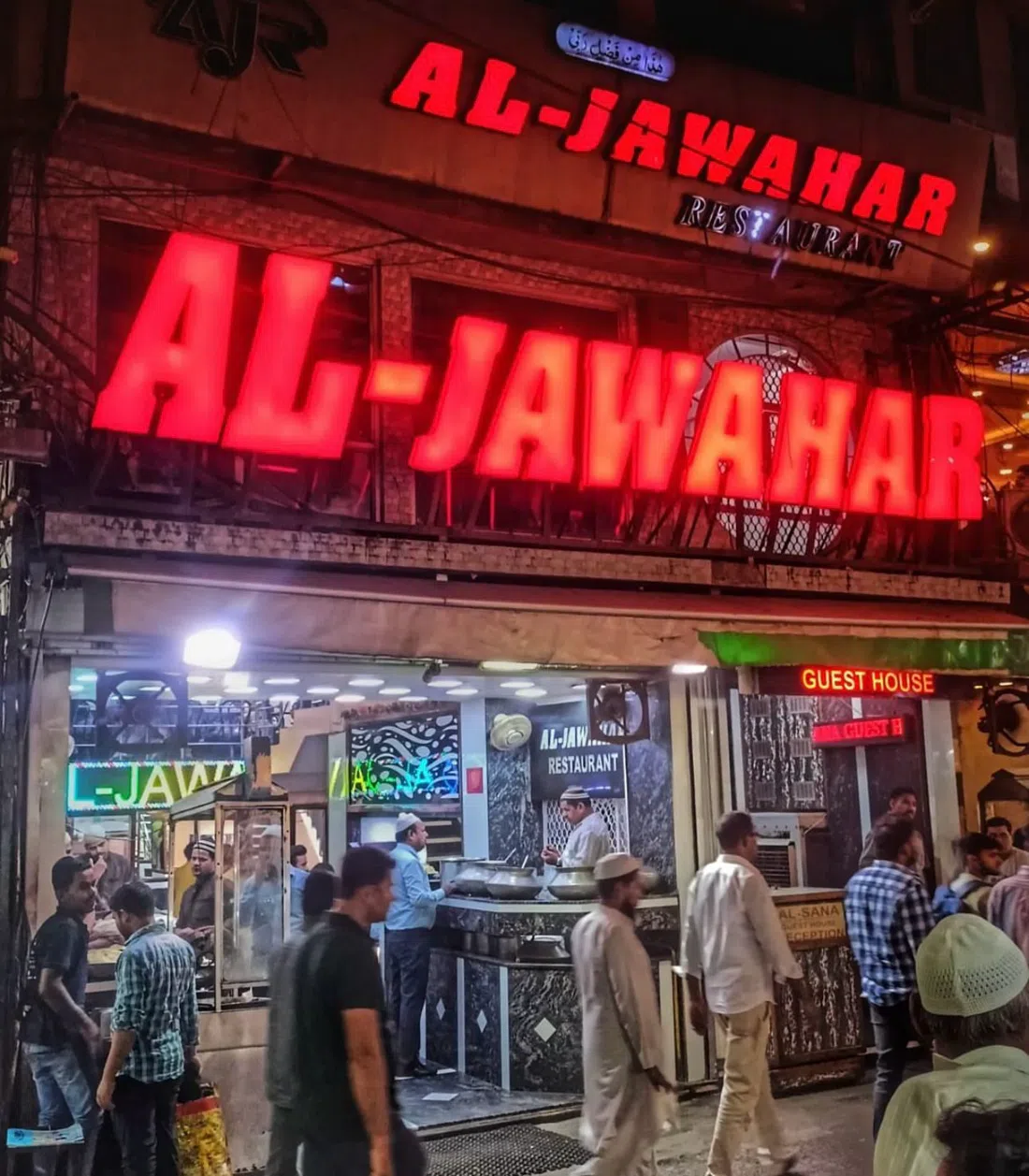
On the same lane, Al Jawahar has been open since 1948 and is worth treating as more than a Karim's overflow option — it's the nihari-and-korma counterpoint, a distinct kitchen with its own following, not a backup. It's a seated restaurant with an upstairs room that handles small-to-mid groups comfortably, ₹400-600 for two, and generally a shorter wait than its more famous neighbour. If you only have room for one Mughlai restaurant on this walk and Karim's is queued out, don't treat Al Jawahar as second-best — order the nihari and judge it on its own terms.
Save Aslam Chicken Corner for after dark, which is when it's genuinely at its best and also when the queue is longest — this is a distinct, drenched-not-sauced butter chicken style that's been running since the late 1990s, newer than its neighbours but no less serious. It spans multiple floors and a terrace, which makes it the most group-friendly stop of the three, and a plate for two runs ₹600-900. If you're doing this walk as an evening food crawl rather than a daytime one, this is the stop to build the night around.
Chandni Chowk's Sweet Shops: Jalebi, a Comeback, and a Wood-Fired Kheer
Back toward Chandni Chowk's centre, at the Dariba Kalan corner, Old Famous Jalebi Wala has been frying pure-ghee jalebi at the same spot since 1884, and it's the single most reliable sweet stop on this entire route. There's no seating — you eat standing on the pavement, which is fine for a walk-through tasting but not somewhere to linger — and a portion runs ₹150-250. Pair it with rabri if the stall's doing it that day; the combination is the whole point.
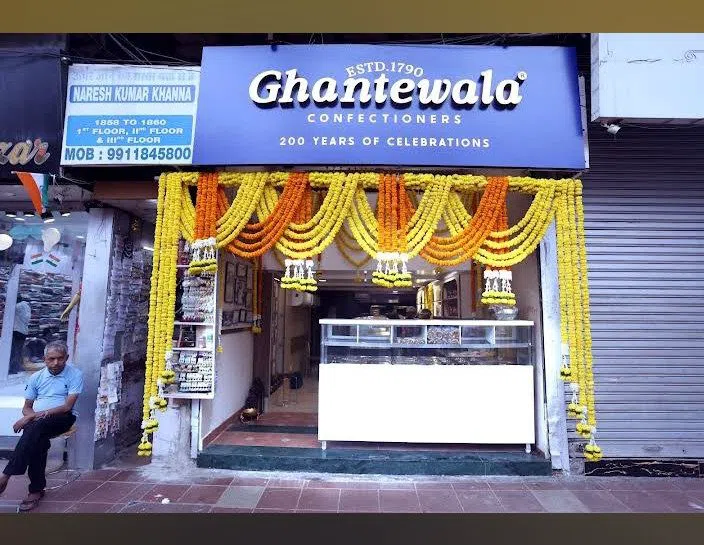
A short walk from there sits Ghantewala, and its story is worth knowing before you go: 225 years of continuous trading ended in 2015 when the shop closed, and the founding family only revived it near the original spot in November 2024. Given that history, treat it as a comeback worth celebrating rather than a guaranteed constant — confirm on the day that it's actually open and trading, because this is a shop with recent form for disappearing. When it's running, it's a walk-in retail counter that handles any group size with no seating required, ₹100-300 per portion.
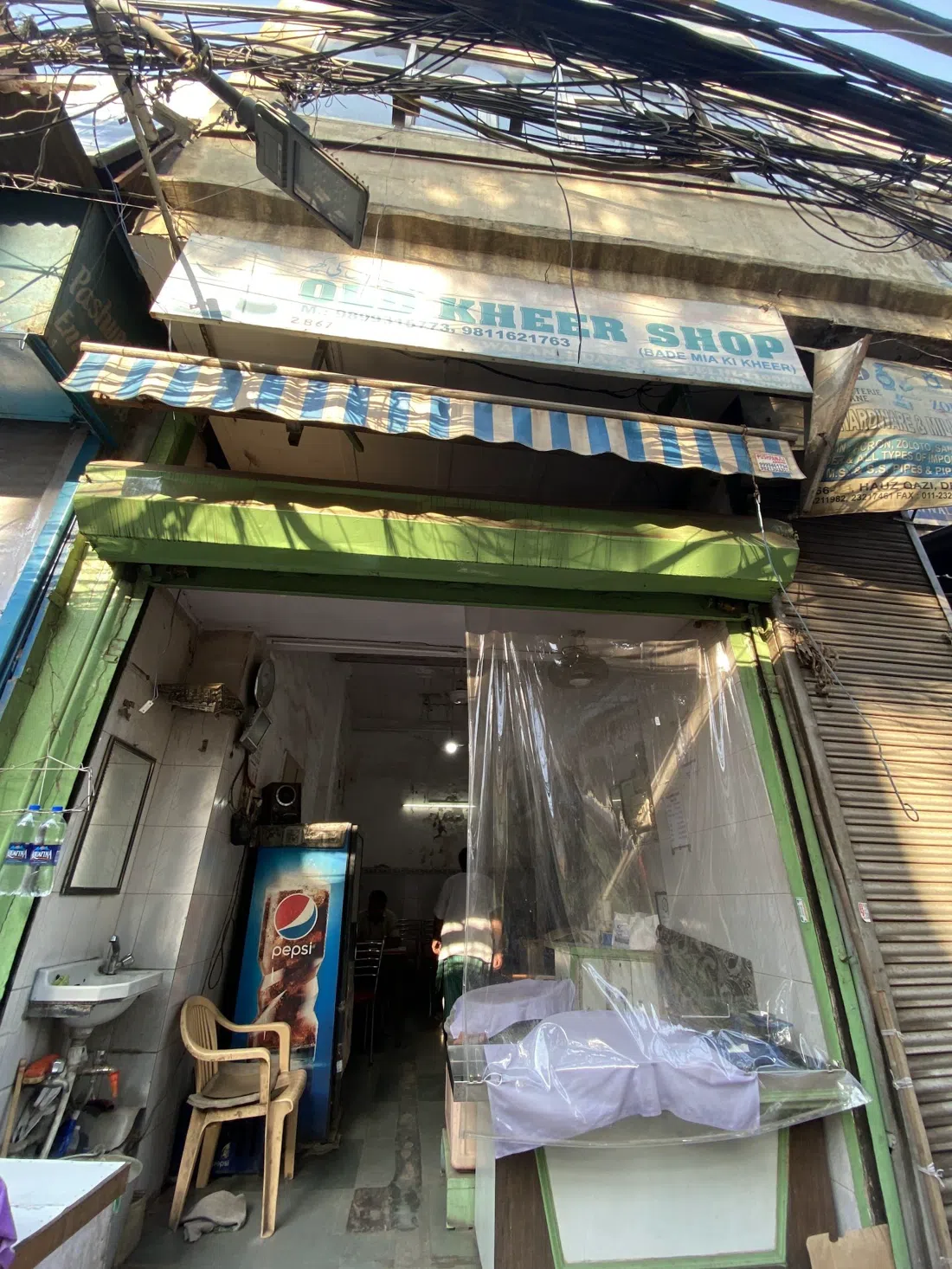
For something well off the tourist radar, look for Bade Miyan Ki Kheer, also known locally as the Old Kheer Shop — a 140-year-old single-product stall doing nothing but kheer, slow-cooked over eight hours on a wood-fired chulha. It's a small takeaway counter, no seating, fine for a grazing group to gather round briefly, and priced by weight from ₹40 for a 125g portion up to ₹320 for a full kilo. This is the stop most visitors doing a rushed version of Chandni Chowk miss entirely, and it's worth the small detour precisely because it isn't on every list.
Chaat, Kulfi and the Cold Stops
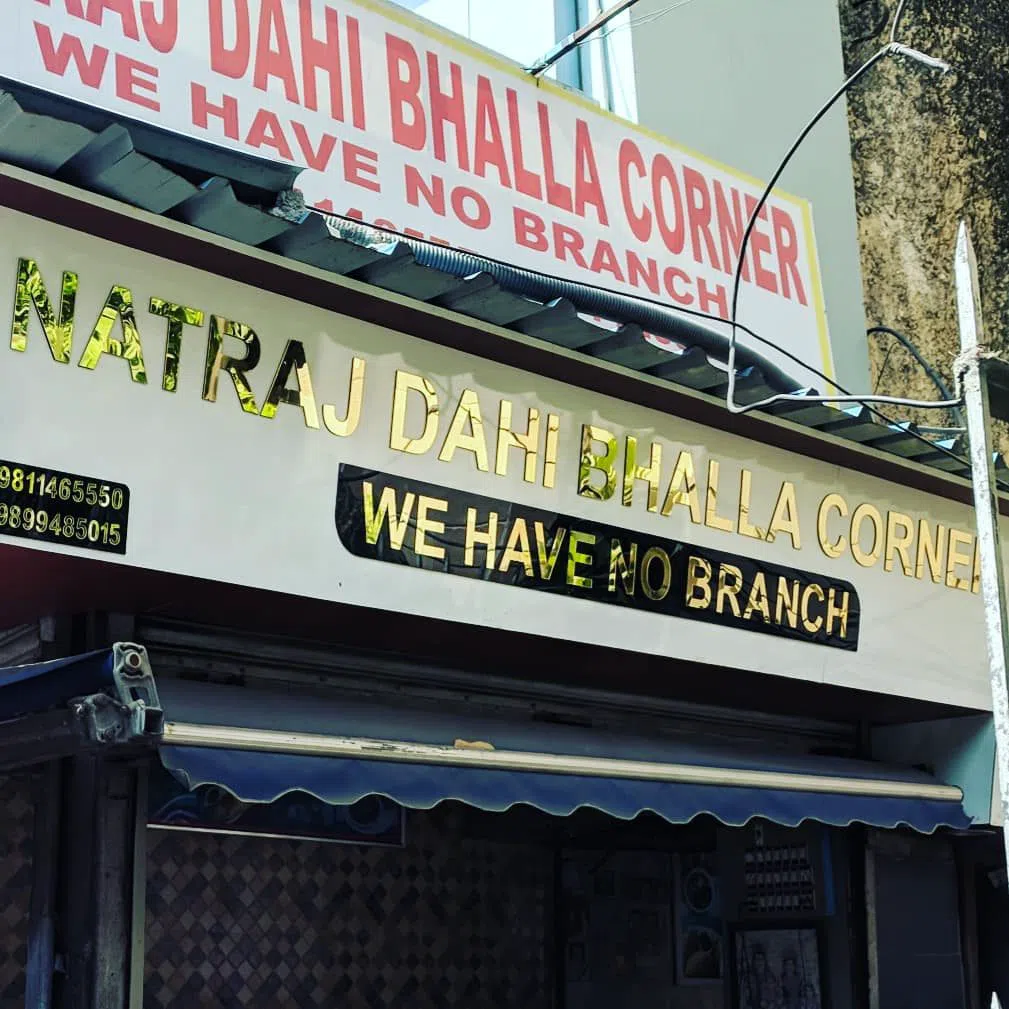
Directly opposite the mouth of Paranthe Wali Gali, Natraj Dahi Bhalle Corner has been serving the same corner since 1940 and is the definitive dahi bhalla and aloo tikki stop on this walk. It's a street stall with standing room only, fine for small clusters but not built for a sit-down group — go for the classic dahi bhalla, ₹80-150 a plate, and treat it as a five-minute stop rather than a meal.
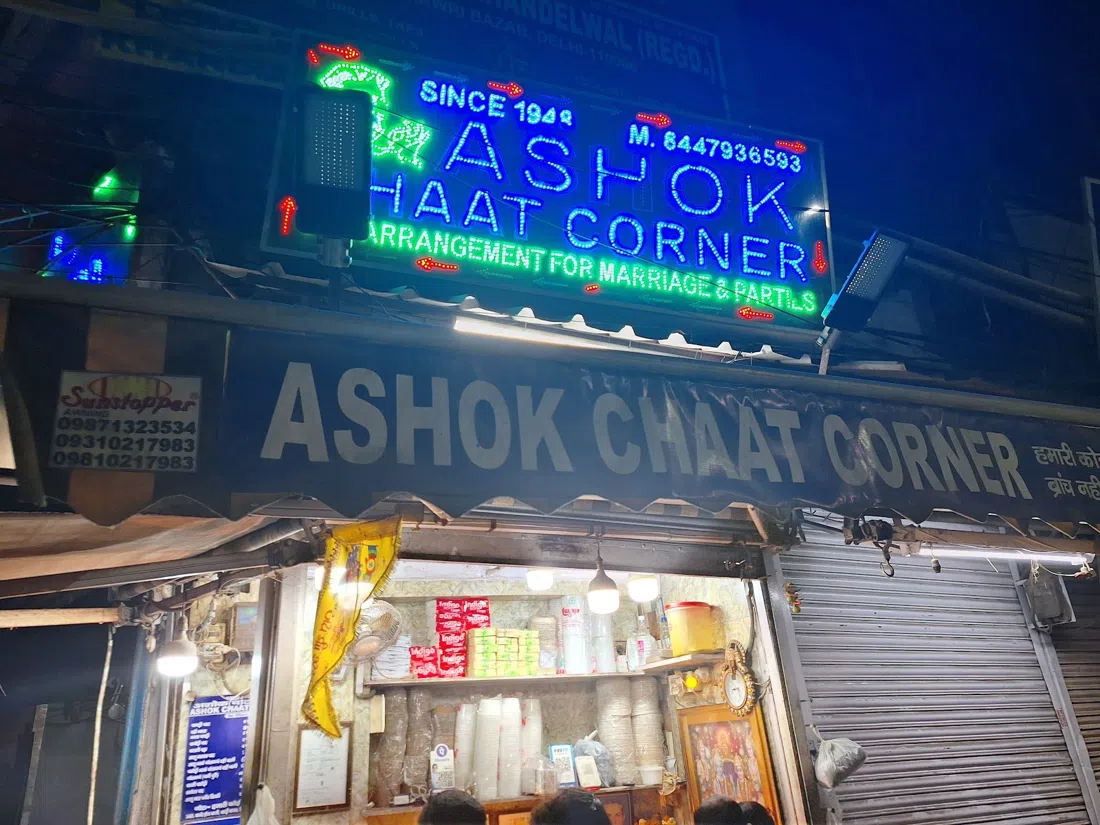
For range beyond dahi bhalla, Ashok Chaat Corner, near the Chawri Bazar metro exit, is a near-century-old family stand doing walk-up chaat service — best approached as grazing rather than a proper sit-down, ₹60-150 a plate. Between Natraj and Ashok you get two genuinely distinct takes on Old Delhi chaat rather than the same dish twice, and both are cheap enough to do back to back.
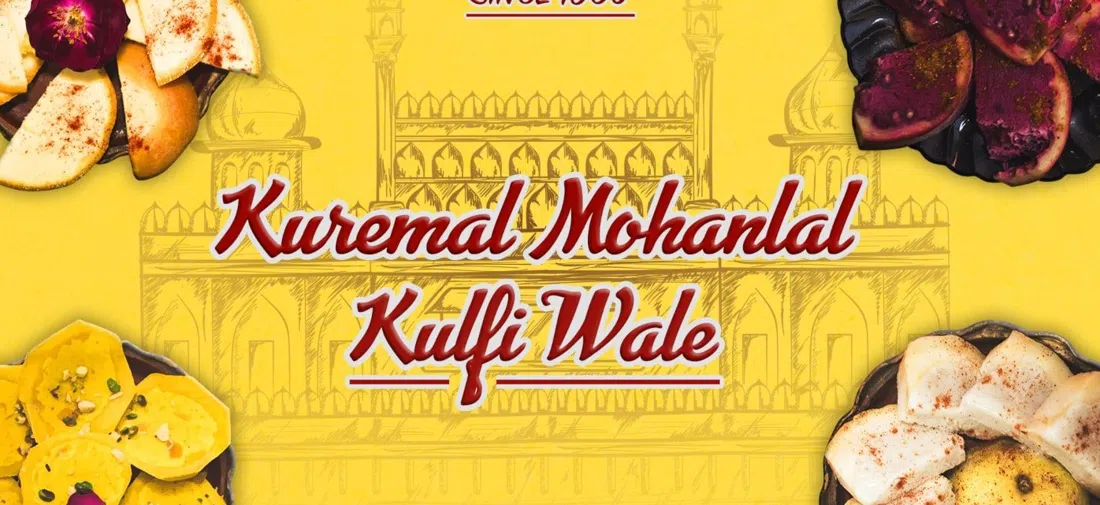
Deeper into the lanes near Chawri Bazar, Kuremal Mohan Lal Kulfi Wale has been making kulfi since 1908, and the fruit-stuffed versions — kulfi actually set inside a hollowed-out mango or other fruit shell — are genuinely unusual and worth the detour for the photograph alone, not just the taste. No seating, takeaway counter only, ₹80-150 a piece, fine for a small group grabbing a quick sweet mid-walk.
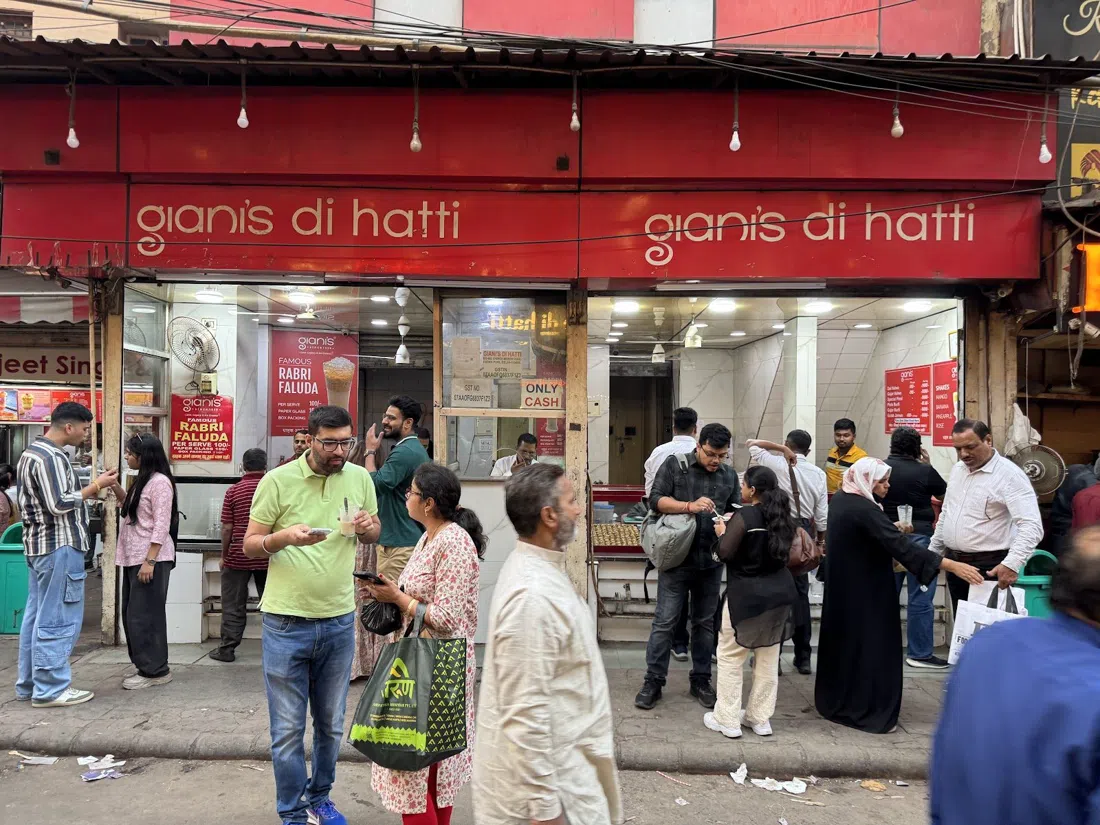
For a cold, sweet counterpoint to everything fried and spiced so far, Giani's Di Hatti is the go-to for rabri faluda and lassi in Chandni Chowk. It's a street counter with a little standing space — enough for a small group, not a crowd — ₹100-200 a glass. Given how much of this walk is hot, fried and spiced, this is worth slotting in roughly at the halfway point rather than saving it for the very end.
The Western End: Fatehpuri and the Last Stop
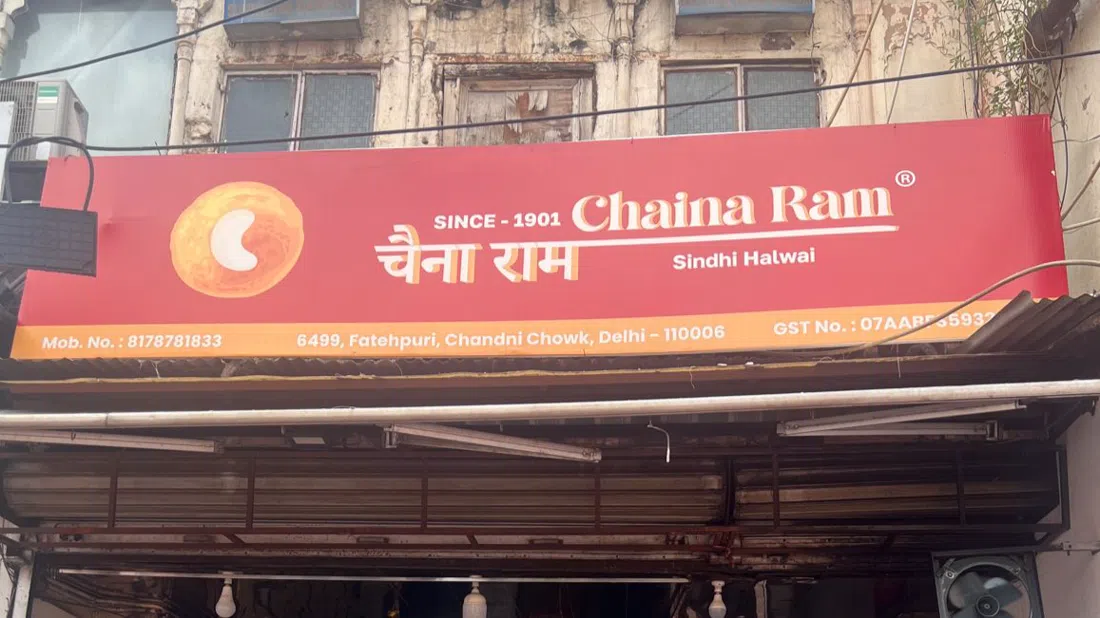
As Chandni Chowk runs west toward Fatehpuri Masjid, Chaina Ram Sindhi Halwai has been trading right by the mosque since 1901 and makes a natural closing stop for the day — a retail counter, easy for any group size, no seating pressure, ₹100-300 a portion. By the time you reach it you'll likely be full, which is fine; buy something to take back to the hotel rather than forcing down one more tasting on the spot.
Planning the Walk: Transport, Cash, Timing, Budget
Getting there. The Chandni Chowk metro station (Yellow Line) puts you at the eastern end of the walk, close to Paranthe Wali Gali; from there the whole route can be done on foot, though a cycle-rickshaw between the Jama Masjid kebab corner and the Chandni Chowk sweet shops saves real time and legs. Cars can't usefully enter most of these lanes — don't try to arrange a pickup mid-walk.
Cash. Every stop on this walk is cash-only or cash-preferred in practice, even where card readers technically exist — carry small notes, because none of these counters want to make change on a ₹2000 note for a ₹150 jalebi. Budget roughly ₹1500-2500 per person for a full day's grazing across six or seven stops, more if you sit down properly at Karim's or Al Jawahar.
Timing. Start at Paranthe Wali Gali before 11am if you want to actually sit down there. The chaat and sweet stops are fine any time until early evening. Save Aslam Chicken Corner for after dark, which is genuinely when it's best, and accept that Karim's will have a queue at both lunch and dinner peak regardless of when you show up — there's no secret quiet hour for it. Avoid the whole route on major wedding-season weekends (roughly October through February) when the crowd density on the narrow lanes roughly doubles.
Groups. If you're travelling in a party larger than six, split up for the narrow-gali stops — Paranthe Wali Gali, the chaat stalls, the jalebi and kulfi counters — and regroup for the sit-down restaurants (Karim's, Al Jawahar, Aslam Chicken Corner), which are the only venues on this list actually built to seat a crowd together.
If you're basing yourself in the city for more than this one walk, start with the Delhi guide for the wider picture, and sort accommodation through Delhi hotel search before you commit to which end of Old Delhi you want to be walking distance from — staying near Chandni Chowk metro cuts real time off a route like this one.