 In this area
Chanakyapuri & Lutyens' Delhi
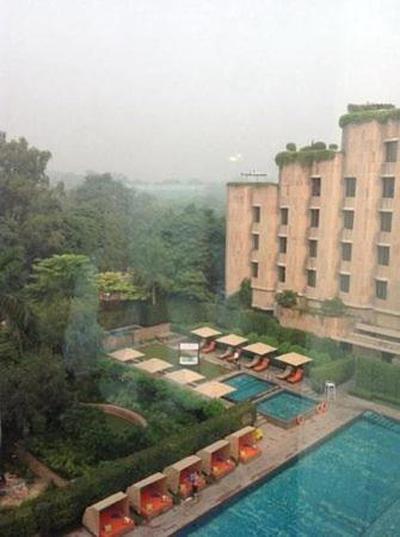
ITC Maurya, a Luxury Collection Hotel, New Delhi
9.4· 1,631 reviews
approx. from£247 / nightSee prices
The Delhi issue
A walk through the capital’s ceremonial core, where embassies, museums and five-star hotels sit under a canopy of trees and a very particular hush.
By Farah SiddiquiOld Delhi, one kebab at a time
Chanakyapuri and Lutyens' Delhi are the parts of the capital that look like they were drawn with a ruler: 42-metre-wide avenues radiating from Raisina Hill, sandstone secretariats, foreign missions behind high walls, and a green canopy so dense that summer temperatures drop a few degrees the moment you cross into it. This is not Delhi in a hurry. It is Delhi in pressed trousers, with a security cordon and a clipped nod. The pleasure here is in the scale of things — the long sightlines, the lawns, the way a palace can sit behind a hedge and still feel like the centre of the map. The irritation, if you are the kind of person who likes a city to spill over its own edges, is that everything is spread out and the streets themselves rarely offer much back. But then that is the point. This is the capital as stage-set, and the republic has kept the scenery.
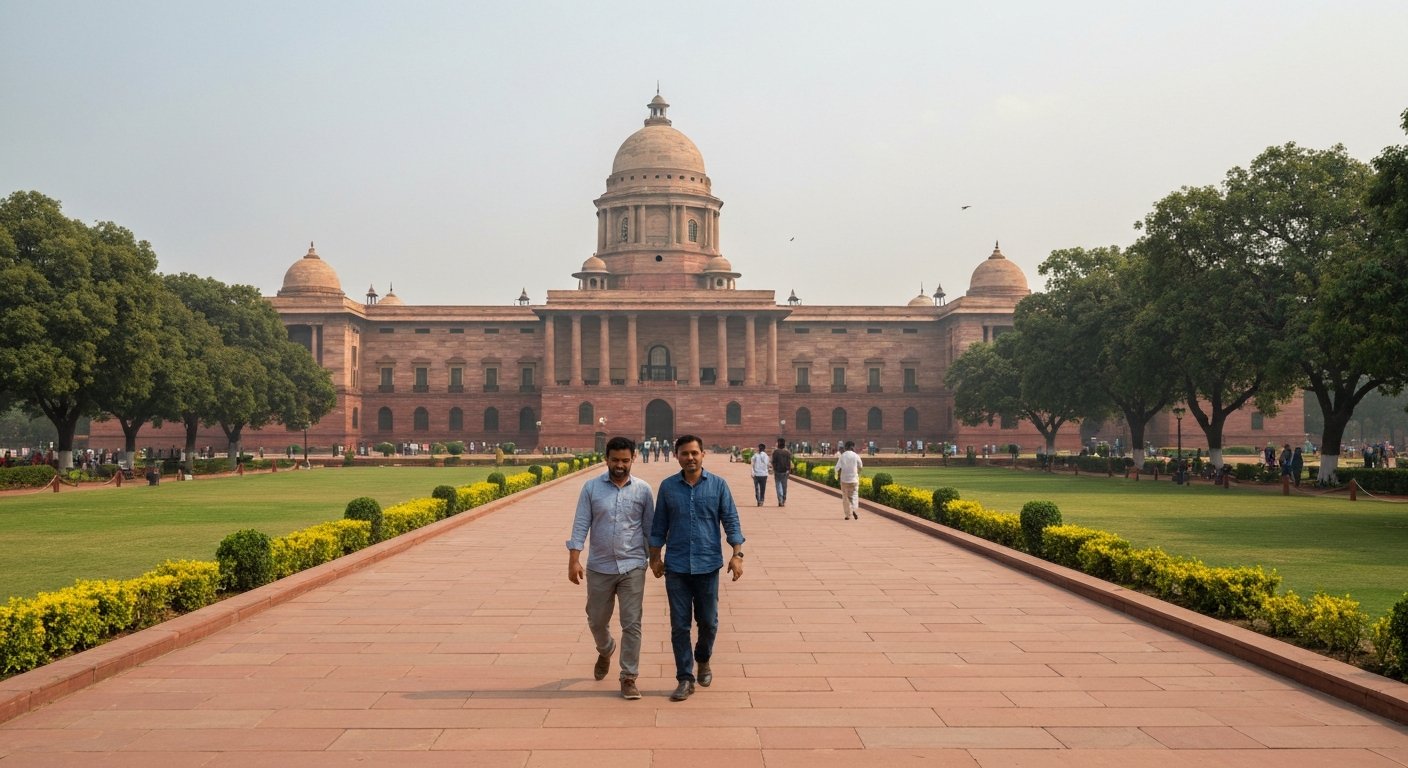
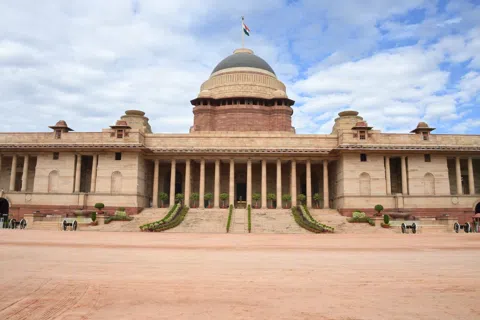
The first thing you understand about Lutyens' Delhi is that it was designed to be seen from a distance. Raisina Hill rises with the confidence of an old empire, carrying Rashtrapati Bhavan, the 340-room presidential palace Lutyens built for the Viceroy, with Baker's North and South Blocks standing like patient bookends. From there the axis runs down to India Gate, and the whole thing feels less like a street than a sentence written in stone. The government buildings are not decorative extras here; they are the grammar of the district.
Then there is Chanakyapuri, the diplomatic quarter carved out in the 1950s, where embassies sit behind high walls and flags move lazily above manicured verges along Shantipath and Sardar Patel Marg. It is a place of low-rise compounds and controlled entrances, of birdsong carrying farther than it should. The streets feel almost over-ordered, as if someone has ironed the city flat. That can sound dull until you stand in it for a minute and realise how rare quiet is in Delhi. Here, quiet is the local export.
The district is also Delhi's museum belt, and the museums are not little side acts. The National Museum on Janpath holds the country's flagship collection — Harappan seals, Chola bronzes, Mughal miniatures — and you should go while it is still there, because plans are afoot to move it into the vast new Yuge Yugeen Bharat museum in the North and South Blocks. That future may come with much fanfare; for now, the old rooms on Janpath still do the work beautifully. Teen Murti Bhavan, once Nehru's residence, now houses the Prime Ministers' Museum and the Nehru Planetarium, while Gandhi Smriti on Tees January Marg preserves the place where Mahatma Gandhi spent his last days and was assassinated in 1948. This is not a district that separates power from memory. It stacks them neatly on top of each other.
Live prices from our booking partners.
Free cancellation on many rooms. We may earn a commission when you book.
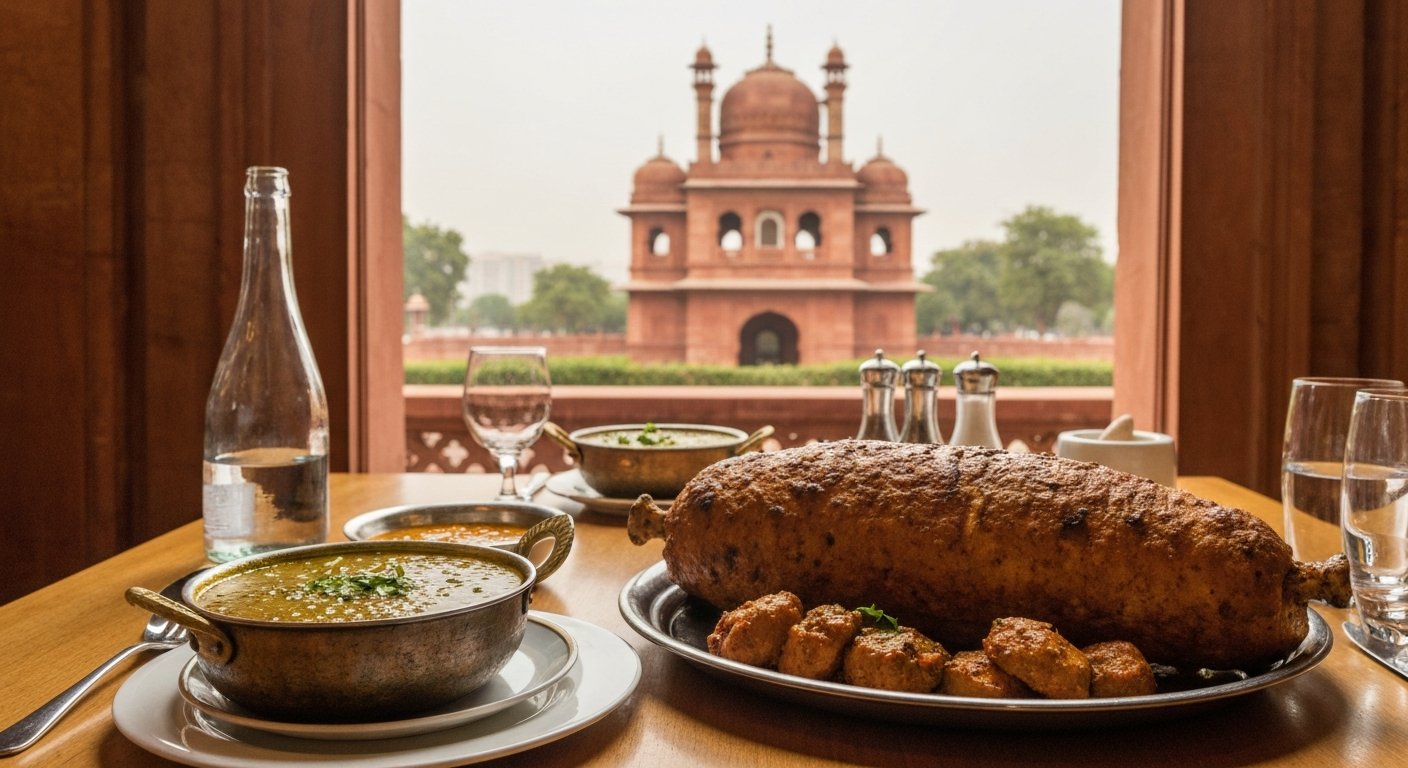
Dining here is dominated by hotel restaurants, which sounds sterile until you remember that some of these rooms have become institutions in their own right. At the ITC Maurya on Sardar Patel Marg, Bukhara is the headline act, the tandoor-and-frontier-cuisine room that has fed presidents and heads of state for decades. Its dal Bukhara simmers overnight; its Sikandari Raan arrives so large it seems to have its own diplomatic passport. Eat it by hand, as you are meant to, and let the rest of the room carry on pretending this is all perfectly normal.
In the same hotel, Dum Pukht turns to refined Awadhi cooking, with biryani sealed under pastry lids in the dum style, and Avartana offers a modern, small-plates reading of South Indian food. The contrast is useful. Bukhara is all muscle and smoke; Dum Pukht is patience; Avartana is the lighter, more contemporary counterpoint that reminds you Delhi luxury dining can still be curious.
The Leela Palace in the Diplomatic Enclave does not believe in doing one thing when it can do four. Jamavar is the opulent regional Indian room, named for Kashmiri brocade and known for kebabs, nihari and the signature Maharaja Table. Le Cirque brings Franco-Italian fine dining onto a terrace over the city, MEGU does high-end modern Japanese with an Izakaya outdoor extension, and Qube covers the all-day ground. This is the sort of hotel where dinner can become an itinerary if you let it, though the better approach is to choose one room and sit still.
Over in Lutyens' proper, the Taj Mahal on Mansingh Road reopened after a full 2024–25 refit and now holds Varq, where contemporary Indian fine dining sits under an Anjolie Ela Menon mural, House of Ming for Cantonese and Sichuan, and Rick's, the Casablanca-themed bar that has long been the district's polished after-dark refuge. The Imperial on Janpath is worth the trip for The Spice Route, its lavishly muralled pan-Asian room, and for high tea in a corridor of Raj-era art. These places are expensive, of course. That is not a surprise; it is the rent.
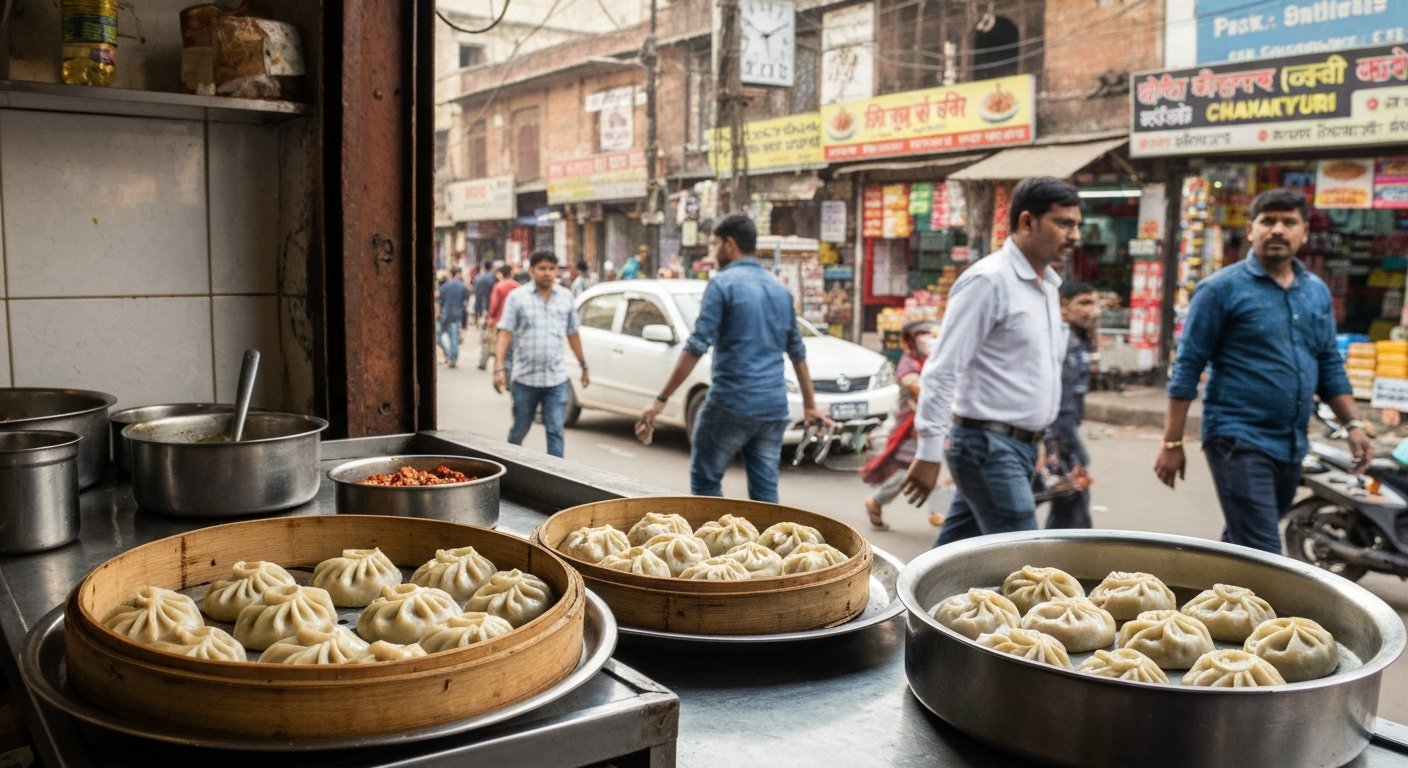
For something cheaper and far less self-conscious, go to Yashwant Place in Chanakyapuri, a scruffy market block that has become one of Delhi's great Tibetan momo destinations. Chimney Sizzlers does steamed chicken momos around ₹150, while Laguna and Bamboo Chopstix handle pork, mutton and tandoori momos, plus thukpa for office crowds. The counters are plain, the service brisk, the pleasure immediate. It is the sort of place that reminds you Delhi's best food often comes without tablecloths and without apology.
There is no street nightlife in this district — no bar strip, no clubs, no late-night crowd on the pavement. Once the museums and monuments close, Chanakyapuri and Lutyens' empty out, and what remains is a handful of polished, expensive hotel bars. That is not a deficiency so much as a temperament. This part of Delhi does not stay up late to prove anything.
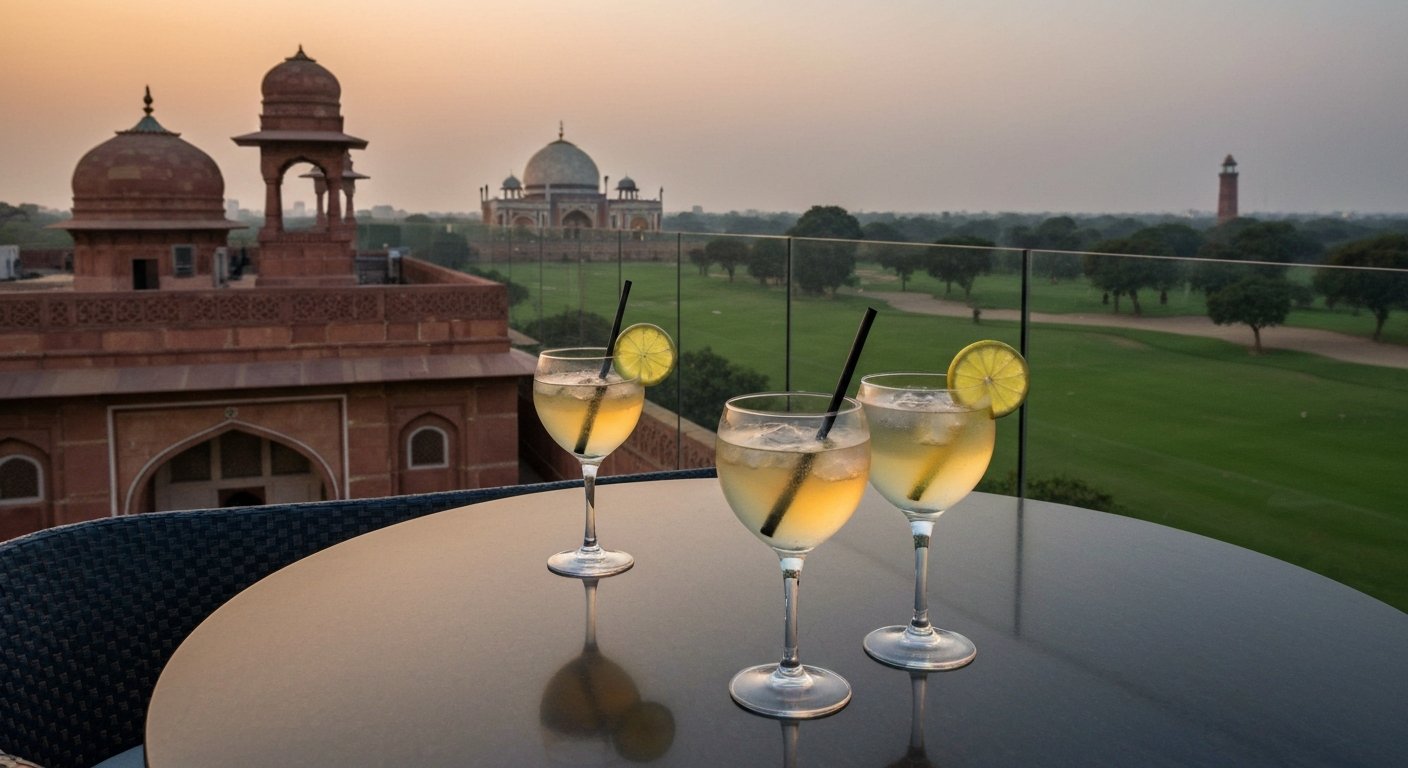
Cirrus 9, the rooftop bar at The Oberoi on Golf Links Road, looks out over the Delhi Golf Course and Humayun's Tomb and does serious cocktails. It is the kind of view that makes one forgive a lot. Rick's at the Taj Mahal, Mansingh Road, is the veteran lounge, a low-lit Casablanca-styled room with a strong malt and martini list. And 1911 Bar at The Imperial on Janpath pours cocktails in a Jazz-Age Art Deco setting for the price of the postcode. If you want a proper night out with a crowd and a dance floor, you will cab south to Hauz Khas Village, Connaught Place or the pubs of Aerocity. Here, the evening is meant to be a considered drink with a view, not a big one.
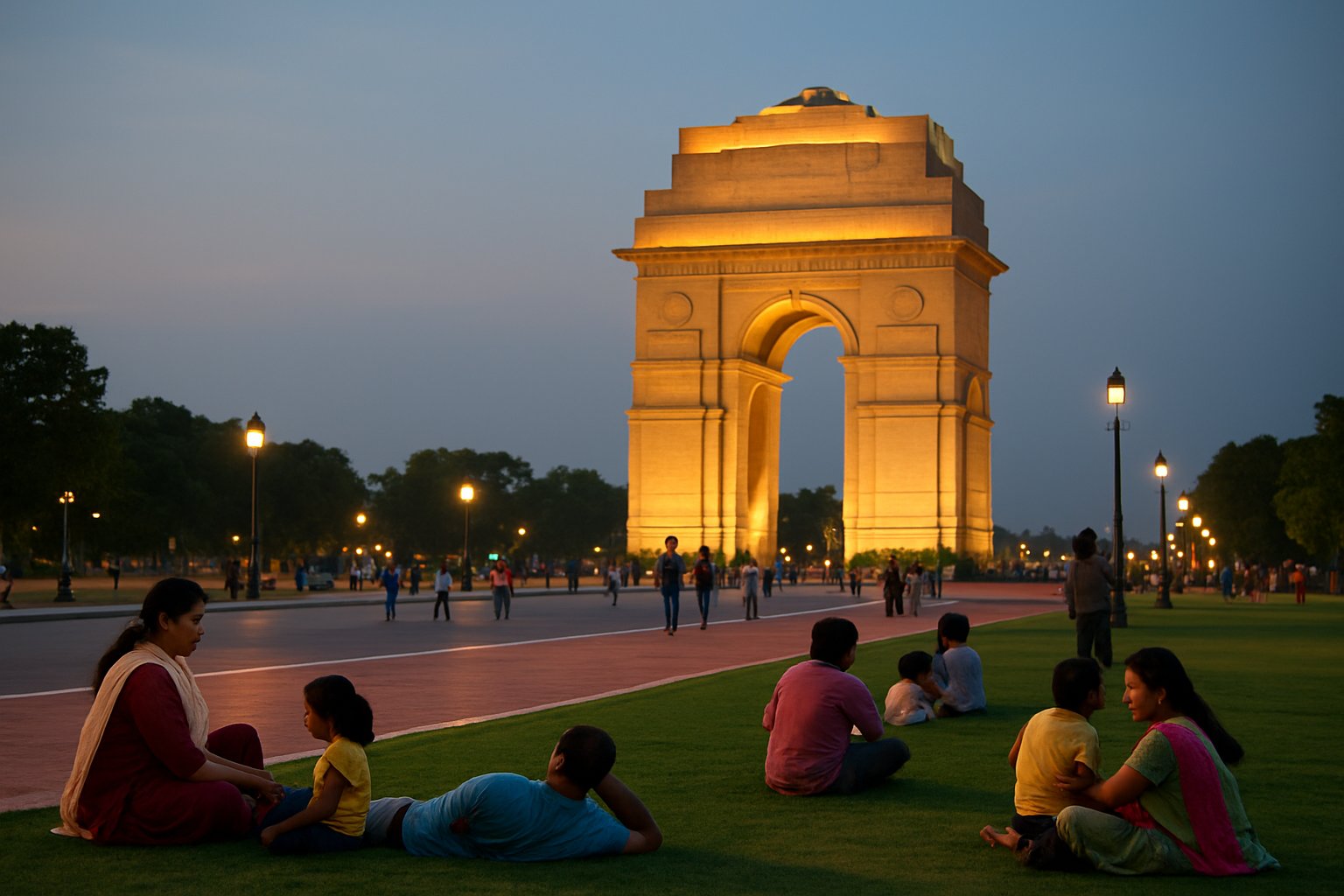
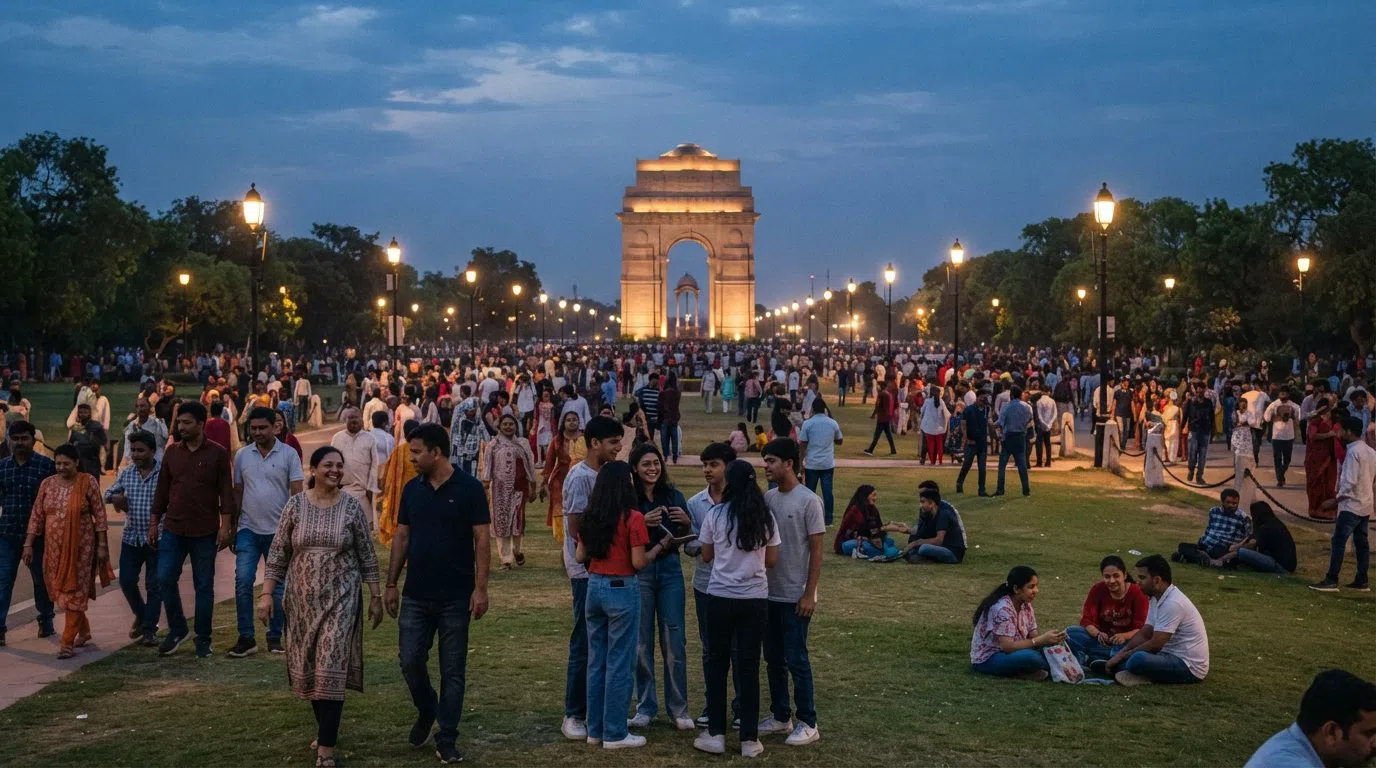
The set-piece is India Gate at dusk. As the light goes, the arch and the canopy floodlights come on, the Central Vista lawns fill with families, and the refurbished Kartavya Path — 101 acres of red-granite walkways, canals and state-wise food kiosks since the 2022 redevelopment — turns into the city's living room. Walk the axis toward Raisina Hill and you get that head-on view of Rashtrapati Bhavan framed between the North and South Blocks, the sort of urban composition that makes even the most cynical visitor pause and look up. The old Rajpath name may have been retired, but the ceremonial drama remains intact.
For Rashtrapati Bhavan itself, book ahead. Guided circuits and the museum run on pre-booked online tickets, and every Saturday morning the Change of Guard ceremony — around 7–8am, with ₹50 registration — plays out in the forecourt with the President's Bodyguard and an army band. In spring, roughly February to late March, the palace gardens open as Amrit Udyan, the former Mughal Gardens: free timed tickets online, entry via Gate 35, and a shuttle from Central Secretariat metro. This is the sort of Delhi ritual that rewards punctuality and a willingness to stand in line with everyone else for a minute or two. The reward is the formality itself.
The museums are the district's quiet triumph and rarely crowded. Give the National Museum on Janpath a half-day for its Harappan, Gandhara, bronze and miniature galleries while the collection is still there. The Prime Ministers' Museum at Teen Murti Bhavan pairs Nehru's preserved home with an interactive gallery on every Indian PM, with the Nehru Planetarium alongside. Gandhi Smriti on Tees January Marg preserves the room and the final footsteps of Mahatma Gandhi, and entry is free. These are not places to rush. They ask for a slower gait and a little attention, which is only fair.
Nehru Park in Chanakyapuri offers the green counterpoint: 80 acres of lawns and jogging paths, plus free Morning Ragas and Evening Ragas classical concerts and the Delhi International Jazz Festival. It is one of the few places in this district where the city seems to exhale without being asked.
The manicured lawns and walking paths of Nehru Park.
The stately architecture of Rashtrapati Bhavan.
The various state-run regional food canteens.
This is not a shopping district — it is embassies, ministries and museums, and the retail is thin and scattered. What exists clusters around Yashwant Place in Chanakyapuri, a plain market block better known for its momo counters than its stores, though it does carry a run of leather-jacket and winterwear shops on the lower floors that Delhi bargain-hunters have used for years. Nearby Malcha Marg market serves the diplomatic community with a small parade of delis, wine-and-cheese shops, salons and a couple of cafes. Useful, yes. Browsing destination, no.
For actual shopping, you leave the district. Khan Market, a short hop east on the Lutyens' edge, is Delhi's most polished retail enclave — bookshops, boutiques, delis and cafes wrapped around a scruffy U of lanes. Connaught Place, ten minutes north, has the mid-market brands, while Janpath and Baba Kharak Singh Marg take care of fixed-price handicrafts and state emporia. Chanakyapuri is the quiet base; the shopping happens elsewhere.
This is Delhi's top-tier luxury base, and the reason to stay is simple: quiet, secure, green, and close to the monuments and museums that most first-time visitors come to see. In the Diplomatic Enclave, the grande dames are the ITC Maurya on Sardar Patel Marg, home to Bukhara and long the choice of visiting heads of state, and The Leela Palace, with its rooftop pool and four strong restaurants. In Lutyens' proper, the Taj Mahal on Mansingh Road puts you within walking reach of India Gate and the museums, while The Oberoi on Golf Links and The Imperial on Janpath sit on the district's eastern and northern edges with easy access to Khan Market and Connaught Place respectively.
Expect five-star prices across the board. This is not a budget or mid-range area, and there is very little between the palaces and the odd boutique property like Hotel Diplomat on Sardar Patel Marg. Pick Chanakyapuri proper if you want maximum calm and greenery, or a Lutyens'/Mansingh Road address if you prefer to walk to India Gate and the National Museum rather than cab everywhere. The live hotel options are below.
Our best-rated stays in this neighbourhood. Prices are approximate “from” rates — confirmed at the provider when you continue. We may earn a commission if you book through our partners — at no extra cost to you.
In this area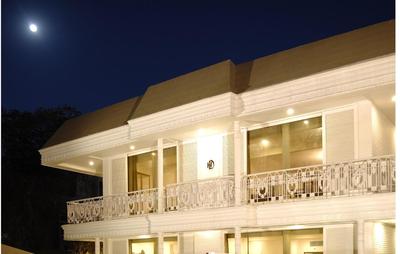 In this area
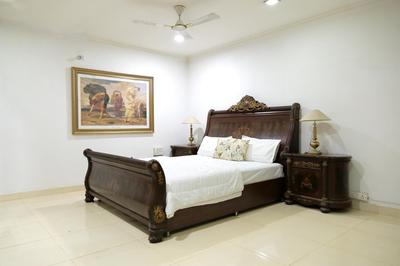 In this area
The district is spread out — plots are large, avenues are wide, and sights that look close on a map are a hot, long walk apart — so you will lean on the metro plus taxis or auto-rickshaws, ideally a metered app cab for fixed fares. The Yellow Line is the spine: Central Secretariat, also a Violet Line interchange, is the closest stop for Kartavya Path and India Gate, with Gate 3 leaving you about 800 metres from the arch. Udyog Bhawan, renamed Seva Teerth in February 2026, serves the Raisina Hill secretariats, and Lok Kalyan Marg is nearest to Nehru Park and the heart of Chanakyapuri. Khan Market station on the Violet Line covers the eastern museums and the market.
For Chanakyapuri's Diplomatic Enclave, cabs are simplest. The embassy roads are quiet and some are access-controlled, and the metro stations sit a walk out on the edges. Connaught Place and Khan Market are 10–15 minutes by road, Old Delhi and Chandni Chowk 30–40 minutes depending on traffic, and Indira Gandhi International Airport Terminal 3 is roughly 30–45 minutes by cab, or a change onto the Airport Express from New Delhi station. Expect security checks and occasional road closures around VIP movements near Rashtrapati Bhavan. Build in a little slack. Delhi likes to be important about its own traffic, and this district, more than most, has the authority to insist.
Gallery
Yes, if you want luxury, quiet and greenery with the big sights nearby. It is one of the safest, calmest, most spacious parts of central Delhi and home to the city's best hotels, including ITC Maurya, The Leela Palace, the Taj on Mansingh Road, The Oberoi and The Imperial. The trade-offs are cost, long distances between things and very little street life after dark.
India Gate and Kartavya Path at dusk, the view up to Rashtrapati Bhavan on Raisina Hill, and the museum trio: the National Museum on Janpath, the Prime Ministers' Museum at Teen Murti Bhavan, and Gandhi Smriti on Tees January Marg. Add Nehru Park for green space and free classical concerts, and book Amrit Udyan if you are visiting in spring.
Head to Yashwant Place in Chanakyapuri, one of Delhi's most-loved Tibetan momo destinations. Chimney Sizzlers, Laguna and Bamboo Chopstix do steamed, fried and tandoori momos and thukpa for a fraction of hotel prices. Malcha Marg market nearby has a few casual cafes and delis as well.
Not really. There is no bar strip or club scene here, only hotel bars such as Cirrus 9 at The Oberoi, Rick's at the Taj Mahal and 1911 Bar at The Imperial. They are smart, calm and expensive, and the district empties out after the museums and monuments close.